Key Highlights
- Darjeeling Tea was surreptitiously brought to India from China by Scottish botanist Robert Fortune
- Darjeeling tea is the first Indian product to receive a GI tag, back in 2004
- The Himalayan terrain plays an important role in lending the tea leaves its flavour
- Darjeeling tea goes through several precise methods: plucking, withering, rolling, fermentation (oxidation) and drying. The tea must always be plucked as two leaves and a bud
- The first flush, harvested in early spring produces a cup that is light, floral and delicately astringent
- The second flush is sweet and mellow, often carrying the muscatel note prized by connoisseurs
- The monsoon flush is robust and strong, while the rare autumnal flush, gathered as temperatures dip, has a cold-weather flavour
- A tea is evaluated on flavour, appearance and the infusion’s nose. A clean tea with a high presence of “tips” (the two leaves and a bud) fetches premium prices, while the presence of stalk is a mark against it.
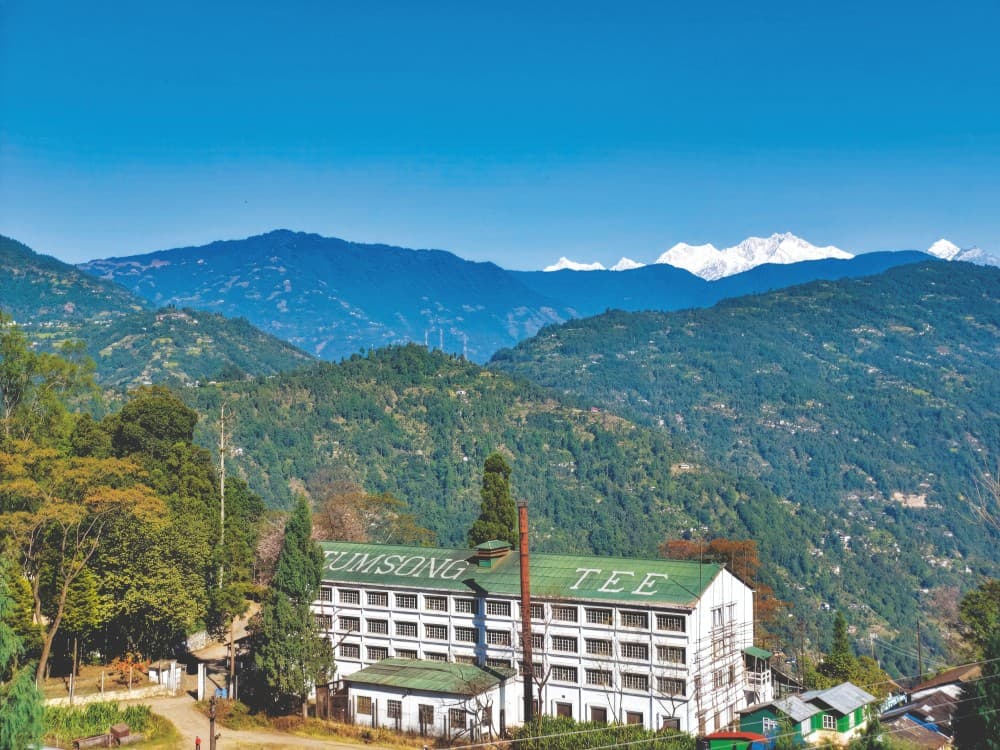
Some 200 odd years ago, a covert heist occurred across continents that would quite literally change the way the world drinks. Scottish botanist Robert Fortune disguised himself and snuck into China to smuggle out the seeds and saplings of a plant that had so far been kept a closely guarded secret. As these stolen plants found their way into the hills of a colonial outpost in the Himalayas, they unexpectedly flourished in the high altitude and misty climate, giving birth to the most mystical beverage of our time: Darjeeling tea.
Emerging from 87 gardens spread across elevations of 2,000 to 7,000 feet, today this tea is so rare that it only accounts for a fraction of India’s total tea production, only 6 million kilograms out of a national output of over 1,300 million.
The first Indian product to receive the Geographical Indication status in 2004, it stands in the same league as Champagne and Parmigiano Reggiano. Its finest leaves travel to global markets where connoisseurs eagerly wait for each seasonal flush with the same enthusiasm exhibited for a premier vintage.
The taste of terroir
What makes Darjeeling tea singular is not just one factor, but an intricate interplay of many, according to Sangeeta Kichlu, a tea specialist and India’s first female tea taster. Take, for instance, the fact that it is rooted in its China bushes (camellia sinensis var. sinensis), the “ancestral” and authentic tea plants that cannot be replicated elsewhere.
Or that the sensory experience of the tea is inextricably linked to the terroir of the Himalayas. For Sujoy Sengupta of the Chamong Group, who has experience both as a tea planter and marketer, the “romanticism” of the tea is “nothing without the smell of the earth, the swirling mist, and the mighty snow peaks”. As the cold air envelops the mountains, each garden develops a personality entirely its own, depending on its altitude, orientation to the sun, and exposure to wind. Thus, no two estates are alike, and “each Darjeeling garden has a specific character,” says Kichlu.
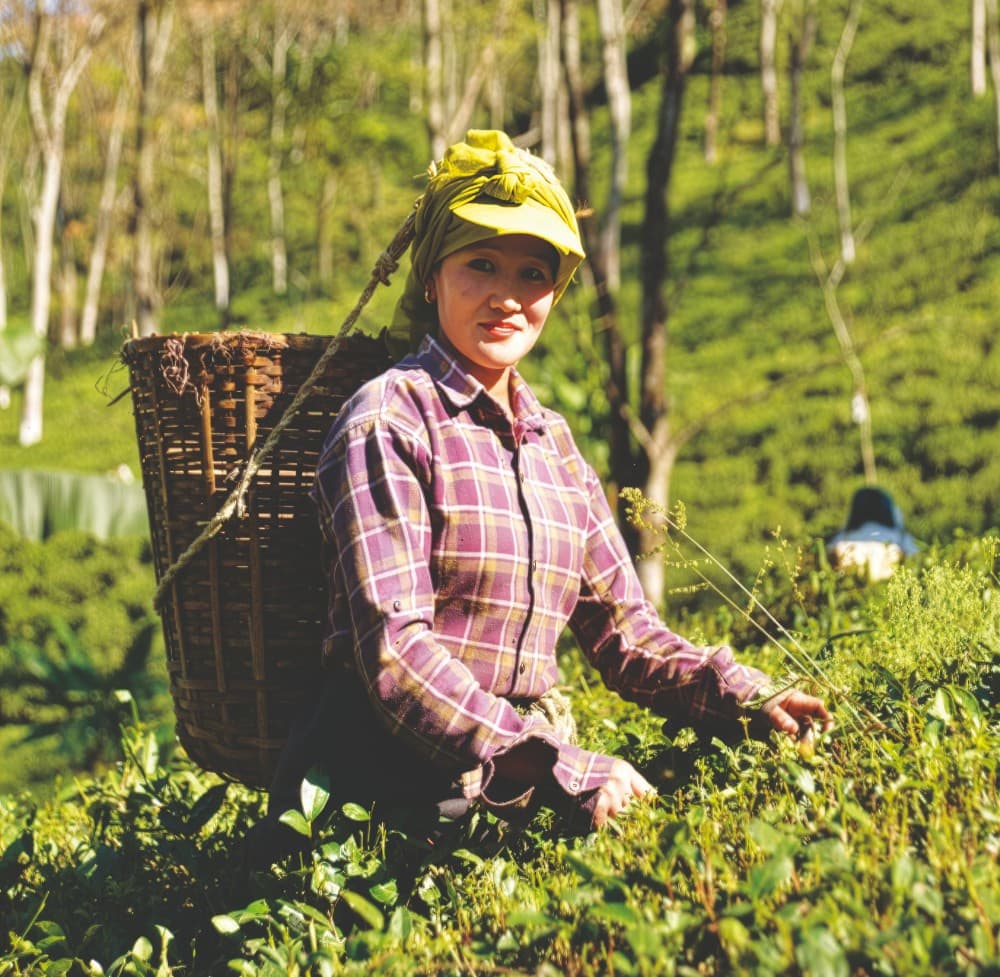
Another differentiator is the method of production. While CTC dominates the majority of India’s milk tea drinking market, Darjeeling follows the orthodox method which has several stages that must be handled with precision: plucking, withering, rolling, fermentation (oxidation) and drying. The plucking of tea is an art in itself, as women brave steep slopes to gather the “two leaves and a bud” that is the essence of premium tea. It is, as Kichlu puts it, a “labour of love,” one that lends the tea not just flavour, but a human imprint.
These are skilled workers, whose knowledge has been passed down through generations, and the industry itself is a result of a significant migration and fusion of cultures. In the 19th century, the British recruited workers from Nepal, whom they viewed as a “martial race” with the natural resilience required for hill labour. This led to the creation of the Indian Gorkha identity, which is now inseparable from the tea’s heritage.
Sustainability has also become a hallmark of the region, with Chamong Group leading as the largest producer of organic tea. Sengupta explains, “Organic farming means minimising off-farm inputs and relying on the ecosystem to nourish itself, much like a natural forest.” Although this shift can lead to a 40–60 per cent drop in yield, it ensures a product that is “pure, safe, and the way nature meant it to be”.
The play of seasons
The complexity of Darjeeling tea unfolds further across the seasons. It is one of the few in the world defined so clearly by its flushes. The first flush, harvested in early spring after the winter dormancy, produces a pale, almost ethereal cup that is light, floral and delicately astringent. With the weather warming, the second flush arrives, sweet and mellow, often carrying the muscatel note prized by connoisseurs. The monsoon flush, robust and strong, yields teas with more body but less aroma; while the rare autumnal flush, gathered as temperatures dip, closes the year with a restrained, cold-weather flavour.
After the leaves undergo the final stage of production, they are packed and make their way down the mountains, into the hands of the brokers and buyers. Here, the second half of their journey begins.
Palate in a memory
While the mountains create the tea and people shape it, it’s in the auction rooms that it finds its place in the world. For Saunak Bose of J. Thomas & Co., India’s oldest tea auction house, each week brings hundreds of lots to be tasted, assessed and valued in quick succession.
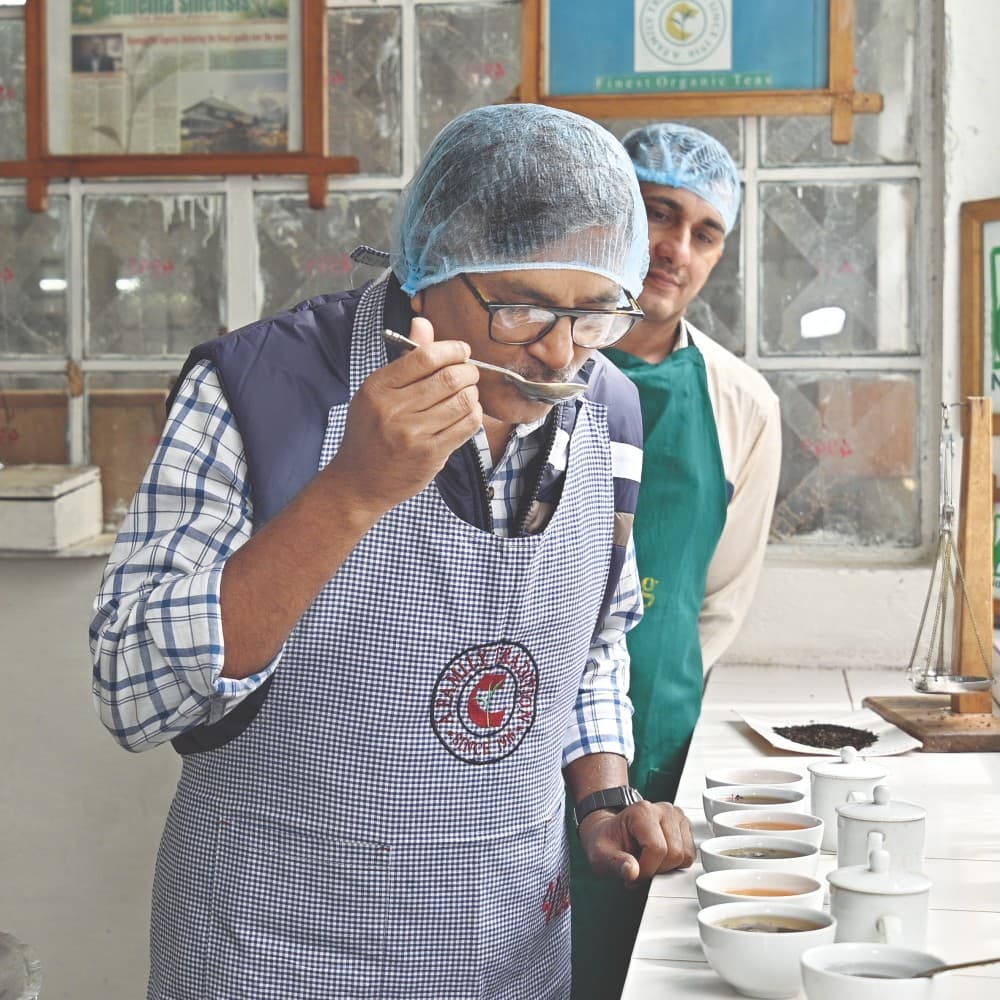
He describes the broker’s skill as carrying a “palate in a memory”, an internal database of thousands of past flavours and prices used to evaluate a tea in a matter of seconds. Years of tasting allows brokers to recognise subtle variations, to recall how a particular estate performed in a previous season, to anticipate what a buyer in Tokyo or Hamburg might be willing to pay. A tea is evaluated on flavour, appearance and the infusion’s nose. A clean tea with a high presence of “tips” (the two leaves and a bud) fetches premium prices, while the presence of stalk is a mark against it. Evaluating Darjeeling is far more demanding than other teas; it requires constant retasting as the liquor matures and shifts in the cup, explains Bose.

The wabi-sabi of tea
For all its sophistication, Darjeeling tea continues to face a curious challenge: it remains underappreciated in its own land. Sengupta says, “There has been a complete lack of promotion for Darjeeling within the tea community globally, and most importantly in India itself, where daily consumption of tea is almost 3 million kg. Amazing, isn’t it? With that kind of phenomenal consumption, Darjeeling tea struggles to even sell its total production of 6 million kg?”
He emphasises the need to shed the “affluent” association that can make potential drinkers wary of trying the tea. Most authentic Darjeeling, he says, is far more accessible than its reputation suggests.
Globally, its audience has remained unchanged, anchored in traditional markets like Germany, Japan and the United Kingdom. But there is a new opening. A growing population of prosperous, globally exposed consumers, particularly within the Indian diaspora, is returning to products that carry both heritage and distinction. Darjeeling, with its fascinating origins and unique identity, is well positioned to meet that demand.
Perhaps what is needed most, Kichlu suggests, is a shift in how the tea is seen. She draws on the Japanese philosophy of wabi-sabi — the appreciation of age, imperfection and transience. Darjeeling’s bushes may be over a century old, even exhausted by conventional standards, but they carry a depth and grace that younger plants cannot replicate. Like an aged wine or an antique painting, their value lies in their history.
Darjeeling Tea: The Himalayan Journey from Peak to Pot
1. The Himalayan Terroir
- Elevation & Climate: The tea is grown at elevations ranging from 2,000-6,000 ft. The unique Himalayan mist and the specific angles of sunlight are essential factors that impart its complex, world-renowned flavor.
- Ancestral Heritage: The gardens primarily feature original China bushes (Camellia sinensis), many of which are 100 to 150 years old. While these heritage bushes have lower yields, they are prized for producing the most complex and vintage flavours.
2. The Labour-Intensive Harvest
- The Steep Ascent: Plucking is an immense physical challenge, with workers navigating slopes that can reach steep inclines.
- Precision Plucking: Only the “two leaves and a bud” are manually plucked. Including stalks or stems is avoided as they can degrade the final quality of the tea.
- The Muscatel Phenomenon: This rare flavour is created when jassids, or green flies, infest Darjeeling tea bushes, particularly during warmer, humid conditions. These insects puncture the leaves, causing “kakreko patti” (curled leaf) by sucking moisture, turning them yellow and begin a form of natural fermentation while still on the bush, which is essential for the unique Muscatel aroma.
3. The Stages of Orthodox Manufacture
The traditional Orthodox manufacturing process follows a strict sequence:
- Plucking: Fresh harvest brought immediately to factory
- Withering: Spread to reduce moisture, make pliable
- Rolling: Twisted and rolled to release essential oils and juices
- Fermentation (oxidation): Critical chemical reaction; alters leaf colour and flavour profile
- Drying (Firing): Heat removes moisture, halts oxidation, and arrests the aroma
- Sorting: Sorted both by hand and mechanically into into whole leaf, brokens, and fannings
- Quality-control: Factory level quality control and tea-testing by the tea-makers
- Packing and Dispatch: Packed into “invoices” for warehouse sampling
4. Two Pathways to Market
Darjeeling tea typically reaches the consumer via two main routes:
- Direct Forward Contracts: Large estates often bypass the auction system to sell high-value, organic-certified teas directly to global agencies and premium buyers
- Auction Houses: Firms like J. Thomas host auctions that act as a price "barometer" for the global industry
5. The Auction and Global Market
- From Hammer to Computer: The industry transitioned from historical manual auctions to modern e-auctions in 2016 for greater transparency and convenience
- The Broker’s Palette: Brokers evaluate teas based on the “nose” (aroma), appearance, and “liquor” (taste), often comparing them to historical standards to set a value
- Global Export: The highest quality flushes are primarily destined for premium international markets, including Japan, Germany, the EU, and the USA
The Consumer’s Guide to Flushes
First Flush
- Season: Spring (March-April)
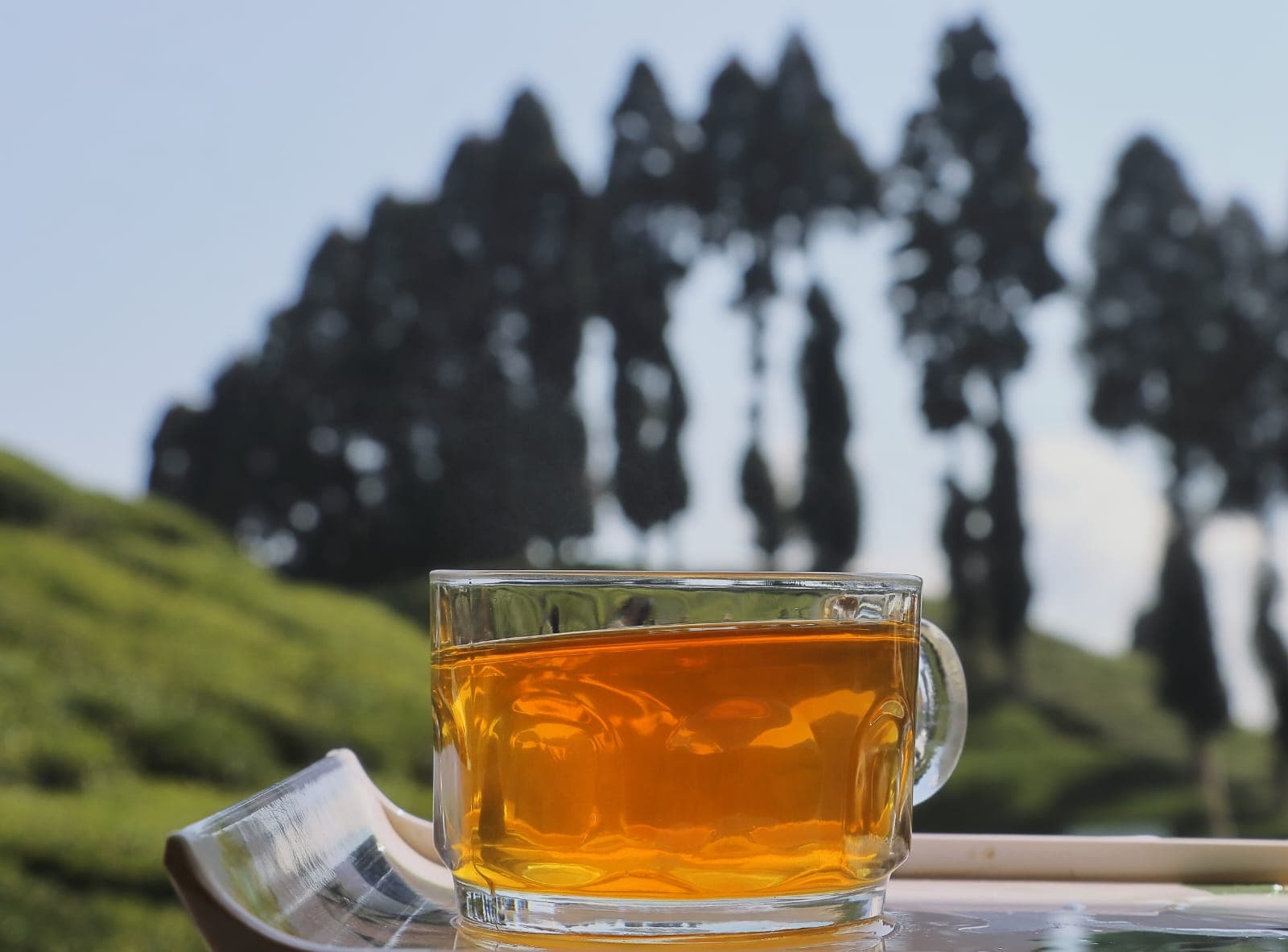
- Appearance: Light, organish/golden
- Flavour profile: Floral, delicate, astringent
Second Flush
- Season: Summer (May-June)
- Appearance: Bright orange, coppery, amber
- Flavour profile: Fruity, mellow, muscatel notes
Monsoon Flush
- Season: Rainy (July September)
- Appearance: Deep, dark liquor
- Flavour profile: Strong, robust, full-bodied
Autumnal
- Season: Autumn (Oct-Nov)
- Appearance: Light cups
- Flavour profile: Mellow, cold-weather character
What is Darjeeling Tea?
What is Darjeeling Tea?
Darjeeling tea is a rare, high quality variety of tea, grown in the hills of Bengal — Darjeeling and Kalimpong.
Which is India’s oldest tea auction house?
Which is India’s oldest tea auction house?
J Thomas & Co. is India’s oldest tea auction house.
What are the different flushes of Darjeeling tea?
What are the different flushes of Darjeeling tea?
The different flushes of Darjeeling tea include first flush, second flush, monsoon flush and autumnal flush.
What is Darjeeling first flush?
What is Darjeeling first flush?
The first flush, harvested in early spring produces a cup that is light, floral and delicately astringent.
What is Darjeeling second flush?
What is Darjeeling second flush?
The Darjeeling second flush, harvested when the weather is warm, is sweet and mellow, often carrying the muscatel note prized by connoisseurs.
Does Darjeeling tea have a GI tag?
Does Darjeeling tea have a GI tag?
Yes, Darjeeling tea was the first Indian product to get a GI tag, back in 2004.