Key Highlights
- Yoga is an ancient practice but its modern form combines two different philosophies
- The story of yoga goes back to Shiva — Adi Yogi — who blessed a fish to be reincarnated on earth as Patanjali, the sage to gather the scattered threads of yogic wisdom into a single text, the Yoga Sutras
- Patanjali’s Sutras were focused almost entirely on the mind, with Asanas appearing in only three of the 196 sutras
- The physical practice of yoga was revived in the late 19th century when Swami Vivekananda brought refined yogic concepts to the West, where they collided with European physical culture
- Yogis divided the practice of stilling the mind into three paths: Bhakti Yoga, Dharma Yoga and Gyan Yoga

If you have spent any time on the mat, someone has asked you this question. And if you are anything like me, you have probably answered it wrong.
As a yoga-doing, headstand-aspiring human being, I used to say ‘I do yoga’ the way people say they ‘eat food’ — technically accurate, almost entirely uninformative. Dua Lipa apparently swishes from crow pose into a tripod headstand. Sting reportedly holds a floating lolasana for reasons that seem, generously, personal. Christina Koch told NASA that yoga was ‘way more fun’ in microgravity, which raises questions that no one in the Yoga Sutras thought to address. What are they really ‘doing’ here?
Back home in India, yoga had been part of the furniture — a grandfather reciting the Sutras at dawn, an aunt who treated pranayama as casually as most people treat their morning chai, a childhood in which the word “asana” was not a lifestyle signifier but simply what you did before school.
Tradition, I came to understand, is not what you absorb simply by proximity. It determines the pace of your postures, the weight of your breathwork, what you are actually asking of your body and mind — and most importantly, how you approach life through your practice.
The style you practise is not a preference. It is a philosophy.
Different styles of yoga
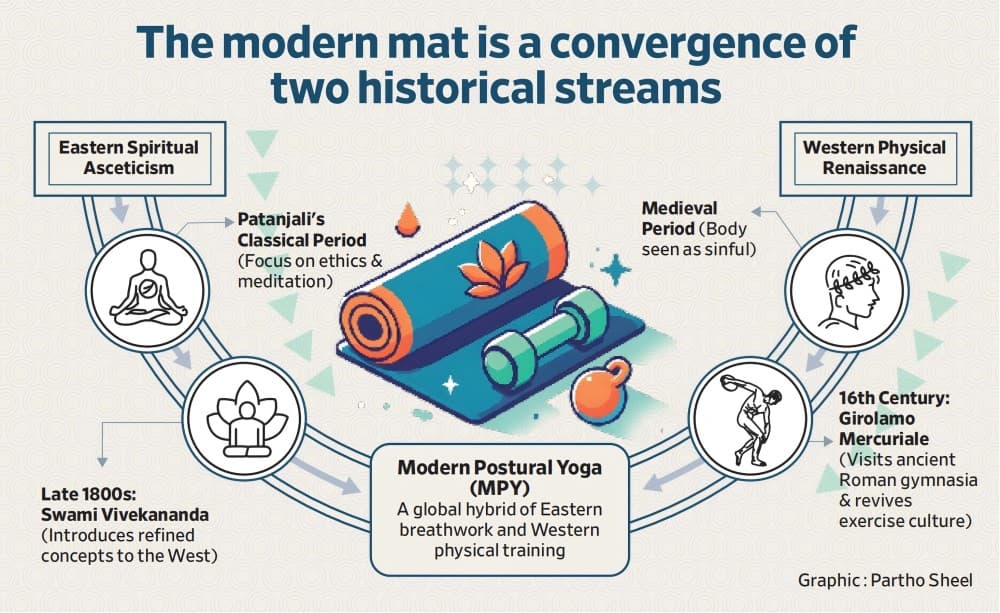
Most people know yoga is ancient. Fewer know it is also, in its current form, surprisingly modern — a hybrid of two very different rivers that converged only in the last hundred years.
The story begins, as the best Indian stories do, at the water’s edge. Shiva — Adi Yogi — is sitting with his partner Parvati, sharing the secrets of the universe. Matsendranath, a fish in the pond, overhears every word. Shiva sees the fish listening, and instead of being annoyed, tells him: you will be reincarnated on earth to carry this knowledge forward.
Hence, Patanjali arrives. Considered a reincarnation of Matsendranath, he was the first sage to gather the scattered threads of yogic wisdom into a single coherent text — the Yoga Sutras — the very one that yoga teacher trainees study today, usually while sipping oat lattes and quietly panicking about their practicum.
But Patanjali’s Sutras were focused almost entirely on the mind. Asana appears in exactly three of the 196 sutras — three — described simply as “sthiram sukham asanam”: the posture should be steady and comfortable. The physical practice as we know it emerged much later, having been nearly lost during a thousand years in which the body was considered spiritually suspect, and was ultimately revived in the late 19th century when Swami Vivekananda brought refined yogic concepts to the West — where they collided, productively, with European physical culture.
Because the body is understood as a microcosm of the cosmos, the yogis laid out an extensive internal map showing how to raise one’s own energy to its highest expression. “Atha yoga anushasana” — yoga is a self-imposed discipline. A point where mind, body and breath converge until the mind becomes, as the texts describe it, a laser-sharp beam.
If you’re in a beautiful pose but your thoughts are running a commentary on everything from the playlist to your grocery list, you are not yet in yoga. You are in stretching mode.
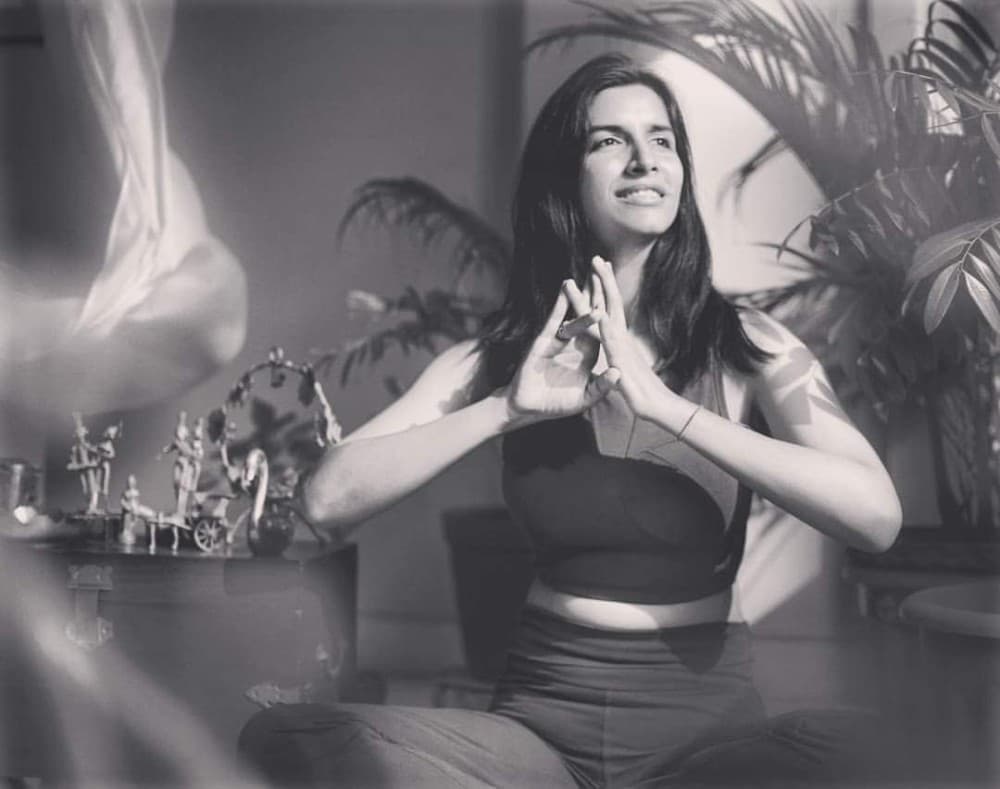
Dua Lipa flows from crow to headstand, Sting holds a floating lolasana, and Christina Koch found it “way more fun” in microgravity at NASA. But beyond the spectacle, the answer is less about the pose and more about the philosophy that shapes it.
The three paths
To make this deceptively large ask — the stilling of the mind — more navigable, the yogis divided the practice into three primary paths.
Bhakti yoga is the path of devotion and surrender: kirtan singing, satsang, the devotional ecstasy of Mirabai pouring her love into song. It asks you to feel your way to oneness.
- Gyan yoga is the path of knowledge: the discernment between what is real and what is not, the slow dissolution of the ego through study and inquiry.
- Karma yoga is the path of right action — the doer’s path. You act fully, completely, without attachment to the outcome. You go on a date without worrying about where it will lead. You walk into the important meeting fully prepared but without white-knuckling the result. You offer the work freely. That’s a Karma yogi in action.
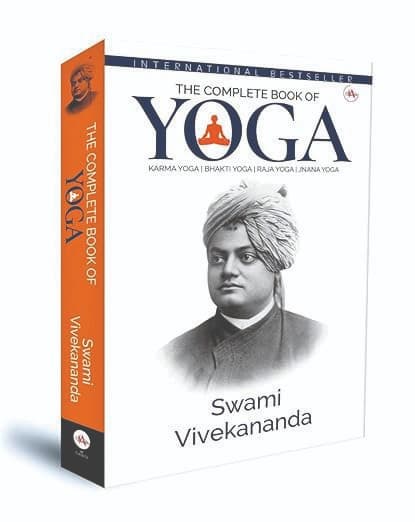
Swami Vivekananda put it plainly: “We mistake doing for being, worshipping perspiration while remaining slaves to results. Freedom lies in joining action to the means rather than the end — working incessantly without attachment.”
Most of what we encounter at a modern yoga studio is a version of Karma yoga expressed through the body. The physical styles are not separate from the philosophy — they are the philosophy, made tangible.
Practice exists on a gradient
Yoga is not one thing on a dial. It is a two-dimensional landscape, and where a practice sits on that landscape determines almost everything about what it will do to you and for you.
At one end: the sympathetic nervous system — active, heat-building, cardiovascular. Targets superficial muscles. Builds strength and stamina. This is the yoga of effort.
At the other: the parasympathetic nervous system — rest and digest, deep tissue, meridians and joints. Targets the body’s connective architecture. This is the yoga of surrender.
Most practitioners spend years in one half of this spectrum without knowing the other half exists. That is a little like learning to play only the top register of a piano.
The community
Beyond all styles of yoga practice, the Sangha is the heart — your community that drives you forward, keeps you steady in your practice and holds you safe. Find that and you’ve found yourself a catalyst that ignites beyond self-motivation.
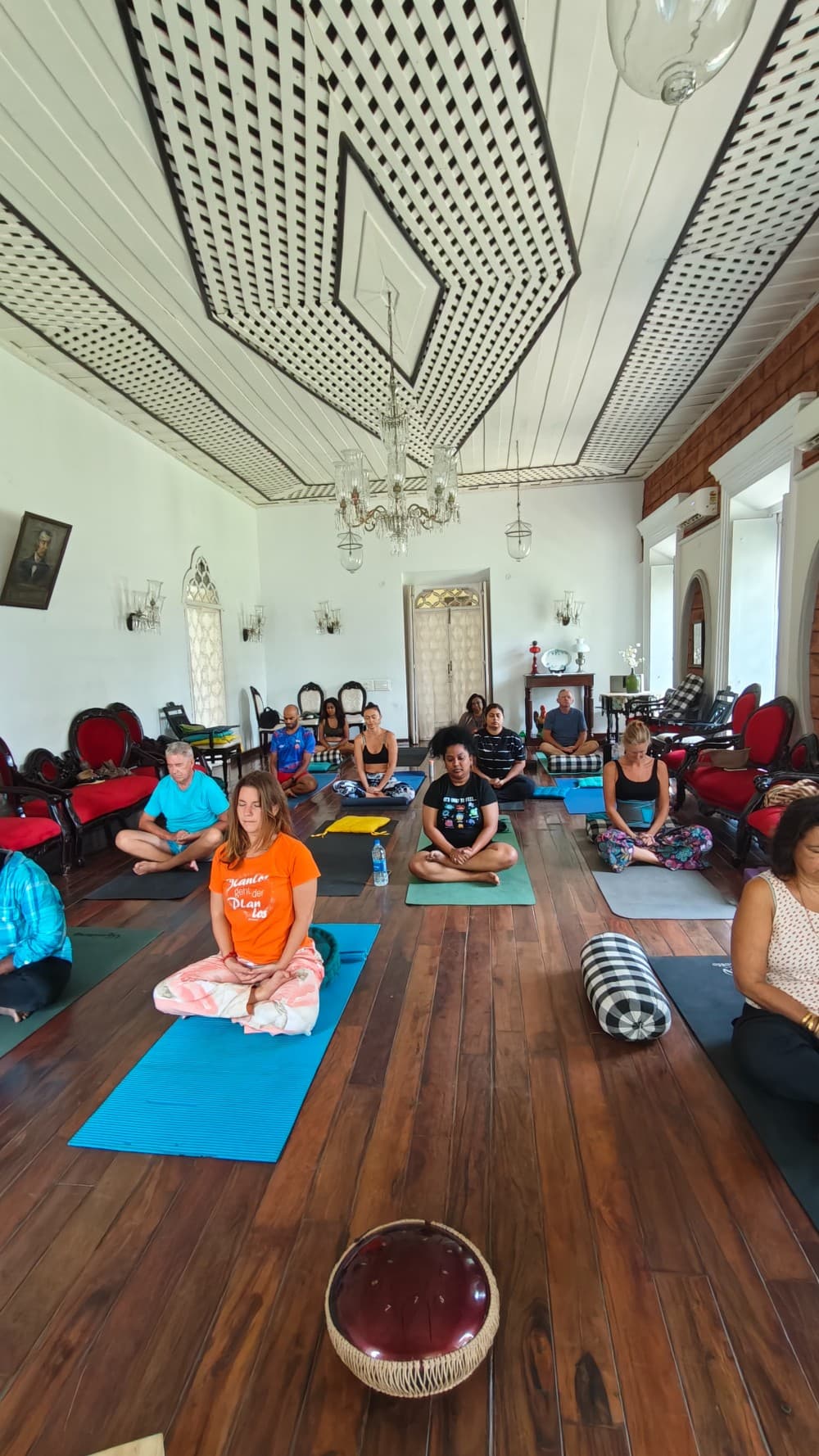
I recall a session in December with Christmas approaching, and a group of people who chose to spend their Saturday morning on their mats. That choice is not a small one. It is, I think, the beginning of everything.
So, the next time someone asks how you exude this calm exterior, you can tell them that ‘‘being’’ in the practice of yoga is all it takes.
Next, we will delve into the elements — fire, earth, water, ether. We’ll explore the forms of yoga that address these aspects of the body and how to choose the right one for you.
How did Yoga originate?
How did Yoga originate?
The story of yoga goes back to Shiva — Adi Yogi — who was sitting with Parvati, sharing the secrets of the universe, when Matsendranath, a fish in the pond, overheard him. Shiva saw the fish listening, and blessed him to be reincarnated on earth to carry this knowledge forward, marking the arrival of Patanjali, who was the first sage to gather the scattered threads of yogic wisdom into a single coherent text — the Yoga Sutras.
When did Asanas become popular in Yoga?
When did Asanas become popular in Yoga?
It was revived in the late 19th century when Swami Vivekananda brought refined yogic concepts to the West, where they collided with European physical culture.
What are the types of yoga?
What are the types of yoga?
Bhakti Yoga, Dharma Yoga and Gyan Yoga.
What is Bhakti yoga?
What is Bhakti yoga?
Bhakti yoga is the path of devotion and surrender via kirtan singing and satsang.
What is Gyan yoga?
What is Gyan yoga?
Gyan yoga is the path of knowledge.
What is Karma yoga?
What is Karma yoga?
Karma yoga is the path of right action.