The first Monday of May has long transformed the steps of New York’s Metropolitan Museum of Art into fashion’s most theatrical stage, where clothing becomes a spectacle, performance and cultural statement all at once. This year, the Met Gala centred around “Costume Art,” the spring exhibition at the Costume Institute that invited attendees to treat fashion not merely as luxury dressing, but as a reflection of identity, craftsmanship and memory.
Among the most talked-about examples of Indian fashion at Met Gala 2026 was the strong Indian presence on the Met steps. Rather than leaning into spectacle alone, figures such as Isha Ambani, Karan Johar and Jaipur royalty Sawai Padmanabh Singh and Princess Gauravi Kumari approached the theme through cultural identity and artisanship. Their Met Gala 2026 looks reflected a broader global interest in Indian craftsmanship and Indian couture.
What Indian celebrities wore at Met Gala 2026
In the current fashion landscape of rapidly shifting trends, several of the evening’s most memorable ensembles drew their power from history, handwork and inheritance. From archive-inspired silhouettes to heirloom references woven into contemporary design, many attendees brought deeply personal interpretations of Indianness to the Met steps. Very few, however, carried the dialogue between craftsmanship and couture more distinctly than Isha Ambani.
Isha Ambani and the saree on the global red carpet
Draped in a gold-toned sculptural ensemble combining a hand-painted saree by Swadesh with Gaurav Gupta’s signature sculptural cape, Isha Ambani’s appearance became one of the evening’s clearest tributes to the artisans behind couture. Archival jewellery, zardozi embroidery, and artistic references woven throughout the ensemble elevated the look.
While the metallic cape lent architectural rigidity to the silhouette, the fluidity of the saree softened the look with an unmistakable sense of grace. The saree emerged as one of the defining Indian fashion statements at Met Gala 2026. In Ambani’s interpretation, the handwoven textile and artisanal detailing became not merely decorative but positioned the saree as a living garment capable of constant reinvention within the contemporary fashion space.
What made the look compelling was not excess, but precision — an understanding that Indian craftsmanship often speaks most powerfully through detail, texture and construction.
Jaipur royalty bring heritage fashion to Met Gala 2026
Jaipur royalty, Maharaja Sawai Padmanabh Singh and Princess Gauravi Kumari, made their Met Gala debut in Prabal Gurung ensembles shaped within ancestry, tailoring traditions, and inherited style. Both interpretations drew heavily from personal history and archival references.
Maharaja Sawai Padmanabh Singh wore a velvet phulgar coat featuring a mirror sun motif inspired by the Sri Niwas at Jaipur’s City Palace — a subtle tribute to his Suryavanshi lineage. Intricate zardozi and aari hand embroidery enriched the ensemble, while the structured bandhgala silhouette paired with layered polki and jadau jewellery grounded the look in regional dressing traditions.
Princess Gauravi Kumari, meanwhile, channelled the enduring elegance of Maharani Gayatri Devi through a sequined saree-inspired gown that echoed her grandmother’s iconic chiffon sarees and layered pearl necklaces. The ensemble felt simultaneously archival and modern, with contemporary construction, allowing the saree to evolve through contemporary couture rather than remain confined to tradition. In many ways, her appearance reflects how fashion heritage continues to travel across generations while remaining emotionally and culturally relevant.
Karan Johar and Manish Malhotra’s Met Gala 2026 looks
Beyond heritage and lineage, the Met Gala also became a space for artistic theatre, where fashion is approached through a cinematic lens. Filmmaker Karan Johar and designer Manish Malhotra treat fashion less as preservation and more as image-making, performance and visual construction.
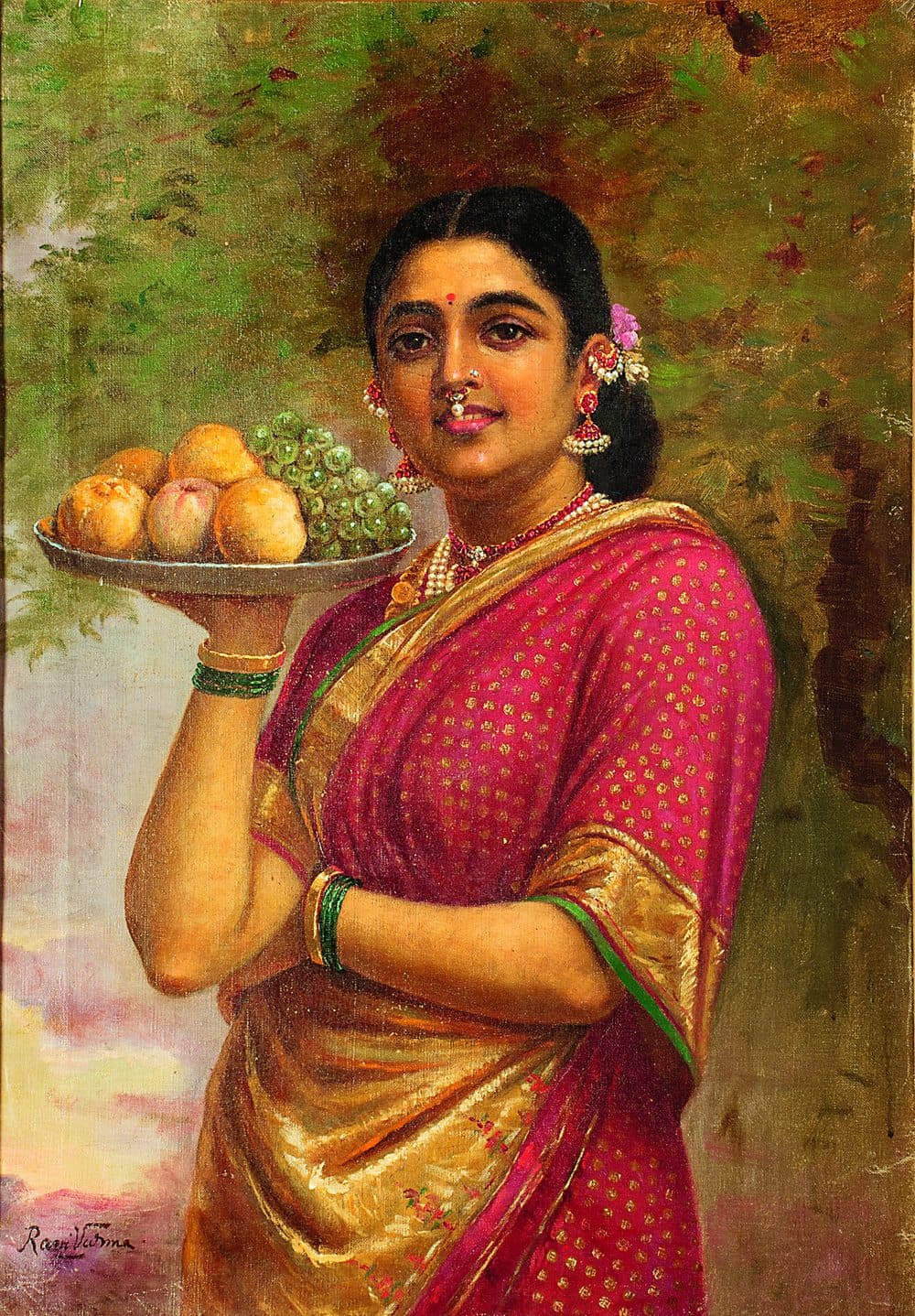
Designed by Manish Malhotra, Johar’s ensemble was envisioned as a “canvas for art,” drawing inspiration from the works of Raja Ravi Varma, including lotus and swan motifs, and ornate zardozi embroidery. Rich in surface detail and theatrical imagery, the look relied less on silhouette and more on visual composition. Fittingly for a filmmaker whose work often exists at the intersection of spectacle and emotion, Johar’s interpretation felt deeply aligned with his own artistic language, reflecting the same sense of spectacle and emotional drama seen in Johar’s films.
Manish Malhotra, meanwhile, approached the evening through a more personal lens. Reimagining the classic bandhgala with a sculptural cape, he narrated the journey of the artist himself. Embroidered motifs, miniature sculptural elements and unfinished hanging threads presented his look as a tribute to the artisans, weavers and tools that shape couture behind the scenes. The unfinished threads were the most striking detail. Instead of hiding the labour behind couture, the look exposed it.
Together, these appearances reflected a broader shift in how Indian fashion is increasingly positioned on global platforms — not simply as ornamentation, but as authorship, reference and artistic perspective.
What was the theme of the Met Gala 2026?
What was the theme of the Met Gala 2026?
The 2026 Met Gala explored the concept of Fashion as Art, encouraging designers and attendees to approach fashion as a form of storytelling, craftsmanship and artistic expression.
Which Indian celebrities attended Met Gala 2026?
Which Indian celebrities attended Met Gala 2026?
Indian attendees included Isha Ambani, Karan Johar, Manish Malhotra, Maharaja Sawai Padmanabh Singh and Princess Gauravi Kumari.
Why was Indian craftsmanship significant at the Met Gala 2026?
Why was Indian craftsmanship significant at the Met Gala 2026?
Several Indian personalities embraced heritage craftsmanship, personal lineage and traditional textile artistry, bringing cultural storytelling into global fashion conversations.