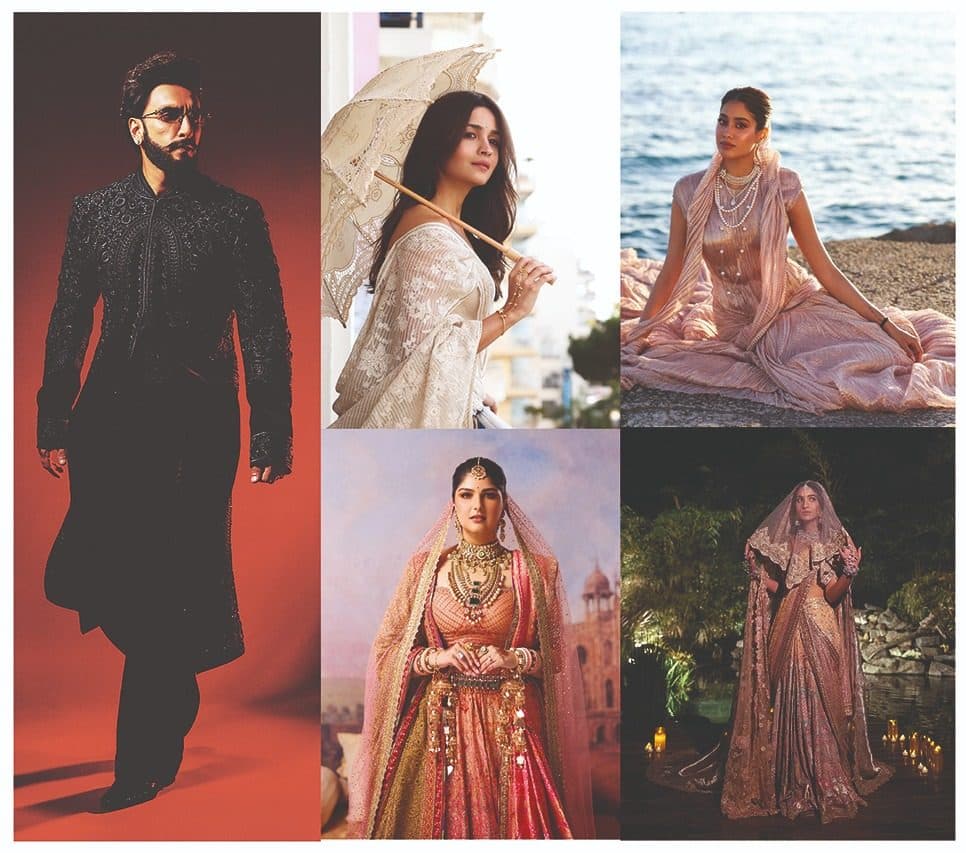
Few designers have shaped Indian fashion as significantly as Tarun Tahiliani. For over three decades, he has championed a vision of India Modern, translating the country’s craft vocabulary into a language that feels contemporary and global. “Heritage is not merely a static artefact to be preserved behind glass; it is a living practice, meant to be experienced. Combined with innovation and a deep connection to culture, it becomes timeless,” he says. As Indian weddings around the world become bigger, more personal and performance-driven, we speak to the patron of the craft and master of the drape.
What does the modern Indian bride want today?
She wants comfort. Today’s bride wants to dance all night. She wants to wear just one necklace. And most of all, she wants to still feel like ‘herself’. The modern Indian bride is confident, self-assured and knows exactly who she is — wherever in the world she calls home. She may draw inspiration from designer campaigns, but she no longer wants to recreate the look of an actress or a character from a film. What’s leading the actual conversations and moodboard is fashion, and not celebrity influence.
Rewearability has also become an important consideration alongside beauty and craftsmanship, so it’s important to her that she can wear her wedding clothes again. Gen Z has a greater awareness of sustainability and environmental responsibility.
How has the bridal industry changed in the last 30 years? And what has stayed constant?
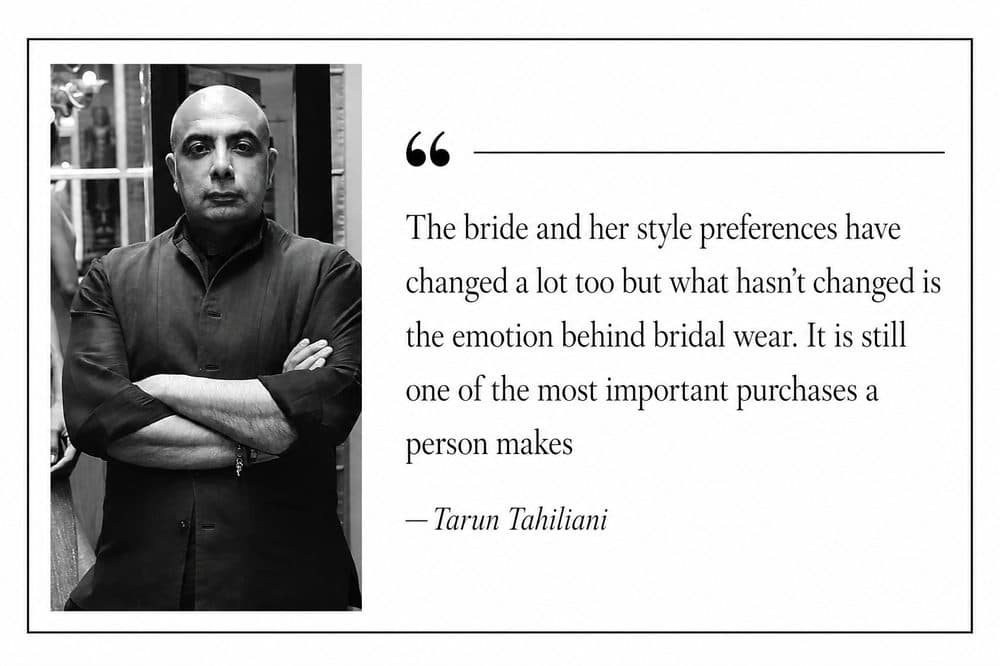
Things have changed enormously. Indian weddings around the world have become bigger, with multiple celebrations around the main ceremony. Every event now has its own wardrobe, from the mehndi and welcome lunch, to the cocktail and reception. The bride and her style preferences have changed a lot too but what hasn’t changed is the emotion behind bridal wear. People continue to value beautiful craftsmanship, exceptional textiles and clothes that make them feel truly special. For many, it’s still one of the most important purchases they’ll ever make.
What is your take on the weddings curated for Instagram these days?
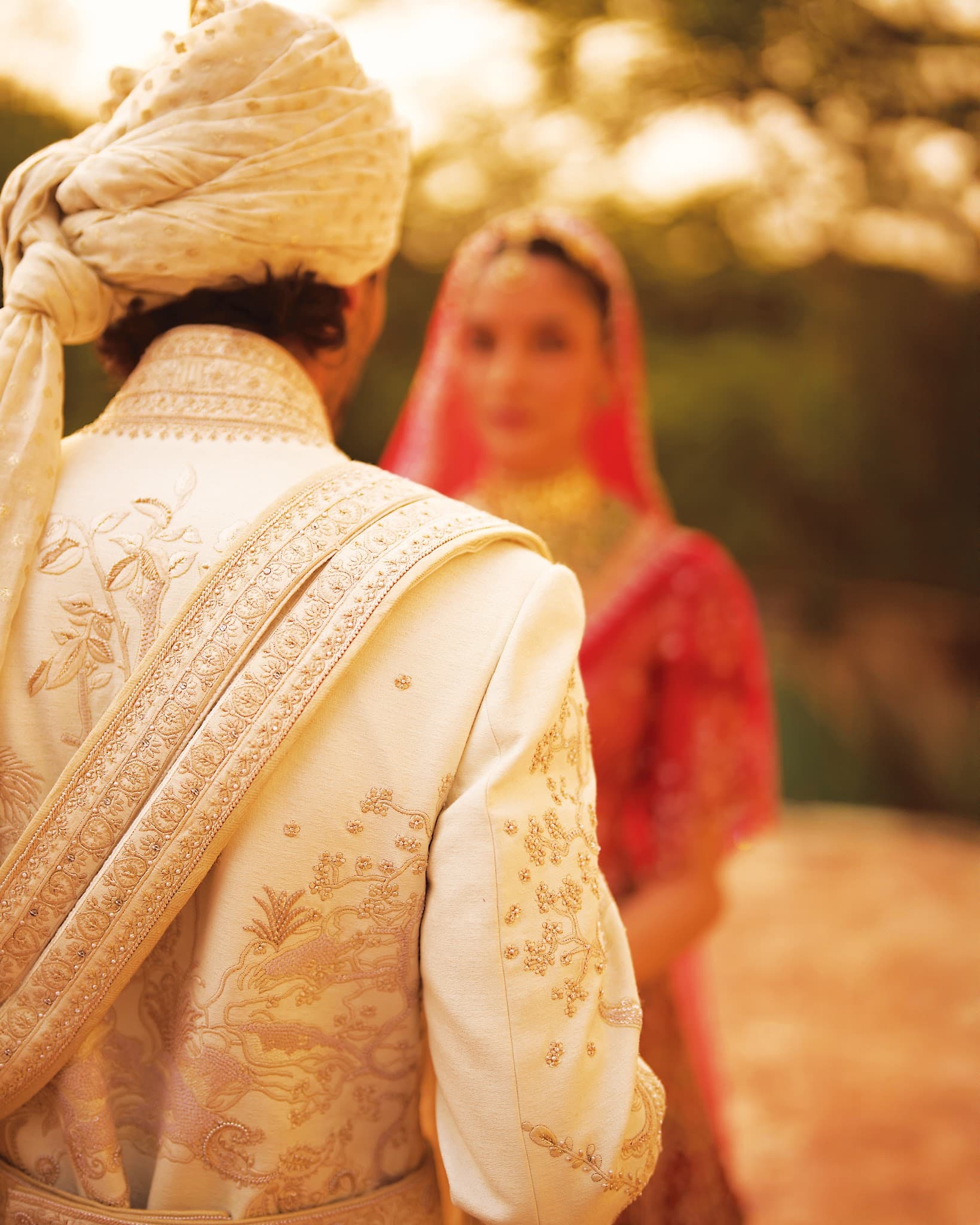
I think we’ve taken things too far. Life must be curated for yourself, not social media. Much of Instagram has become projection. It’s highly cinematic, but life isn’t meant for the cinema. It’s meant for you to experience and feel. Your experiences, the world you create, what you value, and what you choose to share should all be personal decisions. If people enjoy social media, that’s great and of course it’s good for business. But I also think it can be harmful. It puts enormous pressure on people as they constantly compare themselves. At some point, we have to develop our own sense of security and self-worth. I always tell people that money is meant to make you free. Whether it actually does is a choice you make. I don’t even have a personal Instagram account, and I’m reluctant to appear on the company’s Instagram.
How much business is driven by the global bridal market?
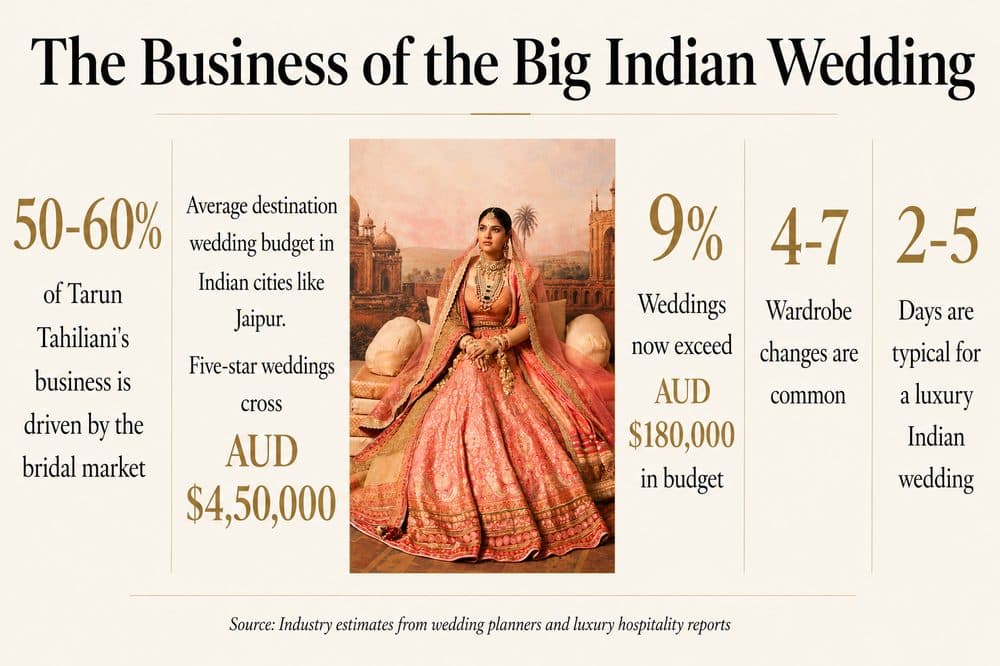
At least 50 to 60 per cent of my business. India may not have the same Western culture of black-tie galas, museum openings, or charity dinners but our weddings are unlike anywhere else in the world. Every wedding-associated celebration has become an occasion to dress with extravagance, creating a huge demand for both men and women.
Your design philosophy is built around “India Modern” and hand craftsmanship.
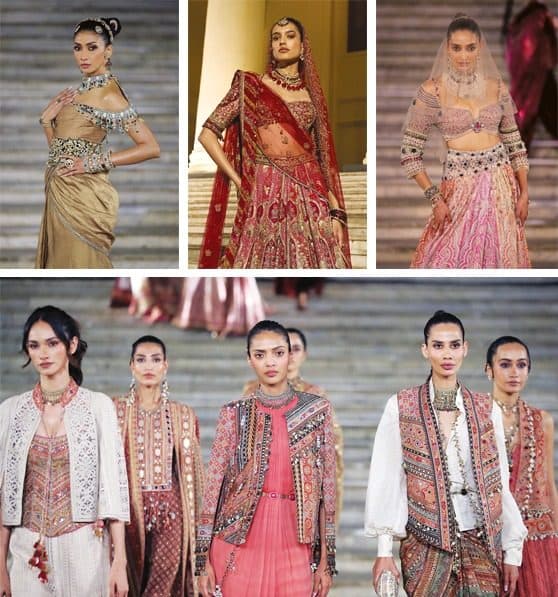
“India Modern” is about reinterpreting heritage through movement, ease, and contemporary elegance, whether it is the structural intelligence of architectural jali or the draping traditions of Kutch. The ‘hand’ represents centuries-old artisanal traditions like chikankari, zardozi, and kashidakari, reimagined with the lens of a ‘global eye’ to ensure relevance in a contemporary landscape. A beautifully made garment always carries the invisible yet indelible fingerprints of everyone who has touched it — from the weaver at the loom and the embroiderer at the adda to the master tailor. Every ensemble we create is deeply personal, shaped by master craftsmen who embody a living legacy at the meeting point of innovation and cultural integrity.
Craftsmanship is the soul of luxury.
You created the first Concept Sari. What was your inspiration?
The sari has always fascinated me. It’s the most sensual, versatile and sculptural garment. Rather than reinventing this iconic form, my goal was to make it easier for the modern woman to wear a sari while preserving its inherent grace and ceremonial gravitas. Our Concept Sari emerged from this pursuit. It’s a product of my ‘drape-and-shape’ philosophy that combines structural precision with fluid movement. By incorporating internal engineering, such as architectural pleating, we have transformed the traditional six-yard wrap into a Concept Sari that fits like a second skin. This evolution allows the garment free movement and the ease of contemporary lifestyles, without sacrificing the artisanal craftsmanship. It was designed to empower the wearer, and to reflect a modern Indian identity rooted in heritage but globally resonant.
Your work has long resonated with the Indian diaspora. How has the NRI client influenced Indian couture?
The Indian diaspora has played a significant role in supporting Indian couture and often pushed us to meet global standards. But I don’t believe fashion should be judged by geography. Good style isn’t about where you live, it’s about authenticity, confidence and taste.
What does legacy mean to you?
Legacy isn’t about being remembered merely for beautiful clothes; it is about creating a sustainable ecosystem where Indian craftsmanship can thrive, evolve and be valued on a global stage. By merging the hand of the master craftsman with a global eye for refinement, I hope to have built a bridge between traditional heritage and modern luxury.
If I have succeeded in shifting the conversation around Indian design towards one of weightless elegance and structural innovation, and inspired the next generation of designers to build upon this foundation with integrity, I will consider that my greatest and most enduring achievement.
REDEFINING INDIAN LUXURY
- 1990: Founded Tarun Tahiliani.
- 1995: Co-founded Ensemble, India's first multi designer luxury boutique.
- Late 1990s: Graduated from the Fashion Institute of Technology (FIT), New York.
- 2000: One of the first Indian designers to present at Milan Fashion Week.
- 2000s–2010s:
- Pioneered the philosophy of India Modern, redefining Indian occasion and bridal wear.
- Global Recognition. Designed for international personalities including Lady Gaga, while dressing generations of Indian brides and global clientele.
- 2024: Launched OTT by Tarun Tahiliani, a pret label to bring the house’s design philosophy to a younger audience.
- 2026: Celebrated 30 Years of Tarun Tahiliani, marking three decades of craftsmanship, innovation and the evolution of Indian luxury.