Key Highlights
- Jensi Kanabar is the first Indian girl to win the 2026 Australian Open Asia-Pacific Elite Under-14 Trophy
- Jensi Kanabar began training at the Junagadh Gymkhana, where her father, Deepak Kanabar, took her when she was only three-and-a-half years old
- Jensi Kanabar entered the top 10 nationally in the U-14 category and played the Asian Tennis Federation tournaments, then the Grand Slam Player Development event in Cambodia in 2024, where she reached the quarter-finals.
- In India, Jensi Kanabar won the national U-14 title in Aurangabad and became India’s number one, going on to win both titles at the Asian event in Delhi, thereby earning her place at Wimbledon.
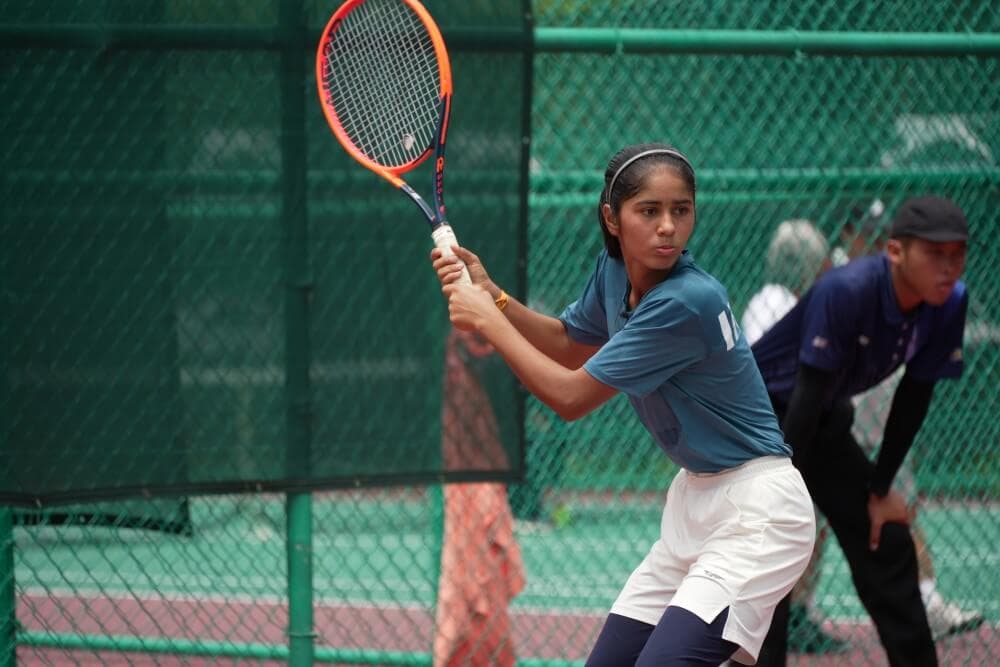
In the final of the 2026 Australian Open Asia-Pacific Elite Under-14 Trophy at Melbourne Park, 14-year-old Jensi Kanabar trailed 3–6, 0–2 against Australia’s Musemma Cilek. The home crowd was loud, the sun was high, and Cilek’s serves were sharp. But Jensi was unbothered. “I wasn’t worried at all. I was enjoying it,” she says, looking back. She stuck to her game plan and watched the Australian opponent tire in the heat. Jensi took the second and third sets 6–4, 6–1, becoming the first Indian girl to win the title. The comeback was clean, clinical and characteristic of everything that had brought her this far.
When Jensi returned to Junagadh a few days later, her life had changed. The city gave her a heroine’s welcome she had never imagined. A three-kilometre roadshow wound through the streets in an open jeep. At the Junagadh Gymkhana, the same club where her journey began, officials named the main court the Jensi Kanabar Court and made her a lifetime member. Jensi’s father, Deepak Kanabar, a government school math and science teacher, remembers the moment with quiet pride: “We didn’t know that such a big function was arranged here.”
Deepak is the engine behind Jensi’s story, a sports fan who watched every tennis match he could on TV. “I had decided that if I have a child they must play tennis,” he says. When Jensi was three-and-a-half, he took her to the Junagadh Gymkhana. There were three coaches — two on clay, one on synthetic. Soon Deepak’s wish became a daily reality when Jensi’s coach told him that the girl has promise. He had no formal tennis background. He taught math and science in a village near Junagadh and had only played cricket and chess in school and college. Yet something in him believed an individual sport would serve his daughter well in life. “I knew that if you play an individual game, it will be more beneficial,” he explains.
At the Gymkhana, a young coach from Kolkata named Somnath took special care of her, treating her “like his younger sister”. For two years, she trained two hours a day. Deepak visited once a week. When she was six, Somnath suggested increasing the time. Deepak stopped his evening tuitions, finished his government job, and sat at the courtside every evening to supervise her fitness. “She is a child, she won’t run properly on her own,” he says.
Then Covid-19 arrived in 2020. Everything closed. Somnath returned to Kolkata. Schools shut. Deepak and Jensi were suddenly free. With no coach, Deepak became the coach. “I started teaching her,” he says. They practised near their house or at the empty Gymkhana for four to five hours a day. He already knew the basic drills — forehand, backhand, serve — from watching and from the earlier coaches. When he was unsure, he filmed Jensi and sent the videos to two coaches he had befriended in Gujarat: Jameesh Thakkar in Rajkot and Narendra Tomar (later in Guwahati).
Deepak read about European training schedules, which went on for five or six hours a day, and followed the same rhythm. Her nutrition stayed simple with regular Gujarati vegetarian food and no special protein plans. “She enjoys it,” her father says.
By the end of 2018, even before Covid, Jensi had played her first tournament at seven-and-a-half. She lost easily to a 14-year-old, but Deepak gained perspective. After Covid, in 2021, they began travelling more. A friend from Jamnagar invited them to Udaipur and then Rohtak. Jensi reached the final of her first tournament outside Gujarat. Deepak never focused on immediate results. “I am a teacher. I have to follow a process. When the whole process ends, then I think about the result.”
Slowly the rankings improved. Jensi entered the top 10 nationally in the U-14 category. She played the Asian Tennis Federation tournaments, then the Grand Slam Player Development event in Cambodia in 2024 where she reached the quarter-finals. Back home she won the national U-14 title in Aurangabad and became India’s number one. When India hosted the Asian event in Delhi, she won both titles and earned her place at Wimbledon.
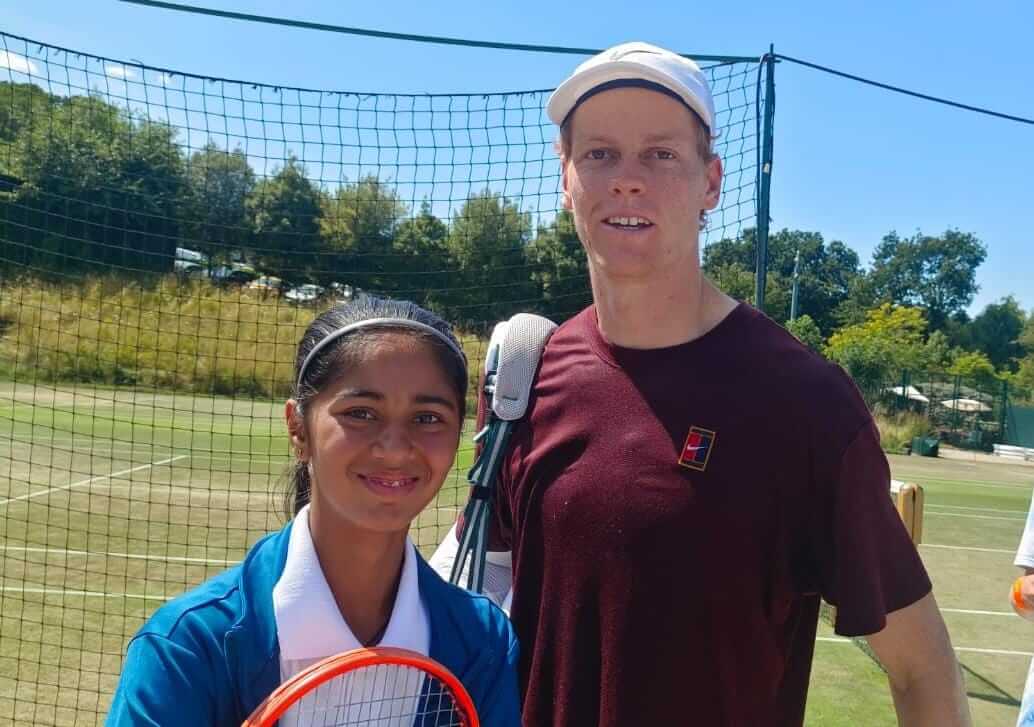
Wimbledon was a different world. Twelve- and 13-year-old children were competing, and Deepak went as her coach. “I can’t express it in words. It was the best feeling.” They practised on the outer courts while bigger names trained nearby. “I have seen Novak Djokovic and Carlos Alcaraz practise for four to five hours from 10–15 feet away,” Deepak recalls. Jensi did fitness and cycling sessions with the players who would reach the final. The most memorable encounter came in the lounge. Martina Hingis, the 25-time Grand Slam champion, approached them, recognised Jensi, and congratulated her on her game. Deepak was moved. “She didn’t need to praise her. I liked the fact that she remembered the match. Remembering is a big thing,” he says.
After Wimbledon, they went to the Philippines, where Jensi claimed the Grand Slam Development Programme (GSPDP) title. Each step built confidence. By the time they reached Melbourne, Jensi was used to big tournaments. In the final, when the Australian girl’s high-quality serve dominated the first set, Deepak could only watch from the stands. “I couldn’t show her a new plan. I just wanted her to start scoring early. The opponent got a little exhausted and she easily won the match in the second and third sets.” It was, he says, “a very good experience… In a big environment, in a big court, big players, big coaches, everyone had their eyes on you.”
Jensi’s routine is steady. Breakfast around 10–11 am: oats, milk, buttermilk. Then an hour-and-a-half of study with her father (she is in Class IX and likes maths and science; Deepak taught chemistry up to XII and knows the entire syllabus). Court time from roughly 4 pm to 8 pm, with a short break. Fitness from 6.30 pm to 8 pm plus sessions with a personal physiotherapist. Dinner is khichdi with vegetables; she eats almonds, cashews and pistachios at night. She sleeps by 10.30 pm. Twice a week she has kheer, her favourite. Apart from tennis, she enjoys painting watercolours, especially of gods and goddesses, and talking to her cousins on video call. She watches Chhota Bheem. When asked what she enjoys most, she answers, “Tennis… when I do service.”
Now 14, Jensi is already playing some U-18 ITF events. She won the J-30 on wild card in Gujarat, the J-60 in Guwahati, reached the semi-finals of a J-100, and played a J-300. Her world junior ranking sits around 300 and will fluctuate with the points cycle. Deepak’s approach stays the same: “If success is going on, why change the winning combination? It’s like cricket. When you are continuously losing, then you have to change. You should not change with one or two losses.”
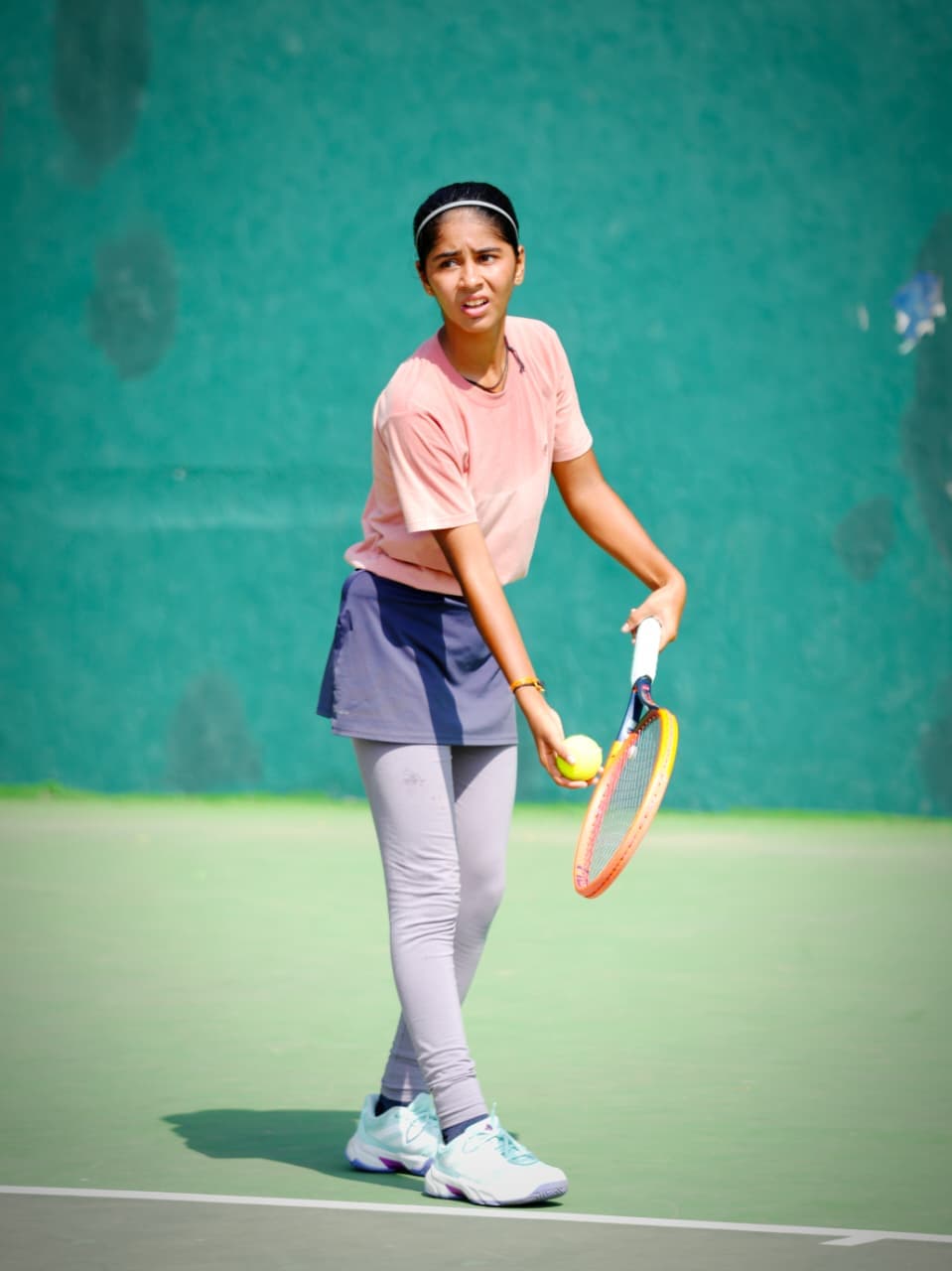
Jensi’s own words on the Australian Open victory and the road ahead were brief but reflected her focus. Asked how she felt about winning, she said, “I felt good.” Celebrations? “I don’t celebrate. I will celebrate after winning a gold medal in the Olympics.” How? “I will enjoy it with my family… As usual.” She has not decided on any special meal yet.
Who is Jensi Kanabar?
Who is Jensi Kanabar?
Jensi Kanabar is a tennis player and the first Indian girl to win the 2026 Australian Open Asia-Pacific Elite Under-14 Trophy.
How old is Jensi Kanabar?
How old is Jensi Kanabar?
Jensi Kanabar is currently 14 years old.
When did Jensi Kanabar start playing tennis?
When did Jensi Kanabar start playing tennis?
Jensi Kanabar started playing tennis when she was three-and-a-half years old, when her father took her to the Junagadh Gymkhana.
Where is Jensi Kanabar from?
Where is Jensi Kanabar from?
Jensi Kanabar is from Junagadh in Gujarat.