Key Highlights
- Kapil Dev is considered the greatest fast-bowling all-rounder in the history of Indian cricket
- It was under his captaincy that India lifted its maiden World Cup, in 1983
- The Board of Control for Cricket in India appointed him the coach of the national team in 1999
- Kapil Dev currently serves as the President of the Professional Golf Tour of India
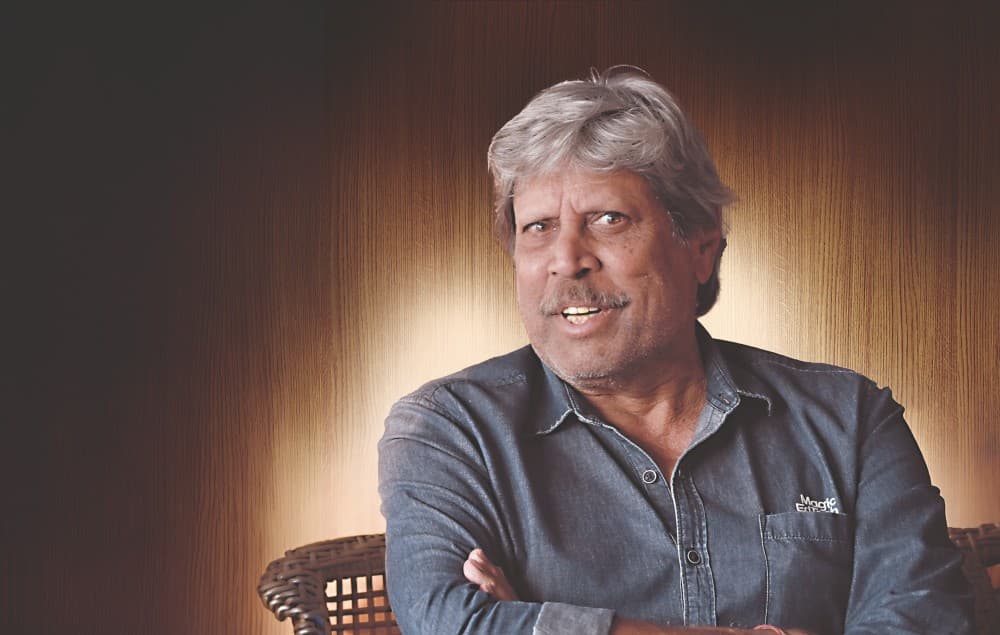
Some sportspersons need no introduction. Kapil Dev Nikhanj, now 67, sits in that elevated bracket. Over to him.
You had no experience of coaching when the Board of Control for Cricket in India (BCCI) took the bold step of appointing you the India coach in the latter part of 1999. Surprised, then?
Not entirely, as a few people had begun to talk. Can anything in India be kept a secret?
Was it an advantage that you came to work with the Sachin Tendulkars without any baggage, good or bad?
Aisa hai, I had no experience of international cricket when I made my India debut in October 1978. It’s not about having an advantage or being at a disadvantage. When you’re given a job, you do it. You learn, improve. By the way, Gautam Gambhir [the current India coach] also came in with no experience.
In your early years, you’d worked with Desh Prem Azad, later with other coaches, like Lt Col Hemu Adhikari, in camps organised by the BCCI. Did any aspect of their coaching leave a lasting impression?
Coaches are only those who teach you the basics, like Azad. The incutter, for example, was taught to me by Rajinder Pal. As for Lt Col Adhikari, he made sure we knew the laws of cricket, what’s allowed and what’s not. I recall Sunil (Gavaskar) suggesting I bowl from close to the stumps. He tried to guide me, not coach. Dennis Lillee and Sir Richard Hadlee weren’t coaches, but I learnt so much just by sitting down with them. They talked, I listened.
You had no experience of coaching when the Board of Control for Cricket in India (BCCI) took the bold step of appointing you the India coach in the latter part of 1999. Surprised, then?
Not entirely, as a few people had begun to talk. Can anything in India be kept a secret?
Was it an advantage that you came to work with the Sachin Tendulkars without any baggage, good or bad?
Aisa hai, I had no experience of international cricket when I made my India debut in October 1978. It’s not about having an advantage or being at a disadvantage. When you’re given a job, you do it. You learn, improve. By the way, Gautam Gambhir [the current India coach] also came in with no experience.
In your early years, you’d worked with Desh Prem Azad, later with other coaches, like Lt Col Hemu Adhikari, in camps organised by the BCCI. Did any aspect of their coaching leave a lasting impression?
Coaches are only those who teach you the basics, like Azad. The incutter, for example, was taught to me by Rajinder Pal. As for Lt Col Adhikari, he made sure we knew the laws of cricket, what’s allowed and what’s not. I recall Sunil (Gavaskar) suggesting I bowl from close to the stumps. He tried to guide me, not coach. Dennis Lillee and Sir Richard Hadlee weren’t coaches, but I learnt so much just by sitting down with them. They talked, I listened.
As a player and captain, you were instinctive and didn’t rely on a template; you let your innate natural talent influence your game. How did you approach coaching?
Always saw myself as a guide, not coach. How, after all, could I have taught Sachin to bat or Anil Kumble to bowl? Wouldn’t even attempt! I believed in lifting the confidence of players who weren’t performing to potential, maybe by taking them out for a meal and engaging one-on-one. I didn’t want my players to walk with chins down.
A guide or cricket manager, if you so wish, must understand what’s going on in a player’s mind. Once, in Adelaide (January 2000), I actually got angry with Sourav Ganguly for getting out on 141 in an ODI vs. Pakistan. I said: ‘Don’t be satisfied, target 200’.
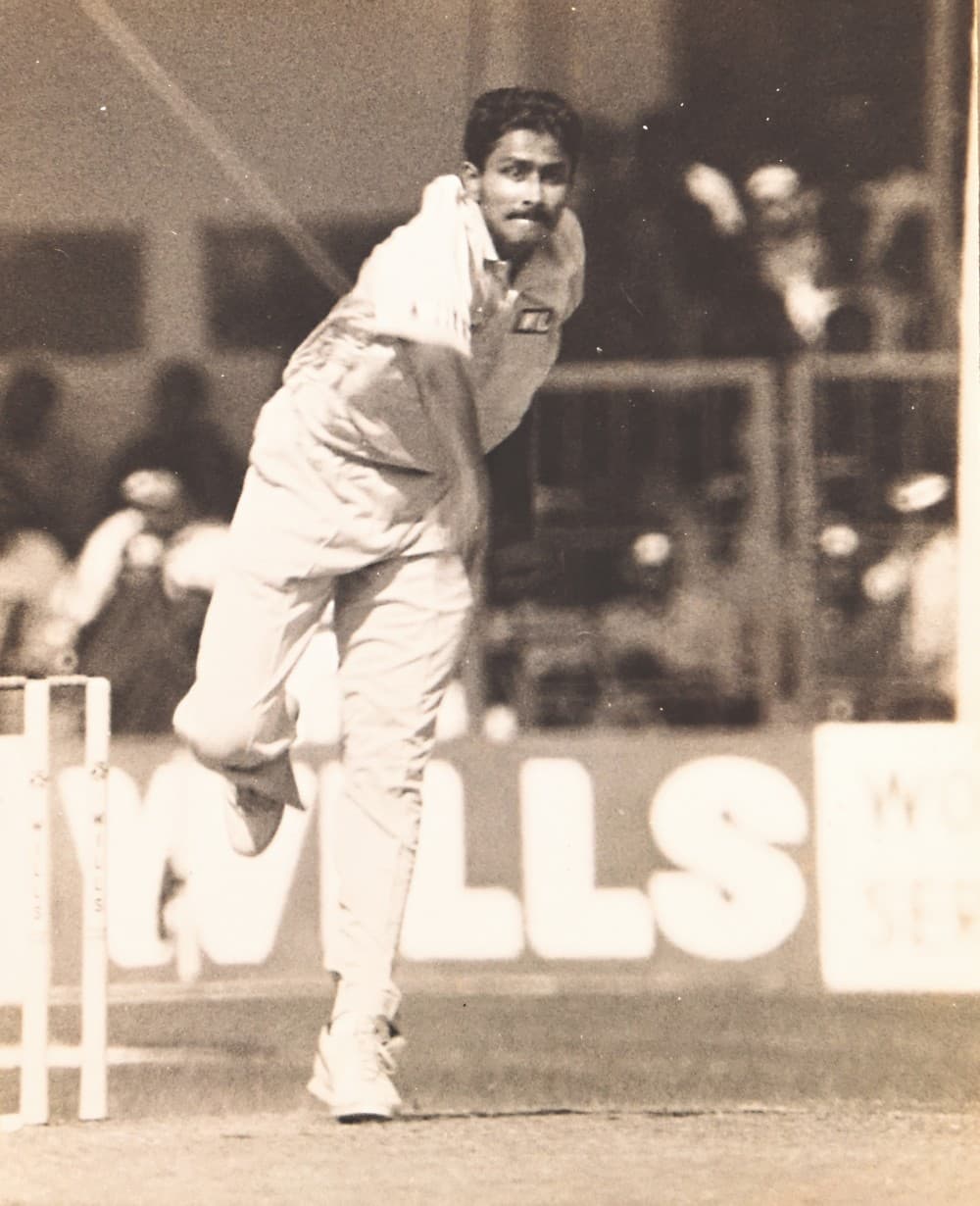
Whatever my role, I aimed big. Wanted my players to aspire similarly. Wanted all to be expressive, like the West Indies lot. As part of the management bit, there’s no need to publicly tick off a player, a firm word in a corner of the dressing room will suffice.
I believed in lifting the confidence of players who weren’t performing to potential, maybe by taking them out for a meal and engaging one-on-one. I didn’t want my players to walk with chins down
How much of coaching a national team is coaching per se and how much of it is man management?
Players who make it to the India teams don’t require coaching. They need a guide, perhaps to suggest trying a different angle while bowling or, in the white-ball formats, focusing on shots fetching high dividends. Much depends on the mindset. Many believe a coach with multiple theories is best suited. Not so.
For much of your career as an iconic India cricketer, the team didn’t have a coach. Rather, there used to be administrative managers — some had a cricket background, others were BCCI officials. Besides filing the all-important manager’s report, did they contribute cricket-wise?
Of course. Hanumant Singh (centurion on Test debut) was the manager on the West Indies tour in early 1983, when I made my Test captaincy debut. He advised batsmen to play the upper-cut, over the slips cordon. Back then, some were skeptical, today it’s bread-and-butter stuff for many. Clearly, he was way ahead of his time.
Somewhat related is the reverse sweep. Captain Mike Gatting got crucified for that shot in the 1987 World Cup final vs Australia. Now, the reverse sweep gets applauded! Call it evolution.
You finished with more defeats than wins as coach. Do statistics say everything?
Before judging, you must allow those holding positions to be in office for three years. Effectively, I was in the saddle for nine months (first Test of tenure till last ODI). Is that enough? You won’t judge a CEO after only nine months, will you? Give time and then assess whether the team has gone 10 steps further or five steps back.
Regret having abruptly resigned?
I resigned (September 2000) because my name got dragged into match-fixing. I put India first, recognising that my ego cannot be bigger than the country’s interest. I didn’t want my players to feel uncomfortable, didn’t want the media to take the focus away from the team. Regrets? None. God has given so much, cricket has given so much, indeed life too. Why regret? I gave my best, nothing else matters.
You planned for two formats, Tests and ODIs. Given the pressure associated with contemporary cricket, are you in favour of two coaches — one exclusively for Tests and one for the two white-ball formats, or one for Tests and ODIs and the other exclusively for T20Is?
I’m definitely in favour of two, one exclusively for the red-ball format and the other for the white-ball formats. The thought process isn’t the same in Tests on the one hand and ODIs and T20Is on the other. Moreover, international cricket consumes around 10 months each year, so there’s a need for freshness.
Had you been the India coach during the T20 era, to what extent could you have plotted strategy?
I’d plan for the first six overs and then would depend on the flow of the match.
How much of T20 is skill and to what extent is it about being lucky?
Skill is very much a necessity, be it batting or bowling. Bowlers, I feel, should look to take wickets, not contain. Batsmen constantly find themselves under pressure, with even 10 in the last over sometimes becoming a challenge. Eventually, skill makes the difference.
But some batsmen have questionable technique.
If you have the technique to win, forget the rest.
Who is an ideal coach?
One who doesn’t put himself in front and gives his players their due. One who doesn’t stifle talent.
You guided Rahul Dravid and, years later, he himself became the India coach. Did you track his coaching career?
As a person, Dravid is sorted. No ifs and buts about him. Sorted as a player and coach as well.
Among your many successors as coach, who stood out?
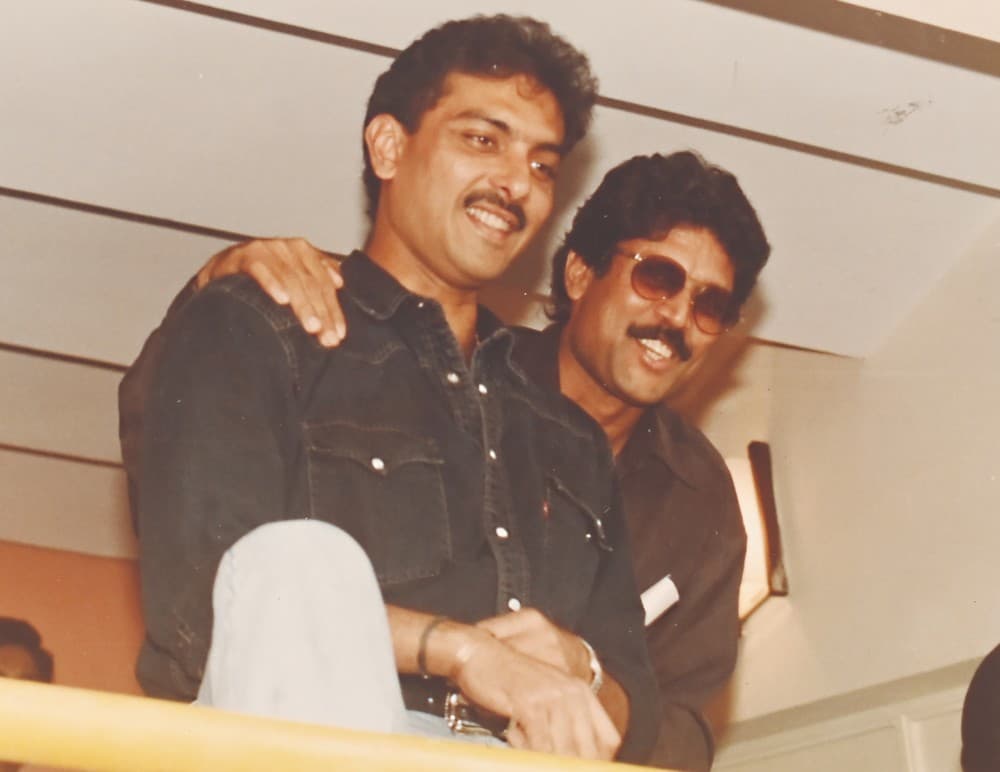
Cricket is so unlike soccer or hockey, where somebody who hasn’t played hockey or soccer till a certain level can still strategise. Cricket does need a former player. Among successors, Ravi Shastri caught my eye. He was largely defensive as a cricketer, but aggressive as coach. Ravi kept injecting confidence, besides making the team play aggressively. The players responded.
Finally, who’s the boss — captain or coach?
Captain on the field, coach off it. If both work for the team’s betterment, nothing like it.
Who is Kapil Dev?
Who is Kapil Dev?
Kapil Dev is a former cricketer of the India Team and is widely considered among the greatest fast-bowling all-rounders in the team’s history.
Did Kapil Dev ever win the World Cup?
Did Kapil Dev ever win the World Cup?
Yes, India won its first cricket world cup in 1983, when Kapil Dev was the captain of the team.
Was Kapil Dev the India coach?
Was Kapil Dev the India coach?
Yes, the BCCI appointed Kapil Dev as the India coach in the latter part of 1999.
Kapil Dev is currently 67 years old.
Kapil Dev is currently 67 years old.
Yes, the BCCI appointed Kapil Dev as the India coach in the latter part of 1999.