Key Highlights
- Sumita Dutta is one of the first Kathak dancers and teachers in Perth, Western Australia
- Sumita Dutta spent years teaching young tabaliyas to play Kathak bols
- A Working with Children Check (WWCC) in Australia is a mandatory background screening
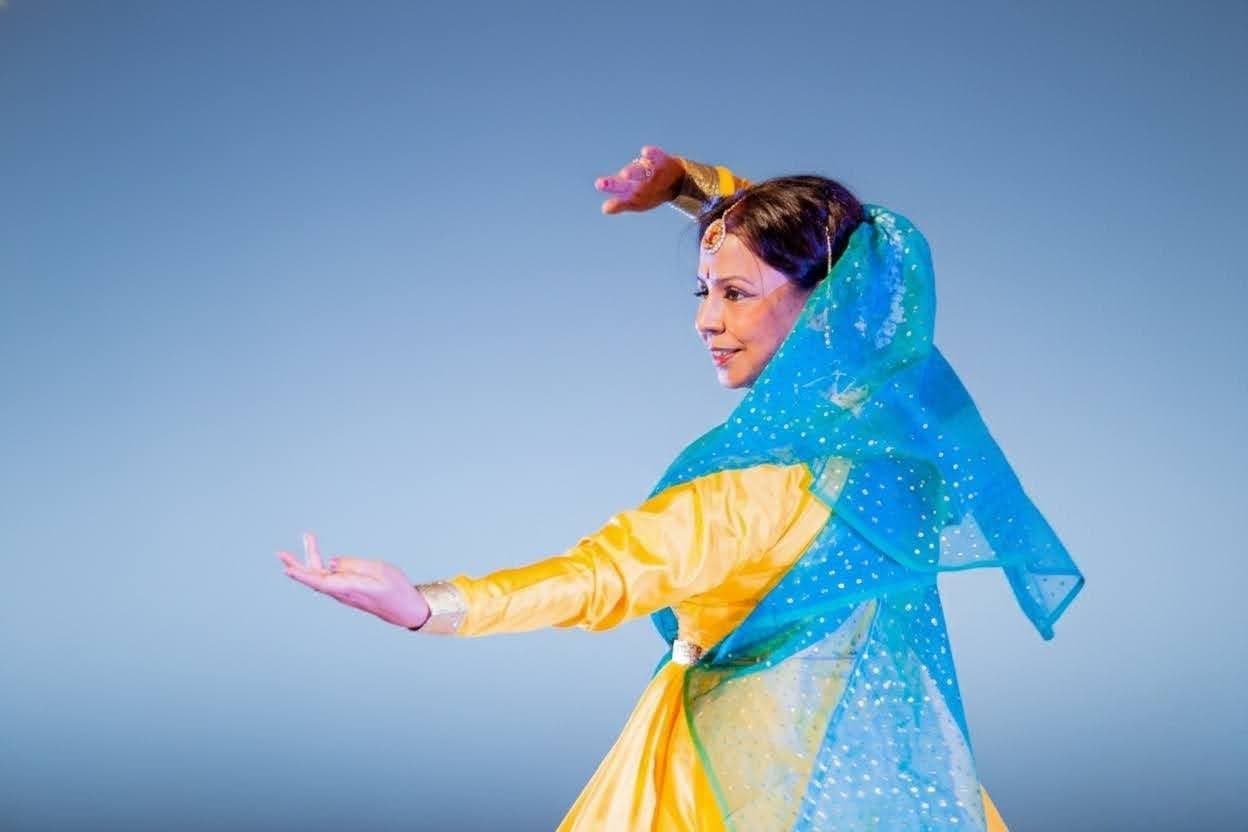
A childhood spent in the artsy world of 1970s Calcutta. Being transplanted to the mining towns of the Australian outback. And throughout it all, continuing a centuries-long conversation of grace and grit through her ghungroos.
Q: You are one of the first Kathak dancers and teachers in Perth, Western Australia. What brought you here from Kolkata?
A: Ah Calcutta! What a different world it was and still is… Yes, I grew up in 1970s Kolkata. And like all good Bengali girls, I learnt dance along with the odd painting class and music performance. Marriage and then my husband’s work brought us to the Antipodes. I arrived in Melbourne in 1992, and eventually moved to Kalgoorlie, a mining town in Western Australia. Our next stop was Perth and then, after a brief period in Canada from 2010–2012, we came back. I tried my best to keep dancing and to demonstrate the ancient tradition I come from to more and more people. Three decades and more later, here I still am. Standing, dancing, teaching.
Q. Tell us how your upbringing in Kolkata shaped your artistic DNA.
A: Growing up in Kolkata, we were breathing art. Our lives were heavily influenced by Rabindranath Tagore’s body of work. Most important was the absence of the belief that we had to stick to just one school. I learned Manipuri, Bharatanatyam, Kathak, and folk simultaneously. To us, it was all just ‘dance.’
Even the choreography of film songs of that era was different — deeply rooted in classical structures. That purity of form formed our baseline.
Q: When did your special relationship with Kathak begin?
A: In 1982. I had joined the Padatik Dance Institute as part of the first batch to train under Pandit Birju Maharaj. I already knew the basics of Kathak from my first Guru Parimal Krishna at Bani Chakra and Pandit Vijayshankar — one of the senior-most disciples of Pandit Birju Maharaj — at Padatik Institute, but when I saw Maharaj-ji’s style, I was awe-struck. I remember asking myself, “What is this magic?” His style had an openness, a unique way of treating the syllable and then building or interpreting the grammar. That exposure changed my trajectory. I went on to take my 6th and 8th-year Sangeet exams and anchored myself in the practice of Kathak.
Q: What about the culture shock when you moved to Australia?
A: In those days, the local community knew next to nothing about India. I started with simple recitals at aged care facilities—an easily available platform and a way to keep performing.
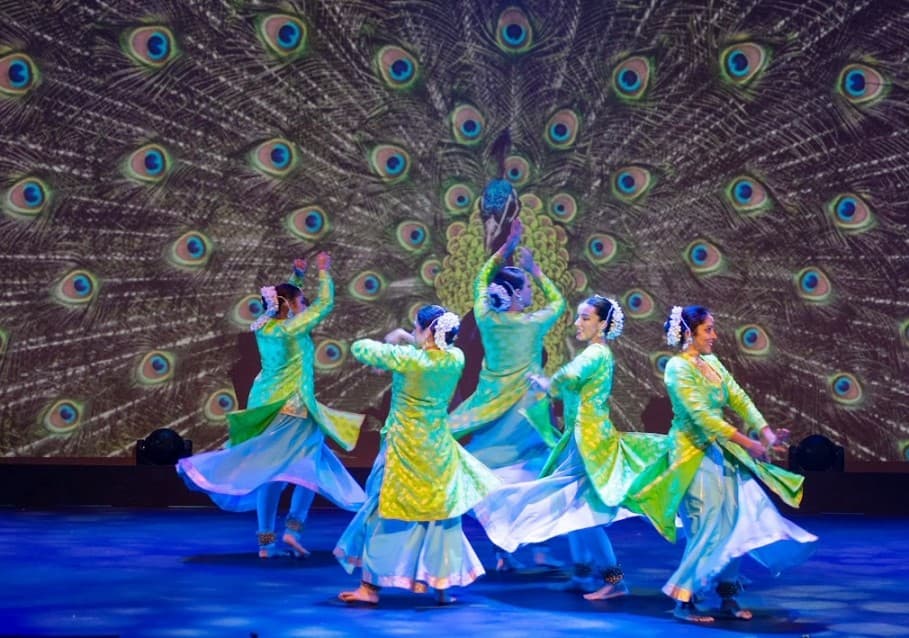
When I moved to Perth a few years later, the challenge became structural. Kathak is a living, breathing conversation between the dancer and the percussionist. But at that time in Western Australia, not a single tabla player knew how to play Kathak bols! If I wanted to dance, I had to train the musicians too. And I spent years training young tabla players from scratch just so we could have an authentic performance.
Q: When did you start teaching formally?
A: My first teaching days were in Jamshedpur, right after my wedding. My debut performance in Australia was at the Phoenix auditorium in Swinburne University in 1992. I began teaching an odd class here and there. In 2002, full-fledged weekend classes started. The Tarana School of Kathak Dance was formally set up only in 2012-2013, though.
View on taranakathakdance
Q: What was the Indian dance ecosystem like at that point?
A: Nothing whatsoever. Barely anyone had even heard of a dance form called Kathak. Also, even the Indian diaspora here is very diverse. We have families of Indian origin who have never been to India. They have migrated from other parts of the world – Mauritius, Kenya, and South Africa. It was thus more about creating awareness, crafting appreciation and hoping it would lead to a demand.
Q. That sounds like quite a task…
A. This was just the visible side that dances on stage. There was the other, extremely important aspect of learning to navigate a strict social and legal framework. Foremost among this is a “Working With Children” ID. A Working with Children Check (WWCC) in Australia is a mandatory background screening. Then there was the need to secure millions of dollars in insurance. Of course, I also needed the Australian Business Number (ABN).
Q. And what kept you motivated through this journey?
A. Dance. For me, dance is not just a passion. It is sadhana; devotion. I must also mention that an ever-growing community that started engaging with the form and then supporting it in myriad ways has also helped keep the fire alive. This community has expanded today to include parents, educational institutions, arts and culture organisations and civic bodies across Australia.
The community’s participation is today one of the pillars I bank on. I also understand that this participation is a bridge for them – to connect and reconnect. So, I treat this as a responsibility. I take great care not to dilute the form, and yet frame it in a way that is accessible. I also ensure that touch of Indian grandeur. I want my students to realise and then be proud of the fact that they are part of a centuries-old and honoured tradition.
Q: You have managed to balance this intense artistic life with a 29-year career in the Australian public service. How do those two worlds intersect?
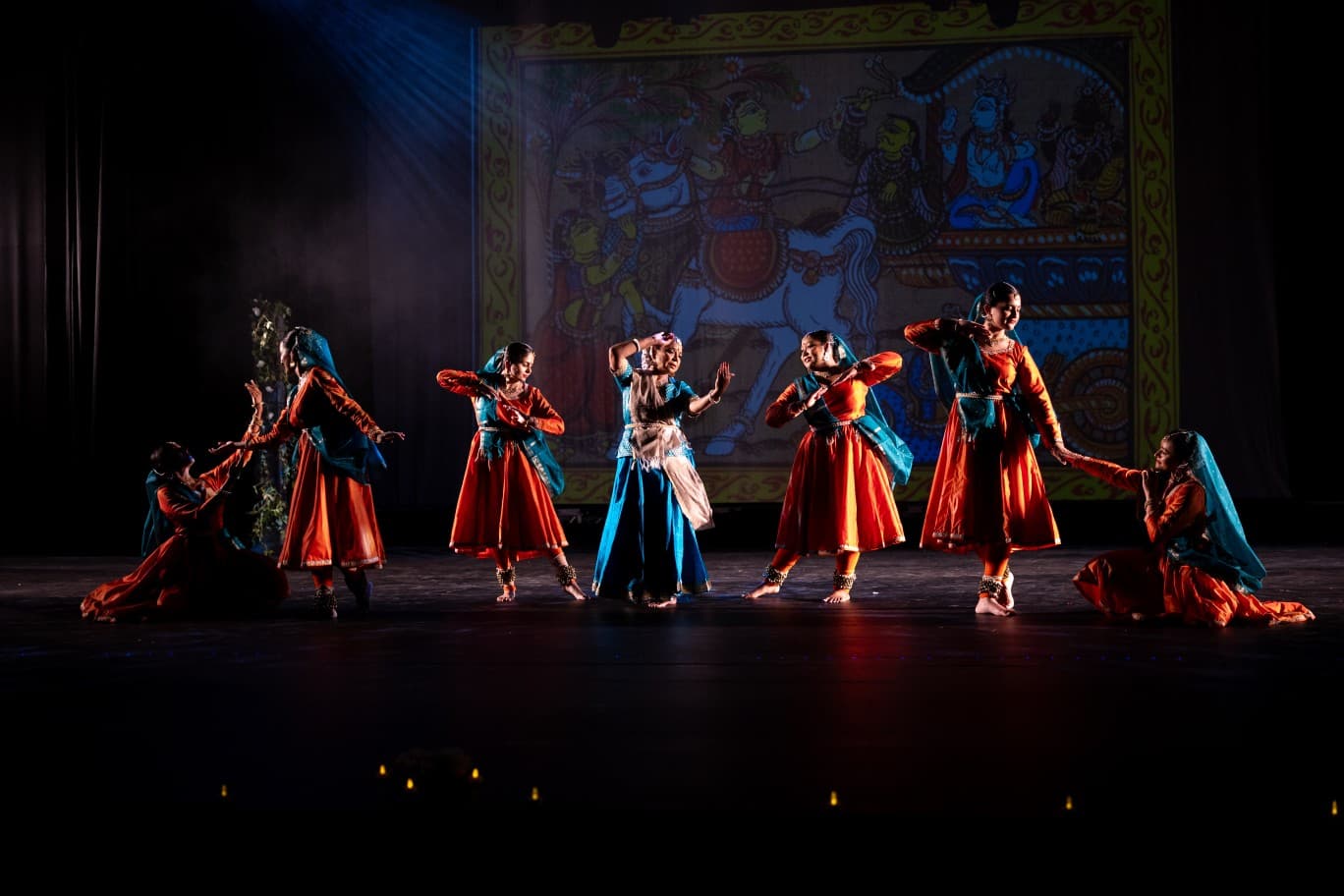
A: To survive and thrive in the Australian arts scene, you cannot just be a “hobbyist.” You have to understand the framework of the country. The Australian government expects a high level of transparency and structure. Professionalising my school enabled moving Indian dance out of the living room and onto the mainstream stage, thus giving it the credibility it deserved.
Q: What does the future hold?
A: I am moving toward the theoretical and pedagogical mastery of the craft. My senior students are finally ready for the level of certification offered by the Kalashram exams. As they are Australian-born, I am translating all the classical materials, books into English. It is important that they have the confidence to say they are practitioners and custodians of an ancient tradition, sanctioned by the highest authorities in India.
Q: You have exemplified the power of cultural persistence. What do you hope your legacy will be for the Indian-Australian community?
A: I want to be known as someone who did not choose the easy path. But my real legacy is my students who understand that Kathak is a language.
I want the next generation growing up here to understand that you can be a professional in the world — a doctor, an engineer, a lawyer, a public servant — and still hold the “ghungroos” with total purity and discipline. And that when we dance Kathak, we are preserving a syllable, a rhythm, and a soul that survived journeys across the ocean.
Indian classical dance in Australia
Present in major cities and diaspora hubs; Bharatanatyam and Kathak are the most common. The ecosystem has grown through schools, festivals, and community arts organisations.
Kathak teachers in Australia
Fewer in number compared to other forms. Early teachers like Sumita Dutta helped introduce traditional Kathak training and performance conventions to Western Australia.
Where can I learn Indian classical dance in Australia?
Schools operate in Sydney, Melbourne, Perth, Brisbane, and Adelaide. Training is available in Bharatanatyam, Kathak, Odissi, Mohiniyattam, and other forms.
Where can I learn Kathak in Australia?
Kathak can be learned from specialist teachers. In Perth, the Tarana School of Kathak Dance is one of the earliest and most established institutions.
What is the WWCC in Australia?
The Working with Children Check (WWCC) is a mandatory background screening for anyone teaching or working with minors in Australia. It ensures safety and compliance for child-related activities.