Key Highlights
- Spread over 90 acres, Lodhi Garden in Delhi houses tombs built by the Sayyid and Lodhi dynasties, during the twilight of the Delhi Sultanate
- The garden has the tomb of Muhammed Shah Sayyid and the tomb of Sikandar Lodi
- Lodhi Garden also has the Bada Gumbad (big dome) with its adjacent mosque, the Athpula Bridge (which was built during Emperor Akbar’s time) and the Shish Gumbad or the glazed tomb, which gets its name from the turquoise and cobalt-glazed tiles at the entrance
- Lutyens’ Delhi is where the political elite of India reside
- Khan Market is a simple colonial-style double-storey complex, that houses iconic Delhi bookstores like Bahrisons Booksellers and Faqir Chand and Sons
It has been a winter of discontent with gloomy and grey skies weighing one down. I decide to head to Lodhi Garden to sit and read on one of the stone benches near the Bada Gumbad, where bougainvillea trees spill over ancient walls, and the air smells faintly of damp grass and dust. It is the kind of afternoon that invites stillness.
My plan for a quiet reading afternoon pivots to exploring the local neighbourhood instead. I begin my walk near Lodhi Colony, where an old tailor sits with his sewing machine, attaching a sparkling border to a neon pink saree. I walk past streets with art on their walls, past the two-storey government housing blocks with their wide verandahs and recessed arches, past the post-independence modernist India International Centre, designed by Joseph Allen Stein, and slip through a small, rusty gate into Lodhi Garden.
Had this been any other global city, like London, Rome, or Paris, a collection of 15th-century tombs would have been cordoned off, and access would have been allowed only through ticket booths and security guards. In Delhi, this garden and these tombs are a part of everyday living and the city’s daily theatre.
Spread over 90 acres, Lodhi Garden can easily be called Delhi’s most loved park. Here, you can spot a Supreme Court lawyer taking a brisk afternoon walk, a young couple romancing with Tolstoy, a gaggle of teenagers taking selfies and a band of housewives playing rummy. The park houses tombs that represent the twilight of the Delhi Sultanate. These are a cluster of key historical monuments built by the Sayyid and Lodhi dynasties, who did not have the incredible wealth of the Mughals who came after. Not all the monuments here are tombs, though.
There is the tomb of Muhammed Shah Sayyid (1434-45) of the Sayyid Dynasty, the tomb of Sikandar Lodi of the Lodi Dynasty and then there are structures like the Bada Gumbad (big dome) with its adjacent mosque and mehmaan khana, as well as a turret. Housed within this park is also the Athpula Bridge, which was built during Emperor Akbar’s time. Most of the structures are made with grey quartzite. My favourite, though, is the Shish Gumbad or the glazed tomb, which gets its name from the stunning turquoise and cobalt glazed tiles at the entrance.
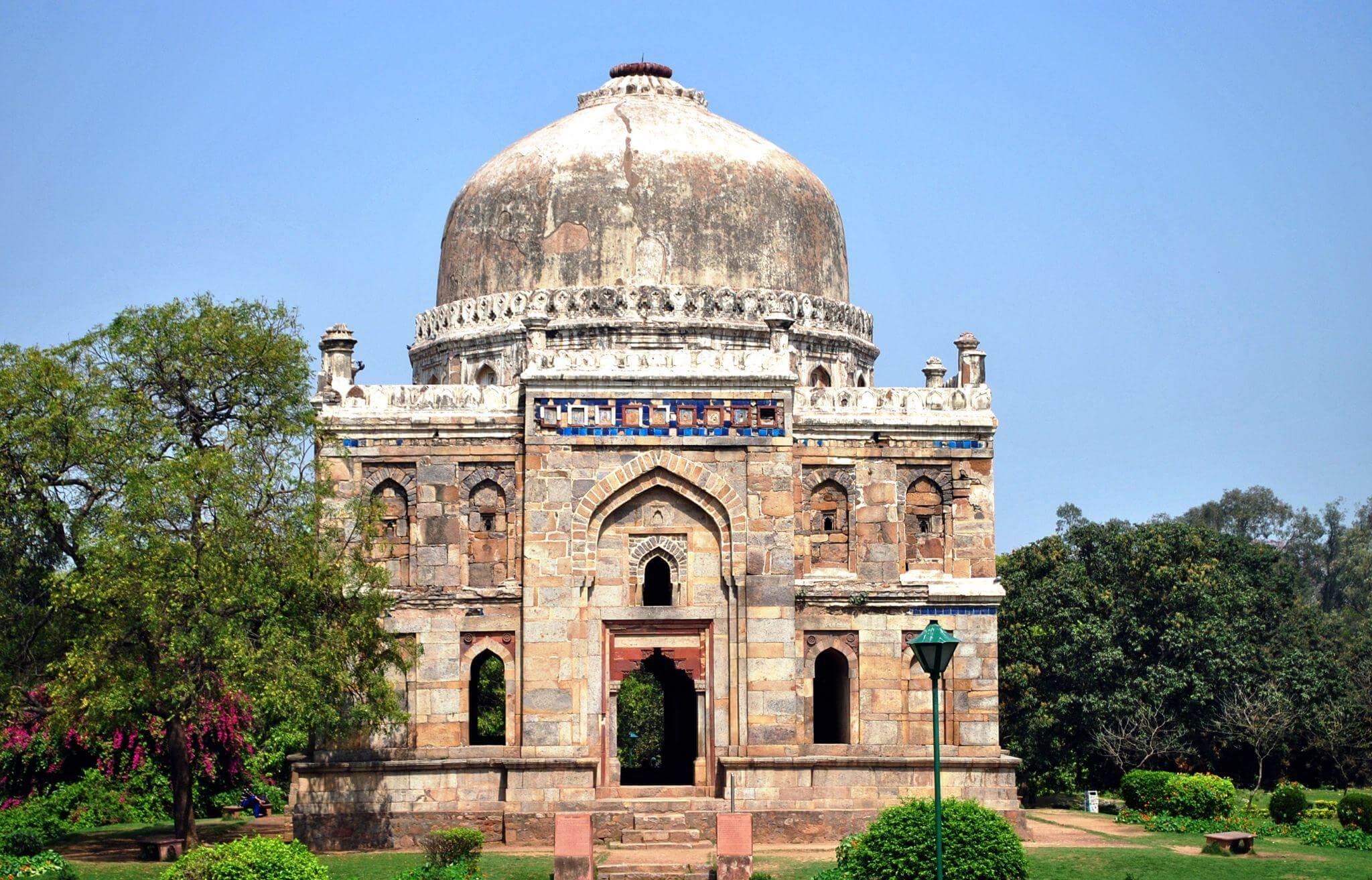
This necropolis wasn’t always housed in a park; it was part of a village called Khairpur that rested on the banks of the river Yamuna. Sometime in 1936, after the British made Delhi their capital, the residents of Khairpur were evacuated, and the area was recreated as a colonial imagining of what a medieval landscape might look like. The tombs were integrated into the Lady Willingdon Park, named after the Viceroy’s wife. A large number of trees were planted, both native and exotic ones, pathways were created, and the hedges and grass were landscaped. The name Lodhi Garden was given post-independence. Architect Joseph Allen Stein, responsible for designing several buildings in the area, re-landscaped the space in the Sixties and added a greenhouse along with an artificial lake.
Walking has helped me see the informal city that maps, guidebooks and podcasts, and vlogs ignore. I have moved between Delhis and seen the royal and the everyday, the planned and the improvised
I keep walking past the palm trees, the Peepal, the Arjun and the Jamun, I walk past the bridge and exit into Lutyens’ Delhi, where the political elite of India reside. I have now entered a different world; the past is behind me, and the air seems more impatient with the honks of auto rickshaw drivers and cars whizzing by. I can see white squat bungalows with sprawling lawns enclosed within high walls; almost all homes have a posse of guards outside. The roads are wide and beautifully shaded throughout the year by a green canopy formed by Neem and Amaltas. In a few months, these roads will be carpeted with yellow blooms.
As I meander along, I spot the first signs of the U-shaped enclave that is Khan Market: a cafe board, a bookshop window, and a glimpse of silk. Khan Market is often labelled an island of privilege and a refuge for Delhi’s liberal, intellectual and sophisticated set, the gin drinkers. But walking into this chaotic, quaint space, it doesn’t feel overwhelming. Rather, it feels comfortable and welcoming, a space where a 70-year-old bookstore resides cheek-by-jowl with a Chinese shoe shop, a stationery store, as well as a haute couture label.
Built in the early 1950s, Khan Market’s history is rooted in displacement. The space was originally allocated to Partition refugees, many from the North West Frontier Province, to build shop fronts and residences. What began as a local market with grocers and seed merchants is now considered one of India’s prime retail spaces.
The architecture is deceptive. It looks like a simple colonial-style double-storey complex, but the fun is in the in-between places, the upstairs and downstairs of the buildings, which seem to compress multiple Delhis all at once. When Khan Market was set up, most families who were allotted space ran their trade on the ground floor and lived upstairs. Most residences have now disappeared, and almost all the space above and below accommodates high-end restaurants and upscale designer boutiques.
Khan Market is also home to treasured bookstores like bahrisons_booksellers Bahrisons Booksellers, which has been here since 1953 and Faqir Chand and Sons, since 1951. From the back lanes of the market, I drift south towards Meherchand Market and reach this strip that is a quieter, more tactile avatar of Khan Market. Skirting Aliganj village, for decades Meherchand Market used to be the destination where one went looking for tailors and tentwallahs who set up the apparatus at weddings. Possibly Khan Market fatigue, combined with the dizzying rents there, helped Meherchand morph into a charming hub for homegrown indie design labels, artisanal food stores and cafes.
By now, I have almost walked a circle and am back where I had started at the Lodhi Art District, where a massive mural of a flower seller covers a four-storey wall. I have traversed five centuries. I have seen fragments of this megapolis--the triangle between the tombs, the colonial bungalows and the refugee markets. Having walked this city for almost a decade since I moved here from Mumbai, I realise yet again that the city does not reveal itself through its monuments alone, nor through disappearing neighbourhoods and developing malls. This is a city that reveals itself in transition, from the Mughal and Sultanate era ruins, to a refugee market tuned into a luxury conclave, to the manicured green lungs set up by the British and the choking pollution.
Walking has helped me see the informal city that maps, guidebooks and podcasts, and vlogs ignore. I have moved between Delhis and seen the royal and the everyday, the planned and the improvised, a palimpsest where the 15th century co-exists with the British Raj and the hyper-aggressive-modern present. And perhaps this unhurried way is why I fall in love with this city, every time.
What is inside Lodhi Garden?
The Lodhi Garden has tombs from Sayyid and Lodhi dynasties, which were part of the Delhi Sultanate
Do I need a ticket for Lodhi Garden?
No, you do not need a ticket for Lodhi Garden. Entry is completely free
Where is Faqir Chand and Sons located?
Faqir Chand and Sons is located in Khan Market
Is Khan Market close to Lodhi Garden?
Yes, Khan Market is close to Lodhi Garden and one can easily walk from the garden to the market