Key Highlights
- Dr Manjul Agarwal is a general practitioner and aviation medical examiner who relocated to Australia from Mumbai when he was two years old
- The Milky Way is the galaxy that includes our solar system and is a spiral of hundreds of billions of stars, gas, dust and dark matter, all held together by gravity
- The technicalities involved in astrophotography include calculating focal lengths, ISO, the earth’s rotation and tracking lunar phases so moonlight does not “blow out” the stars
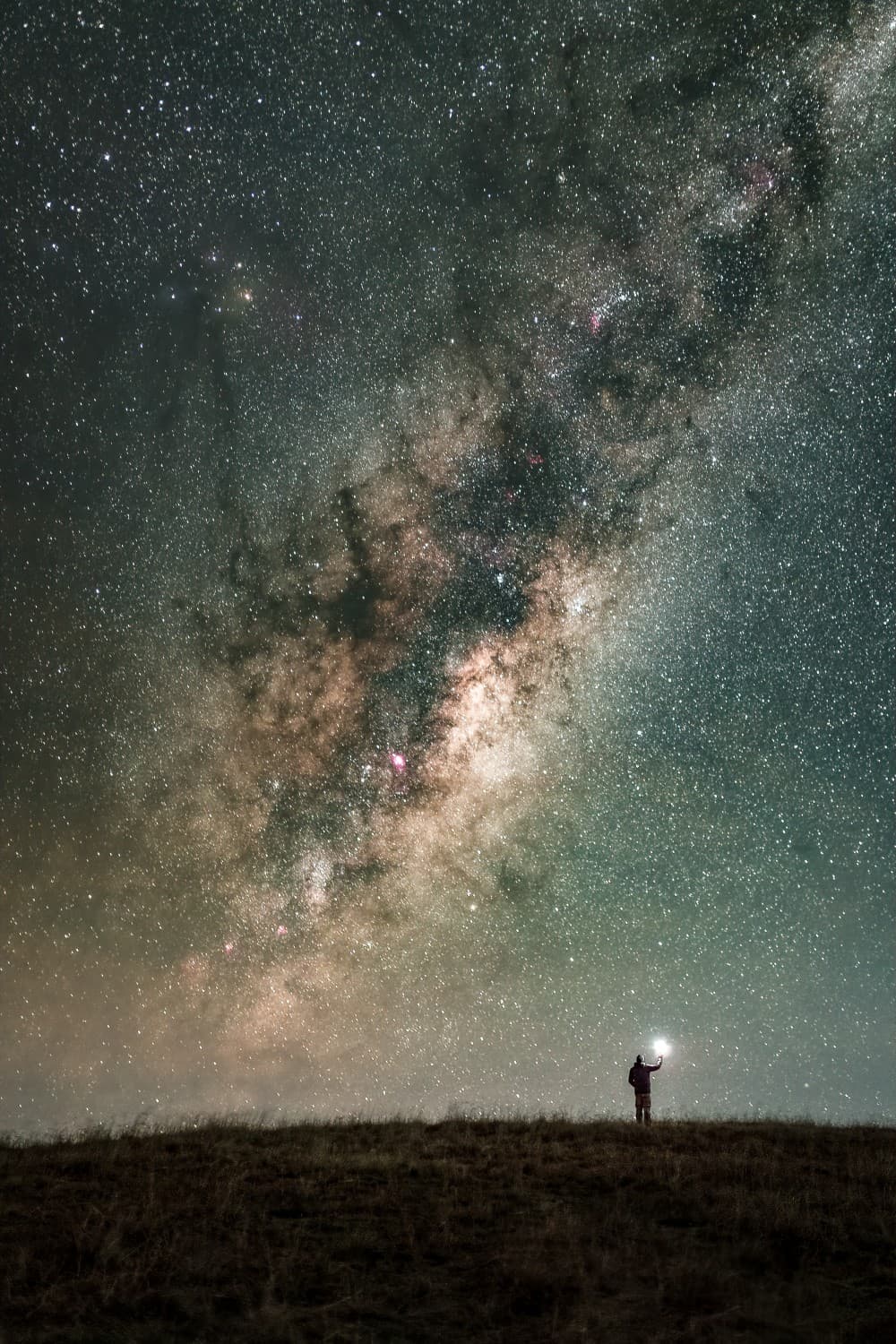
Dr Manjul Agarwal is a man of science — precise, attentive and deeply rooted in the Sydney community. As a general practitioner and aviation medical examiner, his life is measured in diagnostic charts and the tangible needs of his patients. Having relocated from Mumbai at age two, Manjul epitomises the “desi global” success story. But this is just his daytime persona. His other life begins at sundown, chasing — and photographing — the Milky Way.
While medicine deals with certainty and the immediate, and astrophotography explores the infinite, 60-year-old Manjul sees a common thread: “They both require the same thing: observation.”
The First Stop
Manjul Agarwal recalls his father always pushing a camera towards him, but he hadn’t really taken the bait, or rather, the camera strap. “What’s the hard part?” was his question. For him, there was no interest without challenge.
Manjul’s leisure time was once spent playing every sport Australia offered — rugby, cricket, tennis and squash and his clinical mind was occupied by aviation. When his body finally tired of sports, he turned to the science of light. A foundational course at Sydney University, and a 2017 trip to Canberra to study with Ari Rex, one of the first photographers to explore, practise and teach astrophotography, crystallised his passion. Rex remains a close friend and collaborator.
The Art of the Matter
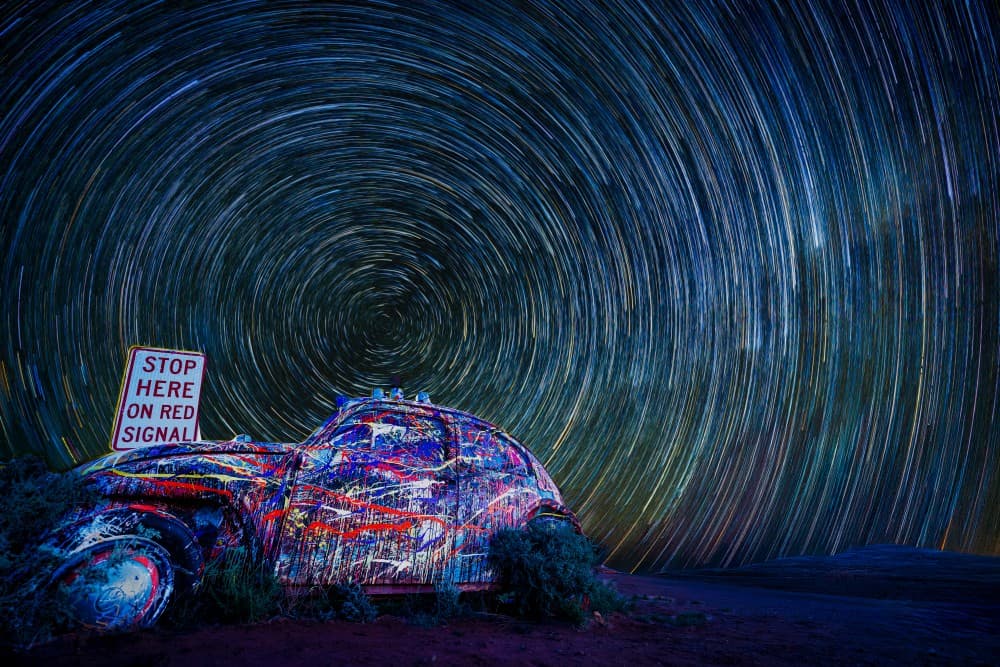
Let’s take Manjul’s haunting image of a discarded rusted car body in the Australian bush, illuminated by the starlight of a billion years captured as a swirling cosmos. The photograph is a poignant study in contrasts: the man-made versus the cosmic, the temporary versus the eternal.
“In medicine, we are trained to find what is wrong,” says Manjul. “In photography, especially under the stars, I am looking for what is right. Thiswas a moment of finding beauty in the forgotten.”
The Anatomy of a Shot
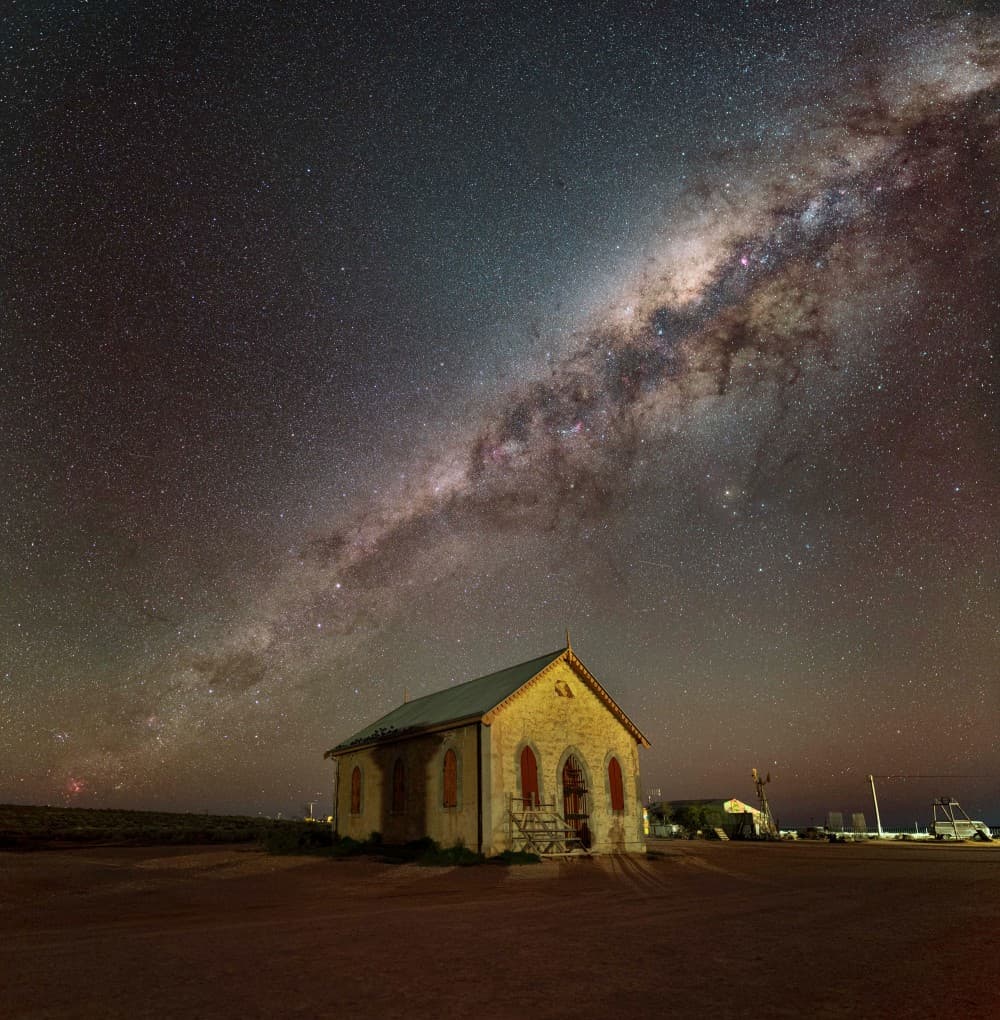
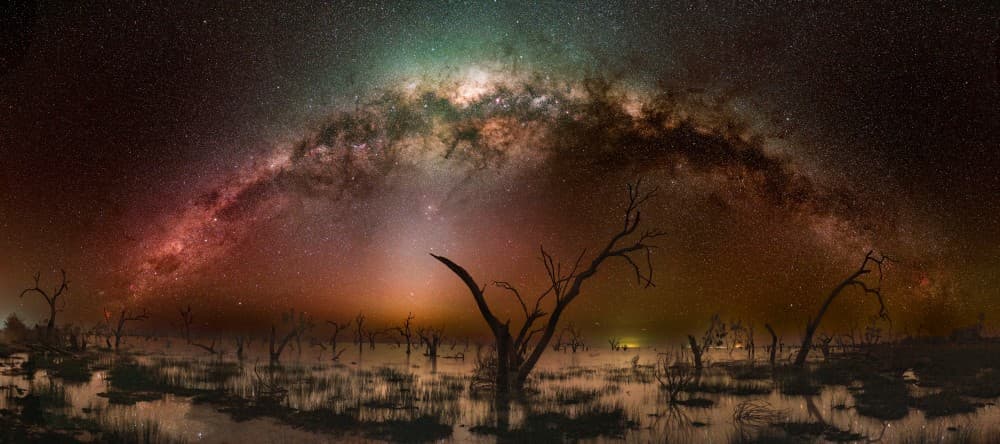
The technicalities involved in shooting images of the stars are immense — calculating focal lengths, ISO and the earth’s rotation. The first step is astronomical planning — tracking lunar phases so moonlight does not “blow out” the stars. “In Australia, sometimes, the Milky Way rises straight up in the East — almost like a Shiva lingam,” says Manjul.
“In the field, one might take 50, 60 or 70 shots for a single panorama. This is called stacking.”
Technology aside, the process is a logistical marathon. The work begins during the daylight hours, scouting compositions and using virtual reality apps to predict where the Milky Way will rise. The routine is a cycle of daytime napping, quick meals and midnight vigils that last until 2am, repeated night after night.
A System of Support
A robust ecosystem of support enables the good doctor to balance such a demanding pursuit. His wife, Neeti, and children are proud of his creative evolution. At his practice, his manager, Stacey, has fostered a culture that values the person as much as the practitioner. In a beautiful full-circle moment, Stacey is learning the art of photography from Manjul.
The Immigrant Identity
Manjul is aware of the reality of the immigrant experience, in which there’s a relentless drive for academic achievement in which any interest other than academics is seen as a luxury. For Manjul it was a necessity. “Our community is excellent at professional achievement. But at the risk of becoming one-dimensional.
The Sky and Beyond
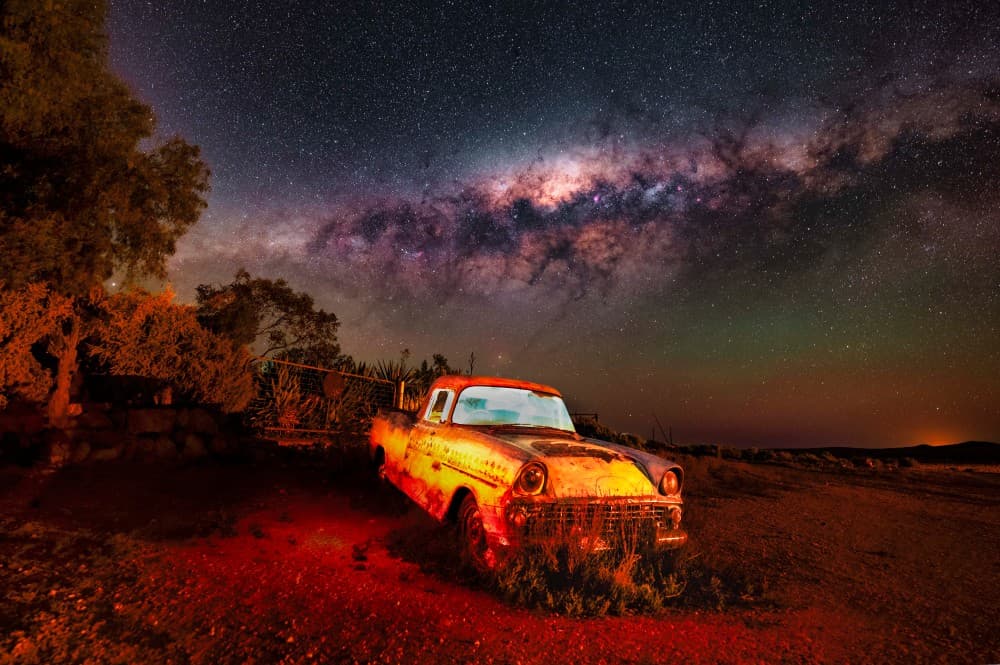
Manjul’s love for the sky has a more personal, profound thread as well — the unthinkable loss of his son, Akaash, at the age of 28. Manjul says, “Akaash always encouraged my eye. We had talked about Ladakh. My first major journey after losing him was to Iceland; a pilgrimage of sorts. Ladakh remains a promise I owe him.
“Now, whenever I’m out there in the mountains or under a dark sky, I feel closer to him. He loved nature. I see him in nature.” His Polish daughter-in-law — who was married to his late son — has poignantly dubbed his work musafir (wanderer) photography.
Awards and Rewards
Manjul is not interested in competitions. “I get more joy from making calendars for my patients,” he says. What started as a patient’s suggestion is now a yearly tradition. Calendars are sold at his practice and the proceeds go to charity.
Today, as a successful professional who has carved out a second identity for himself, Manjul is something of a lodestar for members of the Indian diaspora. As a mentor, Agarwal’s advice is unconventional: Keep your hobbies. He argues that the mental health of high-achievers depends on having a “third space”. For him, that space is Namadgi National Park at 3am, where his only focus is the night sky, and the only diagnosis is wonder. Manjul isn’t just capturing stars. He is documenting a way of being — proving that even the most demanding career can, and should, have room for the infinite.
Who is Dr Manjul Agarwal?
Who is Dr Manjul Agarwal?
Dr Manjul Agarwal is a general practitioner and aviation medical examiner.
What is Astrophotography?
What is Astrophotography?
Astrophotography is the capturing of celestial objects, night landscapes and the night sky.
Is Australia a good place for Astrophotography?
Is Australia a good place for Astrophotography?
Yes, Australia has plenty of spots for Astrophotography, key among them being the Namadgi National Park.
What is required for Astrophotography?
What is required for Astrophotography?
For astrophotography, you need to calculate focal lengths, ISO, the earth’s rotation and track lunar phases so moonlight does not “blow out” the stars. The work begins during the daylight hours, scouting compositions and using virtual reality apps to predict where the Milky Way will rise. The routine is a cycle of daytime napping, quick meals and midnight vigils that last until 2am.