Easter in India has always been fascinating for me. It never announces itself in the loud, obvious way that Christmas does, with its cakes, carols and overenthusiastic décor. Easter here feels lived in. It sits within homes, within communities, within memory. But most importantly, it sits on the table.
What I’ve come to realise over the years is that while the sentiment of Easter remains constant: faith, reflection, renewal and ultimately celebration, the food tells a far more fragmented and interesting story. It shifts with geography, bends with history, and adapts to community in a way that is uniquely Indian.
A shared language for food
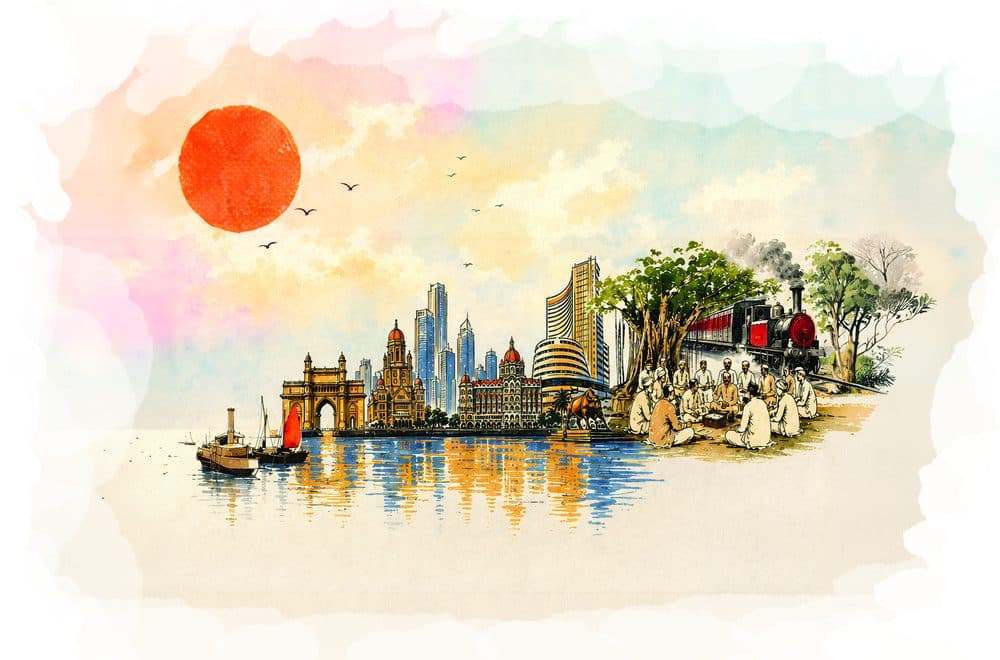
Take Mumbai, for instance. It has one of the oldest Christian communities in the country, the East Indians, with roots going back to Portuguese influence, yet entirely their own in spirit. Their Easter is marked by a rhythm of restraint followed by indulgence. Lent is observed with discipline, and by the time Easter Sunday arrives, it feels earned. There is a genuine sense of ‘phewwww….. now is the time to eat and drink!’
The table reflects this balance. You’ll often find dishes like ‘bottle’ masala-spiced mutton, fugias — those wonderful, puffy, slightly sweet fried breads — and a variety of curries that carry both coconut and spice in equal measure. There’s something deeply comforting about the food, almost homely, yet layered with the comings and goings of history. Sweets come into play too, often coconut-based, gently spiced, never overly showy. It’s food that doesn’t shout, but it certainly speaks.
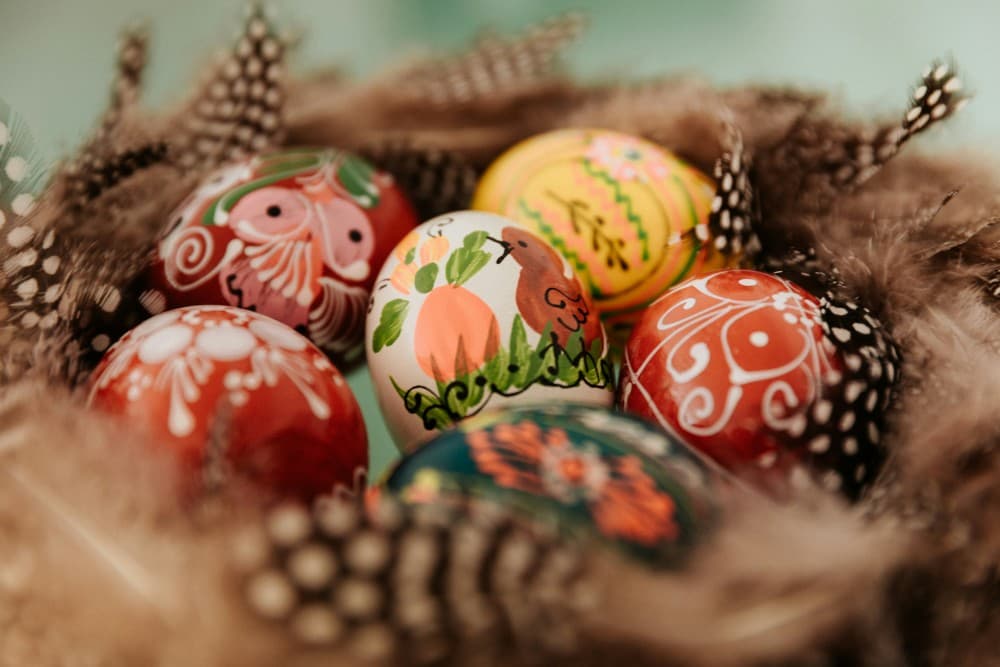
Further East, there’s the Anglo-Indian table, which for me carries a strong sense of nostalgia being a British chef in India and that too, Kolkata, for so long. Not just for a community, but for an entire way of life that has slowly faded but never quite disappeared. Easter here carries a different kind of memory shaped by colonial histories and railway kitchens but with that unmistakable Indian adaptation. Roast meats — lamb if you’re lucky, chicken more often — are accompanied by spiced gravies, pepper water, country captainesque preparations, and the ever present railway-style influences that seem to weave through Anglo-Indian cooking. Eggs, of course, play their symbolic role, often in curried or devilled forms. And then there are the bakeries selling marzipan, nougat and chocolate eggs with the occasional Simnel cake thrown in. All feeling like echoes of another time, another kitchen, another Calcutta or Madras.
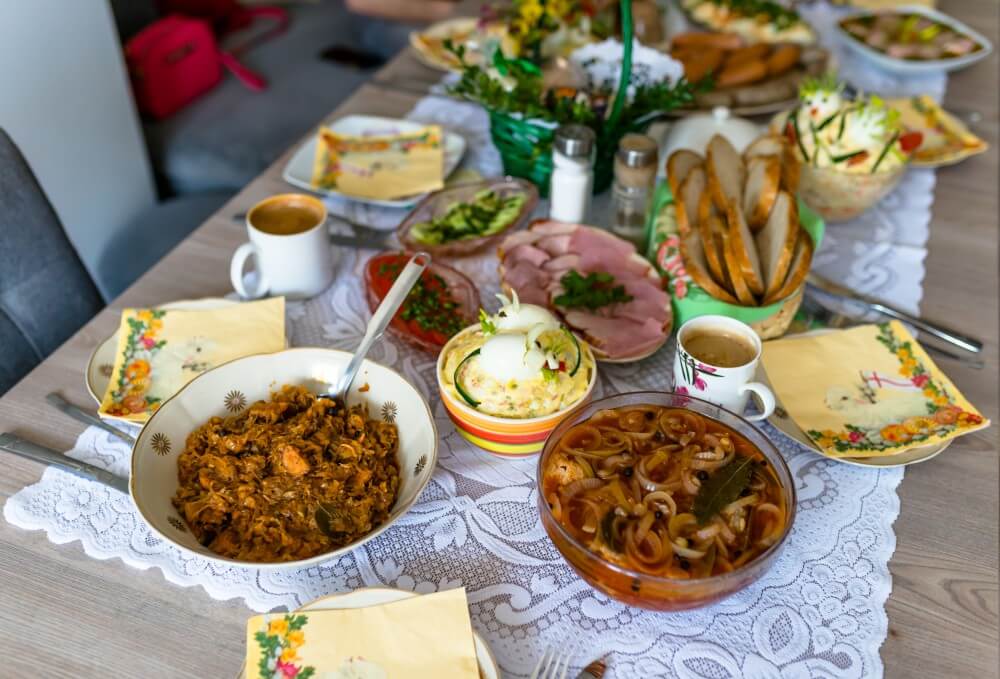
What I love most, though, is the sense of memory around it all. Aging elders gently try to guide the younger ones, sometimes confidently, sometimes slightly unsure, piecing together traditions from what they remember, what their parents did, and what feels right. Recipes are rarely written down; they are half remembered, adjusted, argued over, and somehow still turn out exactly as they should. Not just about the food, more continuity, about holding on to identity in a way that is warm, imperfect, and deeply human.
And perhaps that is what Anglo-Indian Easter is really about: not perfection, but remembrance, family and a table that always finds a way to come together.
Southern flavours to the North East
In Kerala, the story shifts again — both spiritually and gastronomically. The Syrian Christian community, in particular, brings an extraordinary depth to the table. After the austerity of Lent, Easter Sunday unfolds as a feast. Appam and stew — soft, lacy hoppers paired with a gently spiced coconut milk curry, often made with chicken or mutton — anchors the meal. It doesn’t stop there. Around it gather roast meats, cutlets, fish preparations, and vegetable dishes, layered with coconut, curry leaves, and that unmistakable Kerala touch.
Goa, on the other hand, brings a different energy — brighter, more outwardly celebratory. There’s music, there’s gathering, and the food follows suit. The Goan Catholic Easter table reflects both its Portuguese heritage and its coastal setting. Pork features prominently. Sorpotel, vindaloo dishes that are rich, tangy, and deeply flavoured. There are breads like poi and sannas, and sweets are mostly Easter eggs and marzipan.
And then, perhaps less widely known but equally fascinating, are the Christian communities of the North East. Across Nagaland, Mizoram and Meghalaya, Easter is deeply rooted in church and community life. The food reflects local ingredients and traditions rather than colonial influence. Smoked meats, simple stews, boiled vegetables and rice form the core of the meal. There is little ornamentation; the flavours are direct and the food is honest. It leans into what is available, what is seasonal, what is shared. And again, that word comes back — shared.
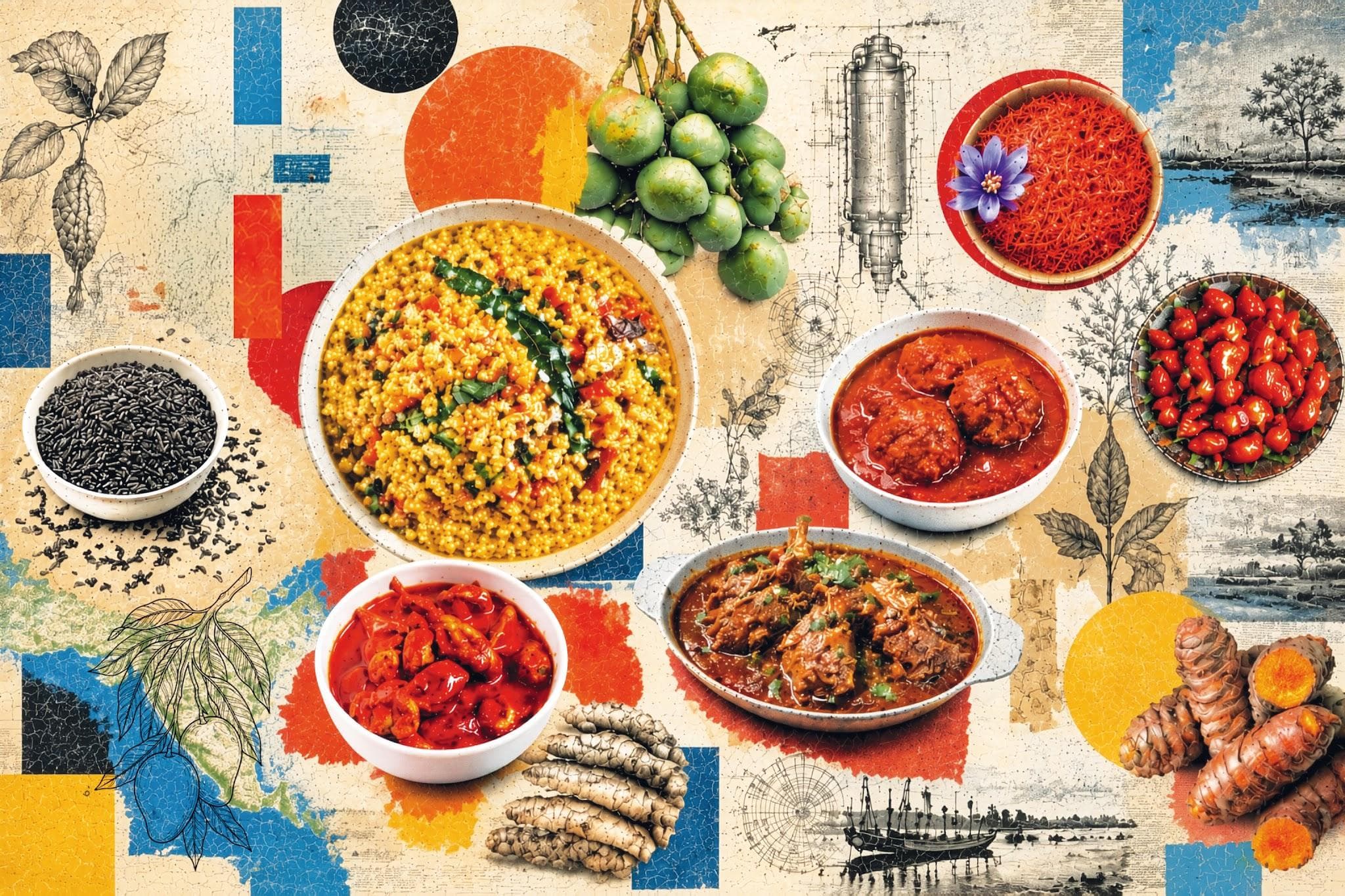
Perhaps that is what makes Easter in India so compelling. It is not a singular story. It is a collection of stories, each shaped by its own history, geography and people. Yet, whether it’s a table in Mumbai, Kolkata, Kochi, Goa or Kohima, all of them arrive at the same place: a table, surrounded by loved ones, where food becomes both memory and celebration. As someone who has spent a lifetime around kitchens and tables, this is where the real magic lies. Not just in the dishes themselves, but in what they carry forward.