Key Highlights
- Bandhavgarh is one of India’s most successful tiger parks, located in Madhya Pradesh
- The Samode Safari Lodge is the passion project of Rawal Raghavendra Singh and his younger brother, Yadavendra Singh – brothers hailing from the Rawal clan, who were Thakurs of the former Jaipur Principality
- This luxury safari lodge is priced at INR 90,000 + 18% tax per night. This, however, is inclusive of meals and two safaris
- The Bandhavgarh Tiger Reserve has the world’s highest density of Bengal tigers
- The best time to visit Bandhavgarh is between April and June, which is the peak season for tiger activity
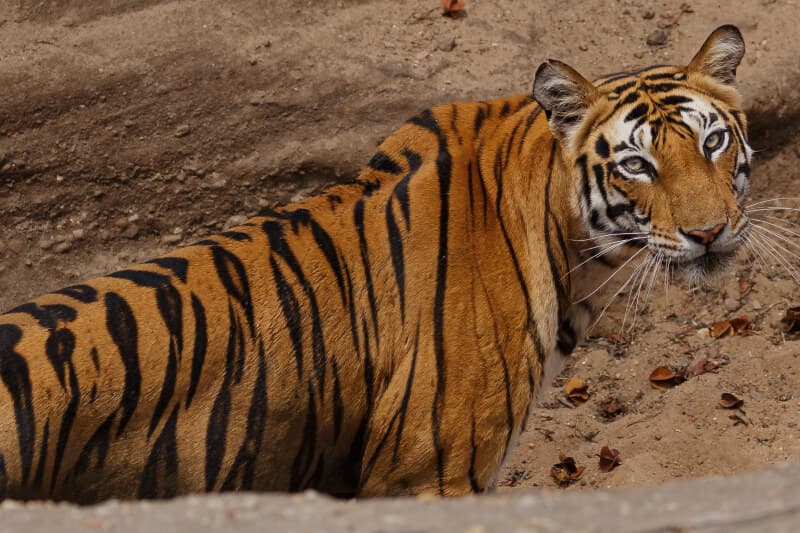
The rhythm of an Indian jungle demands simplicity and a complete surrender to nature’s whims. While difficult for luxury travellers, the call of the wild has kept my sister and I active on the safari circuit for over five years.
This November, my partner, sister and I booked a three-night stay in Bandhavgarh, just as the chill of winter begins to bite the dawn air. Bandhavgarh, as one of India’s most successful tiger parks in Madhya Pradesh, India, is also more “commercial” than some of its quieter counterparts.
Commercial in the sense of tourism being more mature here.
Having chased the stripe across the subcontinent, I thought I knew what a “luxury safari” in India entailed. And then we arrived at the Samode Safari Lodge, and discovered an experience that surprised us at every turn.
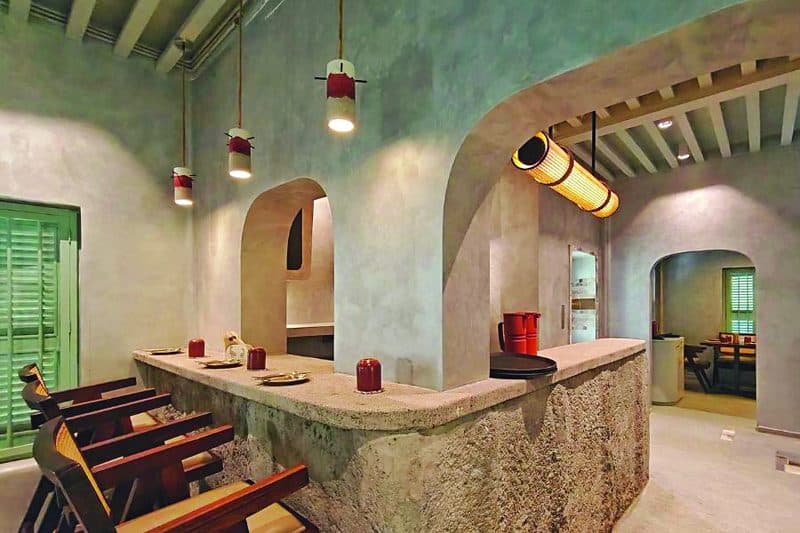
The lodge quietly boasts a beautiful, labyrinthine main building, with interconnected spaces and four entrances nestled on a sprawling 25-acre estate. With a quiet nook for reading, a beautiful artefact talking of older times and open vistas at almost every bend — the lodge was a perfect example of mindful design whispering a luxury that shuns ostentation.
Serving Up (Wildlife) Reserves
- Wildlife reserves are top-tier choices for NRIs and their foreign-born families (classified by the Ministry of Tourism as the international Visiting Friends and Relatives (VFR) tourist category).
- The usual itinerary is a visit to family, along with a 3-day luxury ‘escape’.
- A noticeable shift from medium-high to high budgets
- The diaspora makes up about 40% of the Australian visitor traffic to India.
- Bandhavgarh is a preferred destination because of its high tiger density.
- Cultural immersion in the form of a nearby fort and local interactions adds to the ‘family-plus-safari’ experience.
The Samode reputations rest largely upon the exquisite heritage properties of the Rawal clan — Thakurs of the former Jaipur principality — known for the iconic Samode Palace. Managed by Rawal Raghavendra Singh and his younger brother, Yadavendra Singh, the chain operates in Rajasthan with the Bandhavgarh lodge being the only Samode property outside their heartland.
This jungle outpost is the passion project of the younger brother, Yadavendra, and his wife, Arpana. Inspired by their travels across Africa, the duo decided to commission celebrated architect Pradeep Sachdeva to give form to their vision with a resort that kept the Group’s commitment to sustainability, woven into luxury at its heart. Sachdeva delivered — creating a sanctuary in stone, timber, and quiet with locally available materials and labour. Offered along with the same exacting standards found in the Group’s ancestral havelis, this property made for an unusual experience.
Meeting the couple on the property confirmed the ethos. Their personal involvement transforms the atmosphere beyond that of a typical high-end resort into a house party in the jungle.
This starts with the dining experience. Each meal is an event, with dinner being served in different picturesque locations. No two days in a week will have the same menu. Surprises reign — breakfast might be a beautifully packed tiffin under a forest canopy and lunch, a refined, Continental three-course affair. Your evening tea could be a crash course in local flavours while a regional Indian dinner ends up being a cultural immersion. For us, the team set up a memorable, fully-decked bush dinner in an open clearing, a scene straight from a safari on film.
The team is clearly committed to walking the sustainability talk. Lodge Manager Priyam Kumari said. “At Samode Safari Lodge, we believe in preserving the beauty of nature for future generations while offering a luxurious experience...”
Head Naturalist Anshuman Shah said, “Our commitment to sustainability is woven into every aspect of our operations, ensuring that a stay not only exceeds expectations but also supports the conservation of our precious ecosystem.”
From the public spaces to the private, the team is uncompromising in its offerings. The rooms are vast. We have stayed at dozens of properties in the Indian jungle, and this was the first with a television. Hot water, a bathtub, and solid Wi-Fi are never to be taken for granted when deep in the forest.
Moreover, the human element is exceptional: an escort ensured our safe passage to and from the common area every time, and every employee offered a genuine, smiling ‘Namaste.’
Coming to why we found ourselves there – the safari. The true test of a luxury safari lodge is how it manages the inherent hardship of the jungle. Safari life means 4.30 AM wake-up calls, five-hour bone-shaking jungle drives, and extreme temperature swings—from the frigid, open-jeep wind chill to the blinding heat after 9 AM. This is where Samode truly earns its INR 90,000 + 18% tax per night price tag (inclusive of meals and two safaris).
The Samode team operates with military precision and immense kindness. Our wake-up call was followed by a generous spread of coffee and tea. For the drive, we were equipped with fleece ponchos, individual steel thermos flasks of hot drinks, and, blessedly, hot water bags — making a bitter morning bearable.
Bandhavgarh offers three core zone gates — Tala, Magdhi, and Khitauli — and the five-hour morning and three-hour evening safaris are the lifeblood of the stay. Having done over a hundred drives across India, I can attest that the single guide mandated by the park is inadequate if you wish for a complete experience.
An experienced naturalist heightens the experience by deciphering the complex flora, fauna, and, crucially, the unique tiger dynamics of the park. Samode understands this, a decision that provides guests an interpretation of the jungle’s most compelling language.
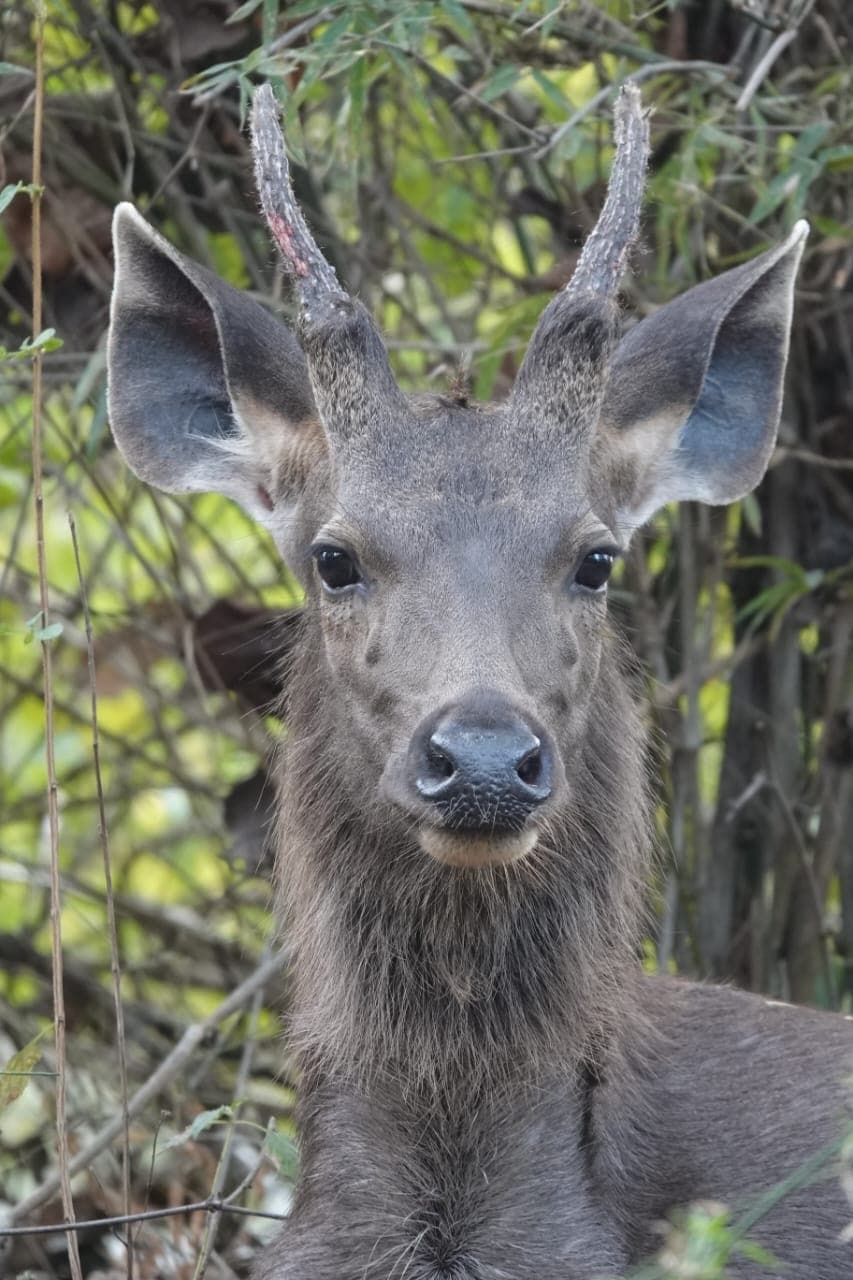
The sensory immersion is total — the air was clean and sharp, the sambar deer’s alarm call just a turning away while a male tiger roared territorially in the distance. We studied the dusty tracks, deciphering the passing stories of leopards and sloth bears. We watched the langurs swinging high above, the chattering guards of the forest.
We were fortunate enough to secure a seat on the very last night safari in India (prior to the December 1, 2025 ban).
In November 2025, the Supreme Court of India issued a landmark judgment aimed at protecting the country's tiger reserves from ecological damage.
The Ban: The Court imposed a complete ban on night tourism (night safaris) and the use of mobile phones within the core habitat zones of all tiger reserves across India.
The Location: Tiger safaris are now strictly prohibited in "core" or "critical" habitats and must be moved to non-forest or degraded lands in "buffer zones" to ensure breeding areas remain undisturbed.
The Reasoning: The ruling seeks to eliminate "mass tourism" that disrupts nocturnal animal behavior and requires all reserves to be notified as "Silence Zones" to preserve ecological integrity.
Sight stripped away, with only instinct and sound on the prowl, we experienced an out-of-the-world adventure — a reminder that the wilderness commands respect. The fact that we had a naturalist accompanying us demonstrated clearly how true luxury can lie in fighting the wild, but in creating an experience so refined it enhances the raw thrill of the tiger trail.
Ultimately, the goal is not just the sighting — though every flash of orange and black is a massive stroke of luck. The goal is the connection.
As the forest department’s saying goes, ‘You might not have seen a tiger today but the tiger has definitely seen you’.
But that’s the final lesson of the Samode Safari Lodge: even if the tiger eludes you, the beauty of the lush forest, the clean air, and the stunning vistas are a balm for the soul.
And having a sanctuary of such luxury to return to at the end of a gruelling day only inspires you to wake up at 4.30 AM, before the alarm, and do it all over again. The jungle, after all, never sleeps
Bandhavgarh Tiger Reserve At a Glance
Home to the world’s highest density of Bengal Tigers. Offers a unique mix of raw biodiversity and 2,000-year-old archaeological ruins.
Fly: To Jabalpur (JLR) via Delhi/Mumbai, followed by a 4-hour luxury chauffeur transfer. Private charters often use Jabalpur or Khajuraho.
Rail: First-Class AC to Umaria (45 mins from park).
Oct – Feb: Temperate and lush; ideal for birdwatching and comfort.
April – June: Peak tiger activity; dry heat (40 degrees C) ensures sightings at waterholes.
Zone Choice: The Tala Zone for the best vistas and historical monuments.
Planning: Full-Day Permits 90 days in advance recommended to bypass standard zone restrictions.
Which is the best tiger reserve in India?
Bandhavgarh Tiger Reserve is the one of the best tiger reserves to visit, because it has the world’s highest density of Bengal tigers
What is the best time to visit Bandhavgarh?
There are two peak seasons in Bandhavgarh. October to February is ideal for birdwatching and comfort, whereas April to June sees peak tiger activity owing to the dry heat, which ensures sightings at waterholes.
How to get to Bandhavgarh?
Take a flight to Jabalpur (JLR) from Delhi/Mumbai, followed by a 4-hour luxury chauffeur transfer. Private charters often use Jabalpur or Khajuraho. If you are taking the train, the first-class AC to Umaria is a good option, since the Umaria station is 45 minutes from the tiger reserve.
What is the tariff for Samode Safari Lodge?
It is priced at INR 90,000 + 18% tax per night and is inclusive of meals and two safaris.