Key Highlights
- Studies from the Max Planck Institute suggest that people of Indian ancestry reached Australia about 4,000 years ago, around 2217 BCE
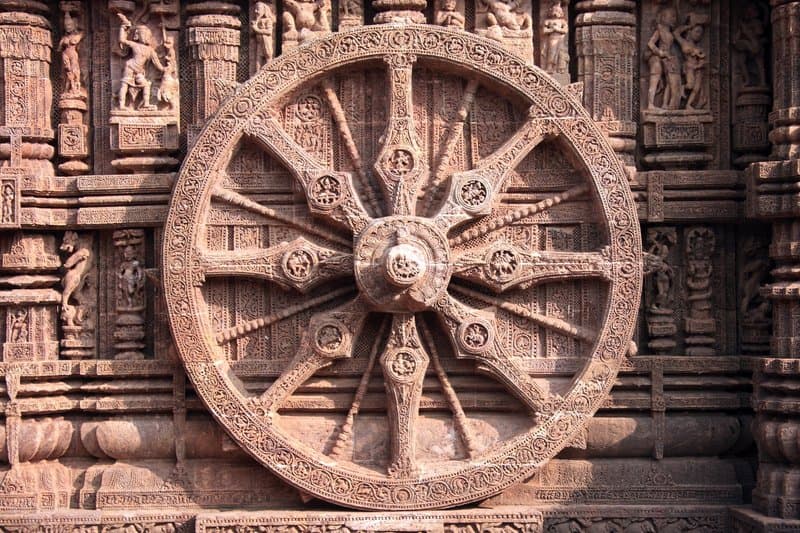
- The rock art of Central India shares a spiritual and stylistic frequency with Australian Aboriginal art
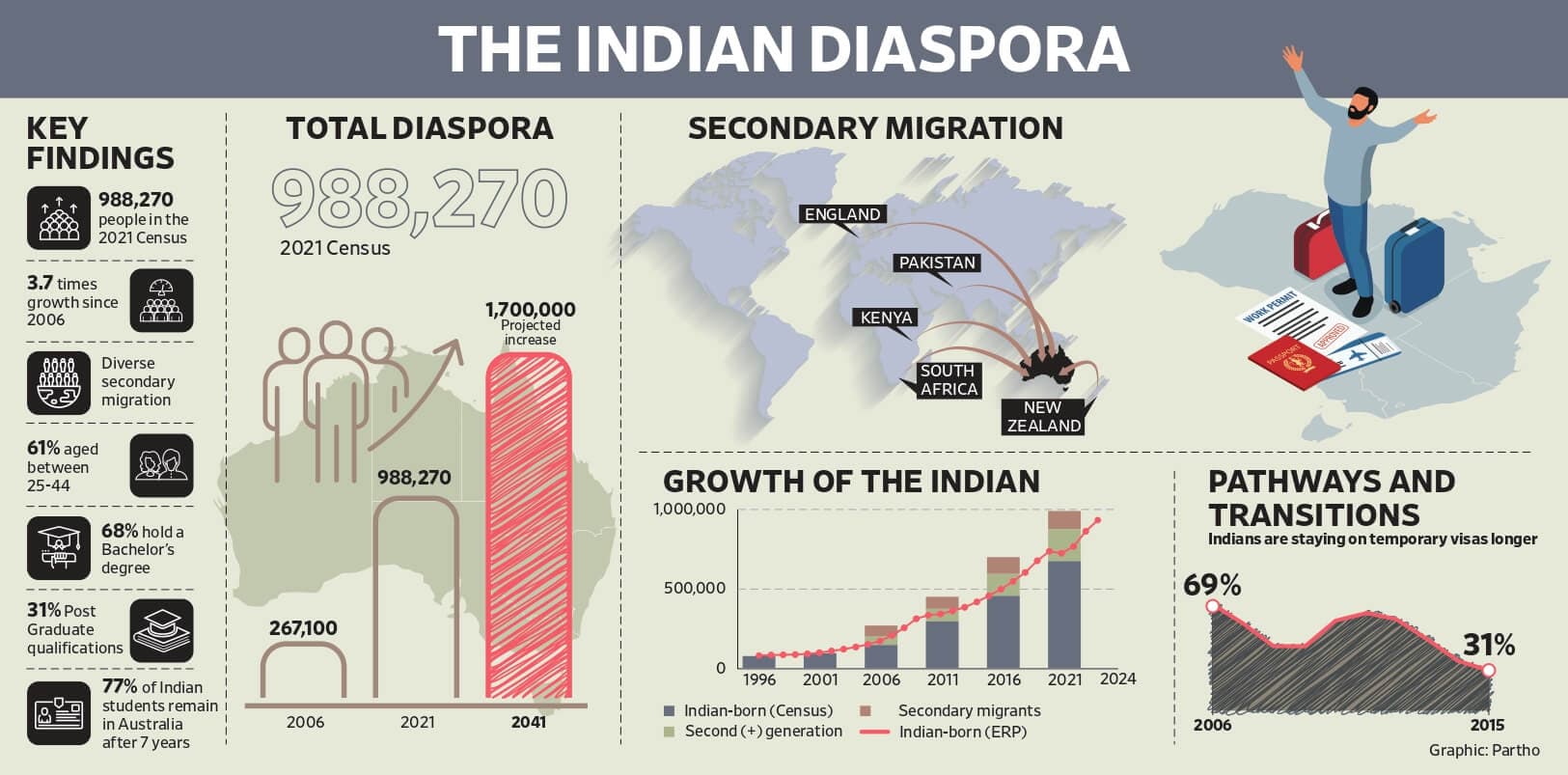
- As of the 2021 Census, there are 988,270 Indians in Australia, a number that has grown 3.7 times since 2006, making Indians the second-largest overseas-born group in the country, having overtaken China in 2019.
- In 2020, Indian-born taxpayers contributed AUD 5.8 billion in income tax — averaging AUD 17,010 per person.
- Indian Australians are highly successful in business, medicine, and tech, but are still under-represented in the government.
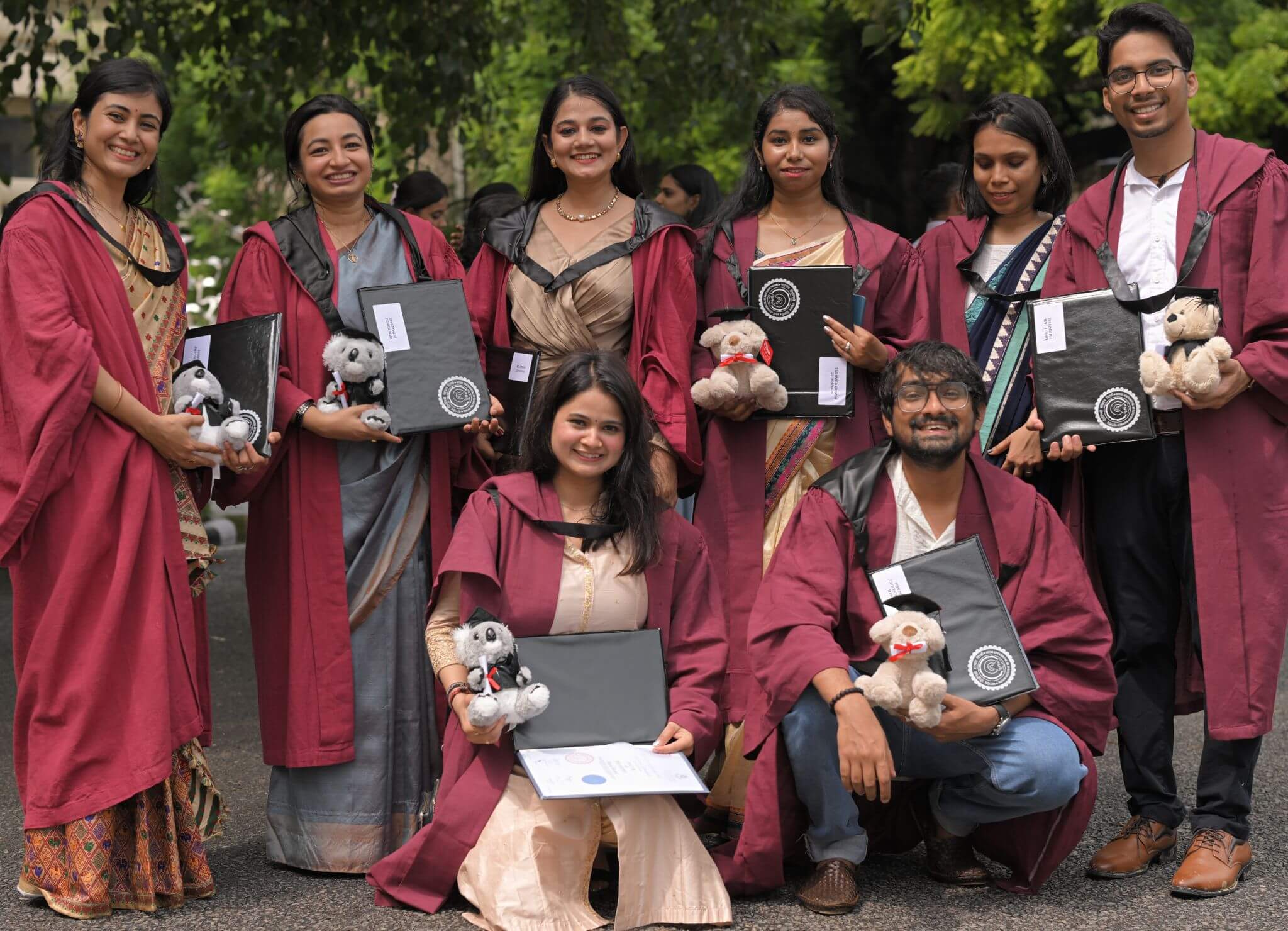
We are the diaspora, my friend. Of Indian ancestry but from all over the world. We were glocal before it became a buzzword. And have been present and counted in Australia since prehistoric times.
I know we might be given to a bit of exaggeration here or even to rewriting a little bit of history there. But recent genetic studies, most notably from the Max Planck Institute, suggest that people of Indian ancestry reached Australia about 4,000 years ago.
Researchers have found strong evidence of a significant “gene flow” from India to Australia around 2217 BCE. This migration coincides with the sudden appearance of the dingo in the fossil record as well as changes in stone tool technology. It seems our earliest ancestors didn’t just bring their genes; they brought along their dogs and their DIY skills.
Of lascars and convict labour
Allow us to jump to recorded arrivals. Documents start appearing shortly after the First Fleet in 1788. Indians were brought as sailors (lascars), servants, or convicts by British officials. A small group of convict labourers was also recorded. It wasn’t exactly the “Business Skills Visa” we’re used to today.
And then it was the turn of the ‘free’ immigrants to start arriving. The first was Rhamut Khan, who sailed to Australia on the Favourite in 1808, probably the first of the Afghan cameleers to play a vital role in the development of the Australian interior.
The next records are of William Boxo who sailed on the Mary Ann from Calcutta, in India, and disembarked in 1809.
Indian summers
If the 19th century was about survival, the 21st is about dominance — but with a polite, highly-educated approach.
As of the 2021 Census, our community has swelled to nearly a million: 988,270 people. We’ve grown 3.7 times since 2006. We are now the second-largest overseas-born group in the country, having overtaken China in 2019. Now, we only have the English left to beat.
The think tank
It’s not just about our numbers, though. It wouldn’t be wrong to call us the “Think Tank”. A whopping 68 per cent of first-generation Indian migrants hold a bachelor’s degree or higher. At 32.7 per cent, we are over-represented in professional sectors. We are good at giving lectures — making up 4 per cent of the nation’s lecturers and tutors.
However, our degrees and our dedication don’t always reflect in the number of managerial positions we hold compared to our Australian-born peers. That’s just another frontier to overcome.
For those in the UHNI and HNI circles, “making it” has shifted from employment to ownership. Indian business ownership jumped from 30,000 in 2016 to 50,000 in 2021. We are job creators: every 1 per cent increase in our population is associated with 123 medium-sized and 6 large businesses.
We are not just participants in the economy. In 2020, Indian-born taxpayers contributed AUD 5.8 billion in income tax — averaging AUD 17,010 per person. We are also a literal “trade multiplier”. A 1 per cent increase in Indian-born residents boosts exports to India by 0.46 per cent. In 2023, we helped bridge $5.82 billion in exports.
Multi-passporting, the India way
The modern Australian-Indian is a sophisticated mix. We are not just arriving from Delhi or Mumbai. Secondary migration is diversifying, with arrivals from England, Pakistan, New Zealand, South Africa, and Kenya. We bring a tapestry of cultures — Punjabi, Tamil and Gujarati.
We are also politically fluid. We switch votes based on policy. No wonder that for the 2025 Australian Federal Election (held in May 2025), both the major parties released “Indian Diaspora” manifestos focusing on dual citizenship recognition, direct flights to India, and streamlining the recognition of Indian professional qualifications (doctors and engineers).
And who can forget the visuals from the major campaign launches from ‘Little India’ in Harris Park, Sydney by both Prime Minister Anthony Albanese and Opposition Leader Peter Dutton?
In fact, the 2025 election cycle was a landmark moment for Indian-Australian representation, reflecting our community’s increasing influence as a “kingmaker” voting bloc. However, we remain under-represented.
A 2021/2022 Australian Government report titled “Australia’s Indian Diaspora: A National Asset” had highlighted that while Indian Australians are highly successful in business, medicine, and tech, they are still under-represented in the “halls of power” relative to their population size (approximately 3.2 per cent of the population).
2041 and beyond
By 2041, the Indian-born population is projected to reach 1.7 million. We will hit the 1 million mark by 2026. We will be older — the median age will rise from 35.7 to 41 years. Most of us (90 per cent) will stay in capital cities.
Melbourne (34 per cent) and Sydney (29 per cent) remain favourites. We like the coffee, the property prices and having enough people nearby to form a proper cricket team.
So, here’s to the lascars who paved the way, the students who stayed (77 per cent of them after seven years), and the entrepreneurs who conquered. We are the diaspora, my friend — and this dosti is just getting started.
How strong is the Indian diaspora in Australia?
How strong is the Indian diaspora in Australia?
As of the 2021 Census, there are 988,270 Indians in Australia, a number that has grown 3.7 times since 2006, making Indians the second-largest overseas-born group in the country, having overtaken China in 2019.
From which cities are Indians migrating to Australia?
From which cities are Indians migrating to Australia?
Indians in Australia are not just from Delhi or Mumbai, but are also coming from England, Pakistan, New Zealand, South Africa, and Kenya, making a strong case for Secondary Migration.
What are popular cities for Indians in Australia?
What are popular cities for Indians in Australia?
Sydney and Melbourne are popular cities for Indians in Australia.
When did Indians first come to Australia?
When did Indians first come to Australia?
Indians first came to Australia around 4000 years ago, in 2217 BCE.
Do Indians in Australia pay taxes?
Do Indians in Australia pay taxes?
In 2020, Indian-born taxpayers contributed AUD 5.8 billion in income tax in Australia — averaging AUD 17,010 per person.