One of my earliest memories of a kitchen has nothing to do with taste. It has to do with a finger. My late paternal grandmother would often make a dish called Tangal Meh, which required a pinch of cooking soda. Just before adding it, she would point at the pot. Only then would she drop in the soda. As a child, I found it amusing. Why point at a pot?
When I finally asked her, she explained, almost casually, that if you pointed first, the soda would not foam over.
It made little sense to me. We laughed and even called it “pipi style” meaning, grandmother’s style. Yet every time I tried it, it worked.
Even today, I cannot explain the science behind it, or whether there was any science at all. Perhaps it was belief. Perhaps coincidence. Perhaps it was a piece of forgotten kitchen wisdom that never found its way into a cookbook. But like so many traditions in the kitchens of the Northeast, nobody questioned it because it worked.
That is how much culinary knowledge survives here and not always through written instructions, but through practice.
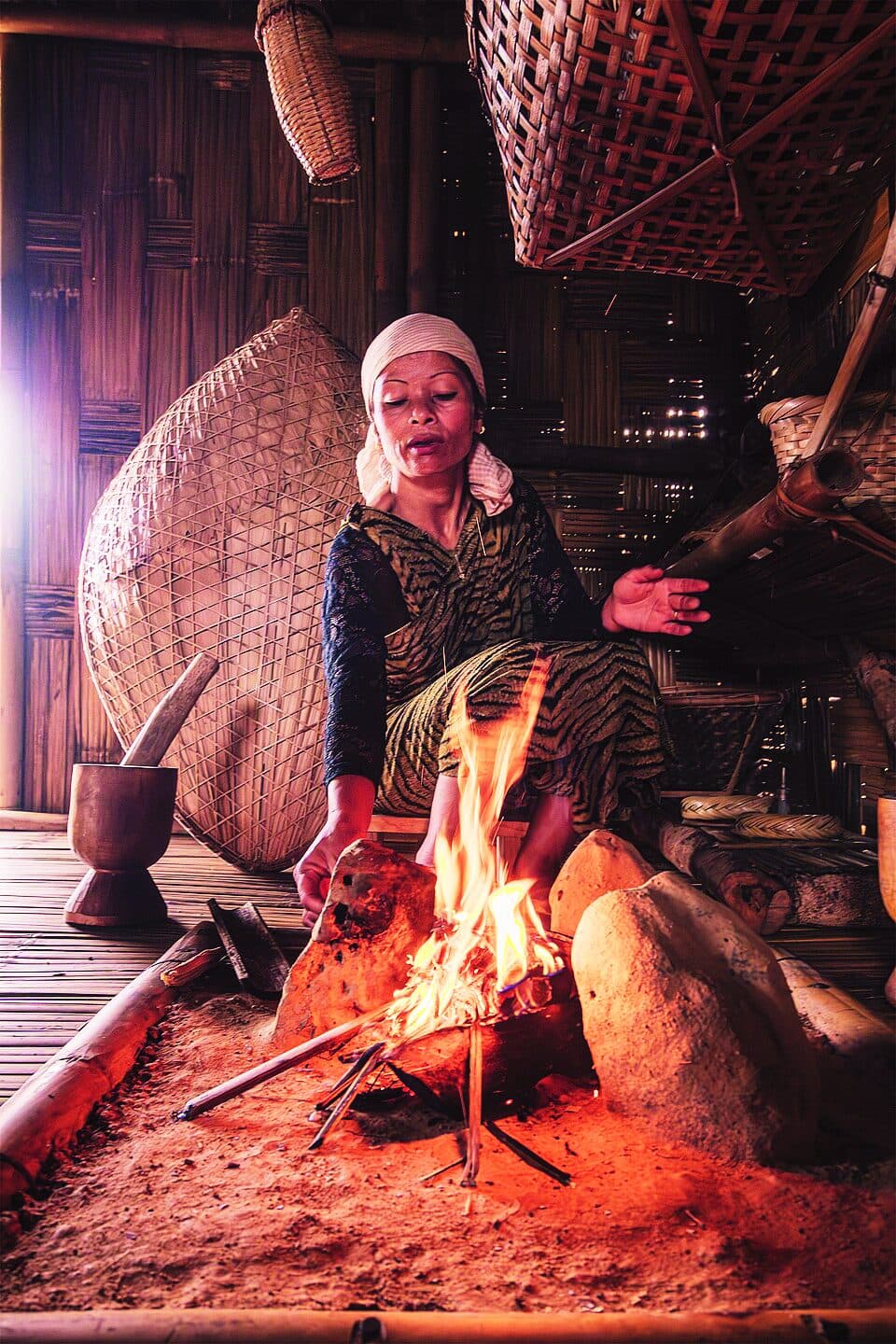
For many communities across the Northeast, cooking is far more than a daily task. Beneath its ordinary rhythm lies a sense of ritual and reverence. The kitchen is often considered the heart of the home, a space that demands respect. In some households, one bathes before entering the kitchen, approaching it almost as one would a sacred place. Traditionally, mothers and grandmothers were the custodians of this space, not merely preparing food, but carrying forward memories, customs and knowledge passed down through generations.
As I travelled across the region, witnessing many kitchens, I noticed how these practices are rarely spoken about. Every household had its own rhythm, its own way of understanding food.
One of the first things I noticed was that knives were often absent when it came to vegetables. This was surprising because many homes owned an impressive collection of knives. My own late paternal grandfather, for instance, had different knives for different kitchen purposes. Yet when it came to leafy vegetables, it was the hands that did the trick.
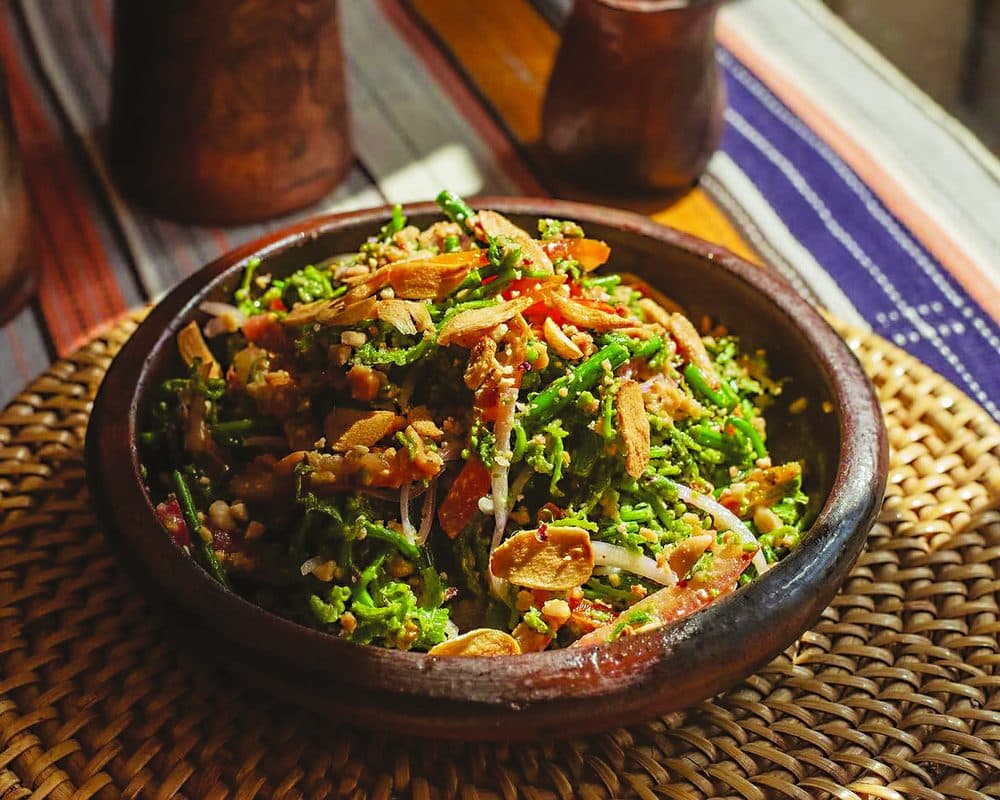
Mustard greens, bean leaves, pumpkin shoots and spinach were often torn rather than chopped. Mothers and grandmothers would patiently remove fibres, bruise leaves between their palms and shred them into pieces before cooking.
Nobody thought of this as a technique. It was simply how they had learnt to cook, just as those before them had done.
For Chef Aketoli Zhimomi, who has been bringing greater attention to Naga cuisine and indigenous ingredients, this is not nostalgia but practice. Certain greens, she says, should never meet a knife.
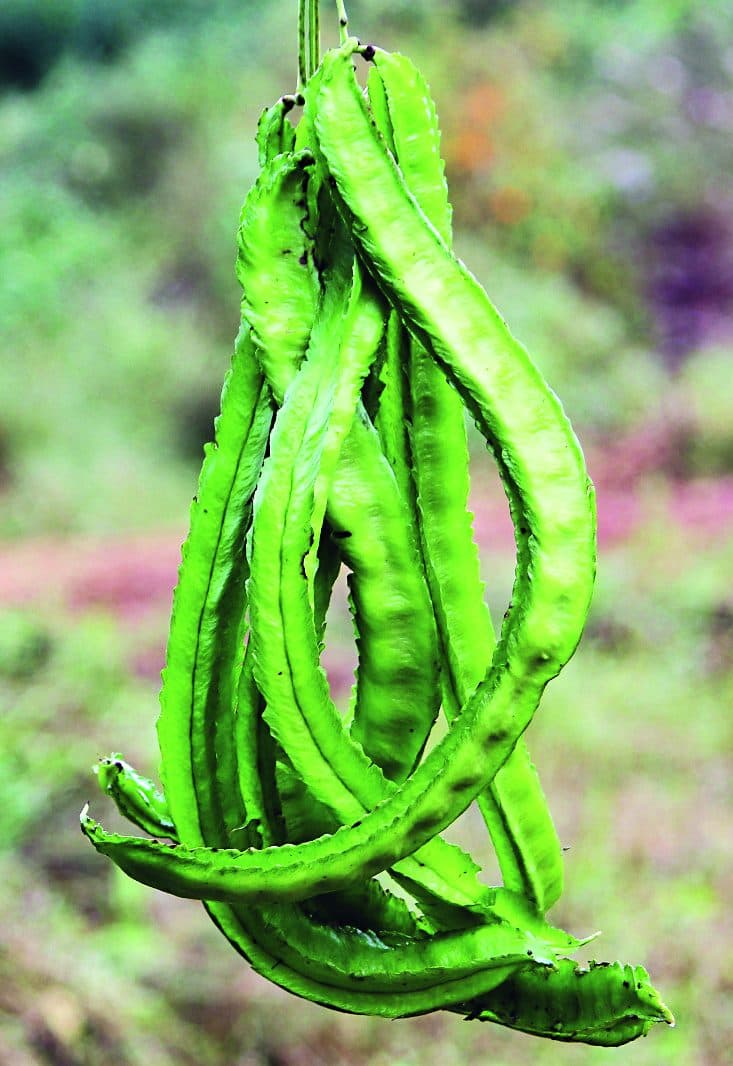
Kumthopeni, the local name for the winged bean, is one such seasonal ingredient. Thick and slightly coarse, it is first bruised gently in the palms before being torn apart. “There is a lot of magic in the hands,” she says. “The warmth of the palms softens the leaves.”
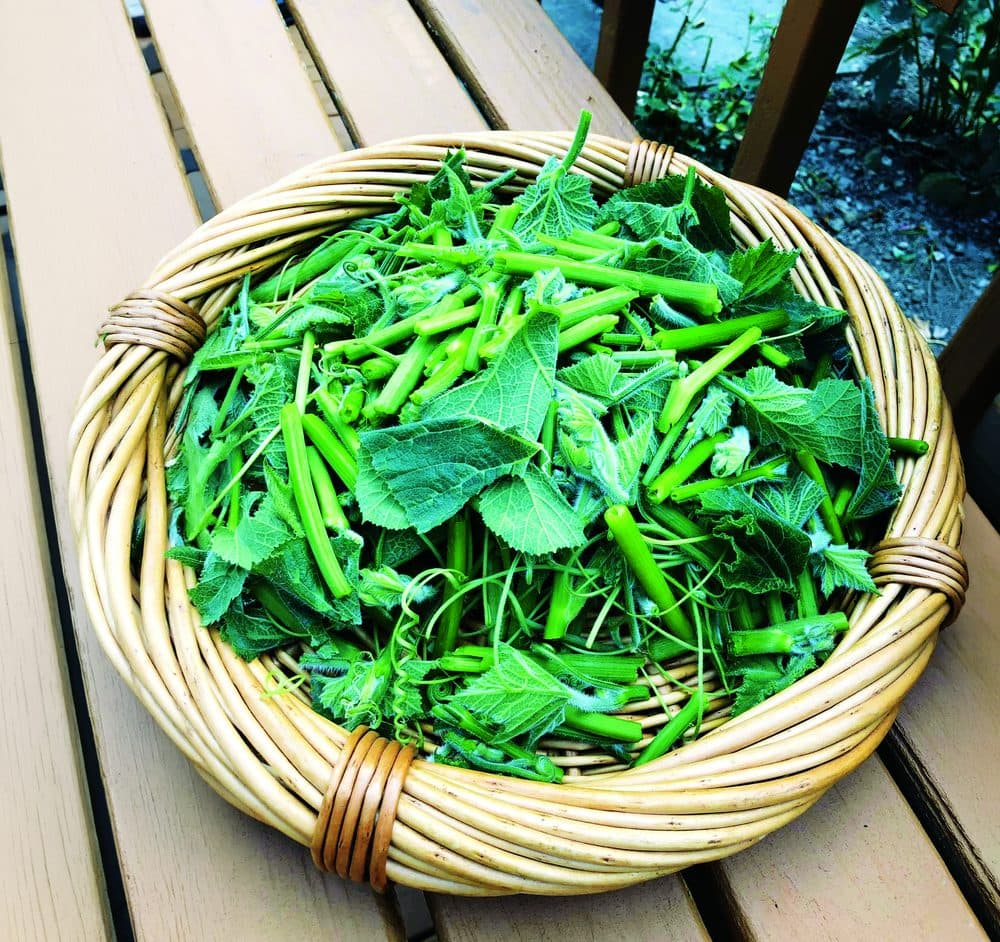
The same care is given to pumpkin leaves, a much-loved ingredient across the Northeast. Some communities cook them into rice preparations, others with smoked meat, while some simply steam and pound them. Before they reach the pot, however, they are handled: rubbed, bruised and torn. Even French bean leaves are carefully stripped of their tougher fibres by hand.
Tomatoes too often avoid the knife. Instead, they are rolled between the palms until the skin loosens, then broken apart and added to the dish.
“When you cut them, the skin separates differently,” Aketoli explains. “When you break them with your hands, they cook into the dish.”
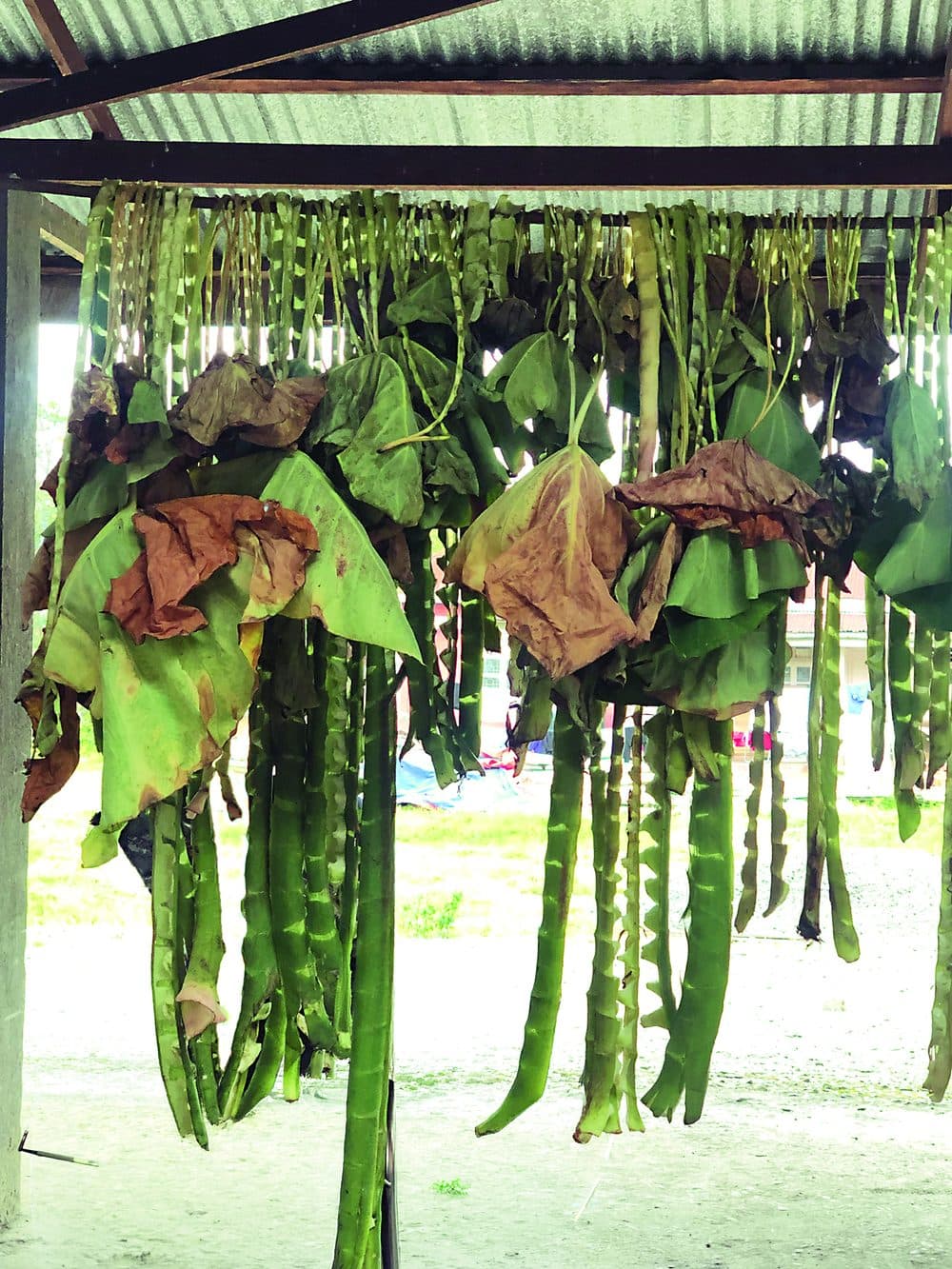
Preservation is another essential part of cooking in the Northeast. The abundance of one season is carried into the next through drying. Taro leaves, yam leaves and mustard leaves are among those commonly preserved. Before they are spread under the sun, the leaves are blanched, bruised between the palms and torn into strips.
In parts of Manipur, dried taro leaves are rolled into balls before storage, while in Nagaland they are often shredded into strips. Even while cooking, they are treated carefully, as vigorous stirring is believed to bring out the itchiness that some leaves can cause.
These small differences in handling ingredients often become markers of identity.
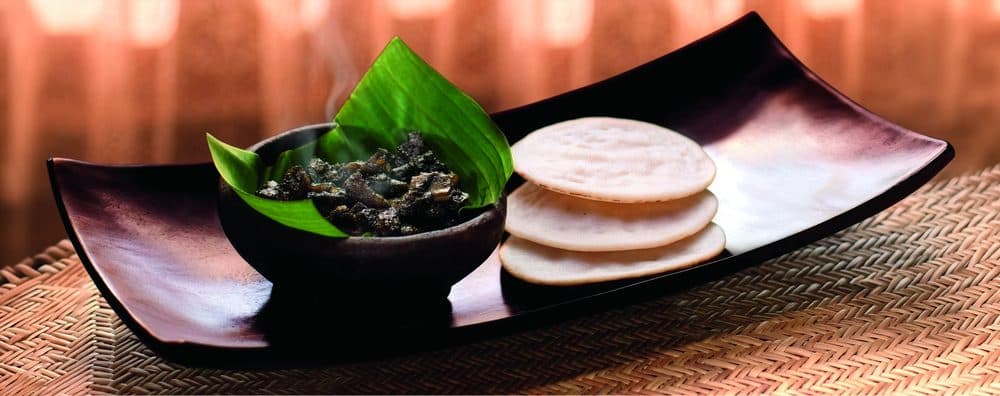
I was reminded of this while eating one of the finest signature pork dishes called Doh Neiiong, cooked by my friend Dorothy. It was simple: mustard oil, onions, pork, a little turmeric and, at the end, a freshly ground sesame paste.
The sesame was the heart of the dish. Among the Jaintias, sesame seeds are lightly roasted before being ground, creating a warm, nutty flavour. Too much roasting makes it bitter; just the right amount transforms the dish. It is often eaten with rice or putharo, the soft steamed rice cakes of Meghalaya.
Dorothy also pointed out that even the rule of tearing greens by hand has exceptions. When mustard leaves are cooked with pork or added to syrwa, a simple broth, they are broken by hand and added towards the end. But when cooked with fish, especially bony river fish, the mustard leaves are sliced finely with a knife and added just before the fire is turned off.
It is a small distinction, but one that generations of cooks have understood.
The same attention is seen in the way meat is cut. Among Khasi cooks, pork is often chopped into smaller, even pieces, with liver and heart finely cut and served with putharo. Dorothy laughs that when she cuts larger pieces, someone inevitably tells her, “You must be from Sohra.” Naga kitchens, by contrast, are known for their generous, chunky cuts.
It reminded me of my friend Grace Muivah’s pork from Ukhrul. Her pork is cut into large pieces and seasoned with little more than salt, local chillies, ginger and garlic. There are no elaborate spices competing with the meat. The taste of the pork and the heat of the chillies are allowed to shine.
That, in truth, explains the hallmark of Northeast cooking. There is an honesty to it. Nothing is added to hide the ingredient; everything is done to bring out what is already.
Much of this knowledge cannot be written down because it depends on the senses like the feel of a leaf, the sound of rice cooking, the judgement of when a fire is ready. It lives in the hands of those who have cooked for generations.
And so, whenever I cook Tangal Meh, I find myself returning to my grandmother and that small gesture by the pot. These methods are more than ways of cooking; they are links to a past that continues to live through our hands.