Key Highlights
- Prime Minister Narendra Modi is set to visit Australia this week in what is being seen as one of the most important engagements in the growing India-Australia partnership
- The visit is part of Prime Minister Modi’s three-nation tour that also includes Indonesia and New Zealand
- Trade, economic cooperation, energy security, education, defence and maritime security are expected to be the key areas of discussion
- India and Australia are also expected to discuss increasing Australian uranium exports to India under existing safeguards, alongside greater collaboration in liquefied natural gas, renewable energy and critical minerals
- Australia’s High Commissioner to India, Philip Green, said both governments were aiming to elevate defence ties further
- Both countries are expected to expand cooperation on maritime domain awareness, naval logistics, port access and surveillance
- One of the highlights of Modi’s visit is a major community event at Melbourne’s Marvel Stadium, where thousands of members of the Indian diaspora are expected to gather
- With Australian universities establishing campuses in India, both governments are expected to discuss research partnerships, skills development, innovation and greater academic mobility, building on the presence of around 140,000 Indian students studying in Australia
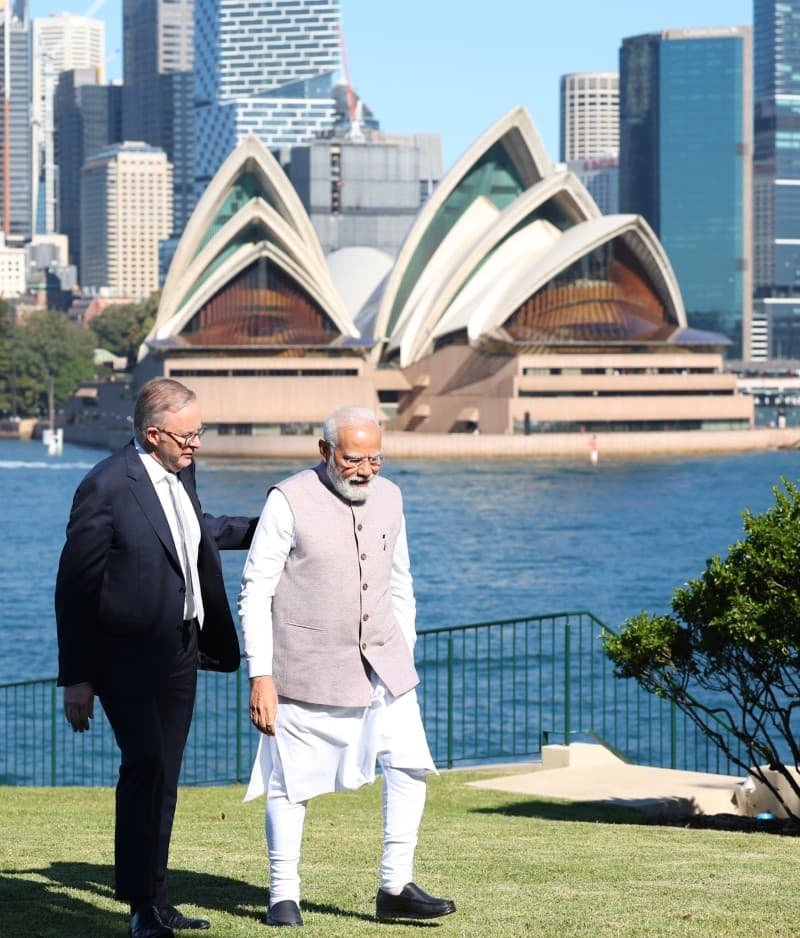
Prime Minister Narendra Modi is set to visit Australia this week for high-level talks that are likely to focus on trade, defence, maritime security, energy cooperation and critical technologies. This visit is being seen as one of the most important engagements in the growing India-Australia partnership.
The visit, part of Modi’s three-nation tour that also includes Indonesia and New Zealand, comes at a significant moment for Canberra’s Indo-Pacific diplomacy. It follows close on the heels of Japanese Prime Minister Sanae Takaichi, in late April and early May 2026, and comes days after the Quad Foreign Ministers’ Meeting, where India, Australia, Japan and the United States unveiled new initiatives aimed at strengthening maritime security, port infrastructure and regional energy resilience.
This week’s visit is expected to reaffirm the strategic relations between New Delhi and Canberra as both countries seek to deepen cooperation across defence, trade and emerging technologies while promoting a free, open and rules-based Indo-Pacific.
Trade and economic cooperation are expected to dominate the leaders’ discussions. Prime Minister Anthony Albanese and PM Modi are likely to review progress under the India-Australia Economic Cooperation and Trade Agreement (ECTA) while pushing negotiations towards a broader Comprehensive Economic Cooperation Agreement (CECA), which is expected to expand market access and investment opportunities for businesses in both countries.
Energy security is also supposed to feature prominently. India is rapidly expanding its civilian nuclear energy programme to meet soaring electricity demand driven by industrial growth and the expansion of artificial intelligence-powered data centres.
During the visit, both sides are expected to discuss increasing Australian uranium exports to India under existing safeguards, alongside greater collaboration in liquefied natural gas, renewable energy and critical minerals.
The proposed expansion of uranium supplies would revive a partnership that has seen only limited exports since Australia and India signed their landmark civil nuclear agreement more than a decade ago. Officials believe India’s ambitious plans to significantly expand nuclear power generation could provide fresh momentum to bilateral energy cooperation.
Defence and maritime security are projected to emerge as another major pillar of the visit. The two countries have expanded military cooperation over the past few years through naval, air force and multilateral exercises, while increasing intelligence sharing and logistics support. Officials on both sides are working towards a new high-level defence declaration that is likely to chart the next phase of bilateral military cooperation.
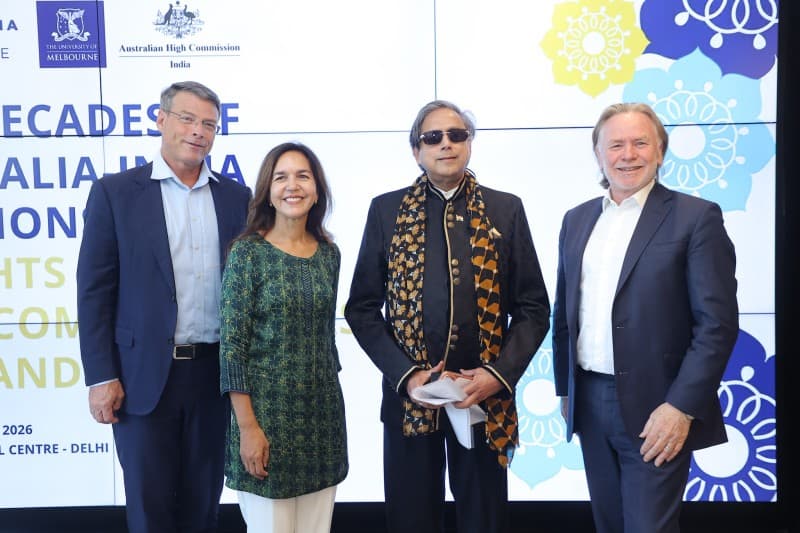
Australia’s High Commissioner to India, Philip Green, said both governments were aiming to elevate defence ties further. “Leaders have challenged us to identify what our new level of defence collaboration looks like… we are shooting towards a new and high-level joint declaration.”
Maritime security has become one of the fastest-growing areas of cooperation as both countries respond to an increasingly complex security environment in the Indian Ocean and the wider Indo-Pacific.
Following the Quad Foreign Ministers’ Meeting, the four countries announced a new maritime surveillance initiative that will improve real-time information sharing and strengthen coordination across the region. India and Australia are expected to build on that momentum by expanding cooperation on maritime domain awareness, naval logistics, port access and surveillance.
The visit will also provide an opportunity for both governments to take stock of the remarkable pace at which bilateral ties have evolved over the past decade, from cooperation in trade and education to defence, clean energy, critical minerals and regional security.
Defence industry collaboration is also billed to receive greater attention, particularly in advanced technologies such as drones, underwater sensors and autonomous systems, where Australian innovation and India’s manufacturing capabilities are seen as complementary.
Beyond the strategic agenda, Modi’s visit is expected to have a strong people-to-people dimension. One of the highlights is a major community event at Melbourne’s Marvel Stadium, where thousands of members of the Indian diaspora will gather.
The Indian-origin community in Australia now exceeds one million people and has become one of the fastest-growing and most influential migrant communities in the country. Senior Australian officials have repeatedly described the diaspora as a vital bridge connecting the two democracies through business, education, innovation and culture.
Education is expected to be another important area of discussion for PM Modi. Australia has significantly expanded its educational engagement with India, with Australian universities establishing campuses in the country and more institutions exploring similar opportunities. Both governments are expected to discuss research partnerships, skills development, innovation and greater academic mobility, building on the presence of around 140,000 Indian students studying in Australia.
Critical minerals and advanced technologies are expected to figure prominently in the talks. As countries race to secure supply chains for batteries, electric vehicles and clean energy technologies, Australia is positioning itself as a reliable supplier of critical minerals to India. The leaders are also likely to explore closer cooperation in semiconductors, artificial intelligence, cyber security and digital technologies as both countries seek to reduce vulnerabilities in global supply chains.
Business leaders are busy preparing for the visit, with industry groups hoping to engage the Prime Minister on opportunities in infrastructure, clean energy, manufacturing and technology. The Australia India Business Council, which is marking its 40th anniversary, and the Australia-India CEO Forum are among organisations expected to be involved in business engagements during the visit.
The visit will also provide an opportunity for both governments to take stock of the remarkable pace at which bilateral ties have evolved over the past decade, from cooperation in trade and education to defence, clean energy, critical minerals and regional security.
The July visit will be Modi’s third to Australia after his landmark visits in 2014 and 2023. Coming immediately after the Japanese Prime Minister’s visit to New Delhi and against the background of renewed Quad engagement, this trip is expected to reinforce Australia’s growing focus on the Indo-Pacific while opening a new chapter in its Comprehensive Strategic Partnership with India.
When is Prime Minister Narendra Modi visiting Australia?
When is Prime Minister Narendra Modi visiting Australia?
Prime Minister Narendra Modi is expected to visit Australia from July 8 to July 10, 2026.
Does India have good relations with Australia?
Does India have good relations with Australia?
Yes, both countries have a long and rapidly growing relationship. Modi’s upcoming visit will also provide an opportunity for both governments to take stock of the remarkable pace at which bilateral ties have evolved over the past decade, from cooperation in trade and education to defence, clean energy, critical minerals and regional security.
What are some key discussion points during PM Modi’s visit to Australia?
What are some key discussion points during PM Modi’s visit to Australia?
Trade, economic cooperation, energy security, education, defence and maritime security are expected to be the key areas of discussion.
Who is Australia’s High Commissioner to India?
Who is Australia’s High Commissioner to India?
Australia’s High Commissioner to India is Phillip Green.
Will there be any diaspora event during Modi’s visit to Australia?
Will there be any diaspora event during Modi’s visit to Australia?
One of the highlights of Modi’s visit is a major community event at Melbourne’s Marvel Stadium, where thousands of members of the Indian diaspora are expected to gather.
How many times has Modi visited Australia as Prime Minister?
How many times has Modi visited Australia as Prime Minister?
This is the Prime Minister’s third major visit to Australia after his landmark visits in 2014 and 2023.