


 ion
ionKey Highlights
- Yoga is not one practice but a spectrum of approaches, with different styles addressing different physical, emotional and nervous-system needs
- Ashtanga, Vinyasa, Power, Rocket and Hot Yoga belong to the “fire” element, building heat, discipline, endurance and measurable progress
- Hatha and Iyengar Yoga represent the “earth” element, focusing on alignment, posture, balance and structural awareness
- Yin Yoga works on fascia, ligaments and connective tissue through long-held postures, encouraging stillness and emotional release
- Restorative Yoga uses extensive prop support to activate deep relaxation and help reset an overworked nervous system
- Kundalini Yoga combines breathwork, movement and mantra to cultivate awareness and create a sense of mental and energetic renewal
- The best yoga style is not the most popular or physically demanding one, but the practice that matches your needs, whether healing, focus, strength, recovery or self-discovery
Fire, Earth, Water and Ether
Heat, sweat and structural discipline
Four styles share common energy — they build heat, they demand, and they reward consistency with measurable progress.
Ashtanga, the foundation
Ashtanga is the practice that taught me the difference between discipline and self-punishment, a distinction I had previously considered philosophical rather than anatomical.
The Primary Series — Yoga Chikitsa, or yoga therapy — is a fixed sequence of roughly 70 postures that will locate every asymmetry in your body and illuminate it patiently, for as long as you keep showing up. Six progressive series. Most practitioners spend years in the first. That is not a failure. That is the point.
When the sequence never changes, the only variable is you. Progress becomes visible not as the acquisition of new shapes but as the deepening of ones you have been doing for years. The difference between doing Trikonasana and actually being in it.
Vinyasa, the dance
If Ashtanga is grammar, Vinyasa is literature — the same elements assembled into something that moves. Each posture is breath-linked: inhale to extend, exhale to fold, the breath becoming not accompaniment but architecture.
A well-sequenced Vinyasa class is genuinely beautiful to inhabit. No two are identical, which is simultaneously its greatest gift and its most productive danger.
The Bhagavad Gita teaches us: “Let right deeds be thy motive, not the fruit which comes from them.” In a Vinyasa class, this means: stop checking your warrior pose in the mirror and feel your feet on the floor.
Power and Rocket Yoga — the workout
Power yoga is Ashtanga stripped of its spiritual layer and repackaged as a fitness class.
Target: Muscular endurance, sweat and rhythmic heat.
Method: High-intensity sequences without the Sanskrit.
Mindset: Focused discipline — meeting the stiff body on the level of pure physical effort.
The new variations of yoga are entrenched in movement. Think Rocket yoga, developed by Larry Schultz. It is a perfectly legitimate gateway, not as rigid as traditional Ashtanga Vinyasa. As Bob Weir of the Grateful Dead apparently said: “It gets you there faster”.
Bikram/Hot Yoga — the forge
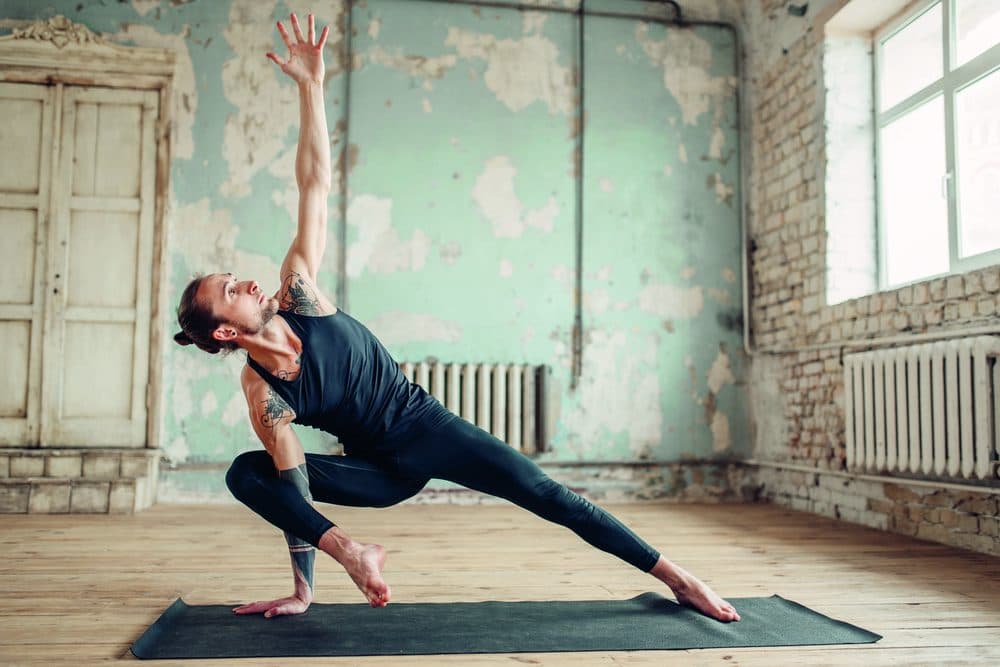
Twenty-six postures. 105°F. Forty per cent humidity. Always in the same order. Bikram Yoga is a trademarked forge — it will either reveal your mental architecture or rearrange it.
Hot yoga (the non-Bikram variant) offers the heat without the rigid sequence. For those who need external pressure to find internal stillness, it works. Bring a second towel.
Earth Yoga
Precision, posture and therapeutic alignment
If fire transforms through effort, earth transforms through attention. These practices ask you to slow down enough to notice what has always been there, like the weight distribution in your feet, the tilt of your pelvis, the way one shoulder quietly carries more of life than the other.
Hatha — the Mother

Hatha yoga is to every other style what the trunk is to the tree. The term — ha (sun) and tha (moon) — refers to the union of opposites: effort and ease, strength and surrender. The Hatha Yoga Pradipika, written in the 15th century, is its primary text: part anatomical manual, part mystical allegory, occasionally both in the same line.
In studios around the world, “Hatha” signals a slower, more foundational class. This is accurate but undersells it. Hatha is the grammar with which all other styles speak. Slower-paced holds. Deliberate balance. Heat built through stillness rather than flow. If you are new, or returning after the particular disruption of a few years lived too fast, start here.
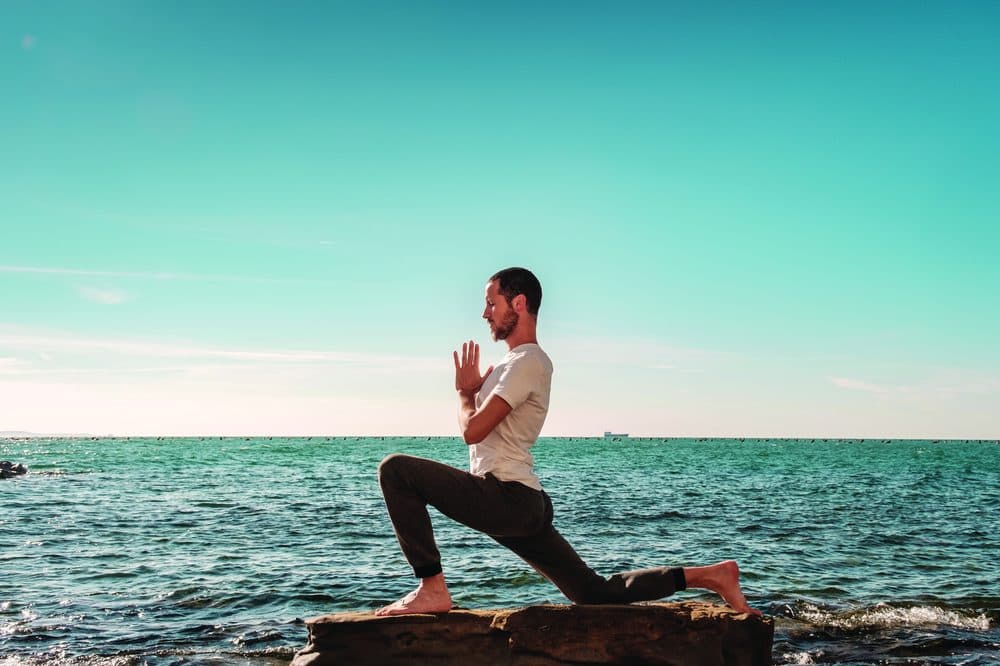
There is something I find quietly moving about practising Hatha on grass — in the particular early-morning light of an Australian coastal town, where the eucalyptus is still deciding whether to be green or silver and the kookaburras are being aggressively cheerful overhead. The groundedness is literal. Hatha suits this. It does not rush you.
Iyengar — the anatomical science
B.K.S. Iyengar brought to yoga what a master architect brings to a building: the insistence that every structural decision is consequential. Props like blocks and straps are not training wheels. They are tools of mechanical advantage, designed to allow the body to access therapeutic benefits regardless of physical limitation.
The Sutra again: sthiram sukham asanam — steady and comfortable. Iyengar understood that most bodies achieve one at the expense of the other. Props restore both simultaneously, allowing the nervous system to release rather than brace.
Iyengar teachers train for at least three years before certification. Their alignment of your sacrum in class will tell you more about your pelvis than a month of flow classes. I recommend Iyengar to students with injuries more reliably than I recommend anything else.
The Water Element
Bypassing the muscles to heal what lies beneath
There is a misconception — particularly in fitness culture — that a yoga class’s value is proportional to its physical difficulty. The sweating, shaking, the post-class endorphin rush are the point. This misconception is, I would argue, a symptom of precisely the pathology yoga is designed to address.
Yin Yoga — confrontational stillness
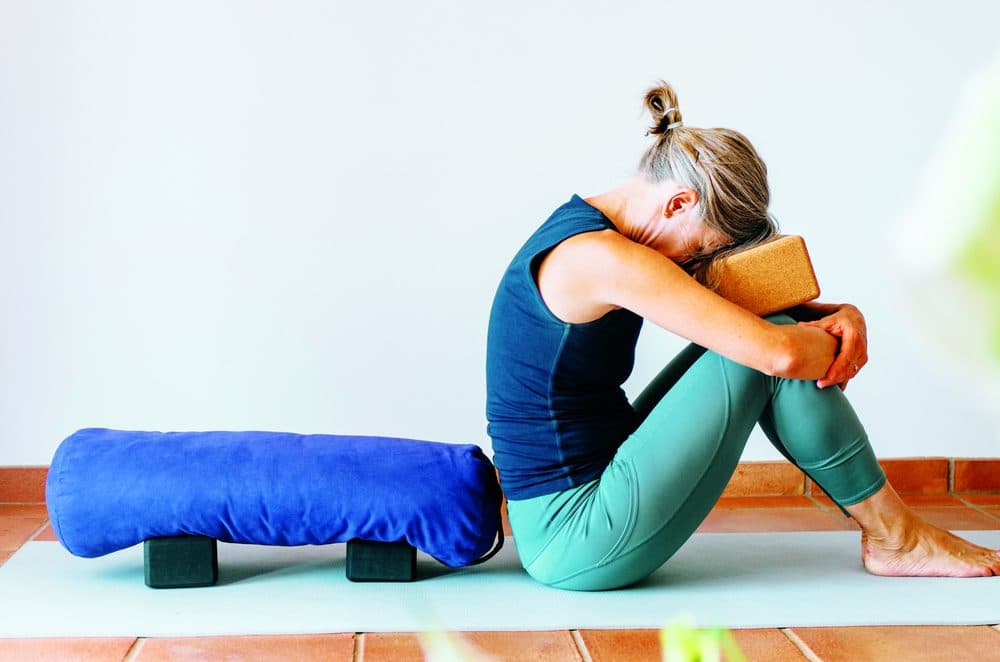
The day I practiced Yin yoga for the first time I cried.
Yin holds postures for three to 10 minutes, targeting not muscle tissue but fascia, ligaments, and joints — the body’s deeper structural web, which responds to time and sustained gentle loading rather than to force. Drawing from Traditional Chinese Medicine, the theory is that these long holds stimulate the meridian system and release patterns of holding that accumulate, invisibly, over years of sitting on chairs and low-grade anxiety.
The hardest thing I ask students to do in a Yin class is not the shape. It is to stay. Five minutes in a passive dragon pose will make those fluctuations visible with a clarity no amount of athletic Vinyasa quite achieves. The stillness is the mirror.
Restorative Yoga — absolute surrender
Restorative yoga goes further. Fully supported by props, the body is held in four to six positions for up to 20 minutes each. The nervous system receives, perhaps for the first time in weeks, the sustained signal that it is safe to stop guarding.
The research on this is clear: restorative practice achieves a deeper healing state than simple sleep! Zero muscular effort via heavy prop support. Ten to 20 minutes of absolute surrender. I use it with students in burnout, people managing chronic pain, and athletes whose nervous systems have forgotten the distinction between effort and emergency.
(This is of course not a substitute for 7-8 hours of deep sleep every night.)
It is, counterintuitively, among the most demanding things I teach.
The Ether Element
Spirit, sound and practices that elevate Kundalini — the system reboot
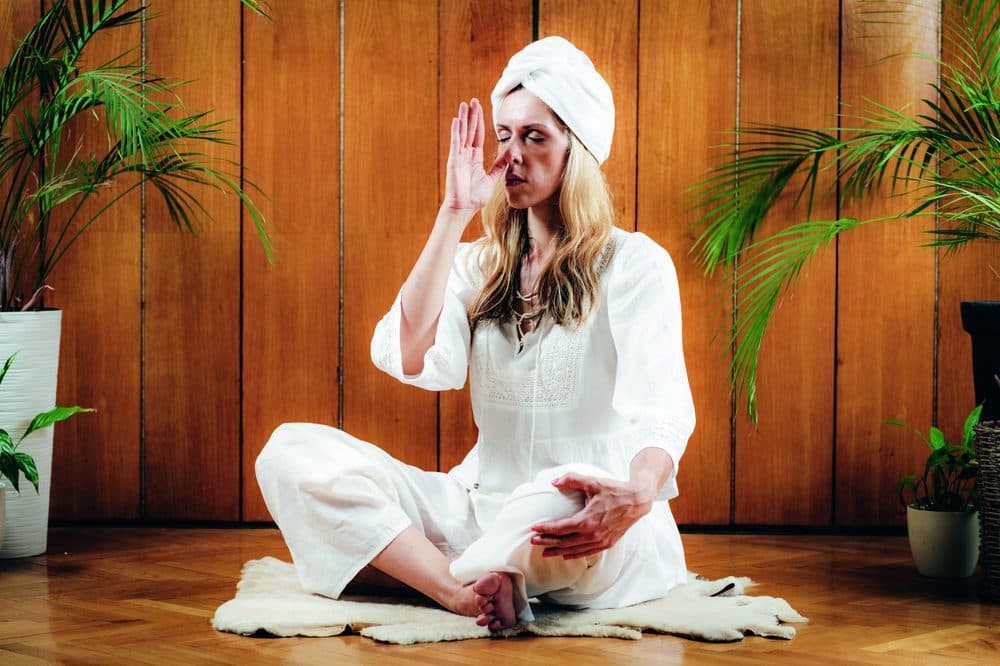
Kundalini does not ask much of your hamstrings. It asks a great deal of your attention.
Kriyas — specific sequences of breath, movement and mantra — work directly with the nervous and endocrine systems. From sequences ranging from three to 62 minutes, the cumulative effect is less like a workout and more like a hard restart of a device that has been running too many processes for far too long.
Find Your Practice
Yoga is not an activity you do. It is structural repair applied to a specific deficiency. The question is not which style is best. The question is: what is the current architecture of your needs?
The most honest map I know asks five questions:
Are you physically misaligned?
Iyengar. Rebuild structural precision.
Are you feeling restless and your tissues rigid?
Yin. Confront the pause.
Are you trapped by stiff athletic intensity?
Power. Transition sweat into focus.
Are you chronically exhausted?
Restorative. Surrender the weight of holding yourself up.
Are you a slave to your own productivity?
Karma Yoga. Master the free offering.
Have a question about which style is right for you? Something in this article landed differently than expected?
Write to me at varunashunglu@gmail.com; I genuinely love hearing from people at any stage of the practice.
If you are already a practitioner, read up more on What kind of yoga you do.
Which yoga style is best for beginners?
Which yoga style is best for beginners?
Hatha Yoga is often the most accessible starting point, offering slower-paced classes that help build foundational strength, balance and body awareness.
What is the difference between Ashtanga and Vinyasa Yoga?
What is the difference between Ashtanga and Vinyasa Yoga?
Ashtanga follows a fixed sequence of postures practised in the same order, while Vinyasa is more fluid, with classes varying according to the teacher and sequence design.
Which yoga style is best for stress relief and relaxation?
Which yoga style is best for stress relief and relaxation?
Restorative Yoga is specifically designed to calm the nervous system through supported postures and extended periods of rest.
How is Yin Yoga different from other forms of yoga?
How is Yin Yoga different from other forms of yoga?
Yin Yoga focuses on long-held passive stretches that target fascia, joints and connective tissues rather than muscular strength or cardiovascular intensity.
What makes Iyengar Yoga unique?
What makes Iyengar Yoga unique?
Iyengar Yoga emphasises precision, alignment and the use of props such as blocks, straps and bolsters to make poses safe and effective for all bodies.
Can yoga help with burnout and mental fatigue?
Can yoga help with burnout and mental fatigue?
Yes. Practices such as Restorative Yoga, Yin Yoga and Kundalini Yoga are often used to support nervous-system regulation, stress management and mental recovery.
Which yoga style provides the most physically demanding workout?
Which yoga style provides the most physically demanding workout?
Power Yoga, Rocket Yoga, Ashtanga and Hot Yoga are generally considered among the most physically challenging styles due to their intensity and emphasis on strength and endurance.
What is Kundalini Yoga?
What is Kundalini Yoga?
Kundalini Yoga combines breathwork, movement, meditation and mantra to cultivate awareness, focus and a sense of mental and energetic balance.
How do I choose the right yoga style for my needs?
How do I choose the right yoga style for my needs?
Choose based on your current goals: Iyengar for alignment, Yin for flexibility and stillness, Power Yoga for fitness, Restorative for recovery, and Kundalini for mindfulness and inner awareness.