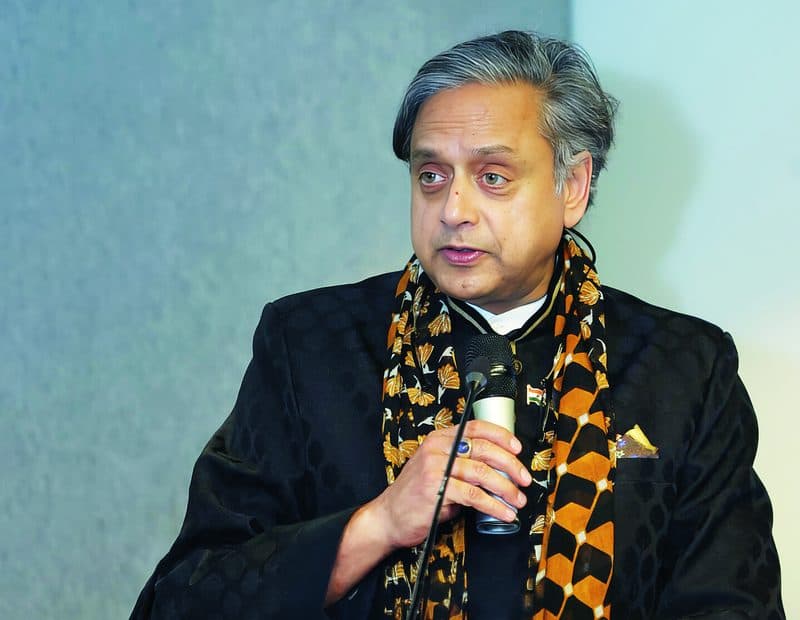
Eclectic is a word guilty of being applied too generously to public figures, but it feels insufficient when used to describe Shashi Tharoor. A four-time Member of Parliament, former Under-Secretary-General of the United Nations, author of more than 25 books, wordsmith par excellence and a keen observer and admirer of Australia, Tharoor is among a select few who can opine with authority on all major (and occasionally overlooked) aspects of the Indo-Australian relationship.
In a conversation with veteran journalist and writer Rasheed Kidwai, whom Tharoor has known for decades, the former Indian Union Minister tells DOT.in about his wide-ranging interests in and about Australia.
What is your earliest memory of Australia?
Australia first came alive for me through cricket, long before I encountered it as a country. It was a distant place associated with formidable cricketers, enormous grounds and the rather painful experience of waking up at an ungodly hour only to find that India had already lost three wickets.
But Australia also seemed familiar in other ways. It was another former British colony, another parliamentary democracy and another country that had made the English language distinctly its own. As I grew older, Australia became much more than the place from which cricket scores arrived at breakfast. It became a complex and fascinating society in its own right, one that I have come to appreciate not merely from the boundary ropes but through its history, people and remarkable diversity.
How often do you visit Australia, and has there been a standout trip that you have special regard for?
I have been fortunate to visit Australia on a number of occasions, for literary festivals, academic engagements, public conversations and political discussions. What has always struck me is that the country reveals itself rather differently depending on the purpose of one’s visit. A literary festival introduces you to an Australia of ideas and argument; Canberra inevitably directs one’s attention towards policy and statecraft; Melbourne combines intellectual seriousness with an almost theatrical devotion to sport and culture; Sydney presents its incomparable physical beauty with very little false modesty; and Bowral, inevitably, brings out the cricket tragic in me.
I hesitate to select one visit because memories tend to blur pleasantly into one another. But the visits in which I have been able to combine my various enthusiasms, politics, books, cricket and conversation, have naturally been the most satisfying.
Australia is also a country where India is increasingly present in everyday life. Each successive visit seems to reveal a relationship that has become less diplomatic and more human. That, to me, is the most significant transformation.
When you spoke at the University of Melbourne in November 2024, the discussion centred on a shifting world order. In that uncertain order, is India-Australia friendship driven more by shared values or shared anxieties?
The short answer is both. A durable relationship cannot survive on anxiety alone.
There is no doubt that the strategic environment of the Indo-Pacific has encouraged India and Australia to look at each other with an urgency that was not always present in the bradmanpast. We share concerns about the stability of the region, freedom of navigation, coercive behaviour, the resilience of supply chains and the preservation of a world in which rules matter.
But anxieties can bring countries together only temporarily. What gives the relationship the possibility of permanence is the broader architecture beneath them: two federal democracies, two plural societies, two countries shaped by the Commonwealth tradition but not confined by it, two Indian Ocean powers and increasingly two societies connected by families, students, professionals and ideas.
Shared values do not mean identical positions. India will continue to prize strategic autonomy, and Australia will continue to operate through alliances in ways India does not. Friendship does not require uniformity. The healthiest international relationships are not built upon agreement on everything. They are built upon sufficient trust to disagree without jeopardising the relationship itself.
As Chairperson of the Indian Parliament’s Standing Committee on External Affairs, how do you see the Quad (comprising Australia, India, Japan, US) and its relevance in a multialigned geopolitical order?
The Quad is, in many ways, a very good expression of the kind of world India believes is emerging: one in which countries need not belong to a single camp in order to work closely together on matters of common interest.
India’s foreign policy has increasingly embraced multi-alignment — the idea that we can maintain different partnerships, of differing degrees of intensity, without surrendering our strategic autonomy. The Quad fits comfortably within that framework. India, Australia, Japan and the United States have distinct histories, alliances and foreign-policy traditions, but we also have a substantial convergence of interests in the Indo-Pacific.
That convergence extends well beyond questions of security. Maritime cooperation, disaster relief, resilient supply chains, critical and emerging technologies, health, connectivity and climate resilience are all areas in which the four countries can make a practical contribution.
For India, the value of the Quad lies precisely in this combination of strategic purpose and practical cooperation. It is not a demand for uniformity; it is an acknowledgement that countries with different perspectives can nevertheless find significant areas in which to act together. In an increasingly multipolar world, I suspect such flexible partnerships will become more, rather than less, important.
Australia is also a country where India is increasingly present in everyday life. Each successive visit seems to reveal a relationship that has become less diplomatic and more human
At the Australia India Institute earlier this year, you described education as a “very important bridge” resting on “lived experience” between India and Australia, beyond policy and diplomacy. How can universities in both countries turn student mobility into deeper intellectual and cultural exchange?
The important thing is to ensure that mobility does not become merely transactional. An Indian student who spends three or four years at an Australian university should experience Australia, not simply acquire an Australian qualification. That means universities have to create opportunities for genuine engagement, with Australian students, with the wider community, with the country’s history and culture, and with its intellectual life. International students should not exist in a parallel universe on campus. The friendships and experiences they form can ultimately matter just as much to the bilateral relationship as the degree they receive.
I would also like the traffic to become more genuinely two-way. There are many Indian students in Australia, but still not enough Australian students spending substantial periods in India. India has extraordinary universities, research institutions, technology companies and cultural traditions from which Australian students can learn enormously.
Beyond student exchanges, the real opportunity lies in institutional collaboration: joint degrees, faculty exchanges, research partnerships and sustained cooperation in fields where our two countries have complementary strengths, from renewable energy and climate science to artificial intelligence, public health, agriculture and ocean studies.
Indian-born people in Australia now form the country’s largest and fastest-growing migrant community. How can the diaspora become a cultural interpreter between the two societies rather than simply an economic or electoral constituency?
The Indian community in Australia has an increasingly important role because it knows both countries in a way that governments, quite frankly, cannot.
Indian Australians live the relationship every day. They can explain India to Australians without reducing it to curry, cricket and Bollywood, and they can explain Australia to Indians beyond the familiar images of beaches, kangaroos and the MCG. That ability to move naturally between two cultures is enormously valuable. We are already seeing this in business, academia, medicine, technology, the arts, journalism and public life. As Indian Australians become more deeply represented in Australian institutions, their contribution will increasingly shape not merely Australia’s understanding of India but Australia itself.
Indian Australians live the relationship every day. They can explain India to Australians without reducing it to curry, cricket and Bollywood, and they can explain Australia to Indians beyond the familiar images of beaches, kangaroos and the MCG
And this is particularly interesting among younger generations. Someone can be entirely Australian while retaining a meaningful connection with India through family, language, food, culture or memory. There need be no contradiction between those identities. Ultimately, the most powerful people-to-people relationship is one that no longer depends principally upon governments to sustain it. When friendships, families, universities, businesses and cultural institutions develop their own connections, the bilateral relationship acquires roots that are much harder to disturb.
You appeared at the Melbourne Writers Festival during the Australian launch of Inglorious Empire. Did Australian audiences respond differently to your critique of the empire, given their own colonial history?
Certainly the Australian context adds another dimension to the conversation. The British Empire was not experienced uniformly. India was conquered, exploited and governed as a possession. Australia emerged from settler colonialism, with an entirely different relationship between the British state, settlers and Indigenous peoples. It would therefore be intellectually lazy to pretend that the colonial histories are interchangeable. But Australians are acutely aware that history is not merely what happened; it is also what societies choose to remember, celebrate, suppress or reinterpret.
What I found interesting was that Australian audiences could engage with the critique of empire without necessarily feeling that the argument was addressed at them. Indeed, Australia’s own continuing debates about Indigenous history, national identity and the legacy of British institutions made many readers receptive to the larger question: how should societies judge institutions whose legacies include both things they value and profound historical injustice? My argument has never been that history requires inherited guilt. It requires historical honesty. One cannot undo the past. One can, however, decline to romanticise it.
As a lifelong exponent of the English language in its most eloquent and engaging forms, what appeals to you about Australian English? Do Indian and Australian idioms represent two successful adaptations of the lingua franca?
Absolutely. English ceased to belong exclusively to England a very long time ago, though I am not entirely certain England has received the memorandum.
Both India and Australia demonstrate the remarkable adaptability of the English language: its ability to travel, absorb influences, acquire new rhythms and develop distinctive local vocabularies while remaining intelligible across continents. Australian English has a particularly attractive informality. It abbreviates with abandon, distrusts verbal pretension and has elevated understatement almost to an art form. Indian English, meanwhile, has absorbed words, cadences and constructions from numerous Indian languages and produced expressions that sometimes puzzle outsiders but seem perfectly natural to us.
English ceased to belong exclusively to England a very long time ago, though I am not entirely certain England has received the memorandum
We have even contributed such useful innovations as “prepone,” which fills an obvious lexical deficiency that the British somehow managed to endure for centuries. Neither Australian English nor Indian English should be regarded as an imperfect imitation of British English. They are confident varieties in their own right, shaped by the histories and personalities of the societies that speak them. That, after all, is one of the great strengths of English: everybody inherits it, and everybody is entitled to make it their own.
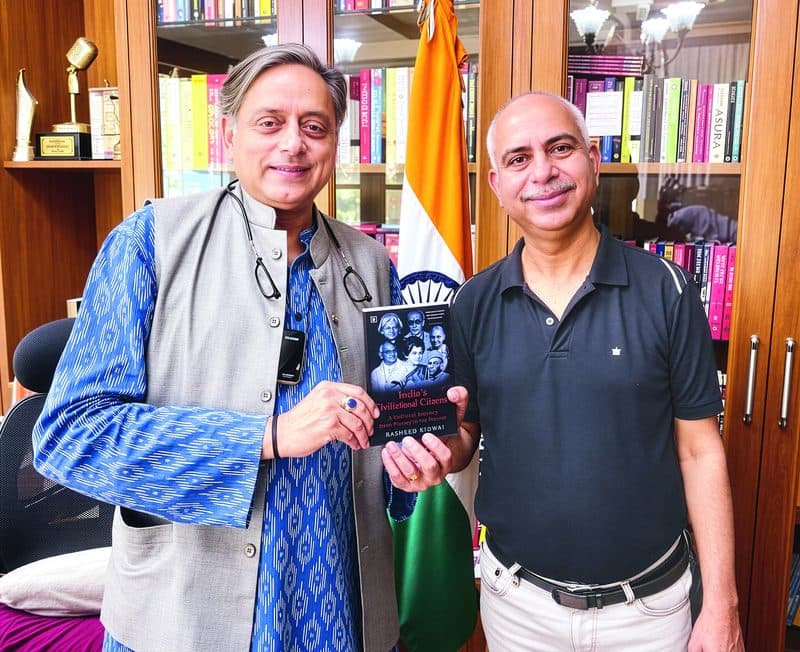
Coming to another of your loves: cricket. What is your earliest memory of waking up at the crack of dawn to tune into an India vs Australia Test on radio, and later turn on the TV for an India vs Australia match?
Anyone of my generation who loved cricket developed a peculiar relationship with time zones. Australia meant alarm clocks, transistor radios and the heroic attempt to remain awake while the rest of one’s household slept. There was something magical about hearing a commentator describe Melbourne, Sydney or Adelaide while one was sitting thousands of miles away in India.
In those days, imagination had to supply what television would later provide. You constructed the field from the commentary. A pause in the commentator’s voice could produce unbearable suspense. And because communication was less instantaneous, Australia seemed genuinely distant.
Television transformed all that. Suddenly you could see the startling size of the MCG, the hard Australian light, the bounce of the pitches and the hostility of the fast bowlers.
Today’s viewer can watch every delivery on a phone and consult 15 statistics before the next ball. We have gained an enormous amount. But I occasionally miss the radio age, when cricket existed partly in the imagination.
India and Australia’s men’s teams have won 15 ICC titles between them this century. In your opinion, has the Border-Gavaskar Trophy now become the sport’s defining rivalry?
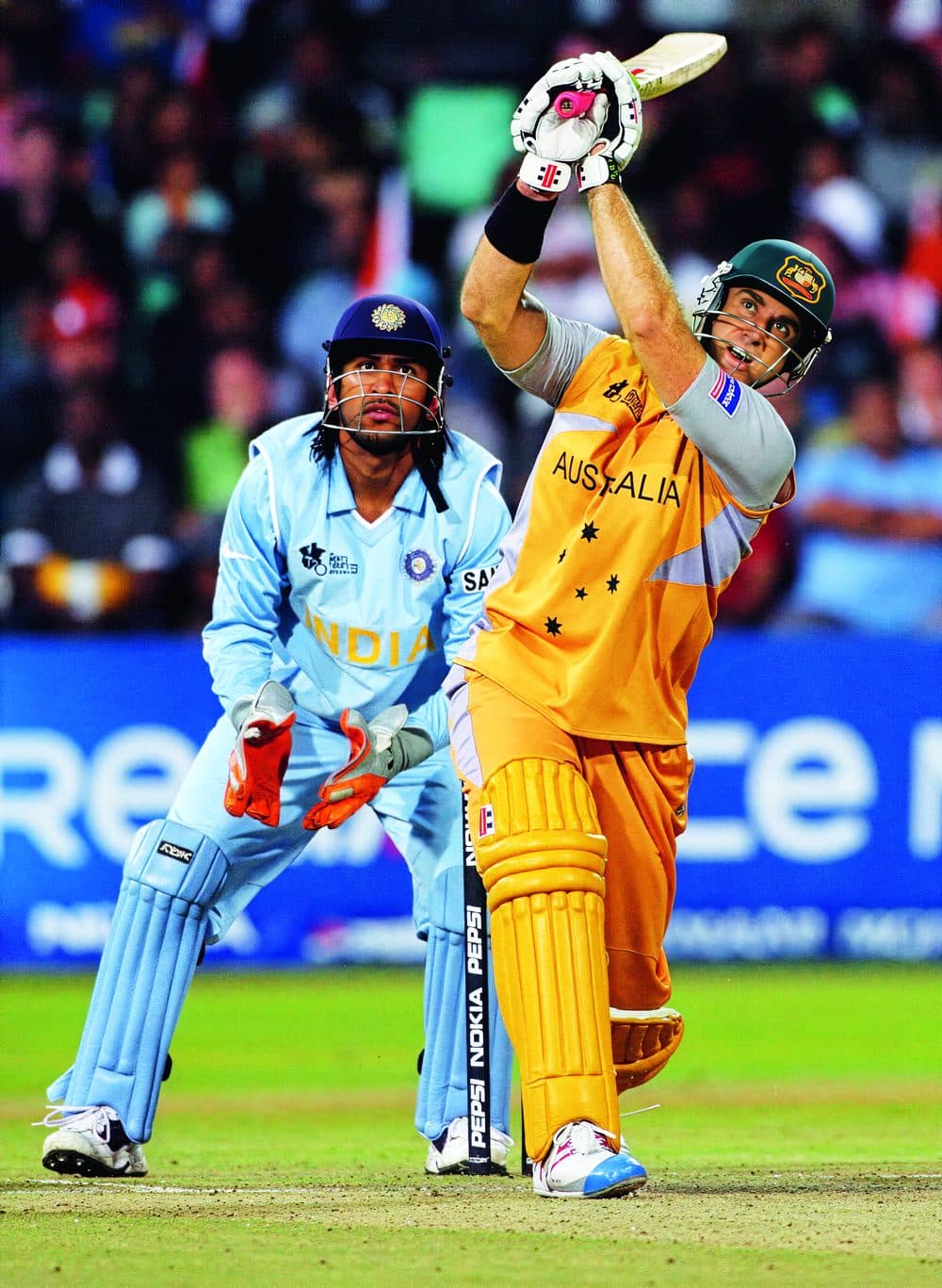
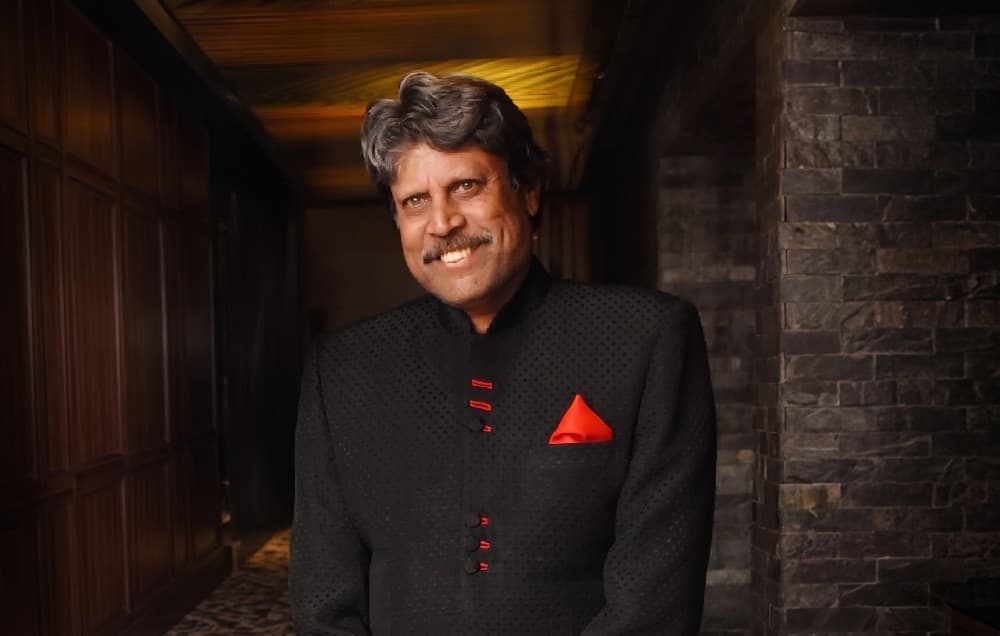
The Border-Gavaskar Trophy has certainly acquired a stature that few bilateral contests in world cricket can match. What makes India-Australia so compelling is not simply the quality of the cricket, but the history, intensity and contrasting traditions behind it. From Kapil Dev’s heroics in Melbourne and the extraordinary turnaround at Eden Gardens in 2001 to the series victory under Ajinkya Rahane in 2020-21, these contests have repeatedly produced moments that have entered cricketing folklore.
With India and Australia also among the most successful sides in world cricket this century, their encounters have acquired a significance that extends well beyond a bilateral series. Whether it is the sport’s single defining rivalry is ultimately a matter of perspective, but few rivalries have combined such sustained competitiveness with such a rich capacity for producing unforgettable cricket.
During a visit to Australia, you criticised attempts to “debunk” Don Bradman, arguing that his personal flaws should not overshadow his sporting greatness and generosity. What do you make of the differences in how Australians regard their cricketing icons as compared to Indians?
There is a broad similarity between Australians and Indians in the affection we feel for our sporting heroes, but perhaps a difference in how we respond to their imperfections. In India, our cricketing icons can sometimes acquire an almost mythological status, with their achievements becoming part of our collective memory. Australians have traditionally been somewhat more willing to subject their heroes to scrutiny, perhaps because there is a cultural instinct to bring even the greatest figures back down to earth.

But admiration need not require hagiography, just as acknowledging a person’s flaws need not erase their achievements. Bradman was not a saint, but he was an extraordinary cricketer who also showed generosity to others. We can hold both truths in our minds without allowing one to cancel out the other.
I have been fortunate to visit Canberra, Melbourne, Sydney, Adelaide, Perth, and Bowral, as well as Byron Bay... everywhere I have encountered a warmth and informality that I greatly value. There is something wonderfully liberating about an Australian landscape: the vast skies, the long horizons and that almost effortless sense of possibility
Lastly, after visits encompassing Canberra, Melbourne, Sydney and Bowral over the years, is there one image of, or feeling about, Australia that you carry most vividly?
I think what stays with me most vividly is the extraordinary sense of space and openness that Australia conveys. I have been fortunate to visit Canberra, Melbourne, Sydney, Adelaide, Perth, and Bowral, as well as Byron Bay, and each has given me a rather different impression of the country, but everywhere I have encountered a warmth and informality that I greatly value.
There is something wonderfully liberating about an Australian landscape: the vast skies, the long horizons and that almost effortless sense of possibility. At the same time, Australia’s increasingly multicultural character gives that physical openness a human dimension.
If I had to distil my feelings about the country into one thought, it would be that Australia is a place where distance does not necessarily mean remoteness. It has a remarkable ability to make you feel both far from the rest of the world and yet very much connected to it.
Also, you underestimate the range of my travels in Australia! In November 2019, I travelled to regional Western Australia to participate in a literary event hosted at the Mandurah Performing Arts Centre. During this visit to the Peel region, I also stopped by the neighbouring coastal city of Busselton to sign books and meet local booksellers. Earlier, in 2008, I inaugurated the Byron Bay Writers’ Festival. So, it’s not just the big Australian cities I have visited and spoken at.
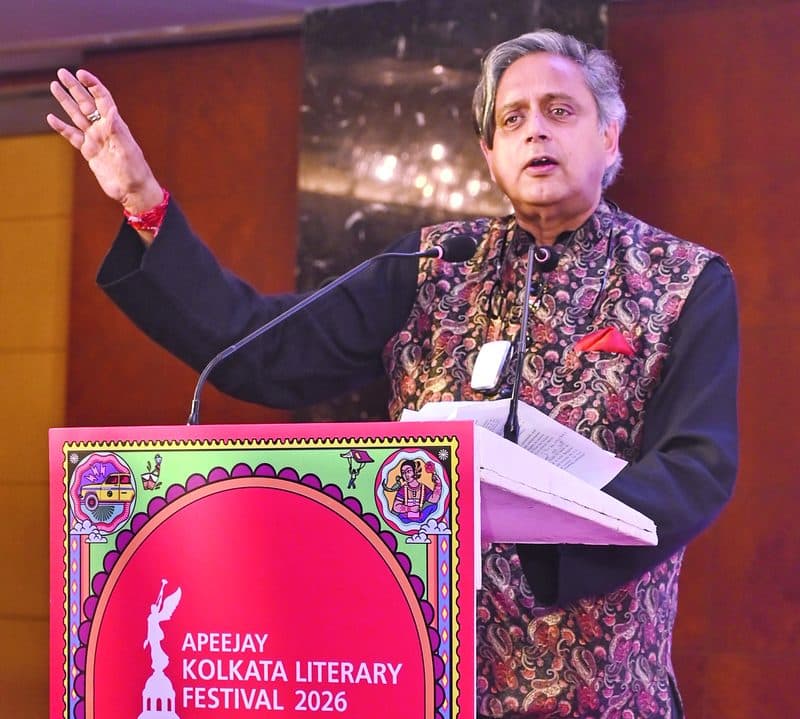
Rapid-fire Tharoorisms
- Your favourite Indian restaurant in Australia: Indian restaurants have not featured much, or at all, in my Aussie itineraries! Guess I need to remedy that next time!
- Your favourite cricket stadium in Australia: The MCG. It has a grandeur that is difficult to replicate and walking into it as an Indian cricket fan carries its own sense of occasion.
- Your favourite Australian cricketer: Shane Warne. An extraordinary competitor and one of the great characters of the game.
- Your favourite Australian author: Thomas Keneally. Schindler’s Ark is a remarkable work and I have long admired his range as a writer.
- One Australian English word you would like Indians to use more: “Arvo.” A wonderfully Australian abbreviation for afternoon, and rather more cheerful than simply saying “afternoon”.