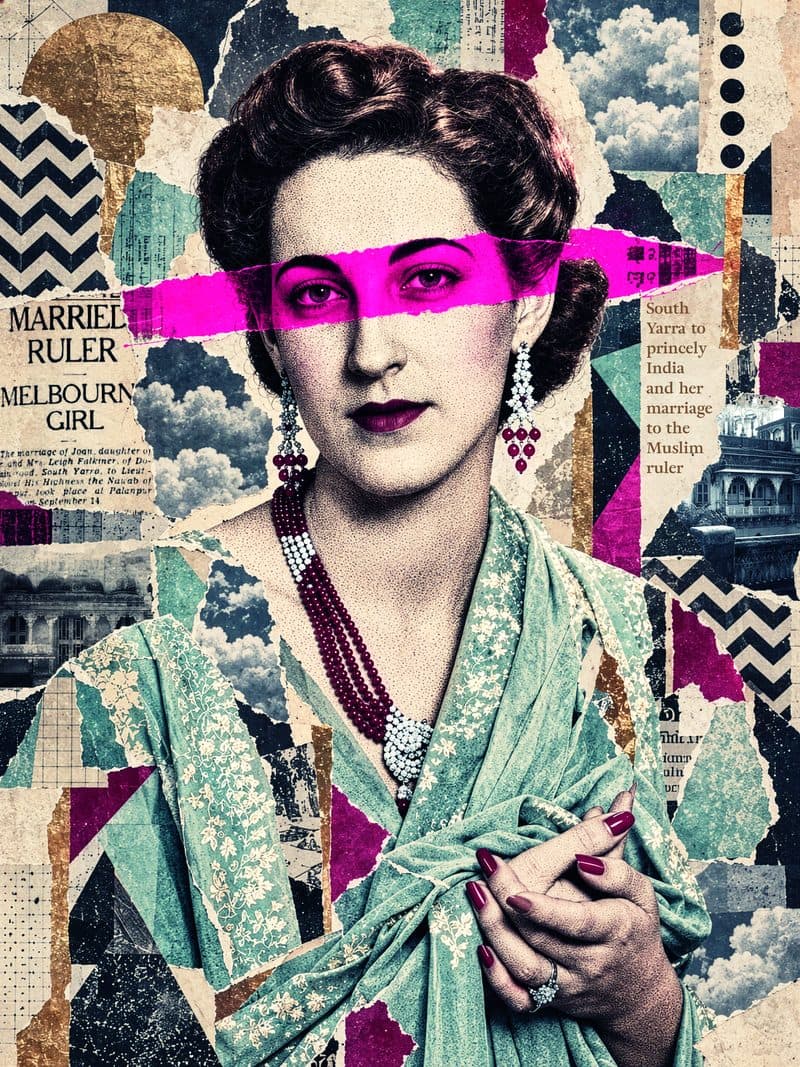
The name of Joan Alice Falkiner may be largely lost to history, but the young Australian woman — who became the Maharanee of Palanpur in 1939 — had a transnational romance to remember.
The young Joan was visiting Freiberg in Germany in 1937 when she met Taley Muhammed Khan, 55, of Palanpur, a princely state in Gujarat. Born on September 16, 1917, Joan was from an affluent family of Merino sheep breeders in Melbourne and had spent a few years in a British school. Taley, a widower with two children, didn’t let his polo injury stop him from sweeping the young woman off her feet.
Two years later, Joan set sail from Melbourne for the wedding, telegramming home to let her parents know the celebrations had been welcomed by all their subjects.
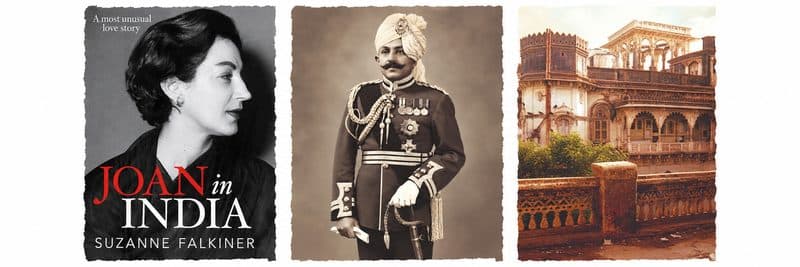
In October 1939, The Australian Women’s Weekly reported this of Joan’s parents, Leigh and Beatrice: “Although they do not approve of their daughter’s marriage entirely because of the difference in race, Mr and Mrs Falkiner discussed the situation quite calmly.” Their daughter, they told the publication, had an interest in clothes, travel, photography and tennis, and that she had an “air about her” and “carried herself well”.
The union with the Nawab, honorary aide-de-camp to the King of England, had not been given the honour of recognition by the Raj as Joan was a “commoner” and the marriage was not in keeping with the protocol of the time. However, the prince’s acquaintance with Lord Mountbatten finally bore fruit, and after enthusiastic lobbying, Mountbatten’s last official act as Viceroy on August 14, 1947, was to recognise Joan officially as Her Highness Jahan Ara Begum of Palanpur.
“For still a few minutes I am the most powerful man on earth,” Mountbatten is quoted as writing by Collins & Lapierre in Mountbatten and the Partition of India. “At 11.58pm, he settled on his last act of showmanship, creating the Australian wife of the Nawab of Palanpur a highness, in defiance of Indian caste customs and British policy,” writes Alex Von Tunzelman in Indian Summer: The Secret History of the End of an Empire.
Though the royal tags ceased to have official meaning after Independence, the acknowledgement of Joan’s status would have had private significance. Even her parents, per reports, eventually came around and visited her in India. Taley and Joan lived a life of royal splendour and had a daughter together, Shameem Sultana. After Taley’s death in 1957, his begum lived a quiet life in France. Joan died at the age of 85 on September 9, 2003, in Nambour, Queensland, Australia.
The Australian Women’s Weekly also mentioned two other Australian girls who had married Indian princes. Elsie Forrest of Sydney married the Maharaja of Tikari around 1909. They met when she was performing song and dance on the stages of Calcutta. Her collection of jewels was famed but did not save the marriage from dissolution in 1921.
Another woman, Molly Fink, was selling buttons at a charitable event in Sydney where she met the Raja of Pudukkottai, who moved to Australia to marry her.