I grew up in the city when it was known as Calcutta. Like many, I left for greener pastures. But somehow, I kept returning.
Serendipity is what I call this last ‘return’. I found a groove I fit into at exactly the right moment with the right skills. I was an insider, but with the curiosity and eyes of an outsider. And so, I decided to do a marketing project for Trincas, my family’s restaurant on Park Street.
This made me realise I knew little of Trincas’ history. What was the full name of the eponymous owner? Why did he sell the business to my grandfather? What was Park Street like in the 1960s? Sure, I’d heard oft-repeated anecdotes, but when you grow up around that sort of thing, you usually roll your eyes and carry on.
I had no idea how big a legacy I was sitting on. The older generation had passed away without physically documenting much. But here I was in the age of social media, with access to the world and generations of Calcuttans who now populated its far corners. I started to reach out on Facebook. Memories arrived digitally but with the excitement of blue airmail envelopes. They came from people who had left the city decades ago and now had different stamps within the covers of their passports.
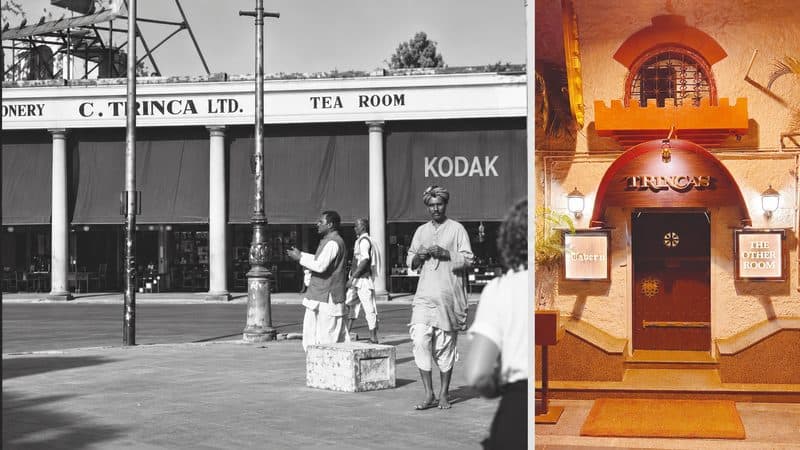
The stories I found blew me away. A hundred years ago, a Swiss baker lent his name to a tearoom on Park Street. He had migrated from Switzerland to Calcutta and by 1959, Trincas had passed into the hands of my grandfather, Om Prakash Puri, and his business partner, Ellis Joshua. The European tearoom would become a restaurant and nightclub and, by the 1960s, part of a flourishing culture of food and live entertainment on Park Street.
But Trincas was changing because Kolkata was changing.
The city had long been shaped by people arriving from elsewhere. Armenians and Europeans were part of the early story of Park Street. Later, Punjabis and Anglo-Indians played a huge role.
In the 1940s, Allied armies populated the city. Partition brought another large movement of people. There was upheaval — famines, protests, gangsters and violence and Calcutta’s signature power cuts. Communities arrived, others left, and with them came ways in which they influenced businesses, music and food.
You could taste that history. Unique cuisines like ‘Indian-Chinese’ and ‘Calcutta Continental’ had come into being and become part of the food culture. Park Street became the dine-drink-dance corridor of the city — it still is.
It was supported by entertainment — musicians, magicians and exotic beauty (not limited to cabaret dancers alone!). In the 1960s, there was Duke Ellington’s visiting orchestra, Engelbert Humperdink before he became famous, Biddu before Kung Fu Fighting, crooners in fishtail dresses (and one with a big bindi!), and musicians in tuxedos who’d go on to influence Indian pop culture. What a scene!
Around the bend on Chowringhee, there was more glamour: nightclubs like Prince’s (and Casanovas before that) at The Oberoi Grand, the infamous Golden Slipper; and world-famous Italian eateries Firpo’s and Peliti’s.
Trincas saw it all. Each generation of my family inherited a different Trincas because each inherited a different Park Street and a different Kolkata. As do all generations in every city.
Sometimes you live without knowing what your legacy really is. Perhaps, when we look for our roots, it’s worth digging through the past — messages that time-travel are the ones we don’t want to leave behind.