Key Highlights
- Some of the different varieties of fish found in Kolkata’s bazaars include pabda (butterfish), desi tyangra (catfish) and ilish (hilsa)
- Bangladesh accounts for a majority of the global hilsa catch, much of which is exported to Bengalis living abroad
- Female crabs, though often smaller than male crabs, can be richer in fat and roe (also known as ghilu)
- The different kinds of potatoes in Kolkata’s bazaars are Jyoti potato, Chandramukhi, notun aloo, Guti aloo and Badami aloo
- J. Johnson in New Market sells Kalimpong cheese, Bandel cheese and Angostura Bitters
- Some of the best mutton available in bazaars often comes from the Bengal Black Goat (also known as kochi patha), and Bannur Sheep, which has a distinct flavour and fat profile.
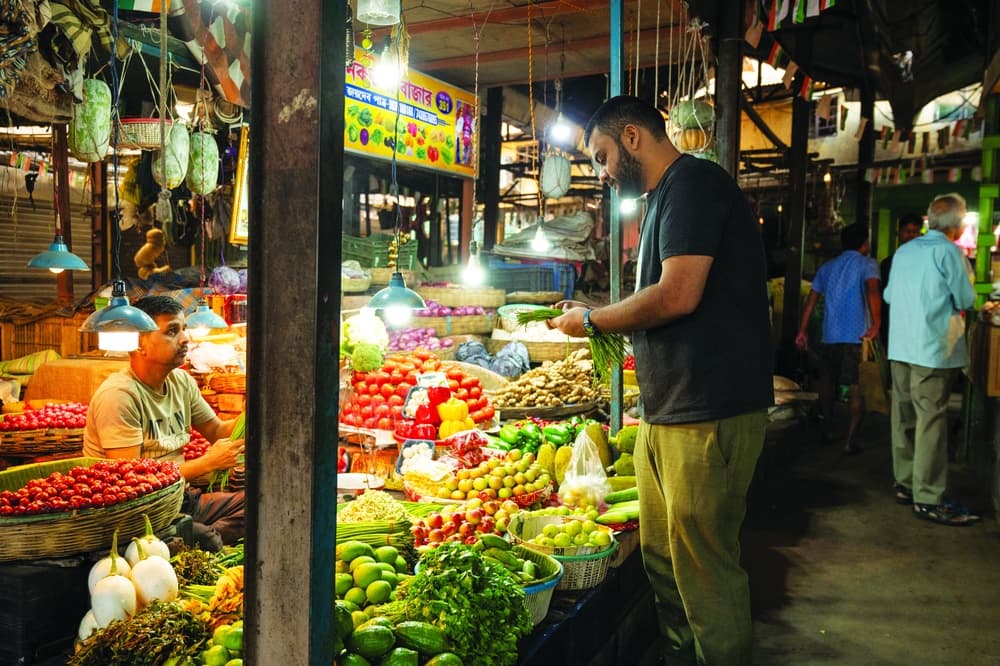
So much of Indian culinary knowledge being rediscovered today is actually very close to home. Many chefs are looking backward not to distant traditions, but to kitchens they grew up in. Quite often, that remarkable ingredient or technique came from a grandmother, a mother, an aunt — women who were proud homemakers and deeply accomplished cooks. They cared about keeping a good kitchen, and they treated the everyday work of cooking as an art form.
But let’s not discount the dads and uncles either, because they somehow always knew where to get the best stuff. They knew which fishmonger to trust, which butcher had the freshest cuts, which spice shop had the new season’s stock, which roadside vendor made something for which it was worth crossing town.
The education of provenance
One of the first real lessons I learned in the bazaar was buying maachh — fish. It is not something you understand overnight. It takes years. A vital part of this education is provenance.
Over time, you learn to distinguish not just freshness, but origin. You begin to understand the difference between desi pabda (butterfish) and farmed pabda, desi tyangra (catfish) and its cultivated counterpart. No fish demonstrated that more clearly for me than Bengal’s most prized ilish (hilsa). I have early memories of my grandmother, my thamma, selecting fish at the bazaar, and those memories still echo.
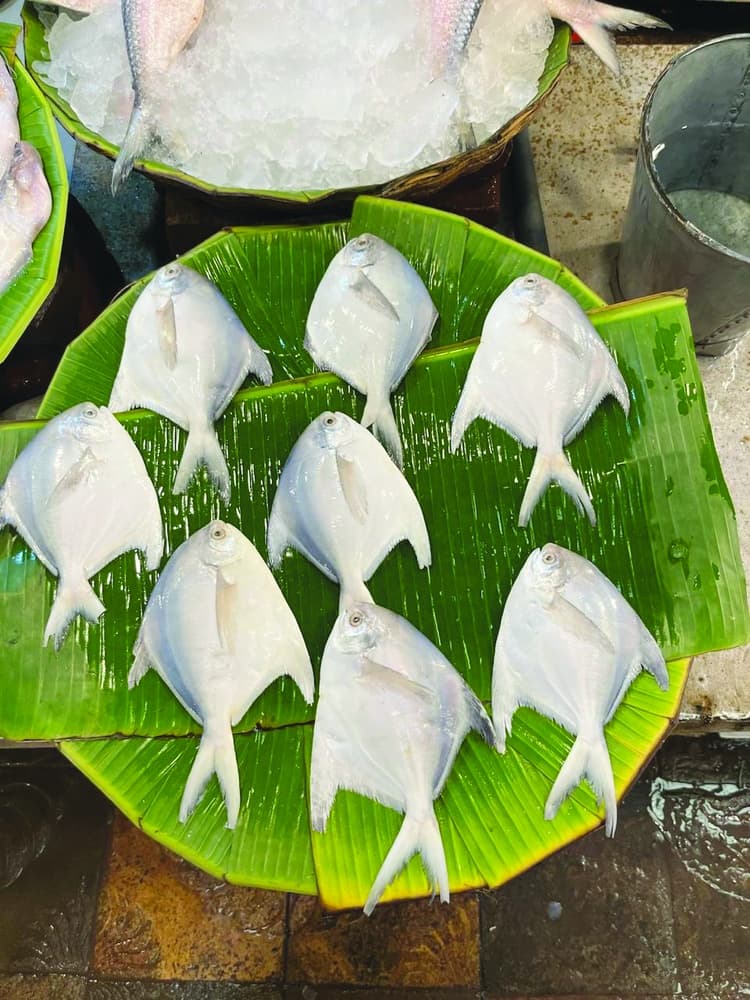
Hilsa teaches you exactly why origin matters. Bangladesh accounts for the overwhelming majority of the global hilsa catch, and much of the most coveted fish moves through export routes to Bengali communities in New York or Frankfurt. To eat the finest hilsa in India, you may not go to Kolkata at all, but toward the Northeast, near a particular border where exceptional river produce still finds its way — something I gleaned from my conversations with chef Amrita Bhattachaarya.
That is why ilish became, for me, a kind of north star. It is the equivalent of a Grand Cru — defined by river, migration, fat content, season and place. It taught me why the bazaar in Bengal works the way it does, and why every serious market in the world has its own map of excellence.
Of crabs and potatoes
If we are talking about prized catch, we should also talk about the things people routinely overlook.
In seafood, there is a common assumption that bigger is better — the larger the crab, the larger the claw, the finer the eating. It was my grandmother who once pointed out that female crabs, though often smaller, can be richer in fat and roe — ghilu, as we say. That was one of those quietly life-changing lessons.
Learning to distinguish male from female crab taught me that understanding an ingredient goes far beyond recognising the species itself. It is about season, sex, size, habitat, texture, sweetness and use. A freshwater pond or stream crab may make a better stock or sauce than a dry kosha preparation. A meatier sea crab may be ideal for something else entirely. The ingredient is only the beginning; context is everything.
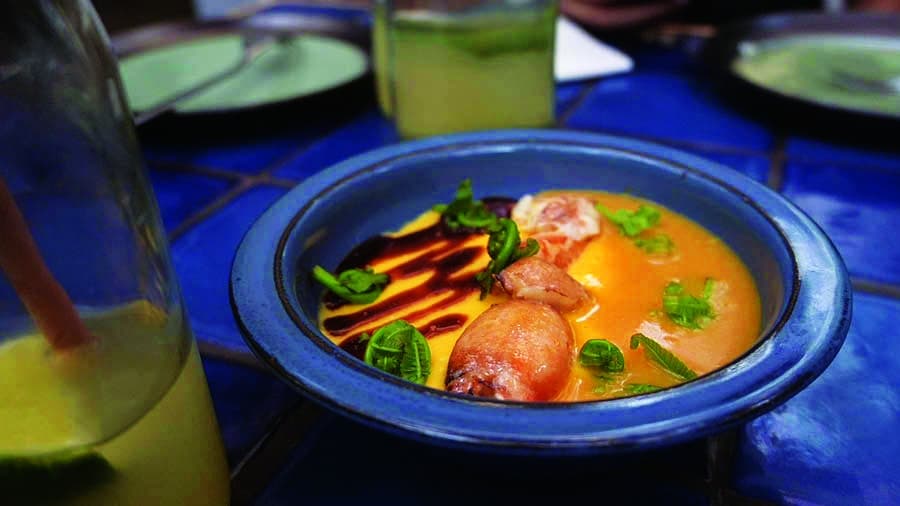
In seafood, there is a common assumption that bigger is better — the larger the crab, the larger the claw, the finer the eating. It was my grandmother who once pointed out that female crabs, though often smaller, can be richer in fat and roe — ghilu, as we say. That was one of those quietly life-changing lessons.
The same principle applies to something as humble as the potato in a Bengali bazaar. What I’ve always loved is that potatoes are not treated as interchangeable there. Jyoti potato, with more structure and bite, is excellent for aloo dum or biryani. Chandramukhi, softer and more yielding, is perfect for aloo bhate or a light maachher jhol. Then winter brings notun aloo — new potatoes, sweet and delicate in their own way — and beyond that, regional treasures: Guti aloo from North Bengal and the Northeast, or Badami from Cooch Behar. Even within one produce category there is astonishing diversity.
Shops as custodians
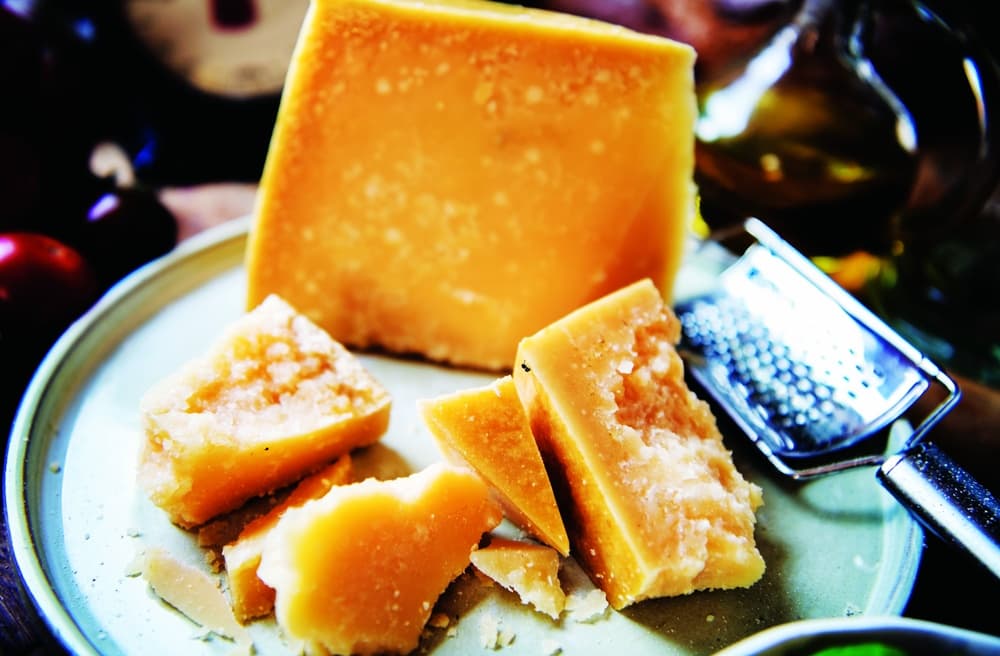
When in Kolkata, I love going to New Market just to visit J. Johnson for two things my family has bought there for years. One is cheese — especially Kalimpong cheese and Bandel cheese. The other is Angostura Bitters. When I was younger, whenever my father came to Kolkata, he would carry back a bottle because New Market was the one place we knew we could reliably find it. I still go there for cheese or bitters, just as he did. A great market shop becomes part of your family’s culinary memory.
One of my more recent market memories is from Chennai, when chef Harish Rao took us to a shop in Mylapore called Ganapathy’s Butter and Ghee. They stocked white butter, yellow butter, pale ghee, darker aged ghee. The white butter had the freshness, cultured depth and consistency of some of the best small-batch European butters I have tasted, yet it was entirely local and deeply rooted in place.
Befriend your butcher
There are many forms of grocery shopping, but the real economy of a market often runs on trust. You may have one mudi dokan (neighbourhood grocer) you rely on because they blend excellent spices, keep beautifully aged rice, or sell freshly milled flours. Over years, you come to understand their produce, their standards and the care with which they work.
One of the most important such relationships for me, something I learned strongly from my father, was with the butcher. With fish, freshness is usually the central question: the right size, bright eyes, clean smell, firm flesh. Increasingly, I even like to prepare fish myself. But with mutton, the equation is different. Reading a carcass is subtler than reading a fish.
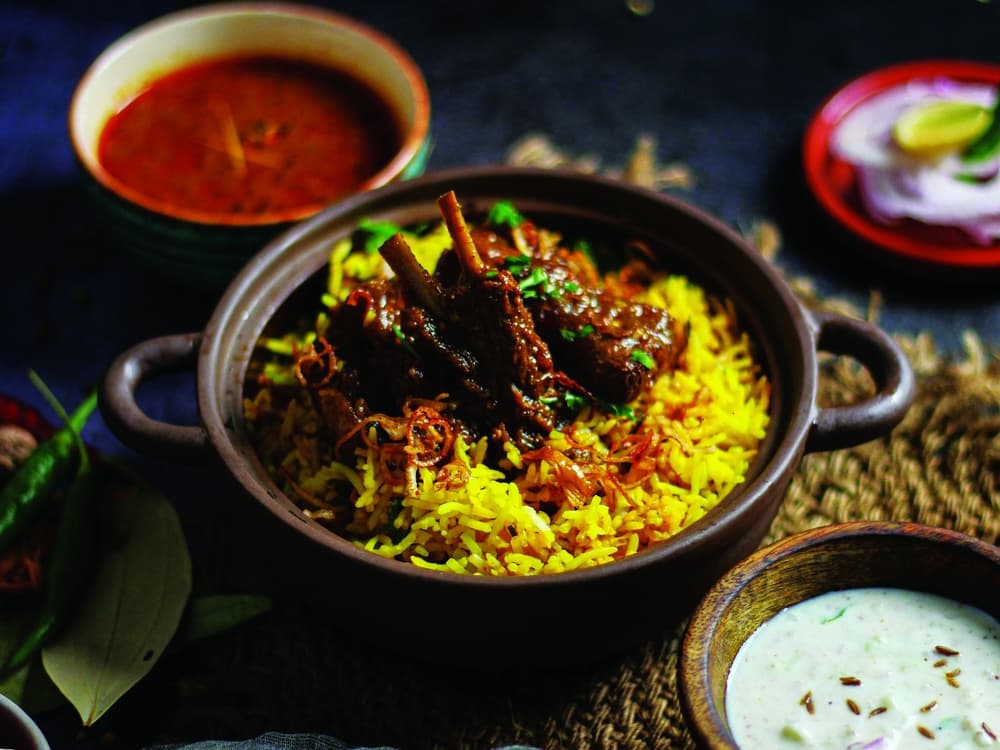
That is where the butcher’s expertise becomes invaluable. You speak to them about what you plan to cook — a slow kosha, a light stew, chops, mince, offal, marrow, ribs. The transaction becomes a conversation. Good butchers appreciate customers who want more than a generic “one kilo curry cut”. They value people who understand different cuts, who occasionally ask for liver, trotters, kidneys, tail, or fat, who care about texture and flavour. In return, they guide you toward the right animal, the right cut, the right balance of bone and meat, the right amount of fat for the dish.
It is also through these conversations, across regions, that I discovered two of my favourite kinds of mutton. One is Bengal Black Goat — especially the younger kochi patha, prized for tenderness and flavour. The other is Bannur Sheep, which I first encountered through my friend Divya of Bengaluru Oota Company. It has a wonderfully distinct flavour and fat profile.
Ultimately, the bazaar is not simply a place of purchase. It is a place where taste is trained. It teaches you provenance, seasonality, texture, habitat, trust and the difference between a generic ingredient and a meaningful one. It teaches you that excellence is often local, relational and deeply remembered. The finest dining experience in India does not always begin in a kitchen. It begins at dawn, in the market, in the hands of someone who knows exactly where to look — and whom to ask.
Who is the largest producer of hilsa?
Who is the largest producer of hilsa?
Bangladesh is the world’s largest producer of hilsa or ilish.
When do you get notun aloo?
When do you get notun aloo?
Notun aloo is typically available in winter.
What potato to use for biryani?
What potato to use for biryani?
Jyoti aloo is the ideal kind of potato to use for biryani.
Where to get Bandel cheese in Kolkata?
Where to get Bandel cheese in Kolkata?
One can get Bandel cheese at J. Johnson, a store in New Market.
Where to get Kalimpong cheese in Kolkata?
Where to get Kalimpong cheese in Kolkata?
Kalimpong cheese is also available at J. Johnson in New Market.