


 ion
ionKey Highlights
- In Vedic literature, philosophical wisdom was often communicated orally through liturgical chants from teacher (guru) to student/disciple (shishya), often sitting outdoors
- Vedic learning used Sanskrit, which was considered deva vak; the language of the gods, whereas common people spoke Prakrit, a hold-all term for many local variants and dialects
- Gautama Buddha was born a prince around 560 BCE in Lumbini, and at the age of 29, he renounced his princely life, eventually going on to meditate under a peepul tree, where he attained enlightenment, and thus came to be known as Buddha, the Enlightened One
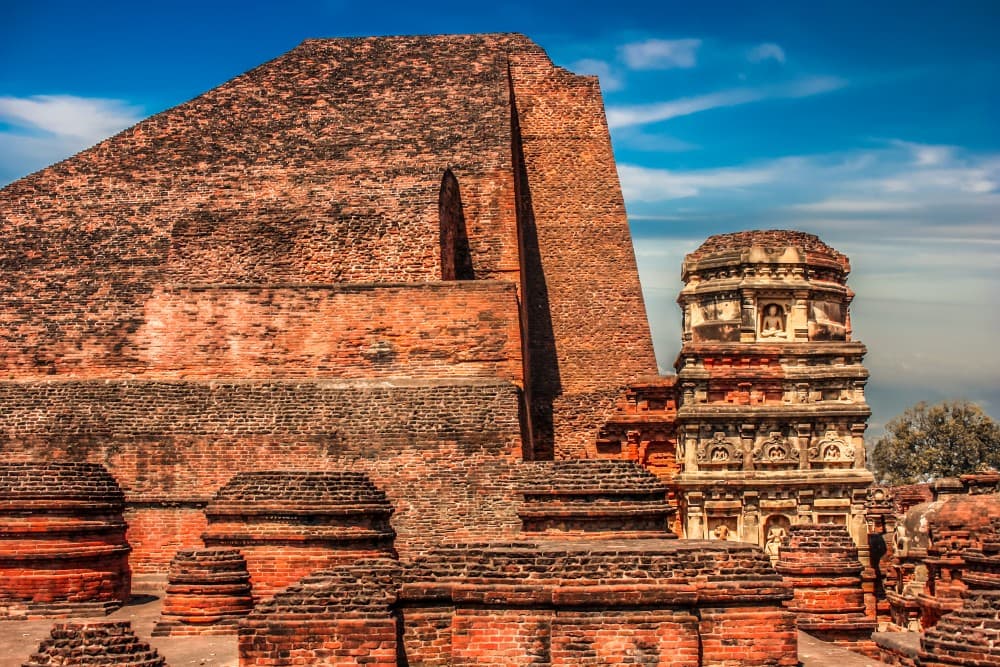
- Soon, Buddhist monks began to set up monasteries — viharas — as places for study. The largest of these viharas, spread out over 22.5 hectares, was in Nalanda in Bihar, and had within it a library as well as places for worship and meditation
- Nalanda University was declared by UNESCO to be a World Heritage Site in 2016
- Nalanda University was destroyed by Muslim invader Bakhtiyar Khalji
- In the 5th century CE, Aryabhata, who was the best known astronomer and mathematician of the age, calculated the value of the pi to 3.1416 and the length of the solar year to 365.3586805 days
- The Gupta kings, who ruled over much of north India between circa 320 CE to 500 CE, were also great patrons of learning
In very ancient times in India, learning was not invariably confined to universities and seats of learning. Profound philosophical wisdom, born out of wonder and contemplation, were communicated orally through liturgical chants and from teacher (guru) to student/disciple (shishya), often sitting outdoors. The earliest of these compositions can be dated back to circa 1200 BCE.
The communication was verbal; they were first recited, then heard and memorised and then transmitted to the next group of learners. These compositions are collectively known as Vedic literature, or the composition of the Vedas. The earliest is the Rig Veda, and this Vedic corpus ends (circa 700 BCE) with a body of philosophical contemplations known as the Upanishads. Since they form the end of the Vedic compositions, the Upanishads are often known as the Vedanta (the suffix ‘anta’ meaning ‘end’).
Dissent and the Unravelling of Orthodoxy
One important point to bear in mind is that the pursuit of this learning and its transmission were very exclusive, confined as this learning was to only the highest levels of society in the language of the scriptures, Sanskrit. It did not take very long for this exclusivity to be challenged and for the confinement to be broken. The ideas of the Upanishads had opened up vistas of speculative thinking, and had brought into existence groups of wandering ascetics in search of new experiences and new ideas. These ascetics were often the originators and carriers of unorthodox ideas. Such ideas covered a wide range of views, from predeterminism (represented by a group known as the Ajivikas) to materialism and atheism (represented by a group called the Charvakas). Materialism and atheism challenged both the spirituality and the exclusivity of Vedic and Upanishadic teachings. The ideas of the Charvakas were thus a direct challenge to Vedic orthodoxy.
The Rise of Public Intellectual Life
The spread of such unorthodox ideas was facilitated by the growth of urban settlements and the emergence of new social groups like merchants and artisans, whose priorities and interests were distinct from those of priests and warriors, who represented the dominant orthodoxy. The new social groups welcomed the diverse ideas that challenged the social and intellectual dominance of priests and warriors. In many of the new towns and cities that developed, there were spaces for public debate, where multiple and competing ideas and views of the world were discussed. These halls of debate were called kutuhala shalas: literally a place for nurturing curiosity. But such discussions were not necessarily restricted to these halls. They also took place in parks and groves on the fringes of the urban settlements. These discussions marked a radical shift from the world of Vedic learning, where intellectual quest was exclusive: a private disputation between a guru and his shishyas.
A parallel shift occurred in the realm of language. As mentioned earlier, Vedic learning used Sanskrit, which was considered deva vak; the language of the gods. Common people, which included the new social groups, spoke Prakrit, a hold-all term for many local variants and dialects. One such variant, Pali, became very important, as it was the language in which Gautama Buddha taught.
Ethics over Metaphysics
The ideas of Gautama Buddha (real name: Siddhartha Gautama) offered the most powerful and popular challenge to Vedic learning and orthodoxy. He was born a prince around 560 BCE in Lumbini (in current-day Nepal). At the age of 29 he renounced his princely life to adopt the life of a wandering ascetic in search of the truth. He sought out teachers — even sages well-versed in the Upanishads — but was not satisfied with what he had been taught. Legend has it that while meditating under a peepul tree, he attained enlightenment, and thus came to be known as Buddha, the Enlightened One.
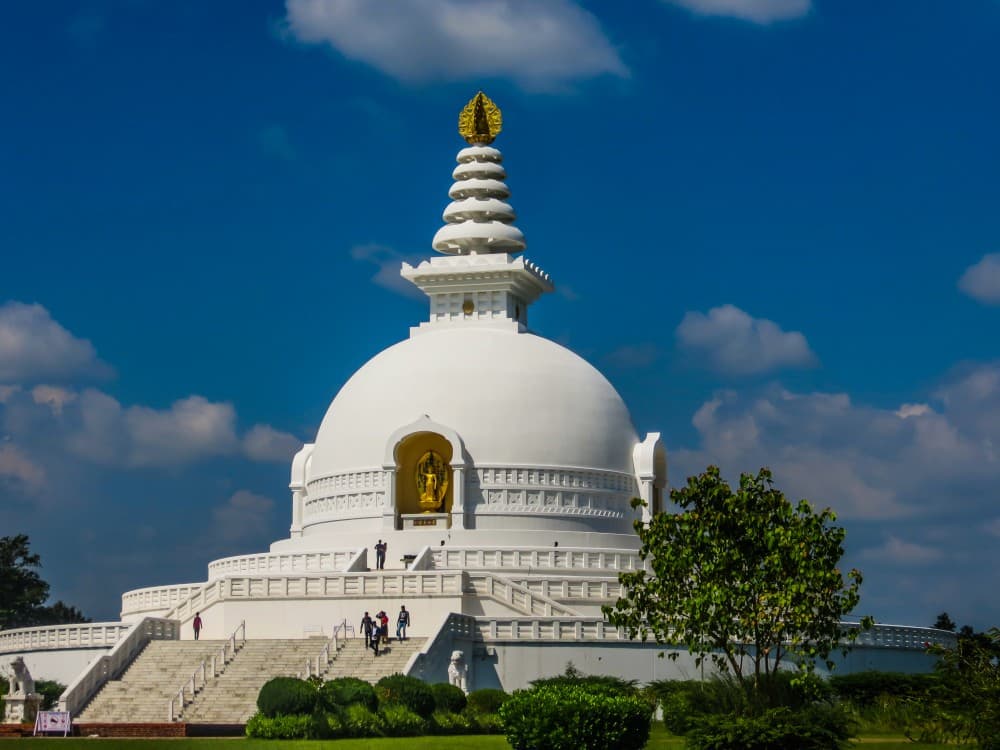
On the basis of this enlightenment, Buddha started teaching. His first sermon was to five disciplines in a deer park in Sarnath near Varanasi. His ideas and teachings shifted the emphasis from metaphysical concerns (the existence of God) to ethical concerns (how to lead a good life).
Leading an ethical life, Buddha said, was open to everyone, irrespective of status in society, and not restricted only to priests and warriors. He advocated a life that eschewed indulgence and asceticism, a life that was based on right views, intention, speech, action, livelihood, effort, mindfulness and action.
The simplicity of this message, and the simplicity of Buddha’s own life, attracted many and led to the formation of a new religious and ethical creed called Buddhism.
Nalanda to New Knowledge Systems
As Buddhism evolved and developed after Buddha’s death, Buddhist monks began to set up monasteries — viharas — as places for study, repositories of manuscripts, meditation and discussion. The largest of these viharas was in Nalanda in Bihar, which, as archaeological excavations reveal, was spread out over 22.5 hectares. It had within it a library, places for worship and meditation; the complex was laid out in a planned manner, the buildings were all made of brick, and artefacts made of stone, metal and stucco work have been found. This has come to be known as Nalanda University (circa 3rd to 12th century CE) and in 2016 it was declared by UNESCO to be a World Heritage Site. This intellectual edifice was sustained by revenue from 200 villages which had been granted to the vihara. It was destroyed by the Muslim invader Bakhtiyar Khalji, and this destruction set the seal on the decline of Buddhism, a process that had started in the 7th century CE.
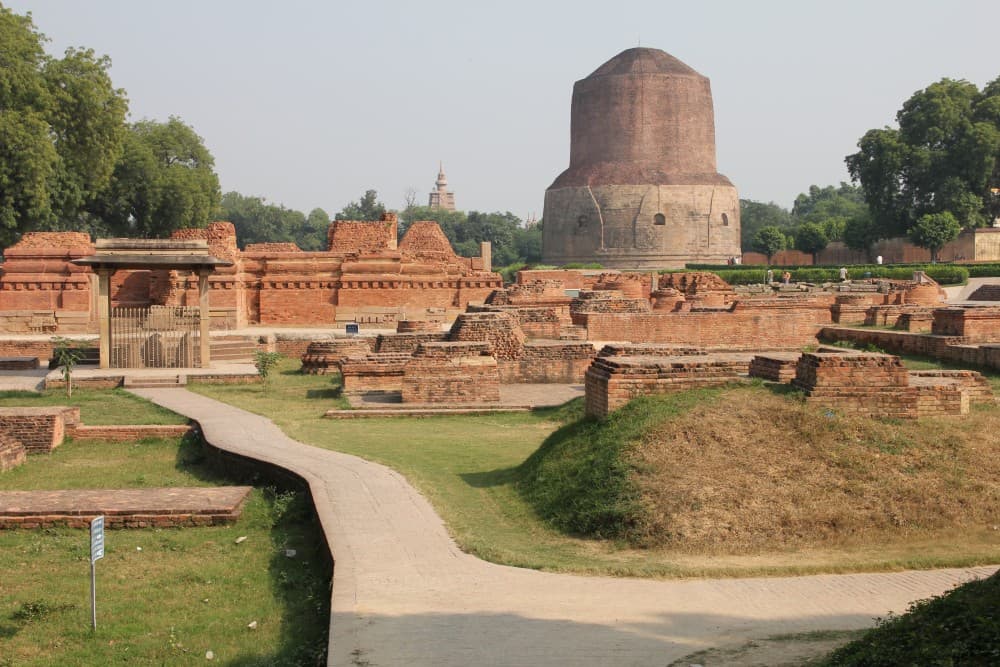
As Buddhism evolved and developed after Buddha’s death, Buddhist monks began to set up monasteries — viharas — as places for study, repositories of manuscripts, meditation and discussion
Again, all learning was not centred around institutions. In the 5th century CE, Aryabhata was the best known astronomer and mathematician of the age. He calculated the value of pi to 3.1416 and the length of the solar year to 365.3586805 days; both these values approximate to recent calculations. He explained eclipses as the shadow of the earth falling on the moon. This punctured the popular myth that during an eclipse the demon Rahu gobbled up the moon. He also described the earth as a sphere.
There were other eminent astronomers and mathematicians who were contemporaries of Aryabhata. Even though we do not know if Aryabhata and his fellow scientists had any institutional affiliations, we know that their studies and discoveries were the outcome of a continuous interaction between Indian and Arab astronomers and mathematicians. The works of Indian mathematicians and astronomers were studied at centres of learning in places like Baghdad. A world of learning without boundaries and walls was an integral part of the intellectual quest of Indians.
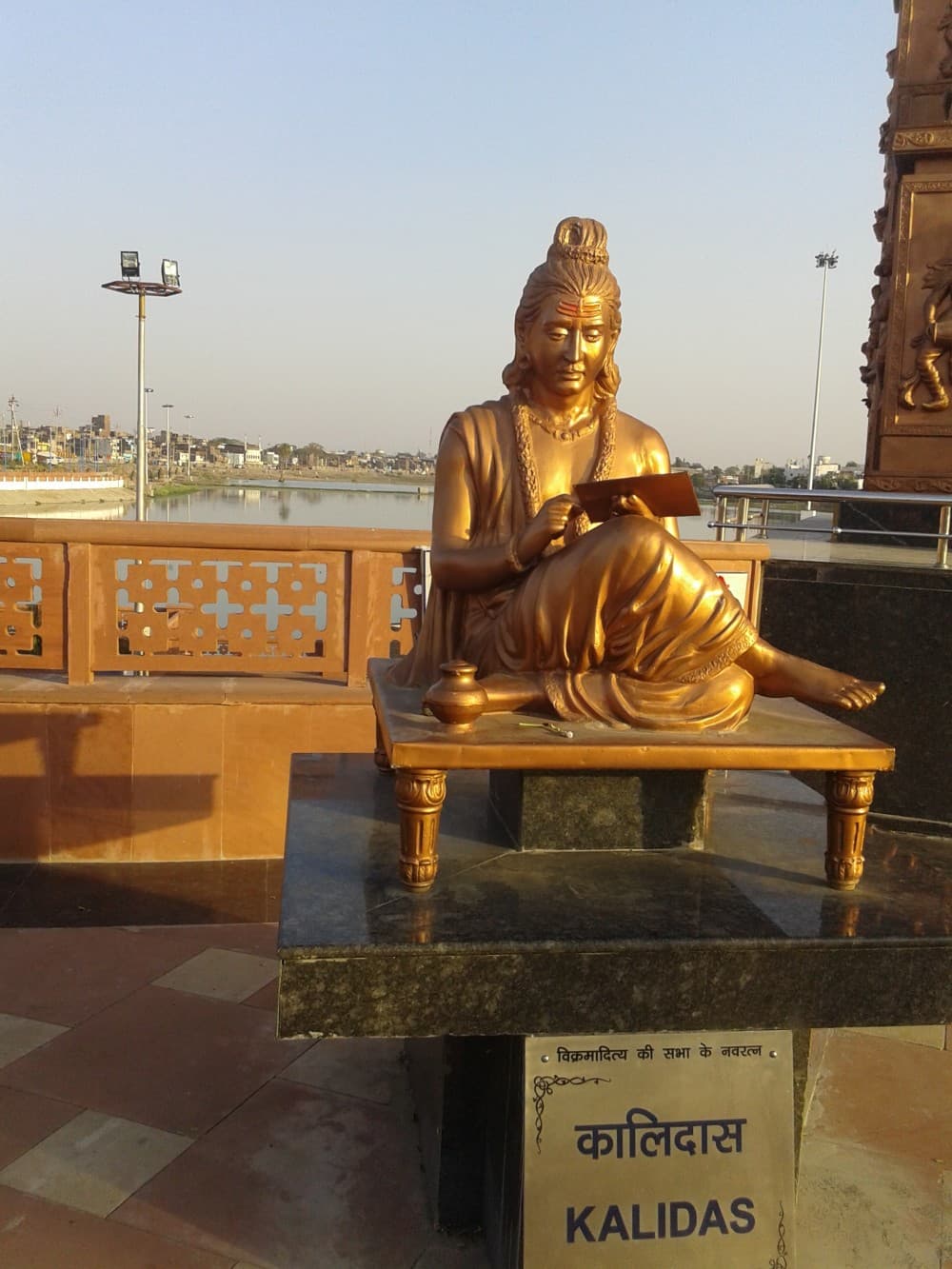
Many Indian monarchs were great patrons of learning. This is especially true of the Gupta kings, who held sway over large parts of north India between circa 320 CE to 500 CE. This period saw major developments in Sanskrit creative writing, with the pre-eminent figure being the poet and dramatist, Kalidasa. Indian philosophical learning was also systematised in this period.
The world of learning and education in early India was rich and varied. Indians of that time did not know everything, but their range of knowledge was vast. The legacy of this world needs to be retrieved and fused with modern learning.
What is Nalanda University?
What is Nalanda University?
Buddhist monks began to set up monasteries — viharas — as places for study. The largest of these viharas, spread out over 22.5 hectares, was in Nalanda in Bihar, and had within it a library as well as places for worship and meditation.
Is Nalanda University a UNESCO site?
Is Nalanda University a UNESCO site?
Yes, Nalanda University was declared a UNESCO World Heritage Site in 2016.
How was Nalanda University destroyed?
How was Nalanda University destroyed?
Nalanda University was destroyed by Bakhtiyar Khalji.
Who was Aryabhata?
Who was Aryabhata?
Aryabhata was a renowned astronomer and mathematician, who lived in the 5th century CE.
When did Gautam Buddha attain enlightenment?
When did Gautam Buddha attain enlightenment?
Gautama Buddha attained enlightenment at the age of 35, around the 5th or 6th century BCE.
Where was Gautam Buddha born?
Where was Gautam Buddha born?
Gautama Buddha was born a prince in Lumbini, Nepal, around 560 BCE.