Key Highlights
- Jewellery as portable wealth shaped pastoral India’s economic life
- Heirloom pieces are moving from homes to museum collections globally
- The so-called “Taj Mahal diamond” is likely a historical misattribution
- Diamond origins remain scientifically untraceable
- India’s jewellery history is vast yet largely undocumented
- Western maisons like Cartier reinterpreted Indian aesthetics

Your latest book Silver and Gold: Visions of Arcadia is about the jewellery of India’s pastoral communities. How did the jewellery reflect their lifestyle?
Pastoral and nomadic communities were largely herders, often from itinerant groups such as storytellers and singers. Some were also agriculturalists. They did not hold bank lockers or own significant land; instead, most of their savings were held in the form of jewellery, as it was a safe and secure investment.
And when they needed cash, jewellery was easy to liquidate. Whenever they came into money, their first instinct was to invest in jewellery. They turned to local silversmiths and goldsmiths, preserving community-specific forms and designs. At the same time, these craftsmen often brought in their own sensibilities, subtly shaping the aesthetics of each piece.

Indian diasporic communities around the world are nomadic too. Have these communities impacted the Indian jewellery tradition?
Definitely. They carried whatever jewellery they had — often pieces received at the time of their weddings — with them when they moved abroad. While tastes in India may have shifted towards more contemporary styles, many of these communities have held on to older designs, preserving them as tangible links to their homeland.
I often see members of the diaspora, especially the more affluent, considering donating their jewellery to museums. The reasons are twofold — the younger generation is less inclined to wear precious jewellery, and investment avenues today are far more diverse. I curated a special exhibition in 2024–2025 at the Flint Institute of Arts, titled Meditations in Gold: South Asian Jewellery. Several exhibits came from a diaspora family that had moved to the United States over 40 years ago. The matriarch chose to give these pieces to a local museum. The exhibition generated a lot of interest as it showcased a completely different aesthetic and culture to the local community. I haven’t seen such exhibitions in Australia as yet. Gifting laws are also a factor because in the US, you can get a tax write-off for donations to museums. You are making a gift to the museum because you want it preserved, but financially it is attractive because you can claim a tax write-off.
In the context of the recent controversy surrounding Margot Robbie and the ‘Taj Mahal’ necklace, what are the challenges in establishing the origins of such antique jewellery?
It is very challenging. Especially for diamonds since no tests exist to determine their geographic region of origin, unlike for rubies, emeralds and sapphires which have a chemical structure specific to a region. No lab tests can say whether a diamond came from South Africa or Botswana or Golconda. One of the biggest problems, especially in the Indian context, is that we do not maintain histories and chronicles as meticulously detailed as in the West, especially among royal families. Much remains undocumented — we have a huge repository of gemstones and jewellery lying in temples and private collections around India but they are completely inaccessible to scholars.
Coming to your question, that term ‘Taj Mahal diamond’ was coined by Cartier, because the inscription on the diamond actually mentions the name ‘Noor Jahan’ with the number 23 — probably Jahangir’s regnal year — and the year 1627. So how did it become a ‘Taj Mahal diamond’? We presume that Shah Jahan inherited the stone and that after his death, it was acquired by Cartier through a dealer in Delhi. To me the piece, stylistically, points very obviously to the Deccan. So, the term ‘Taj Mahal’ is apocryphal. Traditionally, we don’t have names for diamonds and big stones in India.
Have Indian jewellery designs and techniques influenced the West?
Oh yes. Historically, this design influence became visible from the 19th century onwards. A lot of people who came to India were inspired — cultural reformers, artists, architects and textile manufacturers. India was the gem bazaar of the world. And when someone like Cartier travelled to India to buy gems, they saw the local craftsmanship and designs and were influenced. This is visible in European design.
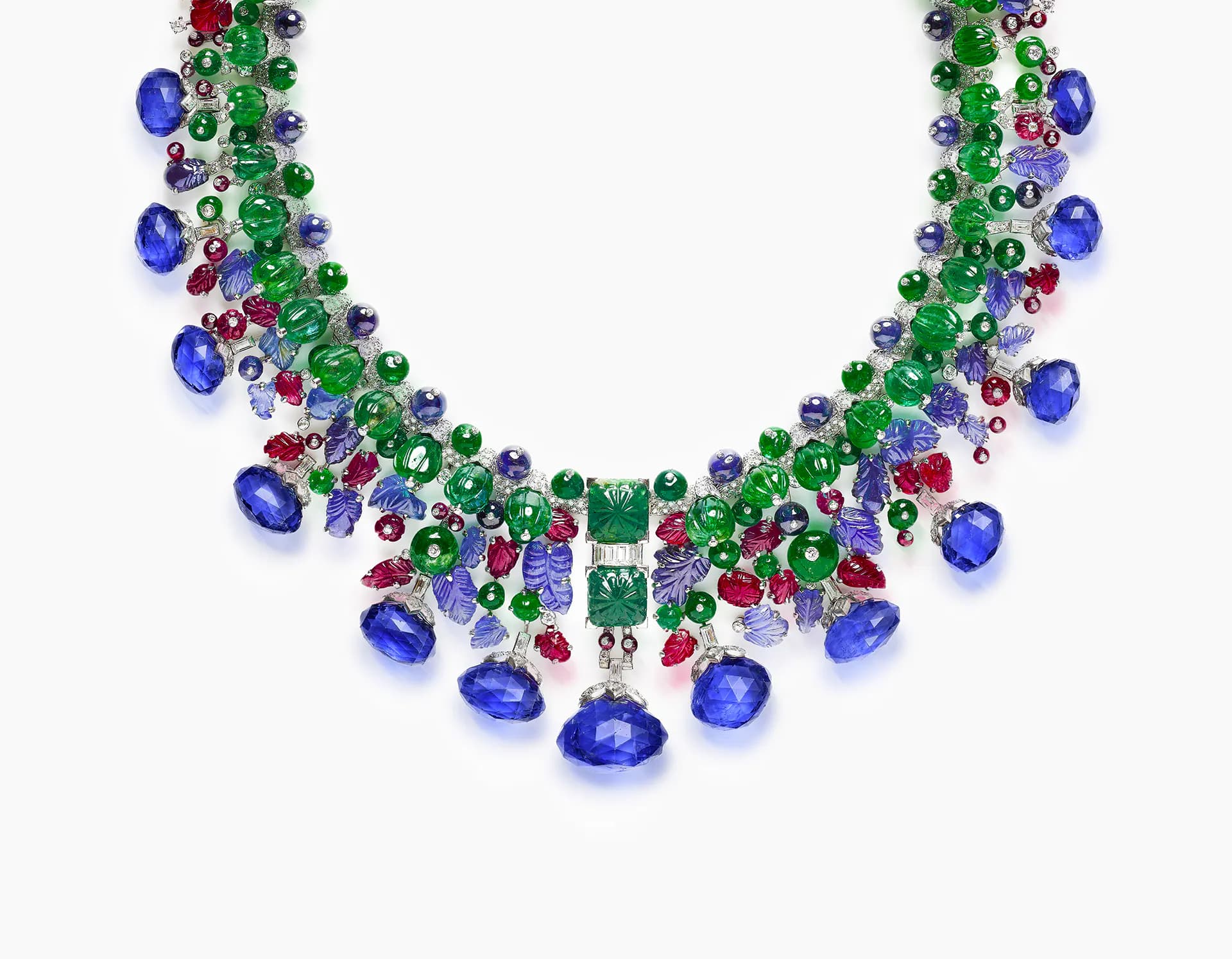
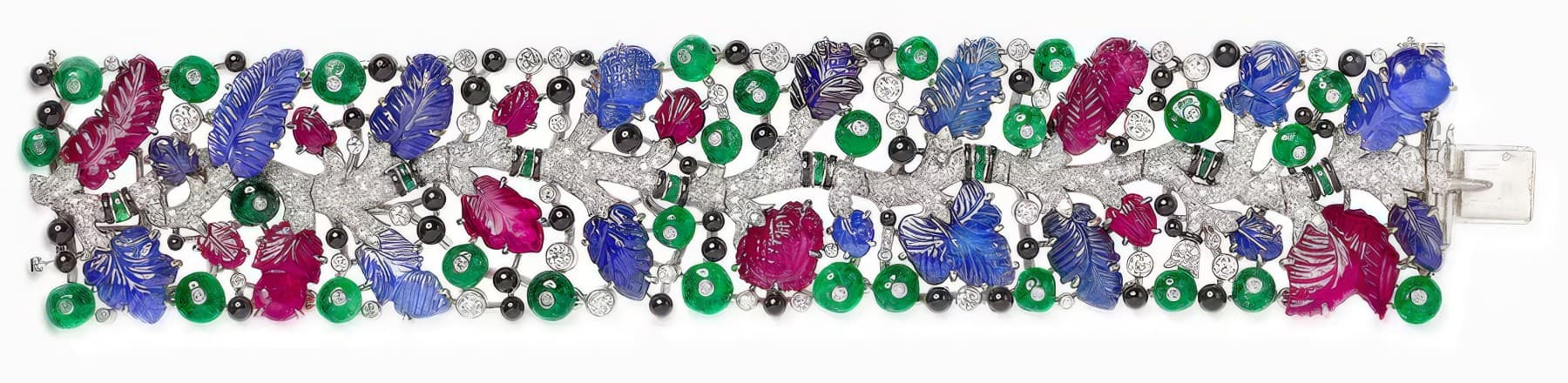
For instance, Cartier sourced carved gems from India that became iconic in their Tutti Frutti line. American designer Lockwood de Forest had a partnership in Ahmedabad for textile manufacturing and furniture and collected quite a bit of Indian jewellery. This influence is also visible in Tiffany’s designs from the late 19th and early 20th century.
There are ongoing efforts to repatriate Indian antiques and artefacts from other countries. How do you see this developing?
There are two sides to this. Something that was plundered, taken away and sold with fabricated provenance is illegal. So, that definitely needs to be corrected. On the other hand, what happens when objects come back to India? We don’t know where those objects that came back from Australia or the US are. Are they being exhibited? No, because in India we have very complicated laws that make it extremely difficult to take these artefacts out again. So, in all probability, they have probably been banished to some dungeon somewhere.
With all the destruction that is going on all around us, it is important that nations sit together and work out an arrangement. The host country acknowledges that an object has come into their collection through illegal routes and the country from which it was taken also recognises that they can perhaps formally arrange to hold international loan exhibitions so that their cultural heritage is shared. After all, culture is soft power with no parallel.
Why was jewellery central to pastoral communities?
Why was jewellery central to pastoral communities?
It functioned as portable, secure wealth — easy to store, wear and liquidate.
Do diaspora communities influence Indian jewellery today?
Do diaspora communities influence Indian jewellery today?
Yes, often by preserving older forms that have faded in contemporary India.
Is the ‘Taj Mahal diamond’ actually linked to the monument?
Is the ‘Taj Mahal diamond’ actually linked to the monument?
Unlikely — the inscription points instead to Noor Jahan and Mughal history.
Why can’t diamond origins be traced?
Why can’t diamond origins be traced?
Because diamonds lack region-specific markers, unlike coloured gemstones.
How did Indian jewellery shape Western design?
How did Indian jewellery shape Western design?
Through materials and motifs adopted by houses like Cartier, especially in Tutti Frutti.
What happens to heirloom jewellery today?
What happens to heirloom jewellery today?
Many pieces are being donated to museums as younger generations move away from wearing them.
Is repatriation always the solution?
Is repatriation always the solution?
Not entirely — returning objects is complex, especially when preservation and access remain uncertain.