Key Highlights
- Asha Bhosle passed away on April 12, 2026, at the age of 92
- Asha Bhosle was born in 1933 in the Mangeshkar family and was the younger sister of the eminent playback singer Lata Mangeshkar.
- Some of her famous songs are Raat Akeli Hai, Aaiye Meherbaan, Mera Kuch Samaan and Dum Maaro Dum
- She also collaborated with legendary composers O P Nayyar and R D Burman
- In the 1980s, she collaborated with Ghulam Ali in Meraj-e-Ghazal and in 1987, collaborated on Dil Padosi Hai, which was penned by Gulzar and composed by R.D. Burman
- She also collaborated with Adnan Sami, Ustad Ali Akbar Khan and Leslie Lewis
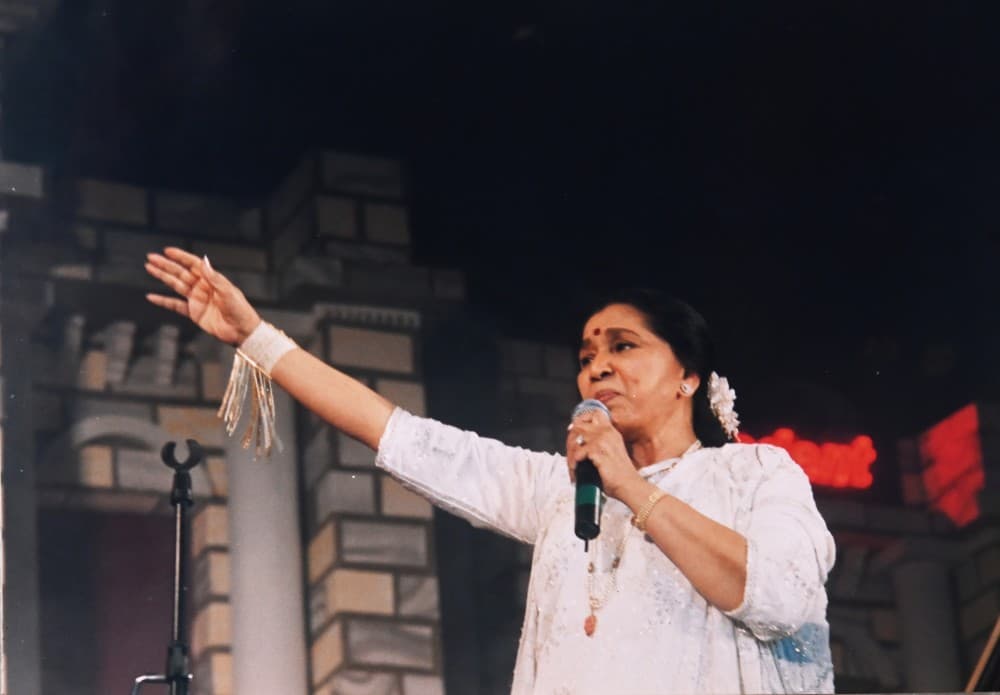
Obituaries of towering cultural figures tend to lean on a familiar vocabulary: ‘the end of an era’, ‘an irreplaceable loss’, ‘the closing of a chapter’, ‘a void that can never be filled’. These phrases, worn smooth by repetition, often feel inadequate, even lazy, when faced with a life as expansive as Asha Bhosle’s. And yet, perhaps this is precisely when clichés return to serve a purpose. When language falters before the scale of a legacy, when the weight of memory exceeds the reach of fresh expression, these well-worn words step in, not as shortcuts, but as collective gestures of recognition. In mourning someone like Asha Bhosle, we fall back on them not out of habit, but because they hold, however imperfectly, the enormity of what has been lost.
Asha Bhosle leaves behind a musical legacy so vast and varied that it resists easy summation. She was not merely one of the defining voices of Indian cinema; she was an artist who continuously reshaped what that voice could be.
Across more than seven decades, she sang not just songs, but moods, eras and transformations, moving with ease from the studio system of the 1950s to the fragmented, globalised soundscape that followed, from Madhubala to Urmila Matondkar, her voice remaining curiously ageless even as the world around it changed. She seemed equally at home in the intimate interiority of a ghazal, the theatrical flourish of a cabaret number, or the sleek textures of late-twentieth-century pop, as though each new idiom was simply another dialect she had always known.
Whether it was the exuberance of Dum maaro dum (Hare Rama Hare Krishna), the teasing cadence of Piya tu (Caravan), or the classical gravitas of her work in films like Umrao Jaan, Asha Bhosle pushed the boundaries of playback singing, evolving organically, staying relevant across changing musical landscapes, from the era of black-and-white cinema to the age of digital streaming.
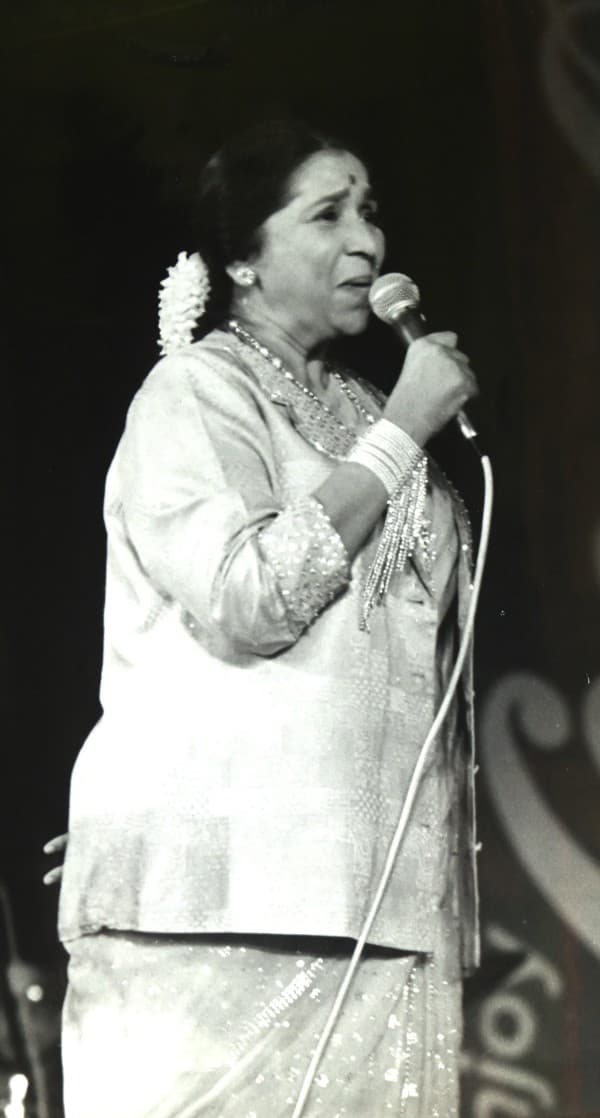
Her breakthrough came in the 1950s, particularly through her collaboration with composer O.P. Nayyar. Together, they created a distinctive sound that broke away from the prevailing norms of playback singing. Songs like Aaiye meherbaan (Howrah Bridge) and Yeh hai reshmi zulfon (Mere Sanam) carried a modern, rhythmic vitality that set them apart. Asha’s voice introduced a new sensibility to Hindi film music, one that allowed for flirtation, mischief and urban sophistication, expanding the emotional and social space a female playback voice could occupy.
The mid-1960s offer a particularly vivid snapshot of this expanding range: a philosophical, almost suspended quality in Aagey bhi jaane na tu (Waqt), the kinetic daring demanded by Teesri Manzil, and, in the same year, the earthy lilt of Paan khaye saiyan hamaaro in Teesri Kasam. Three distinct musical worlds, each inhabited with complete assurance.
If Nayyar helped establish her identity, it was her partnership with R.D. Burman that expanded it exponentially. Their creative synergy produced some of the most memorable songs in Indian cinema. From the infectious energy of Aaja aaja (Teesri Manzil) to the haunting introspection of Mera kuch samaan (Ijaazat), Asha demonstrated a remarkable ability to create vastly different emotional landscapes. With Burman, especially, one senses not just collaboration but a kind of shared curiosity, an eagerness to test how far a song could be stretched without losing its emotional core. Her voice could be sensuous, rebellious, tender, or melancholic, often within the span of a single album.
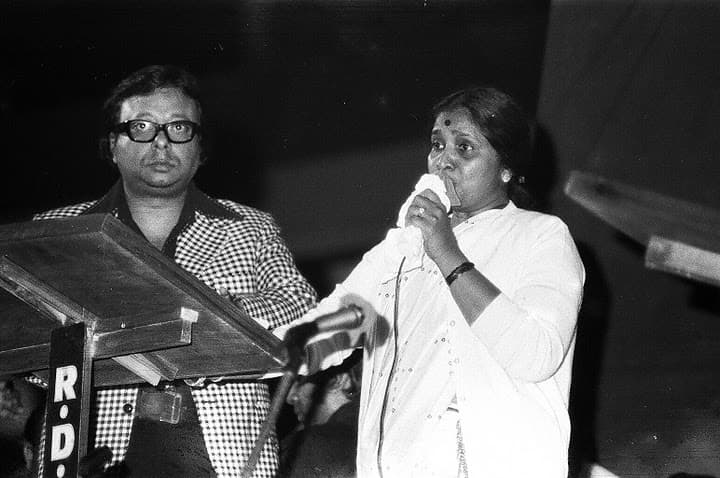
Asha Bhosle did not just adapt to genres; she redefined them. She brought a distinctive flair to cabaret songs, lent depth to ghazals, embraced pop and Indi-pop with equal ease, and even ventured into international collaborations. Whether it was the exuberance of Dum maaro dum (Hare Rama Hare Krishna), the teasing cadence of Piya tu (Caravan), or the classical gravitas of her work in films like Umrao Jaan, she pushed the boundaries of playback singing, evolving organically, staying relevant across changing musical landscapes, from the era of black-and-white cinema to the age of digital streaming. Even in spaces that mainstream respectability once kept at arm’s length — the nightclub, the cabaret, the countercultural drift of the 1970s — her voice did not merely fit in; it defined their sonic identity.
Her presence extended beyond film music into albums, stage performances and global collaborations, including ventures into pop and fusion that introduced her to new audiences. Long before the current ease with which artists move between formats, she had already begun to treat the non-film album as a space for exploration rather than diversion. At the height of the ghazal boom in the 1980s, she collaborated with Ghulam Ali in Meraj-e-Ghazal. This was followed by Dil Padosi Hai in 1987.
Across its fourteen tracks, penned by Gulzar and composed by R.D. Burman, she seemed to stretch effortlessly across moods and idioms: from the dew-fresh, classically inflected serenity of Bheeni bheeni bhor, which opens the album, to the teasing, sensuous playfulness of Raat Christmas ki thi, which brings it to a close. In between, her voice appears to traverse an entire spectrum of feeling, as though charting the passage of a day from first light to nightfall. This instinct for non-film albums resurfaced memorably in the late 1990s with Jaanam Samjha Karo, composed by Leslie Lewis. Its standout track, the light, lilting Raat shabnami, became an immediate favourite, connecting her with a younger generation.
She continued to seek out unexpected partnerships, whether in the easy rapport she shared with Adnan Sami on Kabhi to nazar milao or with the Kronos Quartet collaboration, You’ve Stolen My Heart: Songs from R.D. Burman’s Bollywood. At the same time, there were projects that revealed a more contemplative engagement with music: her recordings with Ustad Ali Akbar Khan, later released as Legacy, an album that highlighted Bhosle’s classical prowess, showcasing another side of her vocal versatility, focusing on intense emotional depth and technical precision in classical ragas.
With her passing, an era of Indian music draws to a close. Asha Bhosle was among the last of a generation of playback singers who defined the golden age of Hindi cinema. She helped shape not just an industry but the emotional vocabulary of a nation. And yet, her legacy is not confined to nostalgia. It lives on in the countless songs that continue to resonate across time, in the artists she inspired, and in the very idea of what a playback singer can be. Hers was a voice that could evoke longing, joy, defiance and intimacy, often all at once.
In the end, Asha Bhosle did more than sing. She transformed music into an expression of life in all its complexity, playful and profound, fleeting and eternal. With her departure, the silence she leaves behind is immense, but so too is the echo of her voice, which will continue to be heard for generations to come.
When did Asha Bhosle die?
When did Asha Bhosle die?
Asha Bhosle passed away on April 12, 2026 at the age of 92.
How are Asha Bhosle and Lata Mangeshkar related?
How are Asha Bhosle and Lata Mangeshkar related?
Lata Mangeshkar is the older sister of Asha Bhosle.
How did Asha Bhosle die?
How did Asha Bhosle die?
Asha Bhosle died due to multi-organ failure after a cardiac arrest.
Did Asha Bhosle collaborate with Brett Lee?
Did Asha Bhosle collaborate with Brett Lee?
Asha Bhosle worked with Brett Lee in 2006 for the song, You're the One for Me, also known as Haan Main Tumhara Hoon.