Like just about everybody else in the world, I’ve been obsessed with Christopher Nolan’s take on Homer’s The Odyssey. His intention could have been to entertain, but he’s made Greek philosophers of us all.
Furious debates fill Instagram with influencers who previously took artsy photos of colourful desserts, now arguing whether reading the epic in the original Greek helps the understanding of the movie. I never expected to use the words ‘Plato’, ‘Socrates’, ‘Agamemnon’ and ‘Tik Tok viral sensation’ in the same sentence, but here we are.
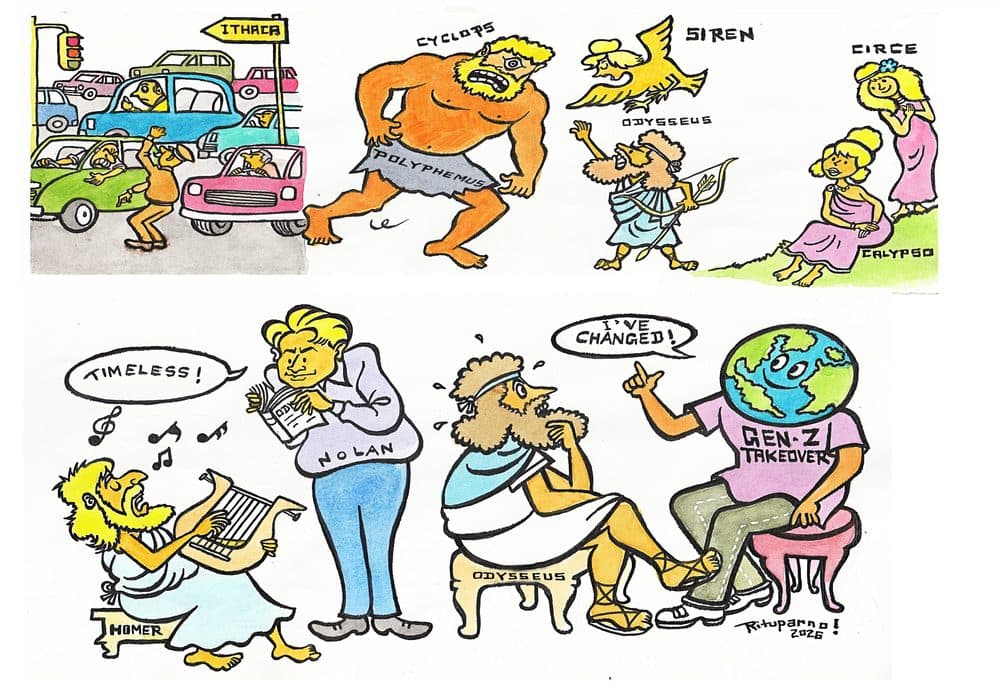
Look, before I went to see it, I thought that since I live between Mumbai and Kolkata, two of the world’s most populated cities with traffic and construction and noise, the underworld of Hades would feel idyllic. I don’t need to have won a Trojan war and get lost on a series of monster and nymph-infested islands to experience an odyssey — just getting home from a meeting is enough.
Sure, Homer may have thought crossing the Aegean Sea was full of danger and symbolism, but he hadn’t experienced rush-hour Mumbai suburban traffic. Odysseus would have given up. So what could Homer possibly teach me?
I was so wrong.
The reason classical literature, especially the Greek myths, have become the foundations of western thought outliving everything else, is because everyone can impose their own odyssey onto them. The cannibals and nymphs and angry Gods and the narrow passage between a devouring monster and a whirlpool are all metaphors for our everyday lives, and the choices we have to make.
It is no surprise that Odysseus was portrayed as a middle-aged family man in 10th century BCE, with all the same worries of a middle-aged man in 2026. Like with all middle-aged men of self-importance, the audience can see his delusions while he himself cannot. Odysseus hasn’t aged well, with his sometimes ridiculous, vain and foolhardy choices, but Homer’s work has — it is as relevant today as ever.
He’s the lauded actor or comedian with a great body of work and sold-out stage shows who suddenly sees a wall in front of his career, because his follower numbers aren’t high enough. Odysseus is you, and me
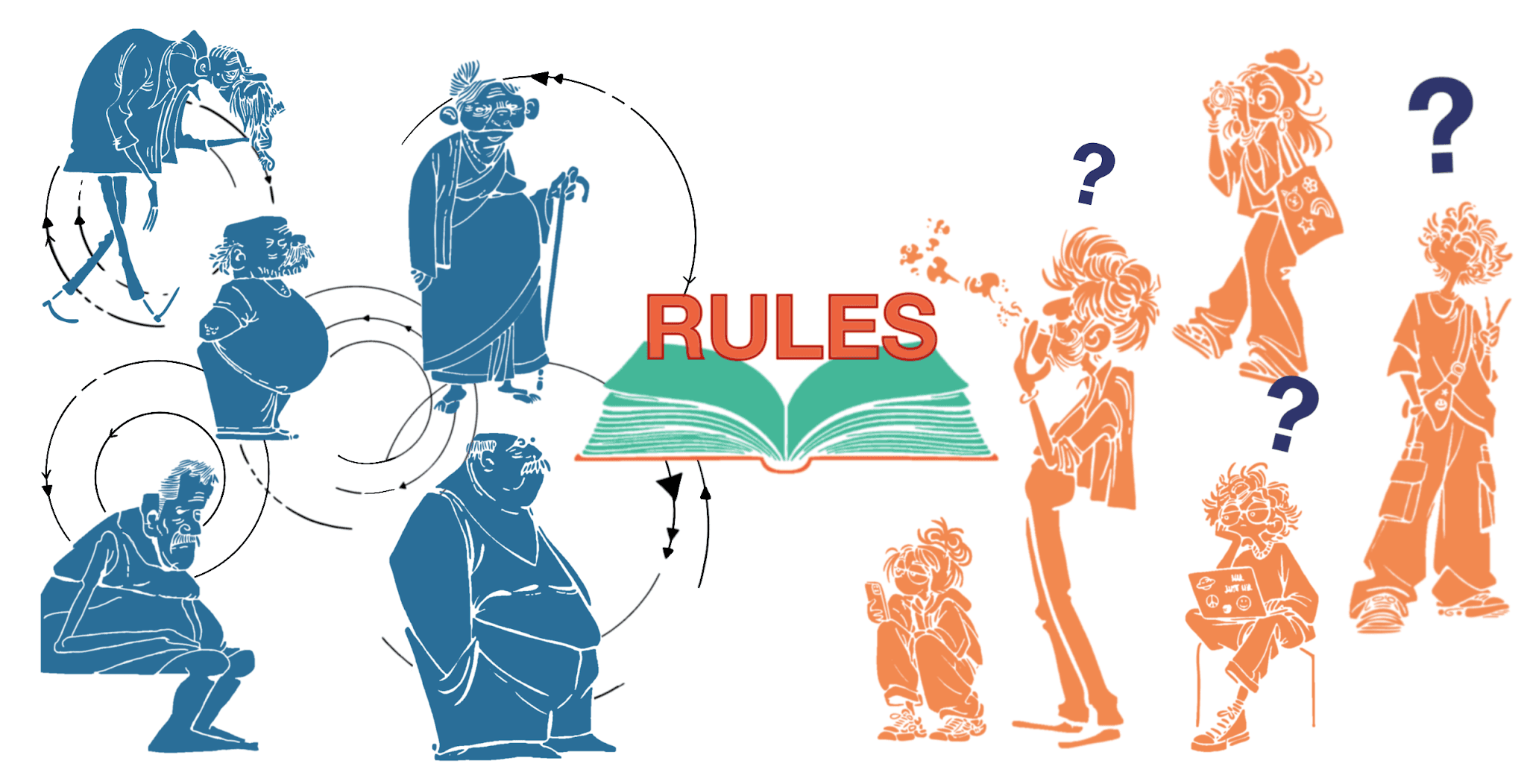
So who is Odysseus in 2026? He’s Gen X. A man with responsibilities, achievements, lost, past his prime, trying to get it all back. He’s the middle-aged banker who just isn’t as clever as he was in his 20s, doesn’t understand the new AI algorithms, and can’t compete with the 25-year-old Gen Z tech expertise.
He’s the guy that ran an advertising agency that couldn’t see the coming wave of Google and Meta completely devouring the ad world. He’s the newspaper editor who wasn’t ready for the entire profession of journalism to be obliterated by the camera phone. He's the feted film festival director without any films to make because no one goes to the movies anymore, and he can’t adapt to making shorts for free for Youtube.
He’s the lauded actor or comedian with a great body of work and sold-out stage shows who suddenly sees a wall in front of his career, because his follower numbers aren’t high enough. Odysseus is you, and me.
Homer’s most enduring appeal — the most simple analysis will tell you — is that The Odyssey is not Odysseus’s journey but life itself. There’s a plan and a goal and a home to get to, and the adventures and obstacles and wisdom — received or rejected, some divine, some self-made — determine the outcome. Sure, you can digress and end up doing drugs and wasting time under the hypnotic spell of beautiful women, but is that your goal, Homer asks. Maybe it is. And what is home? And what if the journey was the purpose all along? In 3,000 years, we still haven’t found the answers to Homer’s questions.