Key Highlights
- The FIFA World Cup remains one of the few global events that unites audiences across countries and cultures
- Australia’s Socceroos embody resilience and the underdog spirit competing against football powerhouses
- Football cultures differ dramatically across nations, reflecting history, identity and national character
- India’s relationship with the World Cup is regionally divided, with states like Kerala and West Bengal embracing the tournament passionately
- Social media has transformed how fans consume the World Cup, with viral clips often reaching larger audiences than full matches
- Lionel Messi’s enduring appeal transcends football, symbolising excellence and inspiring fans across generations
- Despite geopolitical divisions, football temporarily creates a shared global identity through the ritual of watching a match together
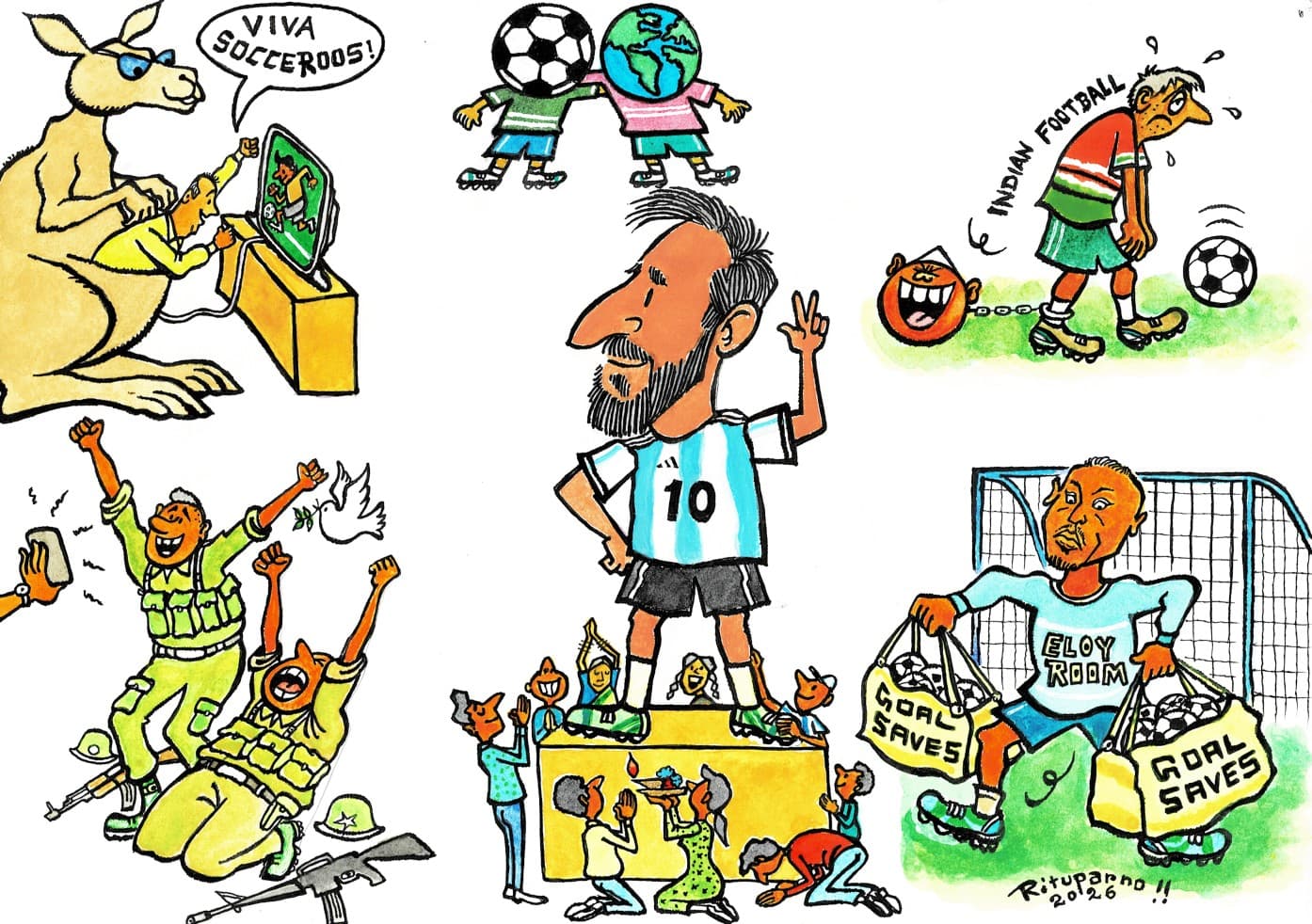
The World Cup is upon us and in a world where most of our time is spent in isolation, consuming specific personal media on a personal phone like some depressed hermit, it is great to see most of the world watch something together that isn’t a war or an accident.
I must admit, I’m a fan of the Australian Socceroos because in a South American-European football hegemony, they show up with a ton of fans and spirit and give it everything, knowing full well that down the line, a France or Brazil will meet them and end it. It’s fun to play with nothing to lose. What even is sport, if not mad belief?
I remember an Italy-Australia game in the previous World Cup, where the Italians did everything with their known slyness and shifty ball-passing and the Socceroos played like it was outright war. This time, it was even more disorienting to see them lose to the USA, which almost started pretending like it was a veteran of the sport in the course of the match. Compounded by the fact that they have American commentators now who try to go toe-to-toe with the British ones, pretending like they’ve always commentated on the sport. Almost as disorienting I’m sure as it is for Australian fans to drink what Americans pass off as ‘beer’ and think of it as the same thing they know.
In a divided world where all the profit seems to be in division and national maligning, one ball and 90 minutes are enough to make us all Argentine or Swede or Belgian or Congolese, or whoever is playing that night
World Cup football creates some peculiar narratives. For the Brazilians and Argentines it is in their DNA. The Spanish and French play it tactically like chess and almost see it as a reflection of how their nation is evolving in diversity, position and style. The British seem to feel a sense of entitlement and there’s an almost medieval mythmaking to winning — with songs, chants and nonsense repartee — having founded the sport, regardless of the quality of the team itself.
In India, where I live, you’d be forgiven for thinking it wasn’t even going on. Most of the country doesn’t care, till you visit Kerala or West Bengal where you’d feel that was all that was going on. (I drove out of the Kolkata airport under a 100-foot giant cutout hoarding of Messi.) Every time the Cup shows up, there’s a debate about India having 1.4 billion people and not finding 11 worthy when Cape Verde, essentially a large resort, defends its honour against the mighty Spain. When we are confronted about our World Cup disappearance (or rather, lack of appearance), we have two excuses — first, corrupt politicians are holding us back; and second, look at China, they don’t make it, either.
Richard Osman, the author and host of the podcast The Rest Is Entertainment, said recently that this is the first World Cup where little clips, Tik Tok and Insta reels, and shocking five-second viral statements from pundits — “This World Cup is an abomination” etc. — will be viewed way more than the games themselves.
And yet, it still brings us together. Every four years, the Cup throws up surprises we all get excited by, like an obscure 40-year-old goalkeeper who makes his mother proud with 15 saves, or Messi’s almost religious following that grows as he gets older instead of waning, or Scottish fans charming Boston or Norwegian fans pretending to be Viking invaders or Americans being confused by all of this.
In a divided world where all the profit seems to be in division and national maligning, one ball and 90 minutes are enough to make us all Argentine or Swede or Belgian or Congolese, or whoever is playing that night. That’s a hydration break we all need.
Why does the FIFA World Cup attract a global audience?
Why does the FIFA World Cup attract a global audience?
It is one of the few sporting events that brings billions of people together across countries, cultures and generations.
Why does the article highlight Australia’s Socceroos?
Why does the article highlight Australia’s Socceroos?
The Socceroos represent the spirit of underdogs who compete with determination despite facing stronger football nations.
Why does Lionel Messi resonate with so many fans?
Why does Lionel Messi resonate with so many fans?
Messi symbolises football’s universal appeal, with a fan following that continues to grow even in the later stages of his career.
Why is India’s World Cup enthusiasm described as regional?
Why is India’s World Cup enthusiasm described as regional?
While football enjoys passionate support in states like Kerala and West Bengal, cricket continues to dominate much of the country.
How has social media changed World Cup viewing?
How has social media changed World Cup viewing?
Short-form videos, highlights and viral commentary increasingly shape how audiences engage with the tournament, often rivaling live match viewership.