Key Highlights
- Despite a forgettable debut against India, Shane Warne enjoyed a memorable relationship with the country
- Warne’s rivalry with Sachin Tendulkar was always intense, but also led to a lifelong friendship between the two
- After injuries derailed him in 1998 and 2001, Warne was back to his best on Indian soil in 2004
- Warne’s greatest India story remains his impact on the IPL and the Rajasthan Royals
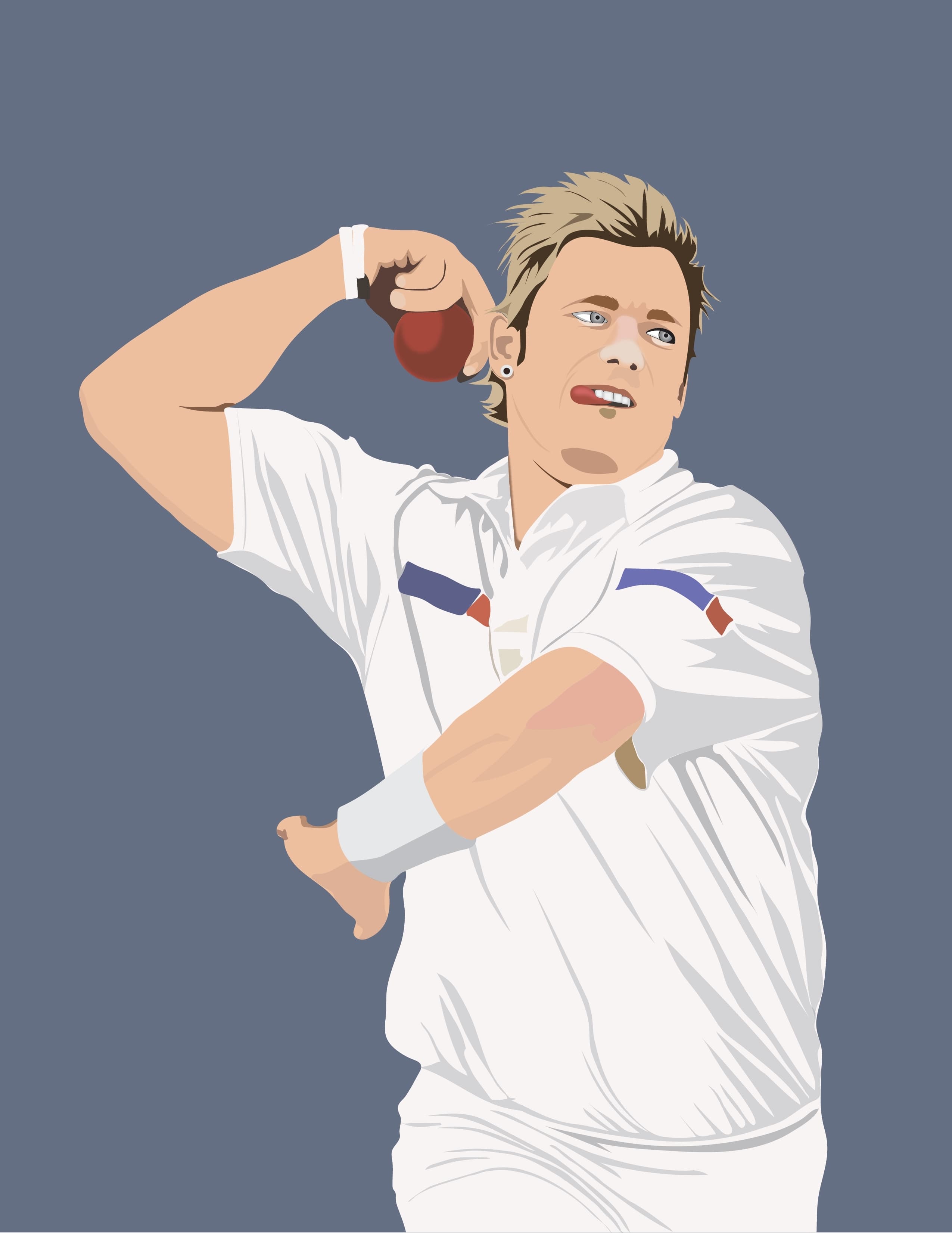
It’s the opening week of January 1992. Australia and India’s men’s cricket teams have just played out a compelling draw in the third Test match of the series at the Sydney Cricket Ground (SCG). In the immediate aftermath, one debutant finds himself under the spotlight. His three wickets in the first innings — scalps of Geoff Marsh, Mark Taylor, and Mark Waugh — helped India seize the initiative, before batting masterclasses by Ravi Shastri and Sachin Tendulkar heaped pressure on the Aussies. His name is Subroto Banerjee, a 22-year-old fast bowler from Bihar. But Banerjee isn’t the only debutant to feature in the game. A stocky, blonde leg-spinner, who ended the contest having conceded 150 runs with a solitary wicket against his name, also played his first-ever Test match at the SCG. He is also 22.
As history would have it, Banerjee would never represent India in another Test, while his Australian counterpart would end up as arguably the greatest bowler of all-time. A man who, in the words of ex English cricketer-turned-broadcaster Isa Guha, could do “genius, rockstar, and mate like no one else”. A man called Shane Keith Warne.
Warne’s international cricket journey may have begun with a nightmarish onslaught by India, but what followed over the next two decades made the Australian one of the most sought after athletes (and celebrities) in India. Whereas Australians would often show one of their prodigal sons tough love throughout the ’90s and the early 2000s, and England, especially the English press, made it a habit to reduce Warne’s greatness to page-three gossip, India was a place where Warne was frequently celebrated. Never more so than during his magnificent run in the inaugural campaign of the Indian Premier League (IPL), when he inspired underdogs Rajasthan Royals to the title.
As the cricketing world marks four years without Warne — he died of a heart attack on 4 March 2022 — DOT.in looks back at the special relationship that Warne shared with India — one that, much like him, was charming in its contradictions.
Warne versus Tendulkar
It was the 50-over World Cup in 1996 when Indians first got to witness Warne’s magic in the flesh. After the drubbing in Sydney on debut, Warne had squared off against India a few times in One Day Internationals (ODIs), where he was dominated by Vinod Kambli and Tendulkar. But the World Cup semi-final in Mohali against the West Indies was when Warne finally came into his own. With the Windies cruising in pursuit of 208, it was Warne’s bag of tricks that dragged Australia back into contention, before propelling them to the final. Two years later, Warne would be back in India, this time to take on Tendulkar in a Test series billed as a head-to-head clash between the world’s standout batter and its number one bowler.
In the first innings of the first Test in Chennai, Warne drew first blood, as he had Tendulkar caught at slip for just four. Come the second innings, though, Tendulkar was fully switched on, taking Warne apart en route to a dazzling century that left a supreme Australian unit looking hapless. It proved to be a gruelling tour for Warne, who later claimed in No Spin (his 2018 autobiography co-authored with English commentator Mark Nicholas) that he felt his “shoulder [was] about to fall off”. Warne’s mood couldn’t have been helped by off-field gaffes, as when he had to send back a room service order of toasted cheese sandwich multiple times before ultimately settling for French fries.
The year of 1998 brought more woes on the India front for Warne, as Tendulkar tore into him and the rest of the Australian bowling attack during the Coca-Cola Cup in Sharjah. But it was also 1998 when Warne and Tendulkar met Sir Donald Bradman, widely regarded as the greatest batsman of all-time, at Bradman’s home in Adelaide on the occasion of his 90th birthday. That meeting helped take some of the sting out of the Warne-Tendulkar rivalry as the two phenoms went on to become close friends.
In numerous interviews post-retirement, Warne hailed Tendulkar as one of the top two batters he ever bowled to (alongside Brian Lara), with Tendulkar tweeting that he was “shocked, stunned, and miserable” to hear of Warne’s passing shortly after the Australian icon was declared dead. Exactly a year later, with more time to reflect on the loss, Tendulkar wrote: “I miss you not only as a great cricketer but also as a great friend. I am sure you are making heaven a more charming place than it ever was with your sense of humour and charisma, Warnie!”
‘I’m pretty knackered’ and missing out on a ‘minefield’
In 2001, Warne returned to India, with the state of his fingers and overall fitness in doubt. In what would turn out to be a landmark series for Test cricket in the new millennium, Warne was part of a seemingly invincible Australian team (led by Steve Waugh) that lost its 16-match winning streak after capitulating at the Eden Gardens in Kolkata. “I’m pretty knackered… It’s like 40 degrees. Let’s rest up and bat again” was what Warne had told Waugh when the latter asked him about enforcing the follow-on at Eden. As was Waugh’s wont in those days, he did the opposite of what Warne suggested. And paid a hefty price. VVS Laxman and Rahul Dravid put on a 376-run partnership, which brought India back from the jaws of defeat. In the fourth innings, as wickets kept tumbling, Warne began falling asleep out of sheer fatigue. When he eventually came out to bat in front of a raucous Kolkata crowd, Tendulkar sent him packing with a wrong’un.
Even though Australia lost the series, Warne didn’t let the resentment fester. In No Spin, he credits Sourav Ganguly with changing the mindset of Indian cricketers by forcing them to shed the pushover tag and encouraging them to play more aggressive cricket. Having said that, Warne’s description of Ganguly “operating like a dictator” may have been somewhat exaggerated, typical of Warnian hyperbole.
Three years later, Warne would perform much better in India, but once again, endure a bitter twist along the way. Ahead of the fourth Test in Mumbai, where the pitch was, in Warne’s own words, a “minefield”, Warne got his thumb broken by a 16-year-old net bowler. That too a spinner! On what turned out to be a spinner’s paradise, Michael Clarke took six wickets with his part-time, slow left-arm spin. Warne had to wait some more for sweeter times in India.
India and Warne had been a mixed bag until the spin legend retired from international cricket and entered the enigma that was the IPL. Warne was the first player to be auctioned in IPL history, pocketing a neat $450,000 to play for the Rajasthan Royals, where he was both captain and coach. Contrary to rumours, it wasn’t Bollywood actress Shilpa Shetty or cricket administrator Lalit Modi who had persuaded Warne to lace his boots for the Jaipur franchise. Instead it was businessman and Royals owner Manoj Badale, who told Warne that playing in the IPL would give him the chance to prove once and for all that he was “the best captain Australia never had”. Warne not only proved Badale right, but his IPL journey also illustrated what Australian batter Mark Waugh had once said about his former teammate: “Warnie was the ultimate entertainer on and off the field, never a dull moment.”
A Royal to remember
As Royals’ skipper, selector, and after-party organiser rolled into one, Warne was anything but conventional. Before the inaugural IPL season got underway, Warne assembled his entire squad and made up a story that his phone had been tapped and theirs could be, too, in an attempt to get all his colleagues to be extra cautious with their communication. Even though Warne adored Ravindra Jadeja, calling him “rockstar”, he didn’t hesitate to jettison him from the team bus and have Jadeja walk to the team hotel after the then teenager had repeatedly failed to turn up for sessions on time.
In the 2008 IPL semi-finals, when the Royals met the Delhi Daredevils, Warne went up to Gautam Gambhir and told him: “It’s [Virender] Sehwag we were worried about… It doesn’t really matter what you do… no one cares.” The sledging worked as Gambhir was dismissed shortly after. In the final against Mahendra Singh Dhoni’s Chennai Super Kings (CSK), the match was in the balance in the second innings with a potentially decisive face-off shaping up between Royals’ Yusuf Pathan and CSK’s Muttiah Muralitharan. During a drinks break, when the usually imperturbable Pathan sounded confused about attacking Muralitharan, Warne had two words for his star striker: “Smash him.” Pathan obliged, before Warne came up with some batting heroics of his own to edge out a thriller in favour of the Royals.
Without Warne’s mentorship, charisma, and characteristically clutch moments in 2008, the IPL may not have been the roaring success it was to begin with. While Warne would continue as a player in the competition till 2011, he went out of his way to mentor several Indian spinners, including Kuldeep Yadav and Yuzvendra Chahal, in the years ahead. His impact on the IPL wasn’t just about writing a golden chapter for the Royals, but about laying the foundation of an ecosystem where the best in the world cherished the experience of sharing the tricks of their trade with emerging Indian talent. Had he still been alive and healthy, Warne would probably have renewed his association with IPL and Indian cricket, going on to inspire countless more Indian boys and girls to “give it a good, old rip”.
Scrolling through YouTube videos these days, it is still hard to process that Warne is no more. His voice from his commentary stints still sound remarkably recent. So much so that I am tempted to imagine his razor-sharp analysis punctuating the ongoing ICC Men’s T20 World Cup, where his humour and wit are missed as much as his understanding of the sport. One wonders what Warne would have made of Australia’s early exit as well as the heartening rise of the associate nations.
From an Indian point of view, it is a pity that Warne wasn’t around to call the action during any of the decisive junctures of India’s three ICC trophies in the past three years. But it is a graver loss still for Indian cricket that the likes of 14-year-old batting sensation Vaibhav Sooryavanshi will never get to experience Warne in the Royals dugout: the game-changing presence of a champion mentor to keep reminding the youngster to “smash it”.