Key Highlights
- Pichwai, an Indian art form, is slowly seeing a shift from temples and is now increasingly finding space in the global stage.
- Pichwai, which originated in the 17th century in Nathdwara, Rajasthan, began as large, hand-painted cloth hangings for the wall behind the idol of Shrinathji.
- The art form mostly depicted episodes from Lord Krishna’s life in exquisite detail and jewel-like precision.
- The Pichwai market primarily constitutes lifestyle-themed decor and high-end traditional art.
- Pichwai paintings have now soared in demand and one can see the art form’s motifs almost everywhere, be it wedding lehengas or cushion covers or even wall art.
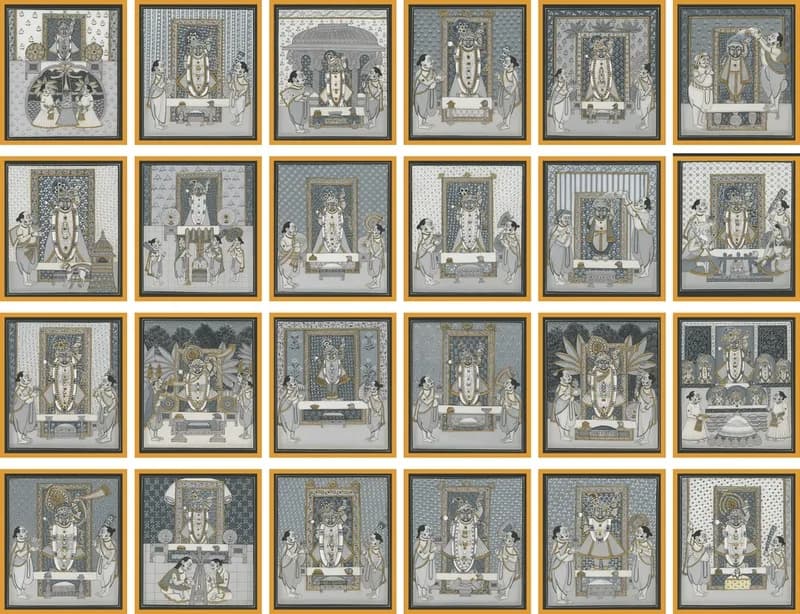
If you observed the decor at someone’s Diwali party this year or looked closely at an ornate Indian wedding invite, you might have noticed a serene cow or lotus peeking out. This is not some random clip-art from a children’s book — it’s an example of an Indian art form called Pichwai. And suddenly, it’s everywhere.
Once a modest backdrop in Rajasthani temples, Pichwai’s charming depictions of episodes from the Indian god Krishna’s life have trotted from their original place behind the deity to front-and-centre on wedding cards, gift boxes, silk sarees and even high-fashion couture. The transformation of this 400-year-old art form from a sacred niche to a global lifestyle trend is as dramatic as it is delightful, and it comes with a gently ironic twist: what began quite literally in the background is now in your face, albeit in a tasteful way.
Pichwai originated in the 17th century in Nathdwara, Rajasthan, as a distinct form of temple art. These were large, hand-painted cloth hangings for the wall behind the idol of Shrinathji, a form of Lord Krishna depicted as a seven-year-old child. In the Pushtimarg tradition in Nathdwara, Pichwais formed an essential part of worship decor, changing with seasons and festivals to delight the deity and devotees alike. Themes were deeply devotional: episodes from Krishna’s life, such as lifting Mount Govardhan or dancing with the gopis, were rendered in exquisite detail and jewel-like precision. Delicate pink lotuses and white cows with red handprints were abundant, going on to become iconic, defining motifs in these paintings.
Walk into a chic Mumbai or Melbourne home today, and you might spot a framed Pichwai replica or a wallpaper covered in lotus blooms inspired by the Pichwai art form
Creating a Pichwai was painstaking work: master artisans would grind natural pigments and spend months on a single tableau. Yet, they remained largely unseen by the larger public, occasionally serving as gifts by high-ranking Goswami priests to princes and connoisseurs. And beyond Nathdwara (the genre’s epicentre), the average art lover had little inkling of its existence. After all, its very name ‘Pichwai’ means ‘hangings at the back’, a reminder that these lush paintings were the background.
Fast forward to the 21st century, and Pichwai art has escaped the sanctum sanctorum and found a dazzling second life. As art revivalist Pooja Singhal observes, “Technically, a Pichwai shouldn’t even feature the image of Shrinathji… But Pichwai survived because it managed to become an art form in itself”.
Pitching the Pichwai
- Pichwai paintings are popular among individuals, boutique galleries, high-end interior consultants, and cultural institutions in Australia.
- The market is divided between high-end traditional art (hand-painted on cloth) and lifestyle-focused decor (prints and digital downloads).
- Etsy Australia is currently the primary retail gateway.
- Brands like Australia-based Maya Wall Art have commercialised the style into ‘Giclée’ art prints.
- The ‘average spend’ for the Australian-Indian diaspora on Pichwai-themed lifestyle items is approximately AUD120–AUD250 per transaction.
- A standard hand-painted Pichwai might sell for AUD350, the same design with authenticated gold foil work starts at AUD750 - AUD900.
Over the past decade or two, a concerted revival effort by artists and collectors has pulled Pichwai out of obscurity and into the limelight. One catalyst was the realisation that this heritage art was fading: by the 2000s, many traditional Pichwai painters had found other occupations or were churning out cheap, stencil-aided versions for tourists. Enter modern champions like Singhal who, in 2009, founded Pichvai Tradition & Beyond. Singhal and others worked with some of the remaining master painters, insisting on old-school techniques while tweaking compositions to suit contemporary tastes. Smaller canvases and modern thematic twists were introduced, thus retaining the essence but increasing access.
This resulted in a renaissance — what was once temple ephemera is now collectible art. “Now, suddenly, Pichwais have become collectibles and are aspirational,” Singhal noted, cautioning that the craze has even led to knock-offs in the market.
Indeed, Pichwai paintings have soared in demand and, consequently, price. In 2020, a Nathdwara Pichwai sold at auction for around ₹6.8 lakh (a little over AUD 11,000), well above its estimate. And in 2023, a vintage Sharad Purnima Pichwai fetched USD 25,200 at a Christie’s online auction, surpassing its USD 15,000 estimate.
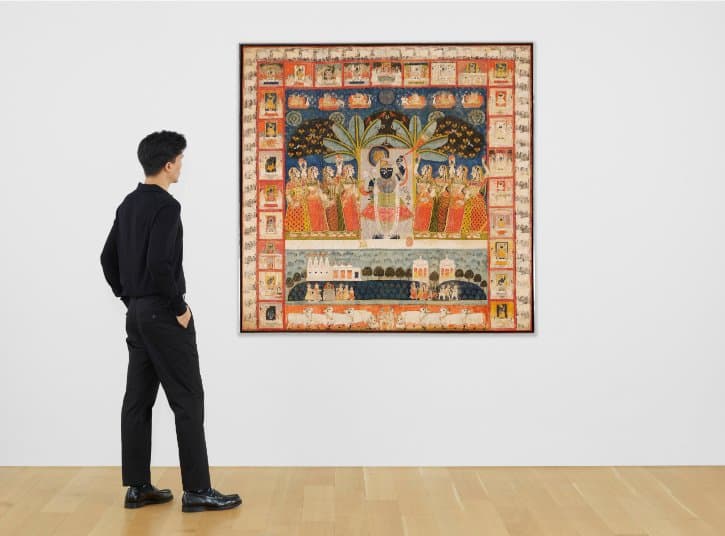
Such head-turning bids confirm that this once-esoteric art form is now a sought-after commodity. Auction houses report a growing pool of eager buyers, with auction director Sunny Chandiramani noting a “visible rise in demand from the Indian diaspora, especially collectors based overseas who see Pichwai art as a way to preserve and celebrate their cultural identity.” He added that increasing global appeal is driving up both bids and the number of Pichwai works coming into the market. Today, affluent Indians and South Asians around the world are keen to own a piece of this heritage — a far cry from when temple priests would literally discard old Pichwai cloths once the colours faded.
What’s most striking (and for some, amusing) is how omnipresent Pichwai motifs have become. What once quietly hung behind closed temple doors has marched boldly into drawing rooms and wardrobes across the globe. Walk into a chic Mumbai or Melbourne home today, and you might spot a framed Pichwai replica or a wallpaper covered in lotus blooms inspired by Pichwai aesthetics. Designers have printed Pichwai’s lotus ponds and cows onto throw cushions, ceramic platters and decorative wall plates, allowing the art to bridge tradition and contemporary design with ease. Even high-end interior studios now offer entire Pichwai-themed collections — from bespoke wallpapers that turn your living room into a miniature temple courtyard, to upholstery fabric sprinkled with tiny Kamadhenu cows.
The fashion world, too, has fallen in love with Pichwai. In January 2025, the internet was abuzz with news about a high-profile family wedding where the celebrated Indian designer, Manish Malhotra, created a show-stopping hand-painted Bundi jacket for the groom, lavishly adorned with age-old Pichwai motifs rendered in real gold leaf. The mother of the groom wore a blouse that had real gold varak work embroidered by a Pichwai artist from Rajasthan.
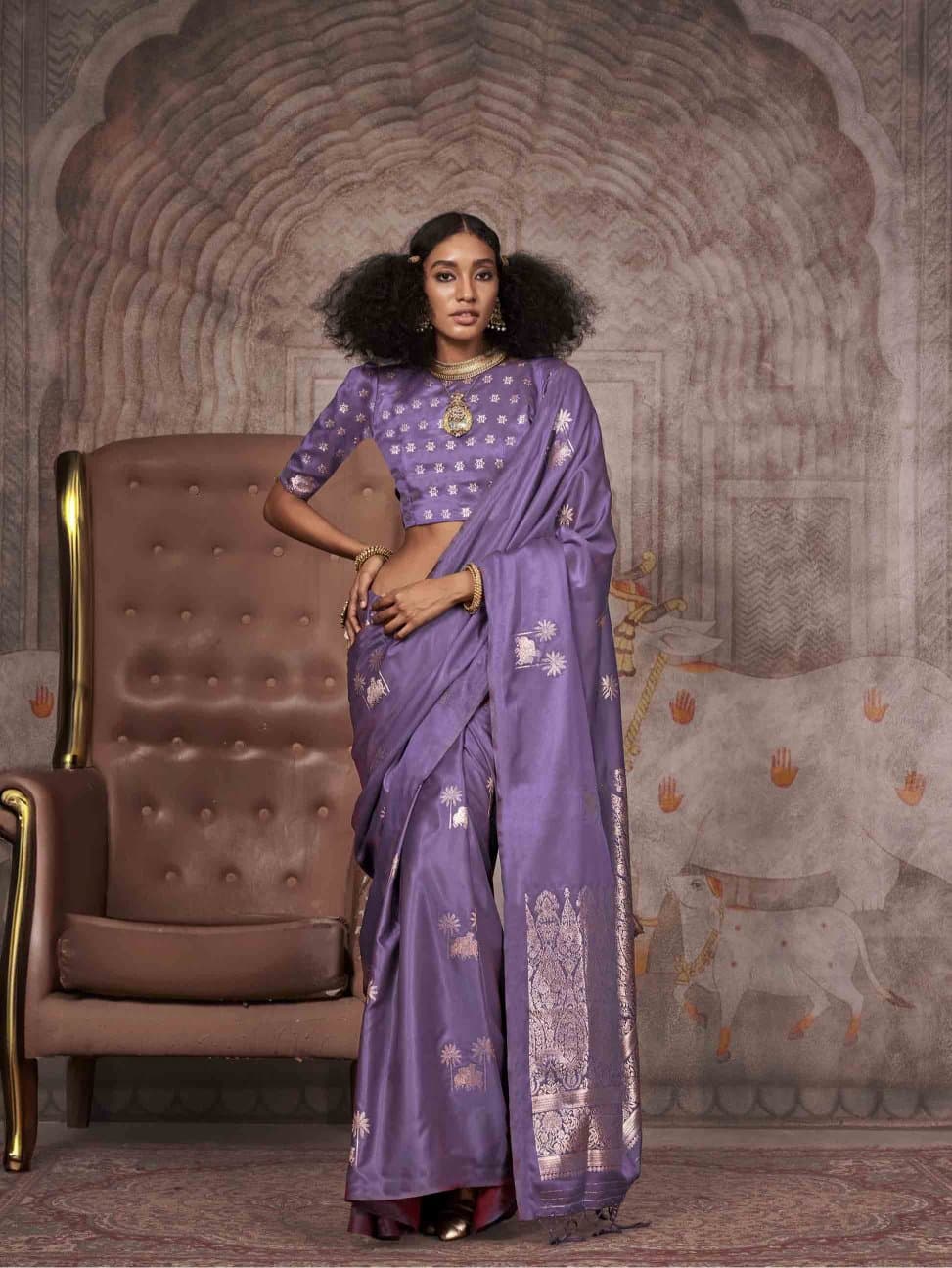
When India’s richest family showcases an art form on the world stage, you know it’s no longer niche. And it’s not just the billionaires: across India and the diaspora, wedding invitation designers now offer Pichwai-themed cards, complete with miniature cows and pastel lotuses, to announce nuptials with a flourish of heritage. Luxury gift hampers for festivals are being printed with cheerful Pichwai-inspired tableaux, so your Diwali chocolates might come in a box bedecked with Krishna and his herd. Even the world of textile weaving has embraced this trend — Kanjeevaram and Banarasi weavers have started featuring Pichwai’s signature cows on their sarees.
There’s an irony in seeing the sacred cows of Nathdwara now ambling along wedding envelopes and fashion runways. However, as long-time collectors point out, this craze has also been a crash course in art history for many young people. A bride who chooses a Pichwai print lehenga inevitably ends up learning about Shrinathji and the Govardhan legend; someone might be hanging a Pichwai canvas in their office for the aesthetic, but they’re also keeping a 400-year-old storytelling tradition alive.
Pichwai’s journey from temple art to living room decor is a story of resilience. Curators and enthusiasts around the world now regard Pichwai as a living tradition rather than a relic. In fact, 2025 saw a landmark Pichwai exhibition by Singhal, titled Feast, Melody & Adornment, at the Mall Galleries in London, showcasing over 350 works.
All said and done, there’s something heartwarming about Pichwai’s meteoric rise. The background has become the foreground: Pichwai’s journey from a hidden backdrop to a spotlight-stealing motif is the ultimate glow-up for a traditional art form. The cow has truly left the barn.
What is Pichwai art?
Pichwai is an Indian art form that originated in the 17th century and was mostly painted on cloth hangings for the wall behind the idol of Shrinathji at the Nathdwara in Rajasthan
How much does Pichwai art cost?
In 2020, a Nathdwara Pichwai sold at auction for around ₹6.8 lakh (a little over AUD 11,000), and in 2023, a vintage Sharad Purnima Pichwai fetched USD 25,200 at a Christie’s online auction.
Where to buy Pichwai art?
Original Pichwai art can be bought at auctions. Currently, Etsy Australia is the primary retail gateway.
What is depicted on Pichwai art? What is depicted on Pichwai art?
Pichwai art mostly has themes that are devotional and features episodes from Lord Krishna’s life as well as motifs like delicate pink lotuses and white cows with red handprints.