Key Highlights
- For Indian communities abroad, GI tags are about authenticity in labelling, especially when buying Indian art and handicrafts.
- GIs cannot be sold, licensed or assigned, and is not owned by a specific brand.
- A GI is different from a copyright, a design right, or a trademark
- India has more than six hundred GI-tagged products, most of which are handicrafts, followed by agricultural products.
- Uttar Pradesh consistently tops the list in the number of registered GIs.
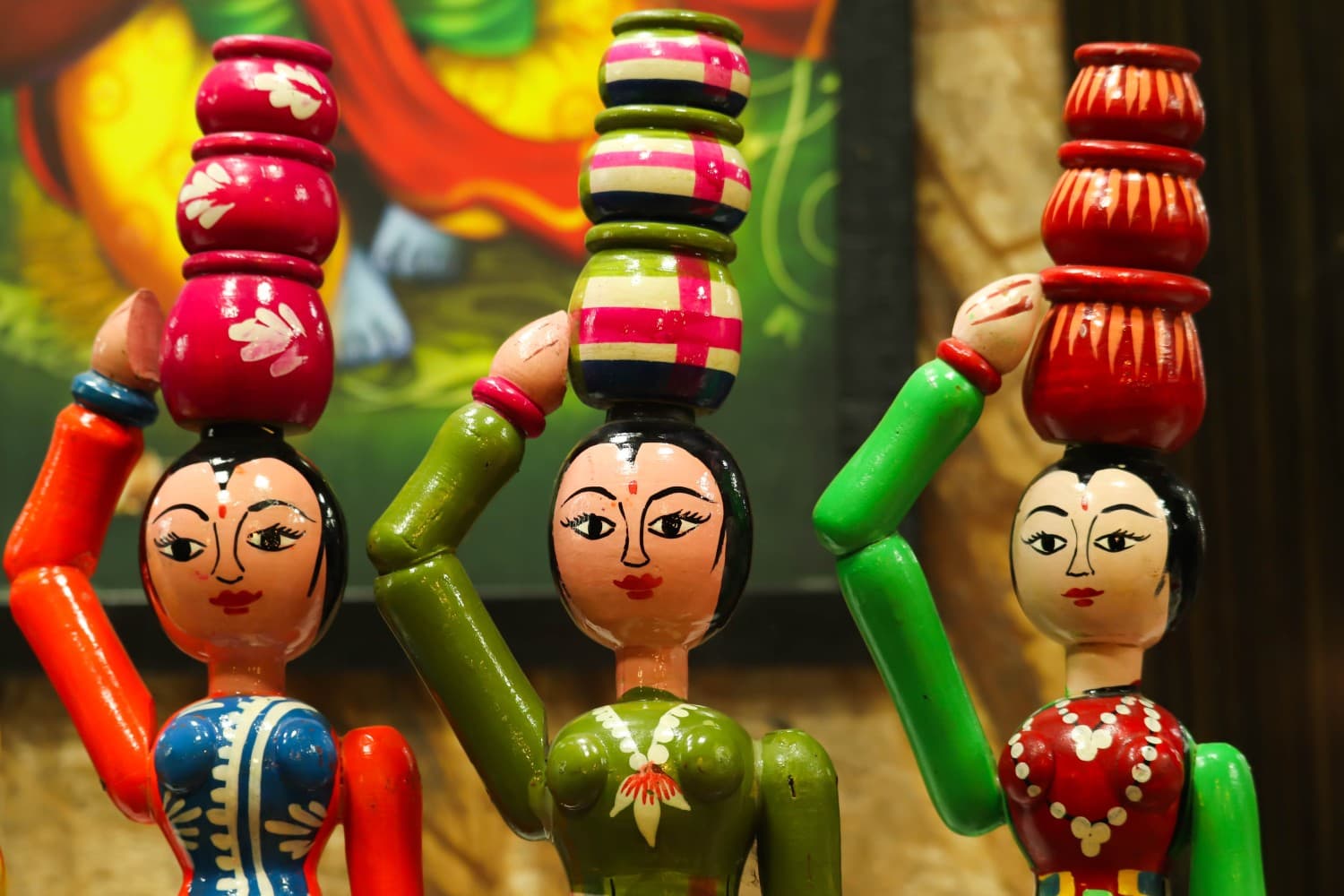
For Indian communities abroad, especially in markets like Australia, where Indian art and handicrafts make their way to boutique exhibitions and luxury retail, questions of origin usually surface when controversy strikes. Perhaps, a motif looks familiar or a silhouette feels borrowed.
Geographical Indications (GIs) are then dragged into the argument as a cultural stop sign — something that should prevent copying, borrowing, or even inspiration. That expectation is emotionally satisfying, but legally misplaced.
A GI is not copyright, a design right, or a trademark. It does not give anyone ownership over a motif, silhouette, recipe, or aesthetic. What it does, quite deliberately, is certify origin. A GI tells the consumer that a product comes from a particular place, and that its qualities are attributable to that place because of local materials, skills, and methods. That is the entire promise.
This is why resemblance, by itself, is irrelevant in GI law. The law steps in only when there is misdescription: when something made elsewhere, or made using different materials or processes, is sold under a protected geographical name. Tea grown outside Darjeeling may taste identical, but it cannot be sold as Darjeeling tea. Footwear inspired by Kolhapuri chappals may exist, but unless it is made in the notified districts, using the notified processes and materials, it cannot be sold as Kolhapuri. GI law is about truth in labelling, not about policing inspiration.
This narrowness is not a flaw. It is what makes the system workable. Unlike trademarks, GIs are not private property. They cannot be sold, licensed, or assigned. No individual or brand “owns” a GI. The indication attaches to the goods and the geography, and any producer from the region who complies with the registered specifications can become an authorised user. This structure matters. It keeps GIs from becoming another extractive asset and ties their value to place, practice, and continuity.
India’s GI register shows how this plays out in practice. Of the more than six hundred GI-tagged products in the country, the overwhelming majority are handicrafts, followed by agricultural goods. Natural products and manufactured goods are comparatively under-represented. This tells us two things. First, GIs have found their strongest footing in craft-based and artisanal sectors.
Second, there is significant untapped potential in categories we have been slower to document and protect.
Uttar Pradesh consistently tops the list in the number of registered GIs, not because it has a monopoly on heritage, but because it has invested in identifying products, organising producer groups, and navigating the registration process.
The distribution across states is equally revealing. Uttar Pradesh consistently tops the list in the number of registered GIs, not because it has a monopoly on heritage, but because it has invested in identifying products, organising producer groups, and navigating the registration process. Other regions with equally deep craft traditions lag behind for lack of institutional support and coordination, not because their products are any less distinctive.
Where GIs have worked well, the success has been unglamorous. Darjeeling tea’s long-running efforts to prevent unauthorised use of its name and logo - both in India and abroad - are a case in point. So too are domestic actions involving products such as Pochampally Ikat, where enforcement has focused on stopping misleading use of the name, not on grand claims of cultural theft. These cases rarely trend online, but they do what GI law is meant to do: protect consumers from deception and producers from erosion of reputation.
GI Myths That Refuse to Die
Myth: GIs stop copying
Reality: They stop mislabeling
Myth: GIs give ownership
Reality: They give certification
Myth: GIs control inspiration
Reality:They control origin claims
What GIs cannot do is resolve every ethical discomfort around global fashion and craft. They do not require designers to manufacture locally. They do not compel acknowledgements of inspiration. They do not prevent borrowing, reinterpretation, or aesthetic dialogue. Trying to force GIs into that role only weakens them. If every product that merely resembles a GI-tagged good were required to use the GI name, the name itself would lose meaning, and the original craft would be worse off.
This is also where misplaced craft evangelism tends to creep in - treating every instance of foreign interest as either validation or violation, and demanding symbolic victories from a law that was never designed to deliver them. A global brand’s engagement with a traditional craft may be welcome, opportunistic or commercially calculated - but those judgements sit outside the GI framework.
There is also a tendency to treat GI registration as the finish line. It isn’t. A GI that exists only on the register, without authorised users, quality control, or enforcement, is little more than a certificate. The harder work begins after registration: organising producers, ensuring compliance with specifications, preventing sloppy or opportunistic use of the name, and resisting the temptation to stretch the GI beyond what it lawfully covers. This is where many Indian GIs falter —- not because the law is weak, but because the institutional follow-through is uneven. Without that discipline, a GI risks becoming either ornamental or aspirational, invoked mainly during moments of controversy and forgotten the rest of the time. Used properly, however, it can do something more durable than outrage ever will: it can keep a craft economically viable without turning it into a museum piece.
Seen in this light, a luxury brand’s decision to explore manufacturing a limited-edition line of chappals in India is not evidence that it violated a GI, nor proof that “India’s GI has won.” It is a commercial choice, shaped by optics, supply chains, and brand strategy - not a legal concession arising from an acknowledgement of a GI violation. Reading it otherwise confuses market behaviour with legal consequence.
For consumers, this calls for attention rather than sentiment. Buying a GI product is not an act of virtue; it is an exercise in accuracy. Look closely at what the label is really saying. Is the product actually from the notified region? Is the seller sourcing from authorised users? Is the GI logo being used correctly, or casually extended to processed or adjacent products where the rules are far tighter?
GIs are not designed to freeze culture or fence it off from the world. At their best, they do something quieter and more useful. They insist that when a name travels, it does not lie about where it comes from.
What is a GI tag?
A Geographical Indication (GI) is a sign used on products that have a specific geographical origin and possess qualities or a reputation that are due to that origin. It certifies that the product possesses certain qualities, is made according to traditional methods, or enjoys a certain reputation, due to its geographical origin.
Does India have GI-tagged products?
Yes, India has more than six hundred GI-tagged products. The majority are handicrafts, followed by agricultural products. Uttar Pradesh currently has the highest number of registered GIs.
Where to buy GI-tagged products?
You can buy authentic GI-tagged products from government-authorised emporiums (like Tribes India or specific state emporiums), certified retail outlets, and online platforms dedicated to artisanal and GI products that source directly from authorised users and producer groups.
How many GI-tagged products does India have?
India has over 600 registered Geographical Indications, covering a wide range of goods including handicrafts, agricultural produce, manufactured goods, and natural products.
Does Darjeeling Tea have a GI tag?
Does Darjeeling Tea have a GI tag?
Yes, Darjeeling Tea was the first product in India to receive a GI tag (in 2004-05). Its name and logo are protected to ensure that only tea grown in the defined gardens of the Darjeeling district can be sold as Darjeeling Tea.