Maharani Nivritti Kumari Mewar brings together two royal legacies: her birth into Odisha’s erstwhile Patna royal family, with its deep political and cultural roots, and her marriage into Udaipur’s House of Mewar, a dynasty whose history is inseparable from Rajasthan’s identity. Her work with Indian craftsmanship reflects a wider question of how royal patronage can evolve to sustain artisans and traditions today.
As a princess of Patna-Balangir in Odisha, growing up, what were the arts and crafts that surrounded you as a child? What did you learn about the relationship between a community, its crafts and its cultural identity?
Odisha is rich in weaves, arts and craft, such as the Sambalpuri ikat, the Patachitras, and stone and silver handicraft work, besides Odissi and Chhau dance. Being a daughter of Odisha, I was surrounded by all this. My family’s relationship with Sambalpuri ikat goes back generations. The community of weavers migrated with my ancestors when they moved to establish (the former princely state) Patna in what is Odisha today, with their families settling in different parts of the state.
Our family holidays centred around art, temple visits, museum trips, as we travelled across Odisha. I grew up appreciating the state’s rich cultural traditions. I always saw my mother wear Kota saris when she was in Balangir (known as the cultural hub of western Odisha). Even today, she wears breathable Kota saris with Odisha being so hot and she being in politics, and out and about. She also wears her chiffons and her silks — Odia silks and satin silk.
Your brand Vottary brings Sambalpuri ikat from Odisha into contemporary products made in Udaipur. How did this idea take shape, and how do you balance an inherited craft with the demands of contemporary design?
I’ve always wanted to do something that would connect me to and give back to the people in Odisha. I’ve been fascinated with Odia weaves and textiles, so when the chance came for me to get a bit freer as my children grew up, I was able to come up with Vottary (which means ‘one who has taken a sacred vow’), and since I believe in numerology, I added an extra T, just as in my name!
The idea came organically — I went to Odisha to meet the ikat weavers, and bought the thaans (rolls of unstitched fabric) off the shelf from them. Then I took the fabric to manufacturers in Udaipur, which has one of the highest forms of craftmaking. Now, the Vottary products (the brand has trunks, bags, shoes and apparel) are like my children. They are an amalgamation of Odisha and Mewar, with textile from Odisha and the manufacturing in Mewar.
The next step is to have a karkhaana (workshop), where my weavers can sit and weave the fabric according to the designs and colour combinations I develop.

Your wedding seems to have been an important starting point for Vottary. How did it inspire you?
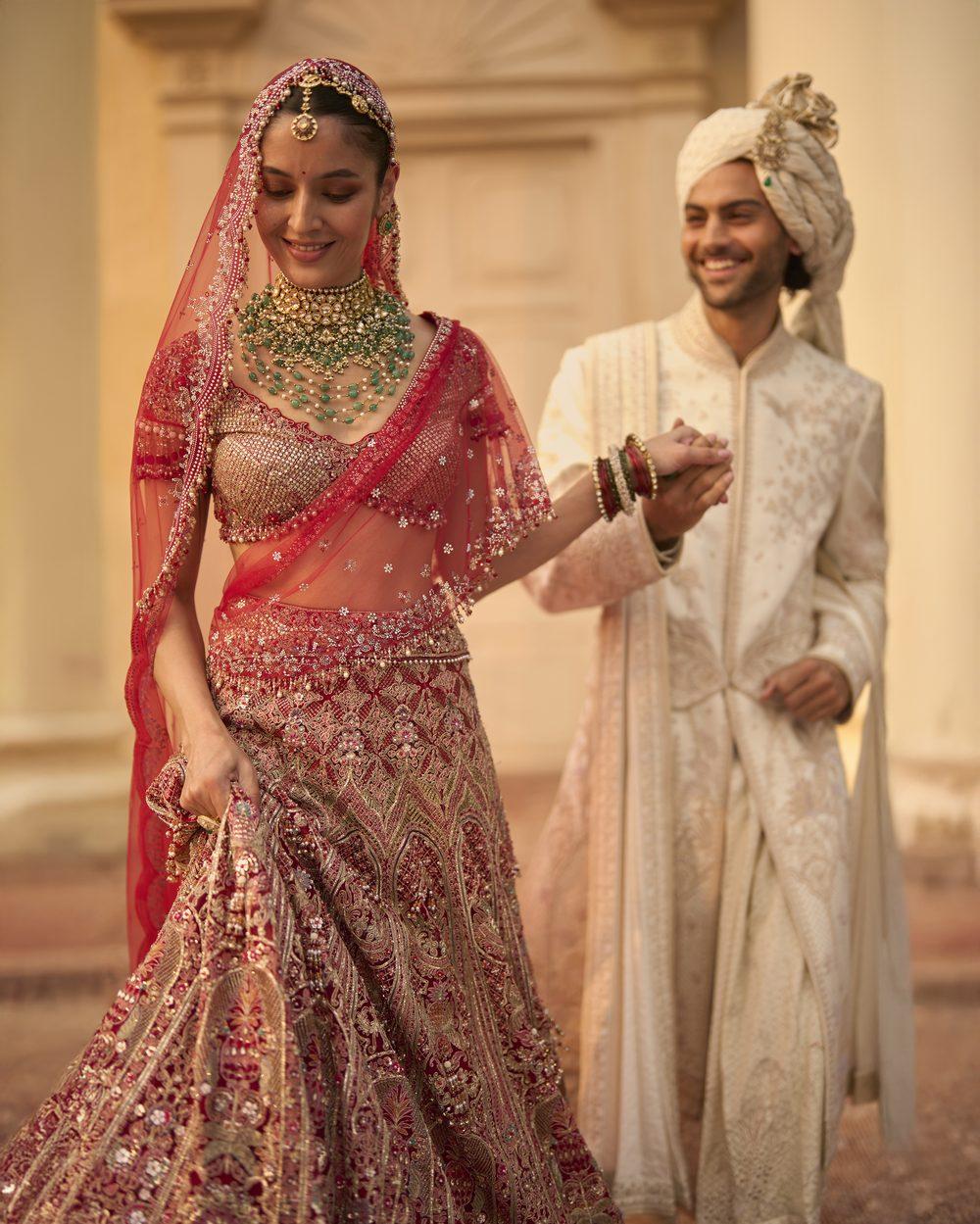
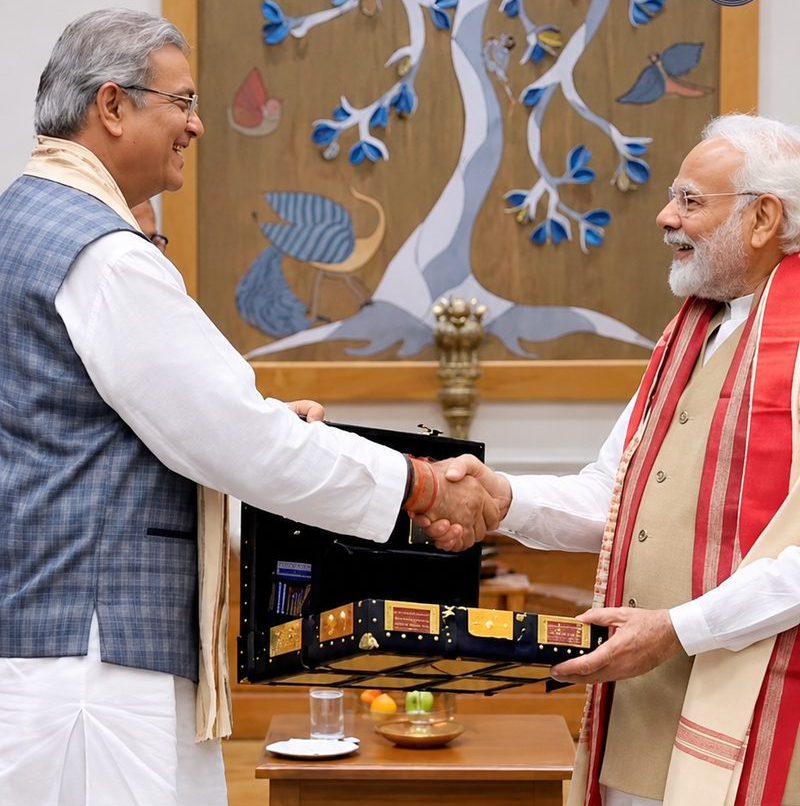
My inspiration came from the work that my mother and I did during my wedding (to Shriji Huzoor Lakshyaraj Singh of Mewar). There are so many things that were part of my wedding, for the actual shaadi and the tilak (pre-wedding welcome of the groom) and the lagan patrika (wedding invitation). I came up with the idea of trousseau and gifting trunks during the wedding, because irrespective of caste or community, gifting is such an integral part of Indian weddings.
I wanted to use traditional Odia textiles with a contemporary twist, creating products that could be part of everyday life as well as special occasions.
How do you bring together Odisha’s textiles and Udaipur’s craftsmanship?
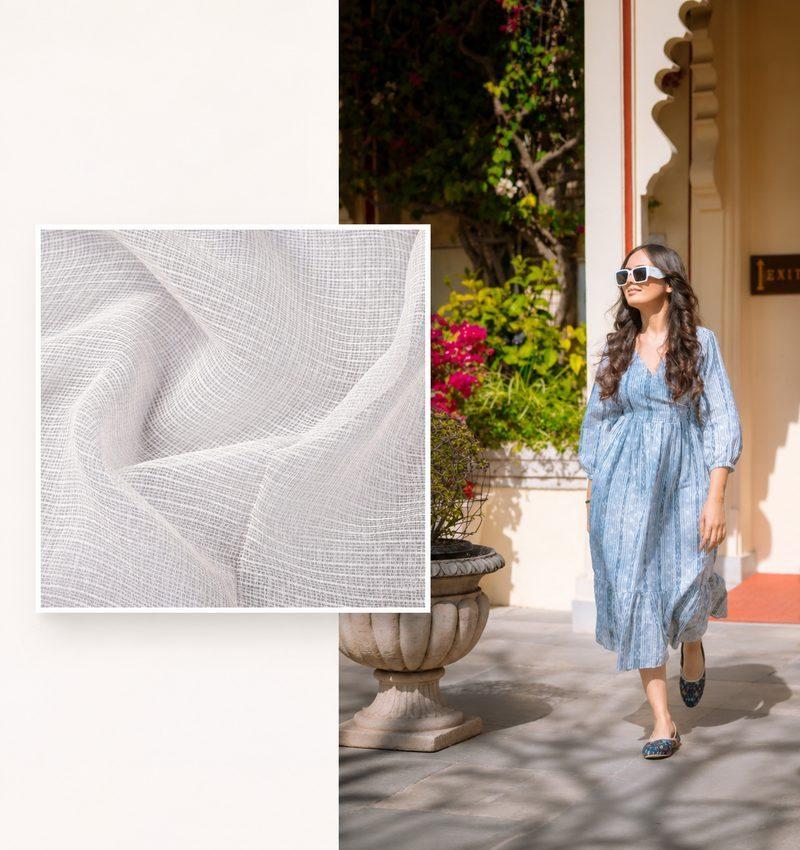
We began with trunks and have since developed bags, laptop sleeves, folders and briefcases. For apparel, I wanted to stick to the kaftan, but eventually made beachy, loungey dresses combining Kota fabric with Sambalpuri ikat to give them movement. We also make mojris (handcrafted shoes) and heels.
All the fabric is real handloom, so it takes time, as there are so many man-hours involved. Plus, we have chosen brass for our handles and logos and eschewed leather. Some Sambalpuri ikat designs feature Lord Jagannath, and we didn’t want to mix these with leather. Our products are vegan and sustainable.
What other pursuits shape your understanding of heritage and your responsibility towards the land you come from?
As the daughter-in-law of the house, I look after my home with my husband. Besides Vottary, I’m also into natural farming; we grow our own vegetables.
Back home in Odisha, I’m restoring my palace, which is a slow process, trying to micromanage it over the phone. I have a fishery there, so I’m breeding fish. These are just a few entrepreneurial things I do apart from looking after three children, my husband and now my parents.
What is being done to secure the future of India’s craft heritage?
I can speak of my role. Personally, I want to grow Vottary organically because so much has happened over the last couple of years. I lost my parents-in-law over the last one-and-a-half years and my focus has been my family.
When people see the products, they appreciate the finish. Even my eldest daughter, who is 12 years old and already a fashionista, loves the shoes and the dresses.
I’ve taken it slow, but I’m soon opening a store in Udaipur, just outside the palace. God willing, that’s our first big step. I would love to have it in stores all over the world. Why not?
Vottary is the sacred vow that I have taken to our people, to our craft, art, heritage and legacy. It’s my vow towards the land I was born in and the land I married into.