Key Highlights
- Putli Ganju is an acclaimed practitioner of the Sohrai tradition — a 10,000-year-old rock art
- The indigenous tradition of Sohrai is a form of matriarchal mural art recognised by a GI tag
- “Natural aggression” is a hallmark of the Ganju style
- One of Ganju’s exhibits, The Cattle and the Snake, has travelled from Hazaribagh to the Art Gallery of New South Wales (AGNSW) in Australia
- When award-winning environmentalist and activist Bulu Imam found similarities between the prehistoric rock art of the Isko shelters and the modern Hazaribagh murals, he became invested in these artforms and established the Tribal Women Artists’ Collaborative (TWAC)
- In March 2000, Putli along with three other TWAC artists spent a month in Sydney painting 14 massive murals, sponsored by the Australian Museum’s Djamu Gallery
- These murals were placed in the nation’s top museums, like Queensland Art Gallery, Art Gallery of New South Wales, The Australian Museum, Powerhouse Gallery and Casula Arts Centre
Moments of raw, forest-floor violence were her first inspirations. A simple stick and stone were her first tools. The crumbling mud walls of her family home, her first canvas.
As an eight-year-old growing up in the forests of Hazaribagh, one of Putli Ganju’s daily tasks was to graze the cattle. One such morning, she saw a tiger hunting a deer. This wild moment sparked an urge to recreate it. As children do, she asked her mother if she could draw this.
And as mothers do, Putli’s mother understood that something was different. She handed her daughter a stick to sharpen. Putli got to work on the mud walls of their house. Little did mother and daughter know that this urge would propel Putli’s work to art galleries in different corners of the world.
The indigenous tradition of Sohrai is a form of matriarchal mural art recognised by a GI tag. They paint by instinct, holding the act sacred.
Home and Art
Putli had grown up watching the women in their hamlet transform mud walls into sprawling painted narratives, using just their fingers. This was the indigenous tradition of Sohrai — a matriarchal mural art recognised by a Geographical Indication (GI) tag in 2020. They painted by instinct, holding the act sacred. Children were only allowed to trace over the drawings by the adults.
“Hum mummy ka sab tasvir kharab kar dete thay, waise hi hum bohut banaye aur bohut sikhe,” says Putli with a laugh. (I would ruin all of my mother’s paintings, though I learnt a lot in the process.) Putli kept observing animals and practising, practising, practising. “Jo bhi dekhte thay bohut dhyan se dekhte thay, aur sab kuch banane ke liye poochhte thay.” (Whatever I saw, I paid a lot of attention to; I would ask to draw it.)
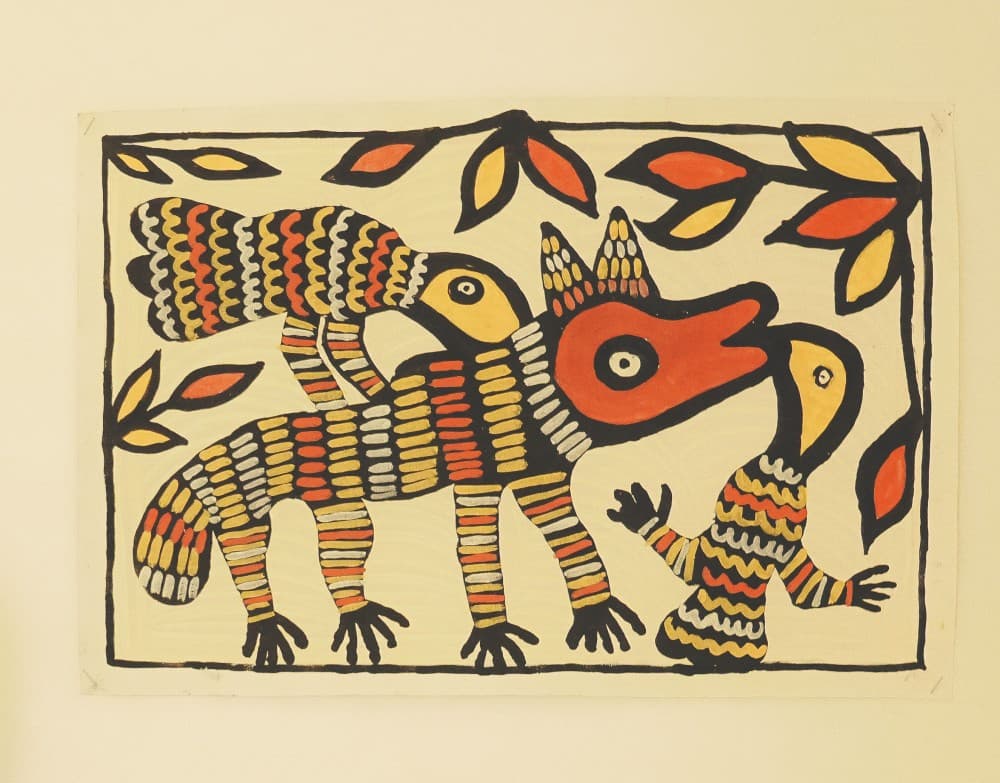
Another day, another strange scene confronted her. A villager’s cow was unable to feed its newborn calf. When Putli tracked the animal into the scrub, she witnessed a snake coiled around it, drinking the milk meant for the calf. Putli once again had witnessed a scene that begged to be painted.
This image of “natural aggression” — a hallmark of the Ganju style — would eventually travel from Hazaribagh to the Art Gallery of New South Wales (AGNSW) in Australia. Today, as the exhibit titled The Cattle and the Snake, it stuns visitors with its unflinching depiction of the natural world.
Mud to museum
How did Putli’s art travel all the way across oceans? The answer lies in yet another chance encounter. Award-winning environmentalist and activist Bulu Imam happened upon ancient rock art on cave walls as well as painted murals on tribal homes within the trails of the Hazaribagh forest. The striking similarities between the prehistoric rock art of the Isko shelters not far away and the modern Hazaribagh murals led Imam to seek out the present-day artists. He intensified his attempt to connect the arts of Sohrai and Khovar to prehistoric rock art. He became invested in these artforms and established the Tribal Women Artists’ Collaborative (TWAC).
Putli giggles when she recounts her first meeting with Bulu Imam’s sons — Gustav and Justin. On their mission to find the artists, the Imam brothers asked an Adivasi man they encountered if he knew a particular artist. This man happened to be Putli’s brother, who then took them straight to his own home. Because the artist they were looking for was Putli.
At first, Putli was unsettled by strange men wanting to meet her. That they had come to kidnap her seemed a very distinct possibility. But, Putli was intrigued by the paper and synthetic paints she had been given. Nervous, yet excited, she started drawing the arc of a new journey. Bulu Imam, determined to take Sohrai beyond Hazaribagh, arranged a grant from the Australian High Commission in New Delhi. In March 2000, Putli along with three other TWAC artists spent a month in Sydney painting 14 massive murals (6x12 feet) on specially prepared boards, sponsored by the Australian Museum’s Djamu Gallery.
These were placed in the nation’s top museums (Queensland Art Gallery, Art Gallery of New South Wales, The Australian Museum, Powerhouse Gallery, Casula Arts Centre, among others). This cultural exchange also served as a profound recognition of shared antiquity.
When Putli started drawing on the mud-plastered screens of plywood she’d been given, her techniques echoed those of First Nations bark painters — both cultures using mineral pigments like kaolin (white) and hematite (red). The striking softness shared by Sohrai and Aboriginal art touched a chord in experts and the audience. The Art Gallery of New South Wales recognised the ethnographic and artistic weight of Putli’s work and acquired her pieces for its permanent collection.
The confidence of authenticity
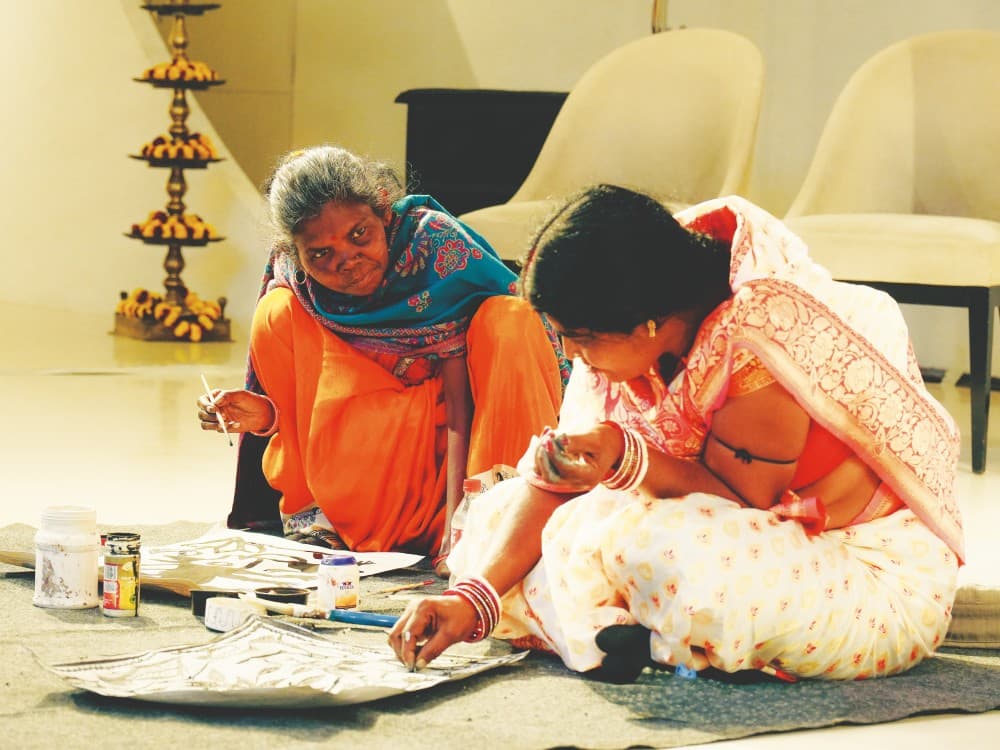
This was the first of several international and national tours. Today, this exposure is evident in Putli’s quiet self-possession. Although not completely uninhibited, Putli’s bearing demonstrates her experience. She recently conducted a workshop at the Kolkata Centre for Creativity, where she guided participants through the nuances of Sohrai. Her joy and pride, as an artist and member of her community upholding this tradition, are clear.
While museum acquisitions are usually confidential, and financial details often unavailable, comparable tribal “master” works from the TWAC collective have seen a steady appreciation in recent years. Currently, a high-quality Sohrai canvas by a recognised artist like Putli typically fetches between AUD $500 and $2,500.
Putli’s authentic voice, tender artistry and expert precision led her to graduate from the ground onto the walls, and eventually onto canvases exhibited in galleries internationally. But despite all the work she has done since, Putli’s favourite work remains The Cattle and the Snake, another testament to the authenticity of her voice and work.
What is Sohrai?
What is Sohrai?
Sohrai is a 10000-year-old matriarchal mural art recognised by a GI tag.
Who is Putli Ganju?
Who is Putli Ganju?
Putli Ganju is an acclaimed practitioner of the Sohrai tradition.
Where is Putli Ganju from?
Where is Putli Ganju from?
Putli Ganju is from Hazaribagh.
How much does Sohrai cost?
How much does Sohrai cost?
Currently, a high-quality Sohrai canvas by a recognised artist like Putli typically fetches between AUD $500 and $2,500.
Is Putli Ganju well known?
Is Putli Ganju well known?
Yes, Putli Ganju’s works have been displayed across various galleries in Australia. She has been on several national and international tours and recently conducted a workshop at the Kolkata Centre for Creativity, where she guided participants through the nuances of Sohrai.