


 ion
ionKey Highlights
- Kerala-based luxury rug brand Neytt by Extraweave created the carpet featured at the 2026 Met Gala
- This is the fourth time that Extraweave has produced the carpet for the event
- Founders Sivan Santhosh and Nimisha Srinivas launched Neytt in 2021 with a focus on storytelling through rugs
- The business evolved from traditional coir products to luxury rugs made from materials such as sisal, wool and jute
- The Met Gala carpet used premium broadloom sisal sourced from Madagascar and woven in Kerala
When the red carpet unfurled at the Met Gala in May, the world’s cameras were fixed on the celebrities and their couture. But more than 13,000 km away, in Kerala’s Alappuzha district, there was reason to focus a step lower.
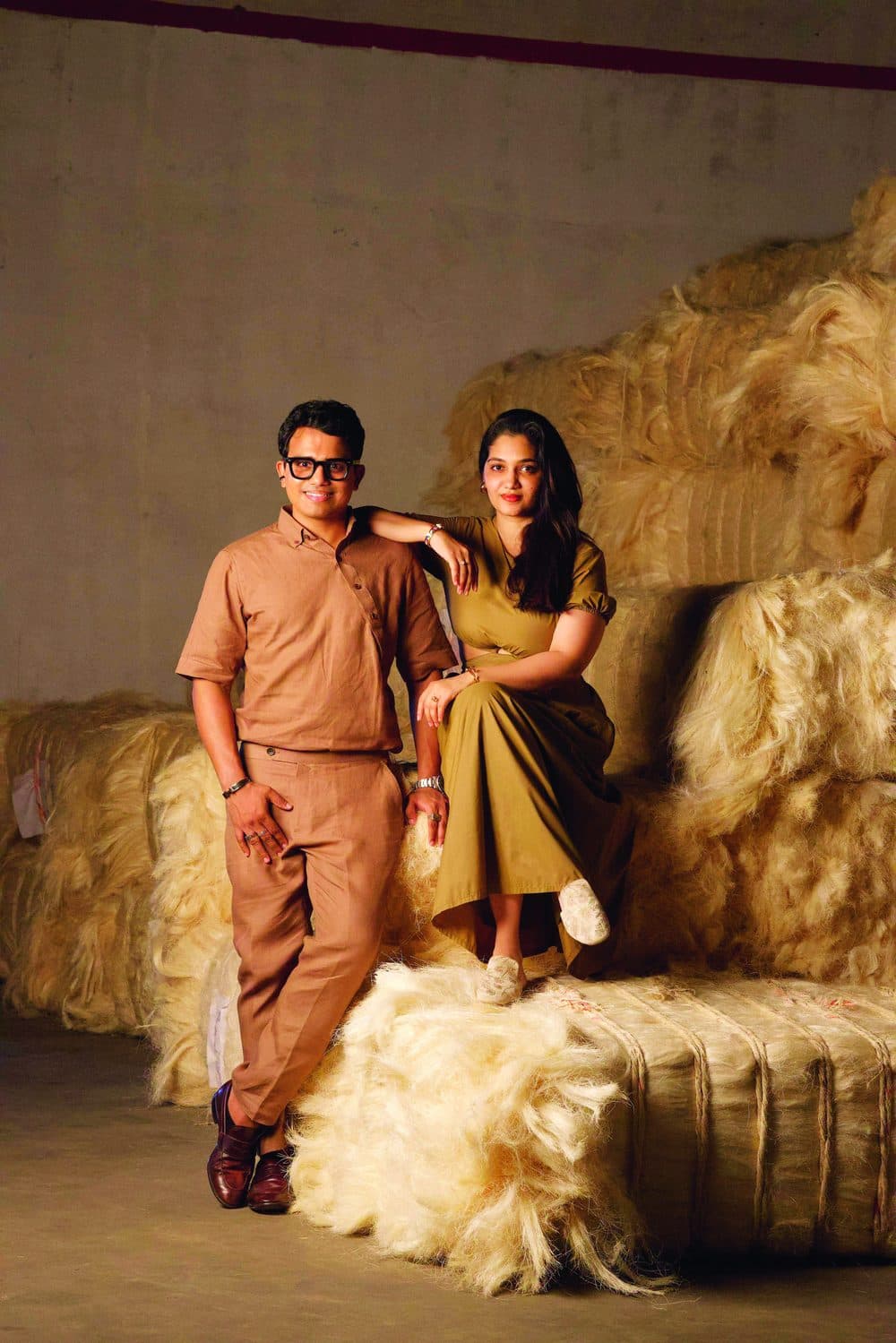
For the fourth time, a carpet made by Kerala-based luxury rug brand Neytt by Extraweave had travelled to the grand entrance of the Metropolitan Museum of Art in New York. Behind Neytt is a family with roots stretching back more than a century in Kerala’s coir industry. For Sivan Santhosh and his wife Nimisha Srinivas, who launched Neytt in 2021, the Met Gala is among the most visible stages their work has reached. But the story behind it began long before luxury rugs, international design projects and fashion headlines entered the picture.
The business’s roots go back to 1917, when Santhosh’s ancestors founded the Travancore Mats and Matting Company in Alappuzha, then one of the biggest centres of India’s coir trade.
“It all started with giving employment to a few artisans locally,” says Santhosh.
Back then Alappuzha moved with the coir industry. Coconut husks arrived through the backwaters in large quantities. Fibre was beaten and processed before being spun into yarn and woven into mats and matting that eventually travelled overseas. Entire communities grew around the trade.
The first organised coir factory in the region was established in 1859 by Irish-American entrepreneur James Darragh. What started as a cottage industry gradually turned into a large export hub. By the early 20th century, coir mats and matting from Alleppey had found markets across Europe and America.
Quality as the constant
For much of the 20th century, coir remained at the centre of both the family business and the local economy. The coconut husk fibre had several practical advantages. It was durable, biodegradable and resistant to moisture. Also, Kerala had coconuts in abundance and the industry became deeply tied to the state’s identity. It joined the ranks of Kerala products that were travelling around the world long before globalisation became part of everyday vocabulary.
“Orders arrived by post. Product samples were packed and sent overseas. The confirmation took a long time. Sometimes weeks, even months,” says Santhosh.
The company later shifted operations to Cherthala during the 1940s while continuing to expand its work around coir products and floor coverings. But markets gradually changed. Traditional coir products continued selling steadily, yet customers began looking for something more. Function alone was no longer enough. Design became a larger part of the conversation. Materials changed and so did customer expectations.
The family saw that shift coming. In 2000, Santhosh’s father started Extraweave, a 100 per cent export-oriented unit that expanded beyond coir into materials such as sisal, wool and jute. It meant more than adding new product lines. Different supply chains had to be understood. New customers had to be reached.
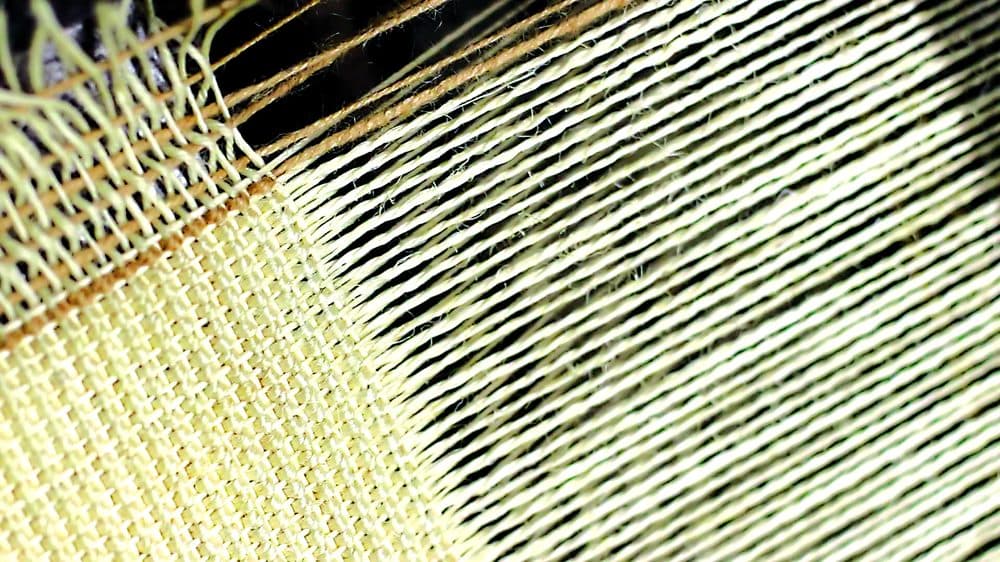
Sisal, in particular, opened up possibilities that traditional coir products could not always offer. Sourced from countries such as Tanzania, Brazil and Madagascar, sisal is stronger and more versatile in several applications. It can be dyed in different colours and woven into products that require finer textures and larger formats. Unlike coir, sisal could move beyond traditional floor coverings.
“We have supplied rugs for meeting rooms, home theatres and similar spaces. The material also works well as a wall covering because of its acoustic properties, helping absorb sound while retaining a natural texture,” says Santhosh.
From Madagascar to Met via Kerala
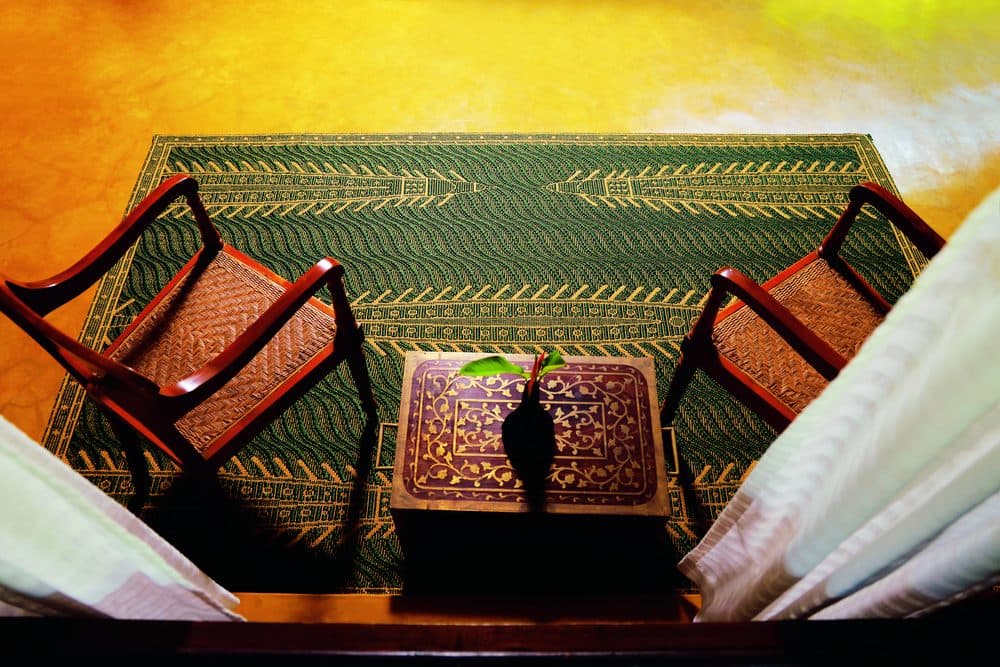
The materials now come from different parts of the world, but the weaving work still happens in Kerala. Regardless of where the inputs are from, the output is what makes customers come back year after year, feels Santhosh.
“We value the trust of our customers and never compromise on quality.”
People like Dinakaran, a senior manager for production planning make that happen. He oversees everything from scheduling production to shipment.
“For the Met Gala project, the scale stood out,” he says.
The carpet used premium broadloom sisal, a continuous weave format used for large surfaces and one that only a limited number of manufacturers work with. Once completed, the carpet was transported to New York, where it was hand-painted by artists.
“Each roll measured four metres in width and 30 metres in length. One roll covered roughly 120 square metres. For the project, the company produced 57 such rolls. The sisal itself came from Madagascar, which is known for its superior quality,” says Dinakaran.
A flying carpet?
The journey to the Met Gala for these weaves is the result of Santhosh and Nimisha's creative turn.
After completing his MBA in the US, Santhosh returned home and joined the family enterprise. But he did not want to simply continue doing things the same way. Along with Nimisha, he began looking closely at the direction in which the rug and carpet industry was moving.
One thing stood out quickly.
“When people spoke about carpet manufacturing in India, the conversation usually moved north — to Bhadohi, Mirzapur and Panipat. Kerala, despite its long history of weaving and natural fibres, rarely entered the discussion. We wanted to change that narrative,” says Santhosh. “I felt Kerala deserved to be put on the map of rug making.”
The turning point came unexpectedly through a flash of inspiration from Nimisha. Around 2018-19, the two had begun experimenting with materials and ideas without being entirely sure where it would lead. Around the same time, Kerala was hit by devastating floods. Instead of focusing on loss, they wanted to capture something else — the way people came together. Nimisha designed a rug inspired by that moment of solidarity. Multiple fibres were then woven together into a jacquard design built around a story rather than a pattern.
That rug was later nominated for an international design award and it gave them confidence that there might be space for something different. The rug itself could become a narrative.
“We started focusing on storytelling through rugs,” says Santhosh.
They built on the existing strengths rather than moving away from them. Traditional weaving methods stayed. Natural materials stayed. But the products became more design-focused and that eventually led to Neytt in 2021, and new markets.
The Met Gala carpet may be one of the most visible examples of that shift.
Santhosh now wants to expand into major cities across India and internationally. But he also speaks about a larger idea of putting Indian craft and southern design traditions in front of a global audience.
When asked what his dream carpet would look like, Santhosh laughs.
“A flying carpet,” he says.
Then he pauses and turns serious:
“Ideally, I would want a carpet with all the crafts of India in one collection.”
What is Neytt by Extraweave?
What is Neytt by Extraweave?
Neytt is a Kerala-based luxury rug brand launched in 2021 by Sivan Santhosh and Nimisha Srinivas, building on a family legacy in the coir industry.
What is the history of Neytt?
What is the history of Neytt?
Neytt’s roots go back to 1917, when the Travancore Mats and Matting Company was established by the founders’ ancestors.
Why is Neytt in the news?
Why is Neytt in the news?
Neytt produced the carpet used at the Met Gala in New York, marking the fourth time its work has appeared at the event.
Where is Neytt based?
Where is Neytt based?
The company is based in Alappuzha (Alleppey), Kerala, a historic centre of India’s coir industry.
What materials does Neytt use?
What materials does Neytt use?
Neytt works with coir, sisal, wool, jute and other natural fibres to create luxury rugs and floor coverings.
What made the Met Gala carpet unique?
What made the Met Gala carpet unique?
The carpet was made from premium broadloom sisal sourced from Madagascar, woven in Kerala and later hand-painted by artists in New York.