This article is an advertorial produced in association with Stained Glass House.
There is something deeply moving about stained glass in a place of worship. Light passes through something painstakingly created by human hands and transforms it into something almost ethereal.
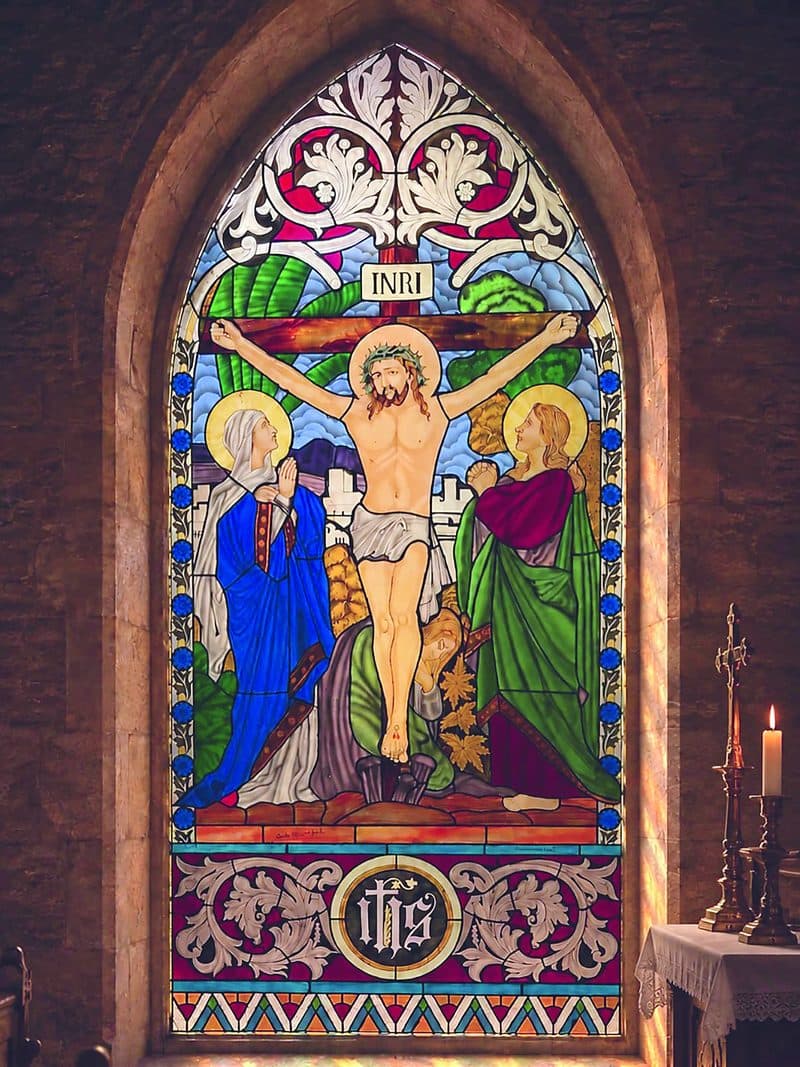
For Stained Glass House (STG) in Delhi, that feeling became particularly meaningful when the studio was entrusted with creating an intricate stained-glass panel of Our Lady of Ephesus for the historic old sandstone church at St Michael’s Catholic Parish in Baulkham Hills, Australia.
The new panel took 45 days and six specialised artisans to complete. Standing 8 ft × 3.5 ft, the work depicts the Handover — the moment at the Cross when Jesus entrusts his mother Mary to the beloved disciple, traditionally identified as John. It is believed that John later lived in Ephesus and that Mary accompanied him there, a story that lies at the heart of the restored church’s new identity — the Chapel of Our Lady of Ephesus.
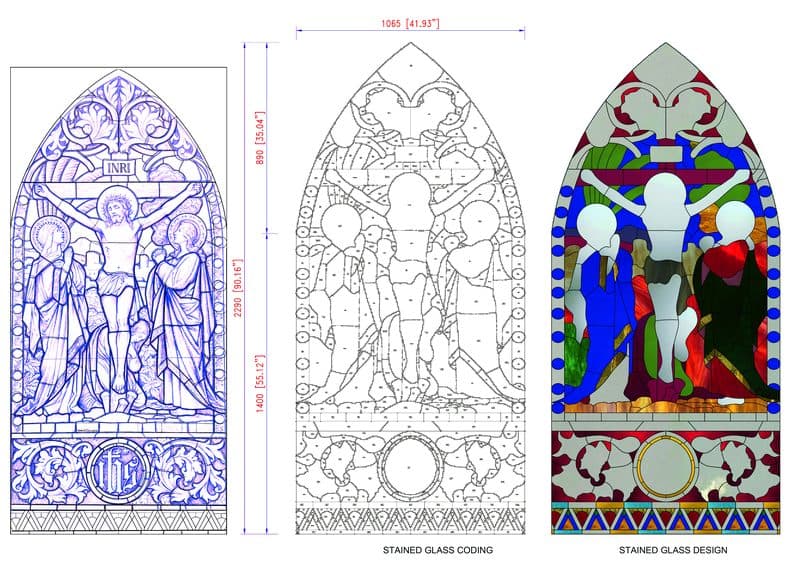
45 days, six artisans and thousands of precise decisions
The finished panel may appear seamless to the viewer, but its creation involved hundreds of individual decisions and countless hours of skilled handwork.
The process began with a reference image shared by the benefactor who was donating the artwork to the church. From this, the studio’s sketch artist developed a detailed working drawing. The digital design team then transformed the artwork into a stained-glass cutting drawing, accompanied by a colour-coded version showing exactly where each colour of glass would be placed.
The design was printed at actual scale and became the working template for the craftsmen.
Approximately six specialised artisans were involved in the project. The team included portrait artists who worked on the faces and figurative details, alongside experienced craftsmen responsible for glass cutting, grinding, copper taping and soldering.
Individual pieces of glass were carefully cut and ground to their required shapes. Pieces requiring painted detail were then hand-painted with fine metal paints, with minute details added by the portrait artists. The painted pieces were subsequently fired in a kiln furnace to permanently fix the artwork.
After several rounds of careful painting and firing, the individual pieces were copper-taped and soldered together. The completed stained glass panel was then sandwiched with toughened glass for additional protection and structural strength.
“A project like this is a beautiful coming together of artistry, craftsmanship and devotion. Every individual piece of glass passes through the hands of our artisans, from cutting and grinding to hand-painting, kiln firing and finally assembly. The portrait work, in particular, requires enormous patience and precision. It is deeply gratifying for us to know that the work of our craftsmen in India will become part of a historic church in Australia. We feel truly grateful to have had the opportunity to create something of such significance,” says Bilal Khan of Stained Glass House.
But the story behind this panel goes much deeper than one commission. It is rooted in the journey of Farah Shaukat, founder of Stained Glass House, and the family and craftsmen who have helped carry her vision forward.
The story behind Stained Glass House
The story of Stained Glass House is one of heritage, artistry, craftsmanship and an unwavering commitment to keeping authentic stained glass alive.
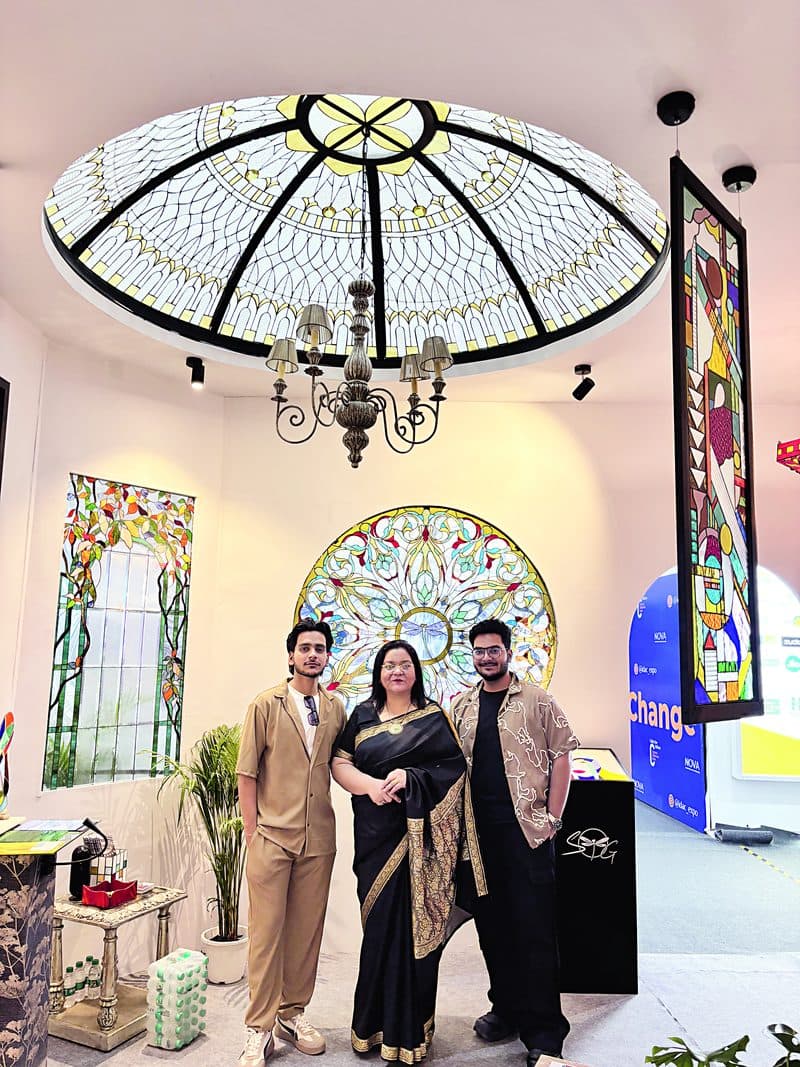
Farah’s roots trace back to a family from Saharanpur, a city renowned for its artistic traditions and master craftsmen. Her grandfather was both a successful businessman and a passionate artist. Alongside a team of skilled artisans, he created exquisite wooden furniture, intricate carvings and decorative finishes. His work combined artistic excellence with large-scale production for export markets.
Creativity was deeply embedded in the family’s heritage, and this environment helped shape Farah’s appreciation for art, design and craftsmanship.
While working in the interior-design industry, Farah noticed that the term stained glass was often used for a variety of decorative glass techniques, including painted, etched, printed and film-applied glass. She became increasingly interested in understanding authentic leaded stained glass, a traditional craft in which individual pieces of glass are carefully cut, assembled and joined by hand.
As demand grew, Farah established Stained Glass House in Delhi and began developing a specialised team of artisans.
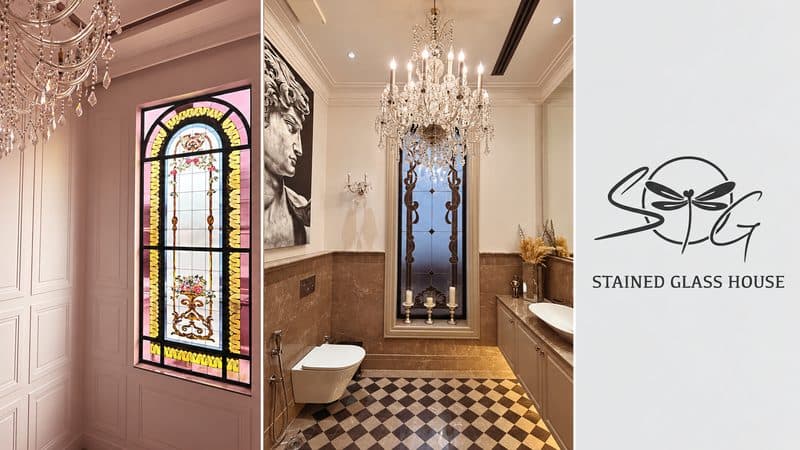
From the very beginning, her two sons, Bilal Khan and Tabish Khan, also started working alongside her as the company was established. Together, the family began building the foundations of what would become a specialised stained-glass design and manufacturing studio.
What began as an artistic pursuit gradually became a larger mission: to preserve authentic stained-glass craftsmanship while creating opportunities for skilled artisans.
Today, Stained Glass House operates from its production facility in Chattarpur and its experience centre in New Delhi.
Taking Indian craftsmanship to the world
Technology may have transformed the way designs are developed and presented, but the heart of the process remains remarkably human.
For the team in India, the project was an opportunity to carry a centuries-old craft across borders and into a house of God. “It is a beautiful coming together of artistry, craftsmanship and devotion. Knowing that something painstakingly crafted by our artisans in India will become part of a place of worship overseas is a special feeling,” says Bilal.
From a workshop in Delhi to a historic church in Australia, Stained Glass House continues to keep an old art alive one carefully cut, painted and soldered piece of glass at a time.
Chapel of Our Lady of Ephesus, Baulkham Hills
The historic sandstone church at St Michael’s Catholic Parish in Baulkham Hills, completed in 1848, is being restored and reconsecrated as the Chapel of Our Lady of Ephesus. Its new dedication looks to Ephesus, where it is believed Mary lived under the care of John after the Crucifixion. The shrine there is also venerated by Muslims, for whom Mary holds an honoured place. It was this interfaith dimension that resonated with parish priest Father Joseph Lam. “We thought that this chapel, once renovated, should serve to remind us that faith is uniting and not dividing,” he says.
The Mystery of Ephesus
On Mt Koressos, near ancient Ephesus in western Turkey, stands a small stone house, believed to be the last earthly home of Mother Mary where she lived under John’s care. German nun and mystic Anne Catherine Emmerich (1774–1824) was deeply devoted to Mary. The Vatican notes that writer Clemens Brentano spent five years with her, recording her visions. In the late 19th century, descriptions attributed to Emmerich’s visions were used by priests searching the hills around Ephesus, where they identified a small stone building believed to be the House of the Virgin Mary.
Sources: Vatican.va, Anna Emmerick (1774–1824); UNESCO World Heritage Centre, Ephesus, Nomination File 1018rev, p. 48