


 ion
ion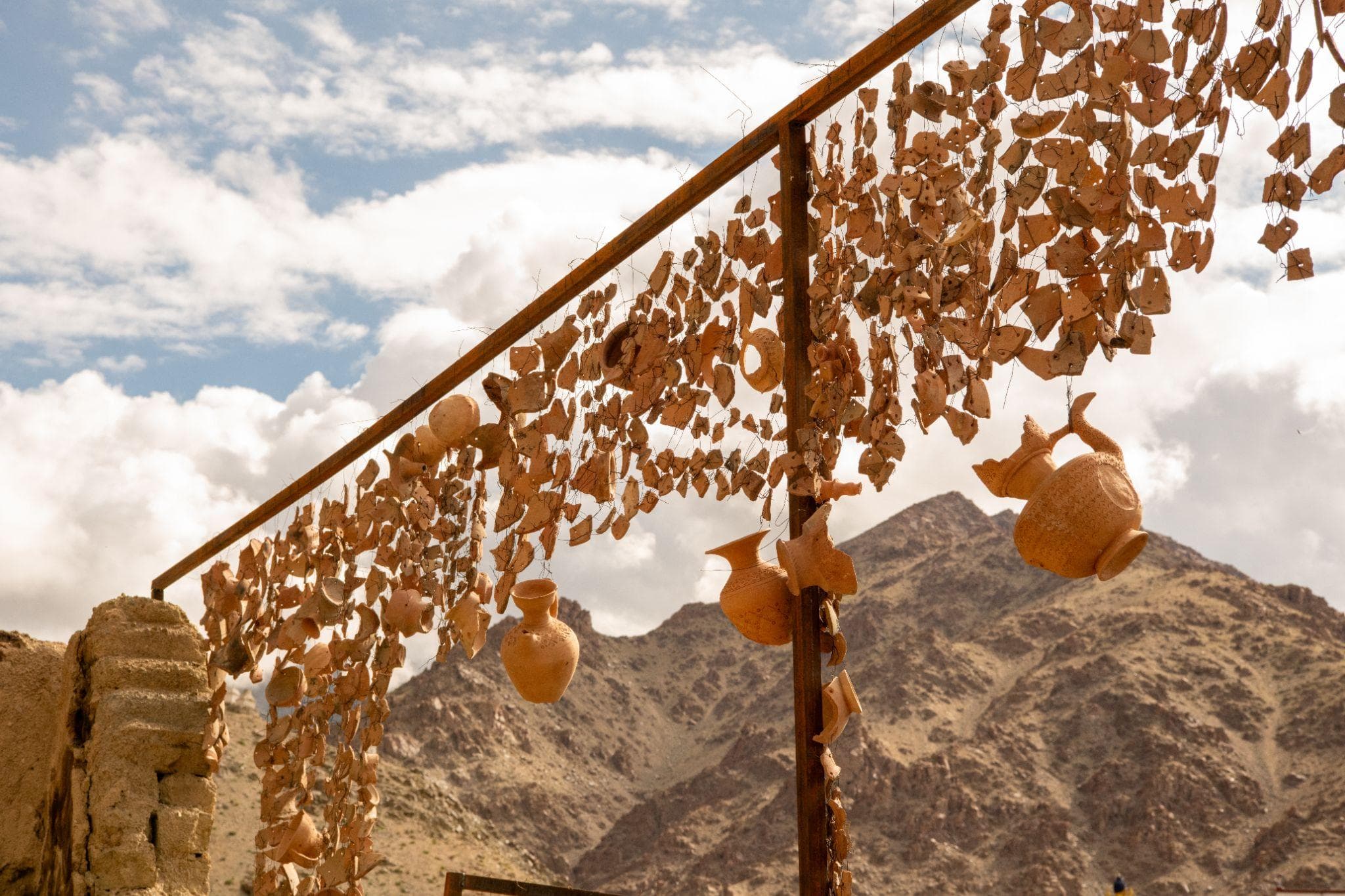
Much of the environmental conversation today is framed through crisis — disappearing forests, polluted rivers and biodiversity loss. That framing is understandable, but fear alone cannot create stewardship. We also need to imagine what a thriving relationship between people and nature might look like.
Outside of the scientific discourse, there are powerful tools that can help bridge the imagination gap to help us connect with nature, and its loss, at a human level — the world of art.
Reimagining the landscape
What happens when we encounter art outside its natural habitat of museum, gallery or salon, with wide open spaces as its backdrop?
Marine conservation artist Janavi Mahimtura Folmsbee works across monumental public art installations and a fine art studio practice in oil paintings, lenticular works and sculpture. Her relationship with the ocean started as a child growing up in Mumbai, forever looking out at the Arabian Sea. Around the age of five, Folmsbee travelled to Lakshadweep, when she first fell in love with its white sands. Years later, she returned on a diving trip.
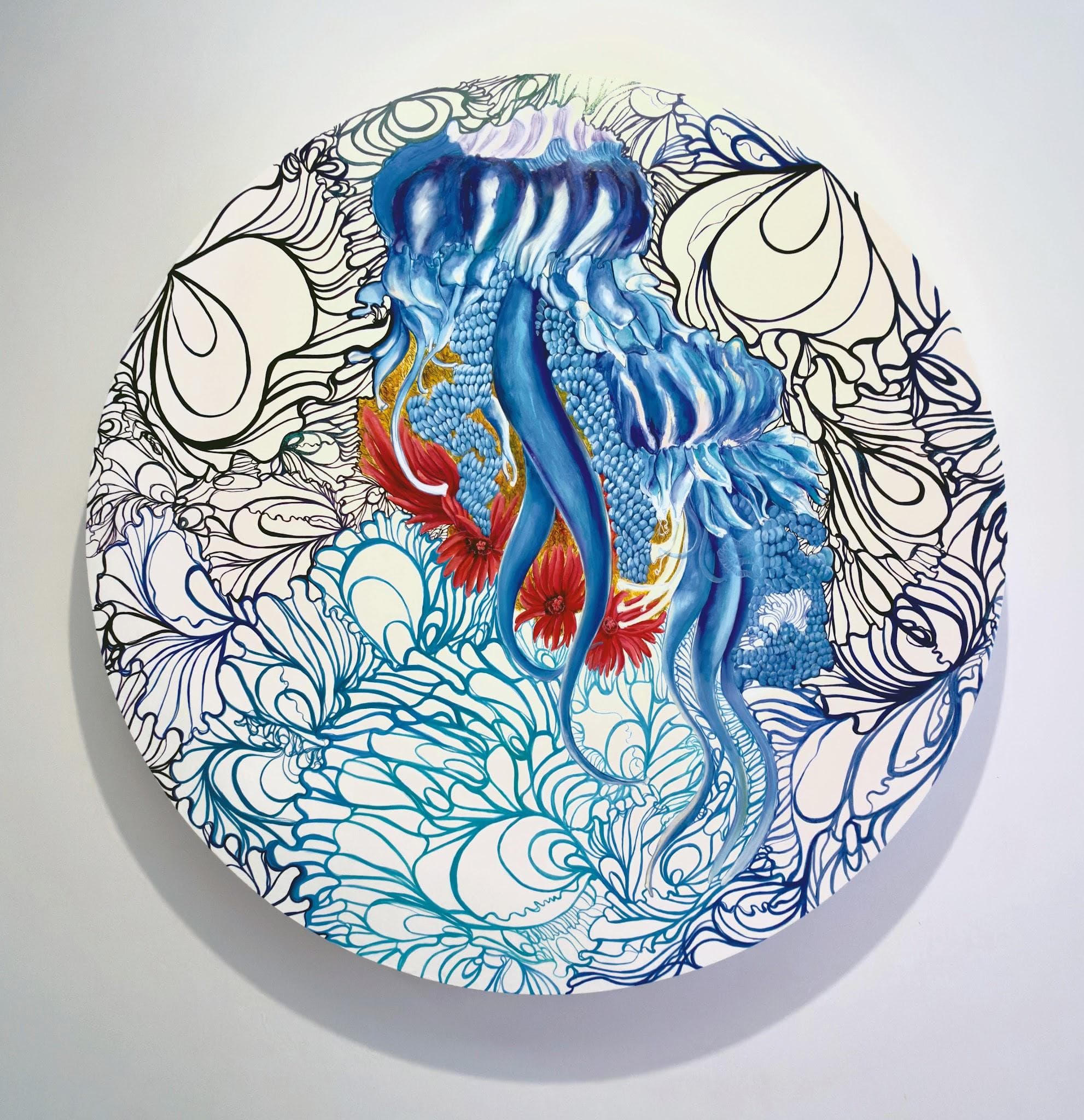
“There were several beginnings to my work in marine conservation, and they are all important. Diving was where I started seeing and experiencing these environments for myself underwater, and naturally, that began entering my artwork,” she says.
Folmsbee’s journey reflects a wider shift among artists; from documenting environmental crises to exploring how art might help us imagine ecological regeneration.
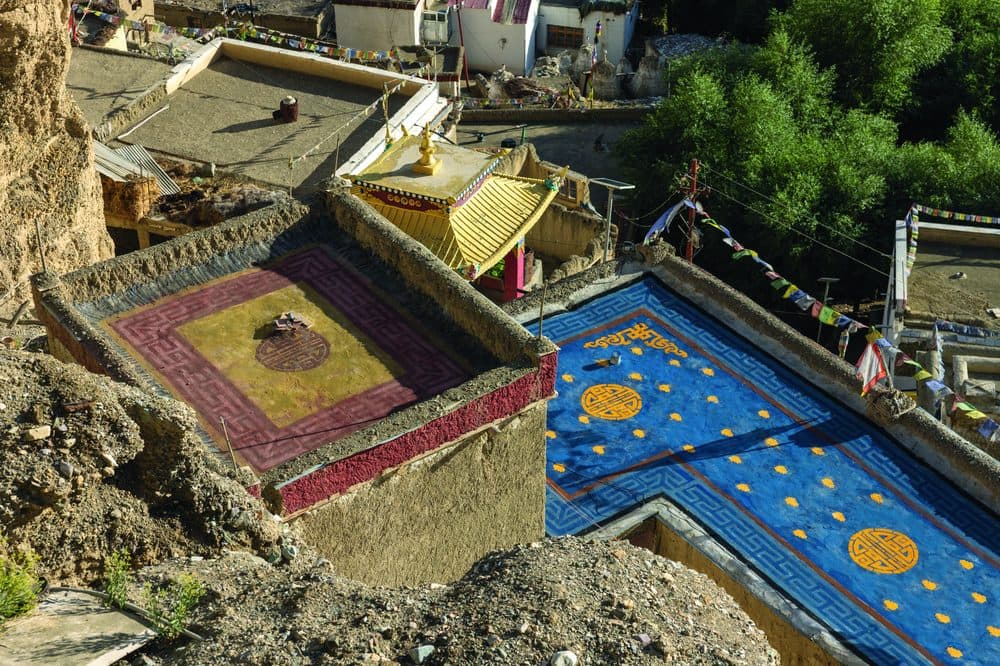
That idea found an ambitious expression in the inaugural sâ Ladakh Biennale 2026 in early August, tagged as the “world’s highest regenerative art biennale”. With the theme Signals from Another Star, the event explored memory, climate awareness and spire ecology, bringing together Indian and international artists. The biennale’s works unfolded across Leh, Likir, Basgo, Nurla, Lamayuru, Henasku, Mulbekh and Kargil, along the 230km Leh-Kargil corridor. The organisers describe the projects as emerging from the landscape rather than being placed onto it.
Art for a living earth
There are other ways for art to be in conversation with environmental issues.
At the sixth edition of Kochi-Muziris Biennale this year, artists explored ideas of adaptation and reuse. Spread across 29 historic venues in Fort Kochi and Mattancherry, several works made visitors ponder over the relationship between people, labour and the land. Birender Kumar Yadav’s installation, Only the Earth Knows Their Labour, for instance, was a take on the forgotten labourers of the exploitative brick industry, while Kulpreet Singh’s Indelible Black Marks, had a video featuring sheets of canvas being dragged across scorched fields, mirroring farmers ploughing the land.
Art gives people a way to experience ecological change rather than simply understand it. An artwork made from waste, for example, can make us think differently about what we throw away and the life of a material. A piece centred around an endangered species can make you curious about its role in an ecosystem.
For Roshan Netalkar, founder and festival director of Echoes of Earth & The Sixth Sense Festival in Bengaluru, art has long been central to environmental conversations. “At Echoes, art is used to explore our relationship with nature, from endangered species and ocean conservation to changing seasons. This year, our focus was on water.” The festival works with artists who use materials, craft and cultural stories to create work that people can see, feel and engage with.
There is a growing desire among artists to move beyond simply documenting what is being lost and ask a more hopeful question: what could our relationship with nature look like instead? Folmsbee has seen that possibility play out through her own public-art practice. “I have created artwork for public spaces and directly for marine scientists, some of which has even gone on to be published in scientific papers. The public art component of my art practice has worked towards raising awareness for certain sanctuaries and reef systems,” she explains.
A new language for nature
Artists have always stayed curious about the intrinsic nature of things and are taught to question lifestyles and practices, be they social, religious or environmental.
“The artist is a key witness. Hence, it is very important for them to stay relevant in a society where art has transformative power and influence, where it can reflect the times past, present and future, and where it can map the evolution of humans in nature and our impact on the planet. Awareness being the first step toward positive change,” says Kapila Nahender, a Bengaluru-based contemporary visual artist and printmaker who runs the Kapila Nahender Atelier.
Green future
For traditional artists, the line between material, landscape and culture has always been thinner than it is in contemporary urban life.
Yosha Gupta, founder & CEO of MeMeraki, a platform that works with traditional Indian arts, believes traditional knowledge has much to contribute to the contemporary ecological conversation.
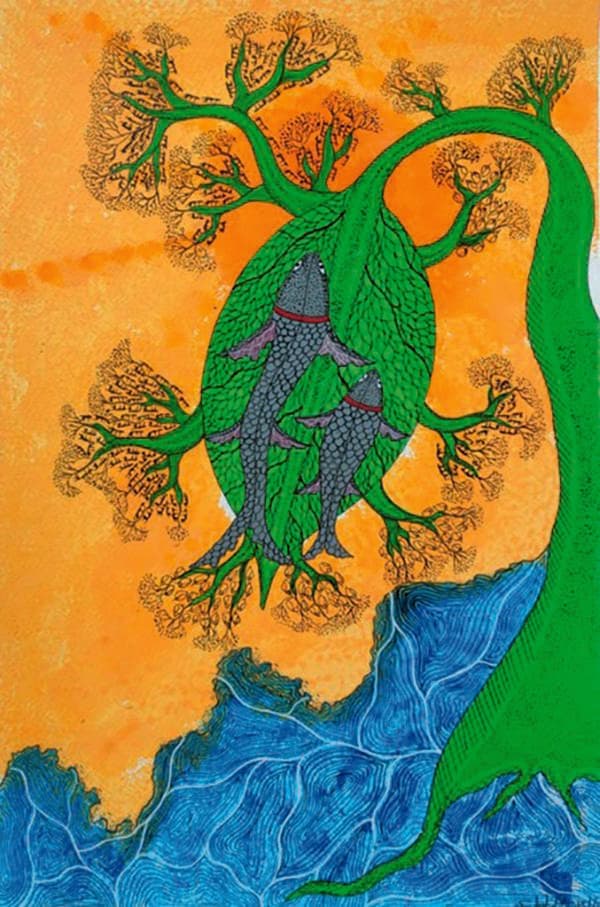
“Traditional knowledge is often treated as something that belongs in museums or history books. Art allows that knowledge to enter homes, public spaces and institutions without losing its roots. At MeMeraki, we work with master artists across India and one of the clearest things work has taught us is that regeneration isn’t a new idea being introduced to these traditions. It is already there, in the choice of material, in the process, in the relationship an artist has with their own landscape. What is needed isn’t reinvention so much as attention.”
Perhaps, that is where art’s role in the ecological conversation becomes most interesting. It doesn’t always have to tell us what we are losing. It can remind us what we already know, that living with a landscape requires attention, adaptation and respect for the knowledge it carries. For instance, art can draw attention not only to a fragile Himalayan landscape but to how Ladakhi communities have historically adapted to its climate and conditions like agriculture and seasonal rhythms.
The opportunity lies in bringing this inherited knowledge into the present, and allowing art to help us see the landscape not simply as something we inhabit, but as something we are part of.