Key Highlights
- Dhun Karai moved from Mumbai to Auckland in 1988 and later to Sydney, part of the early wave of Indian professionals to establish themselves in Australia's corporate landscape
- She identified inefficiencies in retail payments and helped transform customer payment experiences in Australia's financial sector
- She became one of the few migrant women to hold leadership positions in Australia's male-dominated payments industry
- As a member of the Reserve Bank of Australia's Payments Council, she contributed to the country's digital payments ecosystem
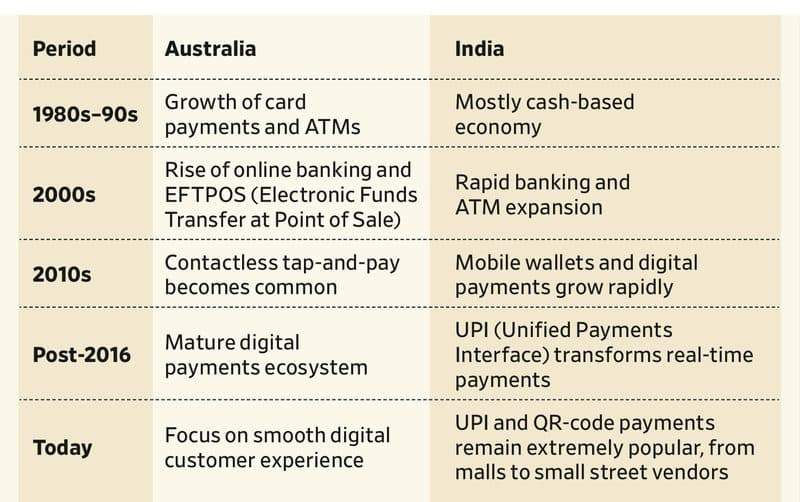
- Card-based payments evolution in Australia can be compared to India's rapid leap towards UPI and QR code-based transactions
- She continues to contribute to Indian education through her role on the board of SP Jain School of Global Management

When Dhun Karai moved from Mumbai to Auckland in 1988, the Indian community in Australia and New Zealand looked very different from what it does now. There were few Indians in leadership roles, community networks and little of today’s cultural glue that connects the Indian diaspora. She eventually settled in Sydney in 1994, navigating a completely different world.
“It was exciting, but also emotional,” recalls Karai. “I had to leave behind my support systems and start from scratch.”
Born and raised in Mumbai, Karai studied at Queen Mary School and Sydenham College before building a career across some of Australia’s top financial and retail institutions. She retired as Partner, Financial Advisory at Grant Thornton Australia in January 2026 and now serves as a senior advisor to CEOs and boards of companies. She is also a senior advisor to DXC Technology.
Interestingly, Karai’s story mirrors the evolution of the influential Indian diaspora in Australia. Over the last three decades, Indian-origin professionals have become among the most visible contributors to Australia’s banking, tech, healthcare, education and entrepreneurial sectors.
The problem no one was solving
Karai’s entry into the world of payments was almost by chance while working with one of Australia’s largest retailers. What she discovered was surprising.
“Payments were the third to fifth largest cost of doing business, yet retailers didn’t fully grasp their value,” she says.
What also drew her attention was that few people were doing anything to fix it. That disconnect became her opportunity.
“I saw a chance to bring my banking skills into retail, and transform the customer experience,” she says.
In an overwhelmingly male-dominated industry, Karai soon became one of the few women — and migrants — in the boardroom.
India and Australia, two different journeys
Karai, who contributed to national policy as part of the Payments Council of the Reserve Bank of Australia, saw payments as something that should feel “quick, trusted and almost invisible,” she says.
According to Karai, the payment trajectories in Australia and India have followed two very different paths.
“Australia was an early adopter to launch electronic card payments at point of sale, while India leapfrogged straight into UPI and QR codes. Two very different models, but both world-class in their own way,” she says.
“On my annual visits to India, it is amazing to see how UPI has penetrated to the grassroots level, enabling even small vendors,” adds Karai, who belongs to Mumbai’s Parsi community.
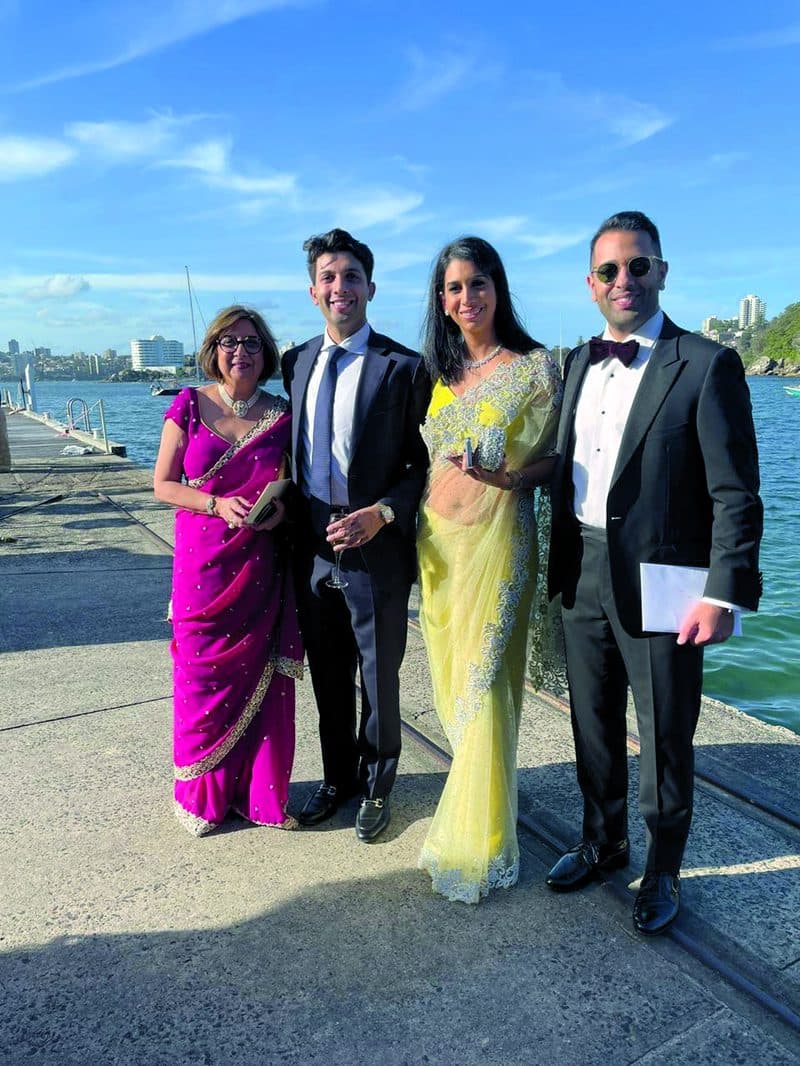
Interestingly, Parsis were the driving force behind the early evolution of Mumbai’s money markets.
Dhun believes the next wave of global change will come from AI-driven systems, faster digital transactions, smarter money systems and easier international transfers.
Building a community beyond transactions

As a founding member of Stone & Chalk, a nonprofit hub supporting fintech startups, Karai actively supports early-stage entrepreneurs, particularly women in the payments space.
“We have some amazing talent in Australia currently, and the megacycle breaking out is for the taking,” she says.
Her ties to India remain strong. She is a board member of SP Jain School of Global Management, one of India’s highly regarded B-schools.
“For me, the journey from Mumbai to Sydney was never just about building a successful career,” she says. “It was also about contributing to an industry I came to love, while being part of a generation that helped shape the Indian diaspora story in Australia.”
Who is Dhun Karai?
Who is Dhun Karai?
Dhun Karai is an Australian financial services leader of Indian origin who has played a significant role in Australia's payments industry and fintech ecosystem.
When did Dhun Karai migrate to Australia?
When did Dhun Karai migrate to Australia?
She moved from Mumbai to Auckland in 1988 before settling in Sydney in 1994.
What is Dhun Karai best known for?
What is Dhun Karai best known for?
She is known for her leadership in Australia's payments industry, her contribution to national payments policy and her work in mentoring fintech startups.
What role did she play at Grant Thornton Australia?
What role did she play at Grant Thornton Australia?
Dhun Karai retired in January 2026 as Partner, Financial Advisory, and now serves as a senior advisor to CEOs, boards and DXC Technology.
What does Dhun Karai believe is the future of payments?
What does Dhun Karai believe is the future of payments?
She believes artificial intelligence, smarter digital payment systems, faster transactions and easier international money transfers will drive the next phase of financial innovation.
What is Stone & Chalk?
What is Stone & Chalk?
Stone & Chalk is an Australian not-for-profit innovation hub that supports fintech startups. Dhun Karai is a founding member and mentor there.
How does she remain connected to India?
How does she remain connected to India?
She serves on the board of SP Jain School of Global Management and regularly visits India, where she closely follows developments in digital payments and financial technology.