Key Highlights
- The 2025 Aga Khan sale at Christie's became the highest-ever auction for classical Indian and Persian paintings, totalling nearly $61 million
- Indian buyers are increasingly entering the classical art market, not just modern and contemporary art
- Raja Ravi Varma’s Yashoda and Krishna sold for $17.9 million, the highest auction price for an Indian artwork
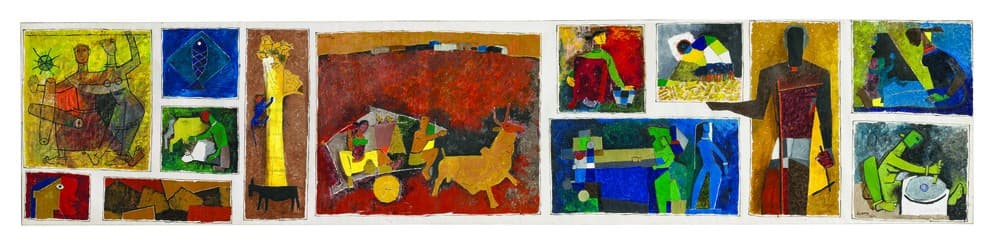
- M. F. Husain’s Untitled (Gram Yatra) sold for $13.75 million at Christie’s New York in 2025
- Indian contemporary artists are gaining major international visibility through institutions and events like the Venice Biennale
- The Indian diaspora is buying art with greater confidence, knowledge and long-term commitment
- Indian collectors are increasingly bringing historically significant Indian artworks back to India
At a Christie's auction in London on October 28, 2025, collectors had a rare opportunity to buy top quality Indian and Persian paintings from the personal collection of Prince & Princess Sadruddin Aga Khan. There have been other remarkable auctions of Indian art. I have been watching them since I worked in the Indian department of Christie’s for a few years in the late 70s. One notable sale was in 1996: the P&O Collection of Watercolours by Thomas and William Daniell which at last gave Indian landscape painting its deserved place in the picturesque tradition, and yet pictures were mainly bought by the small band of Indian art cognoscenti.
But the Aga Khan sale was different. Each of the 95 high-calibre works was endorsed by the integrity and knowledge of the collectors, and by the impeccable provenance of the works themselves. It brought in new buyers, confident they were buying the best (endorsed by Christie’s diligent cataloguing) and that the hammer would set the fair market price. Up until then, the collector pool for historic Indian art was fairly narrow. It had not kept pace with the broadening of interest — and resulting price leaps — in modern and contemporary Indian art thanks in large part to affluent global-living Indian buyers.
The sale was “a watershed moment”, says Damian Vesey, Christie’s Director of South Asian Modern + Contemporary Art. “We had Indian collectors of Indian modern art ready to open up to the classical. And we had collectors of international art buying their first piece of classical Indian art.” Rob Dean, who founded Pundole’s auction house in Mumbai and has decades of experience in the market, was in the room: “There were an awful lot of Indian bidders, many new to the classical market. They bid up high prices without blinking an eye.”
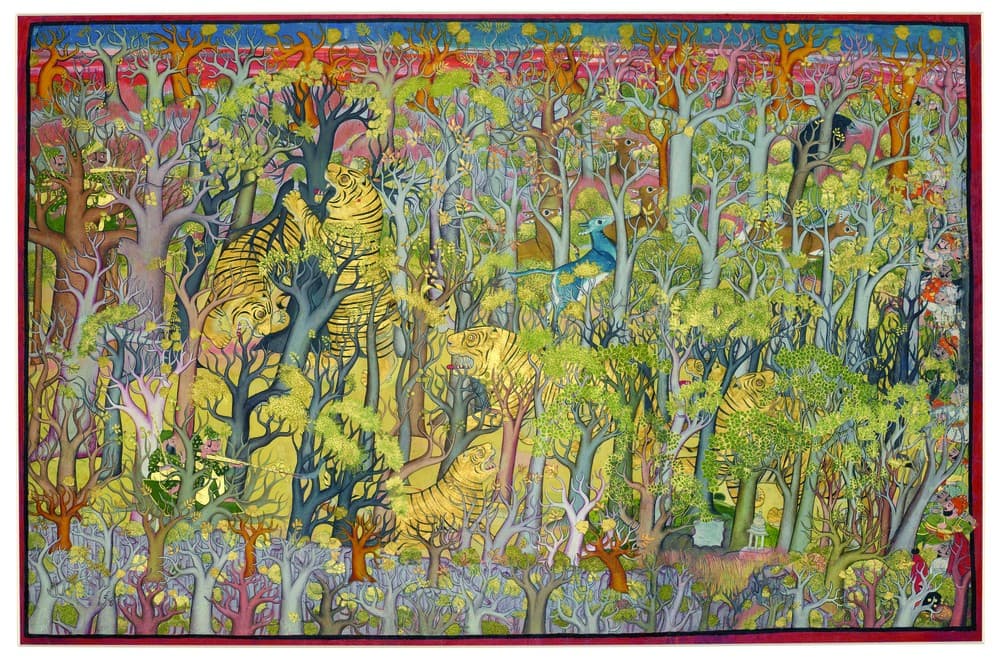
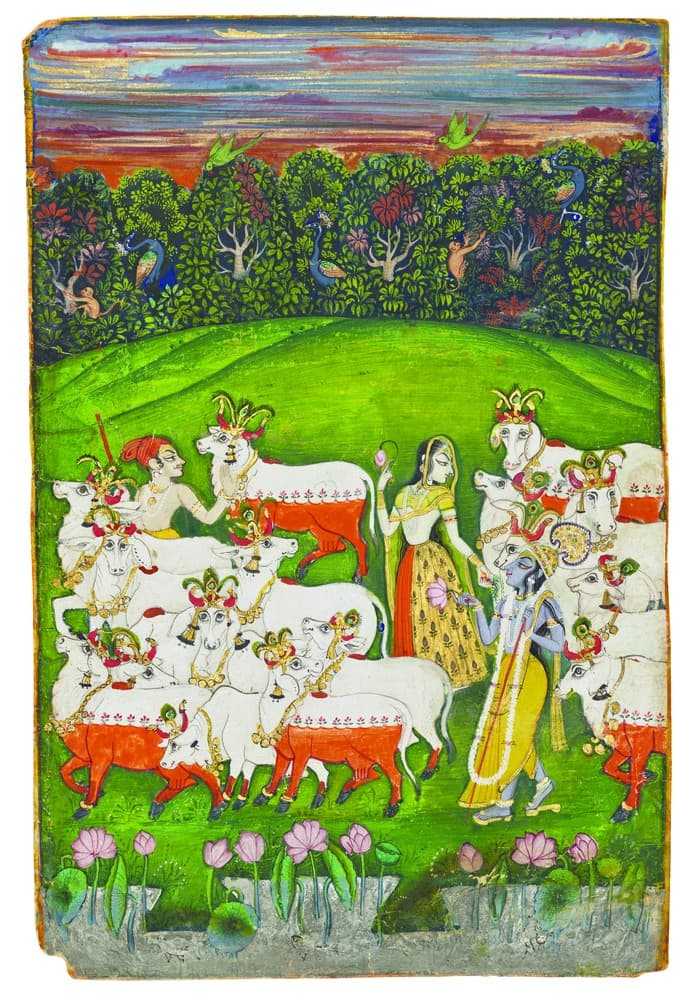
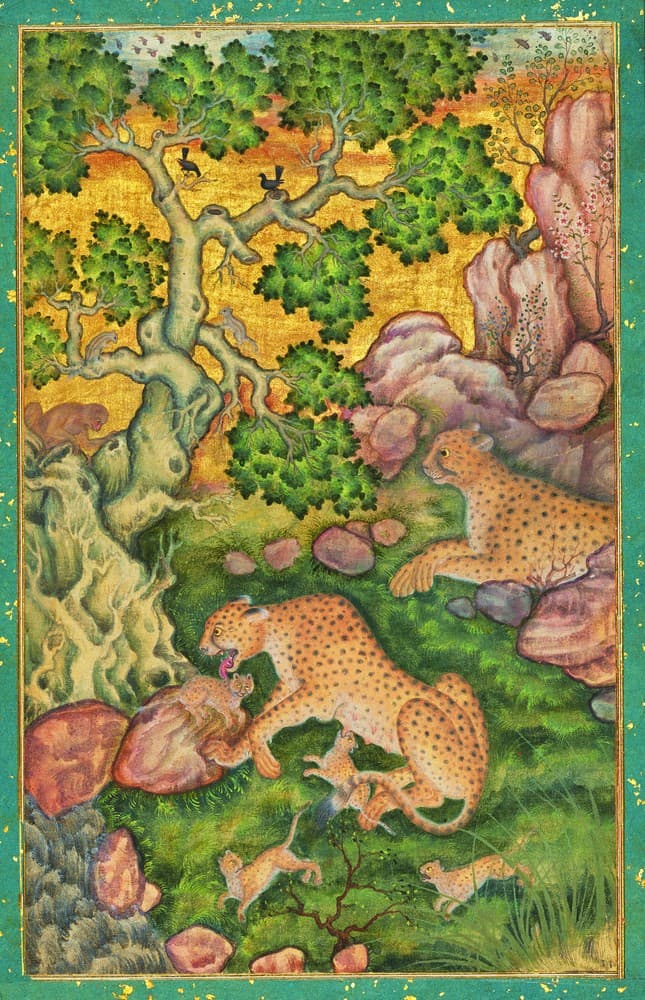
The sale totalled almost $61 million, the highest ever for a sale of classical Indian or Persian painting. Some pieces went under the hammer for six times their pre-auction estimated price. Buyers were from 20 countries across four continents and 19 per cent of them were new to Christie's. If your pockets were deep, why not bid on the Mughal master Basawan’s stunning painting of cheetahs made around 1570 (sold for $13.6 million)? If not so deep, how about an exquisite botanical study of tulips (sold for $1.1 million — in 1972 it sold for $2,500) or a devotional picture of the Hour of Cowdust made at Rajasthan’s effete Kishangarh court around 1800 (sold for a relatively modest $68,000)?
The Aga Khan sale is just one aspect of the changing market for Indian art today. It is a complex field. The historic art like the Aga Khan’s is part of the vast curve of India’s phenomenal creative output from 2nd century BC Buddhist stone carving to prints of Raja Ravi Varma’s fashionably-dressed goddesses at the turn of the 20th century. As most Indian art is still relatively unappreciated, the sharp-eyed can find wonderful pieces at fair prices.
The exceptions are modern and contemporary. Modern encompasses the 20th century especially post-Independence art for a new country — M. F. Husain, S. H. Raza, F. N. Souza, Amrita Sher-Gil, Abanindranath Tagore and others. Its market has built up since the 1990s and now fetches the highest prices for Indian art, by far. In March 2025, Husain’s masterpiece Untitled (Gram Yatra), hardly seen for 70 years, blew the Indian art market into the sky when it sold at Christie’s New York City for $13.75 million.
India’s contemporary, living artists, are on a different world stage. The India Pavilion at the Venice Biennale opening this May has five artists — Alwar Balasubramaniam (Bala), Sumakshi Singh, Ranjani Shettar, Asim Waqif and Skarma Sonam Tashi — responding to the theme Geographies of Distance: Remembering Home, revealing the cultural depth of a nation in the throes of economic boom, with a vibrant global diaspora. In the auction world, it is worth it to Christie’s to show highlights from its March 2026 sale of modern and contemporary sale in Dubai, Delhi and London before the auction in New York. Meanwhile in London, considered a major hub for Indian art, recent shows of contemporary Indian artists — often their first exposure outside India — in public institutions have drawn crowds to the Royal Academy, Serpentine, Barbican and ICA.
“Collectors are much more educated, there is less financial speculation for pure investment, more buying for the long term,” observes Rob Dean. “They want to understand the art and know about the artist.” More curious collectors train their eyes. They visit museums and institutions, which are buying more Indian art especially if there is a supportive Indian diaspora, better still if there is an Indian board member. They talk to commercial gallerists, critical for supporting young artists and nurturing new buyers. At auction houses, where specialists rigorously research cataloguing, they experience sales comprising a wide variety of works. They travel to art fairs, in India and across the world — Basel and its satellites, and even Maastricht, show Indian art.
The Indian diaspora is buying a wide range of Indian art with informed confidence, and paying increasingly high prices for it. Interestingly, their collections may include one of those Daniell landscapes (since that 1996 sale, prices have increased sixfold) which they enjoy not as colonial paintings by a foreigner, but as evocative landscapes of an idyllic homeland tinged with nostalgia.
There is another development. Indian collectors are starting to buy Indian art abroad and bring it back ‘home’. This requires commitment: if the work is more than 100 years old, or if the artist is on the official list of modern “national treasures”, they may pay import duty, they must officially register the work and they cannot export it without permission. Some new collectors are embarking on this, joining such established ones as Abhishek Poddar for his Museum of Art & Photography museum in Bengaluru, Kiran Nadar for her museum of contemporary art in Delhi, Jai Hiremath and Sugandha Hiremath for their Zirad Art and Heritage Foundation outside Mumbai.
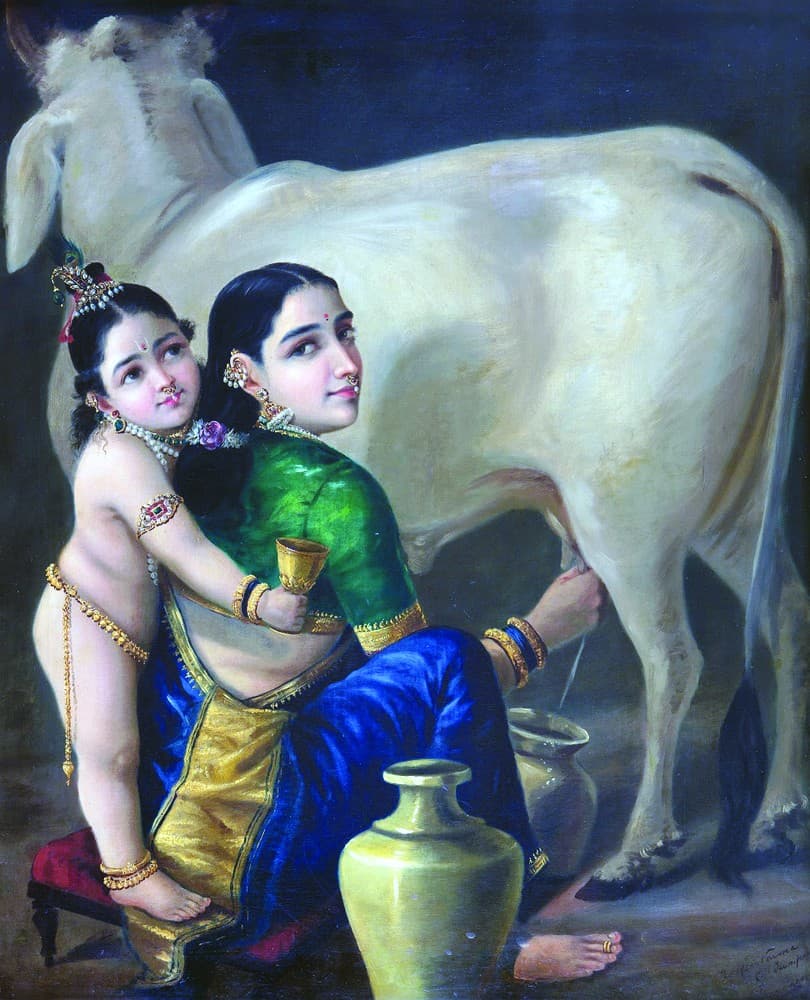
On April 1, Yashoda and Krishna by Raja Ravi Varma went under the hammer at Saffronart in Delhi for $17.9 million, the highest auction price for an Indian work of art.
A major Indian commercial gallery, DAG, is even importing and selling Indian art which will certainly remain in its place of creation. Its research and cataloguing team raises awareness of the art they show. One painting — on loan from a private Indian collection — they have exhibited is Yashoda and Krishna, painted in the 1890s in a High Victorian Western academic style replete with devotional sentiment. On April 1, it went under the hammer at Saffronart in Delhi for $17.9 million, the highest auction price for an Indian work of art. Varma is on India’s ‘national treasures’ list and the buyer, Cyrus Poonawalla, confirmed its importance to India when he announced: “This national treasure deserves to be made available for public viewing periodically, and it will be my endeavour to facilitate this going forward.”
What was the Aga Khan sale?
What was the Aga Khan sale?
It was a landmark 2025 Christie’s auction featuring Indian and Persian artworks from the collection of Prince & Princess Sadruddin Aga Khan.
Why is the Aga Khan sale important?
Why is the Aga Khan sale important?
It attracted new international buyers and marked a major expansion in interest in classical Indian art.
What is the highest auction price for an Indian artwork?
What is the highest auction price for an Indian artwork?
Yashoda and Krishna by Raja Ravi Varma sold for $17.9 million at Saffronart in Delhi.
Who are some major Indian modern artists?
Who are some major Indian modern artists?
M. F. Husain, S. H. Raza, F. N. Souza, Amrita Sher-Gil and Abanindranath Tagore.
What is the Venice Biennale?
What is the Venice Biennale?
The Venice Biennale is one of the world’s most prestigious international contemporary art exhibitions.
Why is the Indian diaspora important to the art market?
Why is the Indian diaspora important to the art market?
Diaspora collectors are increasingly buying Indian art globally, helping expand demand and visibility for Indian artists.