Key Highlights
- Abhijit Pal found creative freedom in Melbourne’s open and multicultural art scene
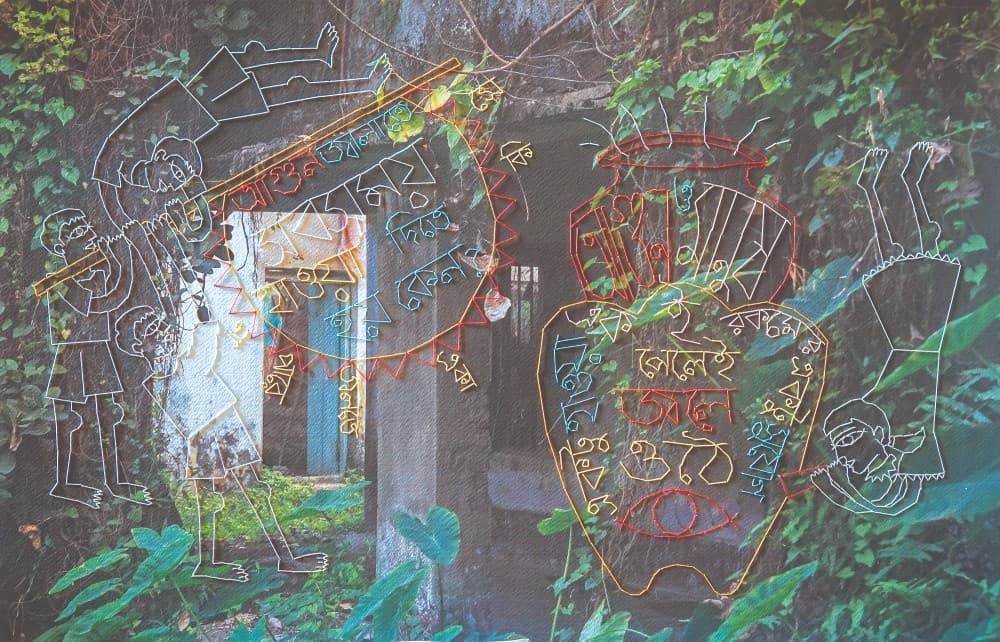
- His 2026 solo exhibition Chhordi combined photography, kantha embroidery and Bengali text
- Pal believes Melbourne’s lack of artistic hierarchy encouraged him to become more authentic in his work
- The artist intentionally kept Bengali text untranslated, treating language as a point of connection rather than a barrier
- Aboriginal dot painting influenced his confidence in elevating kantha stitching into mainstream contemporary art
What happens when an artist trained in Kolkata, refined in Dortmund, and seasoned in the galleries of Paris and Berlin lands in a city where an overwhelming majority of the population are immigrants? For Abhijit Pal, it wasn’t a clash of cultures, but a profound sense of liberation.
Within three years of arriving in Melbourne, Pal was exhibiting his first Australian solo in March 2026: Chhordi.
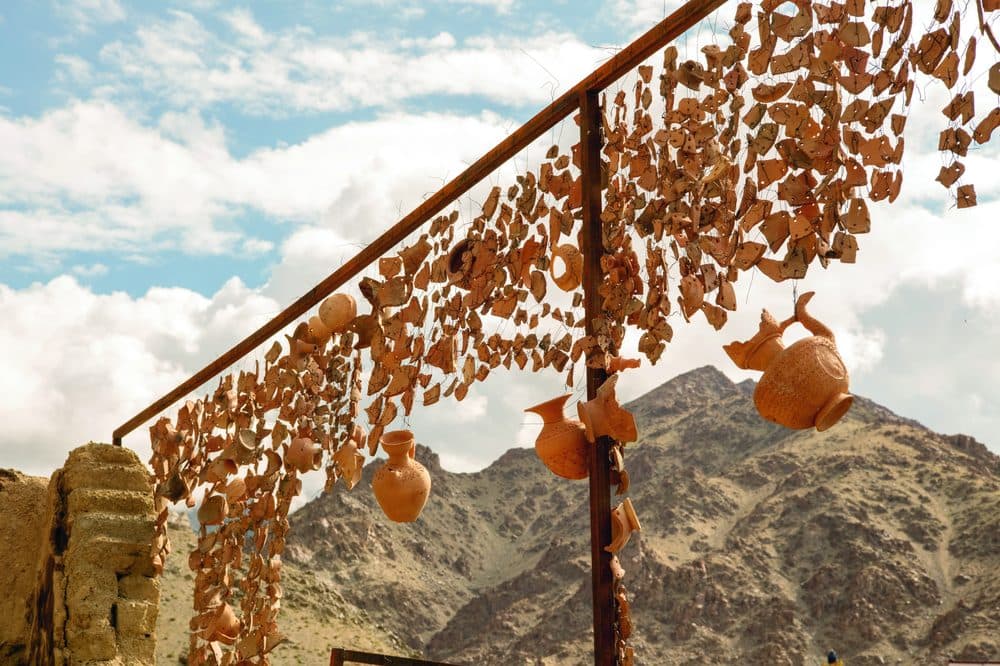
In this series, he literally stitches memories back to life, overlaying photographs of his uncle’s abandoned ancestral home in India with kantha embroidery and spiraling Bengali text. It is a deeply personal project that Pal believes could only have emerged in Melbourne. “Melbourne is wonderful,” he says. Where European art scenes are shaped by long histories and established tastes, Melbourne, he states, is radically open. Melbourne’s appreciation for indigenous and Aboriginal art feels woven into its mainstream fabric.
“There is no gatekeeping here,” Abhijit says, pointing to the Incognito Art Show as the symbol of the city’s spirit. The show, with its unique method of leveling the playing field by selling every piece anonymously for AUD $100, places novices and professionals on equal footing.
For an Indian artist, “making it” in Melbourne doesn’t require shedding one’s skin. Pal found that the more specific he became, the more the city responded. For Chhordi, he kept his Bengali text untranslated.
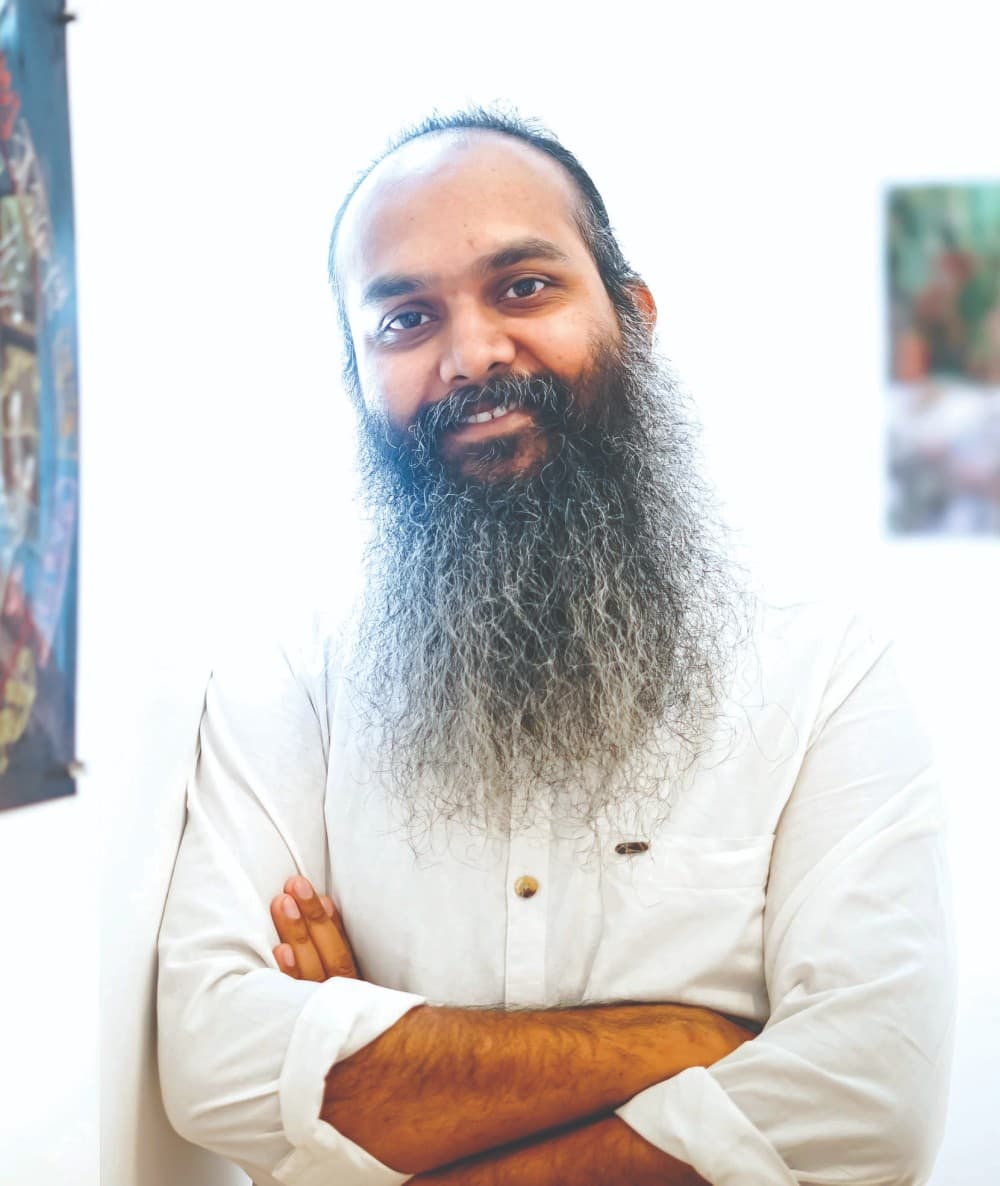
“I wanted to remain authentic,” he explains. “The language wasn’t a barrier.” If anything, it was the hook and the pull.
His embrace of the kantha stitch is driven by a similar instinct. While the technique carries cultural heritage, Pal’s confidence to elevate it into mainstream art was sparked by the institutional respect given to Aboriginal dot painting. Though kantha is traditionally viewed as “women’s craft” in Bengal, Pal cites his father as his primary influence, in a home where craft was never gendered.
“My father’s stitching is a thousand times better than mine,” he says, “but he doesn’t think he is an artist.”
Pal has spent over a decade teaching across continents. Yet, across contexts, one thing is constant: students surprise him. “I always learn from them,” he says. A workshop with children made him rethink his work once he realised he couldn’t replicate their innocence. “I had to change.”
That willingness to unlearn, to remain porous to influence, sits at the heart of Pal’s practice. Whether through thread, language, or pedagogy, his craft resists fixed meanings. An artist whose work transcends regional identity, he believes his work speaks to shared human experiences.
“Art has a language,” he says. “Everyone can understand this.”
Who is Abhijit Pal?
Who is Abhijit Pal?
Abhijit Pal is an artist trained in Kolkata who now works in Melbourne, creating mixed-media works that combine photography, embroidery and text.
What is Chhordi?
What is Chhordi?
Chhordi is Pal’s 2026 solo exhibition in Melbourne, inspired by memory, family and abandoned ancestral spaces in India.
What is kantha embroidery?
What is kantha embroidery?
Kantha embroidery is a traditional Bengali stitching technique historically associated with recycled textiles and domestic craft traditions.
What is the Incognito Art Show?
What is the Incognito Art Show?
The Incognito Art Show is an Australian exhibition where artworks are sold anonymously at the same price, giving emerging and established artists equal visibility.
How did Melbourne influence Pal’s work?
How did Melbourne influence Pal’s work?
He describes Melbourne’s art scene as open, multicultural and free from rigid gatekeeping, which encouraged experimentation and honesty in his practice.
What is the larger theme of the article?
What is the larger theme of the article?
The piece explores authenticity, migration, cultural memory and how art can transcend language and geography.