Key Highlights
- Natural history filmmaker Ashwika Kapur traces her journey from a wildlife-obsessed child in Kolkata to working alongside David Attenborough
- Her debut film, Sirocco: How a Dud Became a Stud, won Best Newcomer at the Wildscreen Film Festival in 2014
- Three years later, Kapur joined the production of Attenborough and the Giant Elephant, gaining a rare behind-the-scenes view of Attenborough at work
- Kapur reflects on Attenborough's role in inspiring generations of filmmakers, scientists and conservationists around the world
- Published on World Environment Day, the piece celebrates Attenborough's centenary and his lasting contribution to conservation storytelling
In a 12th floor flat in Kolkata, sometime in the mid-’90s, my father, a chartered accountant, who could not tell a cheetah from a leopard, was quietly assembling from around the world a library of videos he had absolutely no intent to watch. Attenborough’s Life on Earth. The Trials of Life. The Life of Birds. The Life of Mammals. Life in the Freezer. The Private Life of Plants. They were for his daughter, who, at five, had already filled her balcony with rescued birds, frogs, rabbits, squirrels and an ever-expanding guest list nobody had quite signed off on.
It is one of the small, immeasurable kindnesses of my life that Dad understood, very early, what I needed. He brought home the wildlife books and the Attenborough tapes, and let his feral daughter come home on monsoon days as muddy as she wished.
Sir David Attenborough did the rest.
I watched the tapes over and over on a small TV set. I did not know I was being shaped and marked. By the time I was about to graduate college, it was assumed I would slide gently into law, or banking, or, failing all else, teaching. Instead, I bolted into the jungle with a camera. I was going to be a wildlife filmmaker. This was not my decision alone. A man with a quietly ardent voice had for many years been sitting in my drawing room telling me where the gorillas slept, how the lyrebird could mimic a chainsaw, and how, miraculously, the dung beetle navigated by the stars. That man was Sir David Attenborough.
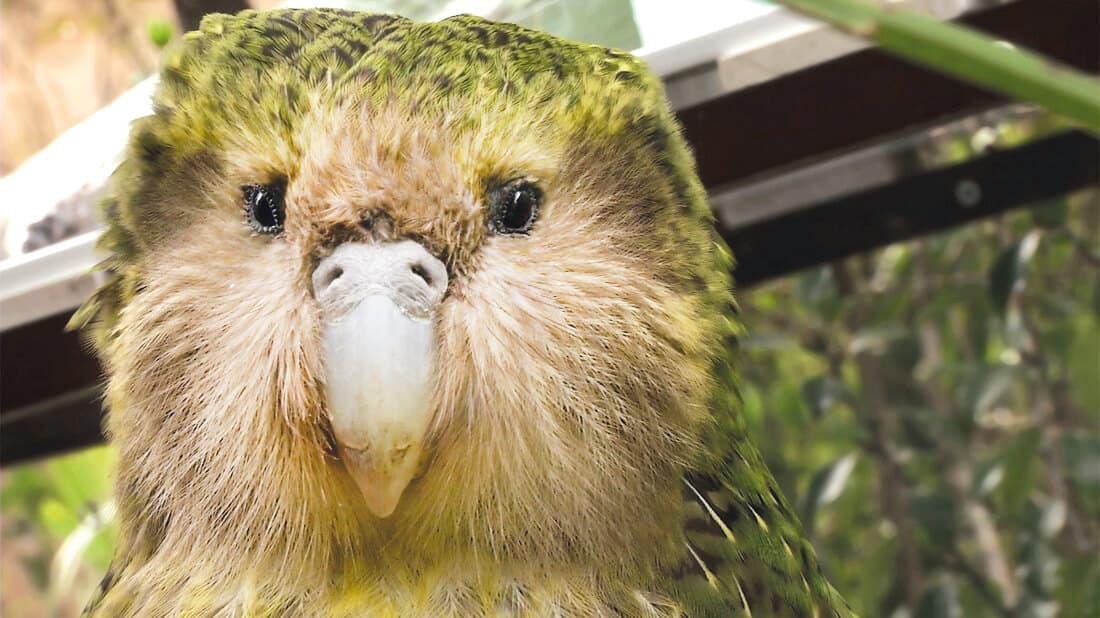
Cut to 2014. My first film, Sirocco: How a Dud Became a Stud, about a flightless, nocturnal, alarmingly amorous New Zealand kakapo parrot named Sirocco, won Best Newcomer at Wildscreen Film Festival, the Green Oscars of the natural history world. Everyone back home was over the moon. But the bigger moment, for me, was that Sir David was there. In a crowd of hundreds, I handed him a DVD of the film. I learnt later, from a senior colleague, who tried to spare my feelings, that all he watched was VHS tape. I’m not sure if anything has changed since then!
Inside a David Attenborough shoot
I went home thinking that was as close as I would ever come. Three years later, in 2017, I was proved wrong. For this, I have to thank Stephen Dunleavy, owner of Humblebee Films in Bristol, who was producing Attenborough and the Giant Elephant. Sir David’s shoots are notoriously close affairs. Small crews. Only familiar crew. Since begging would not have cut it, I pitched the rather sheepish notion that as nobody had been engaged to capture behind-the-scenes for the upcoming production, I could perhaps do that and not get in anyone’s way. To my astonishment, the answer was yes.
The first day of the shoot was at the Zoological Society of London’s library, in Regent’s Park. I did my best to play the calm professional who belonged on a David Attenborough set. Inside, I was screaming. I was on a shoot with David Attenborough himself. The man whose voice had narrated the entirety of my childhood.
He arrived, greeted the crew and sat down. He took out his phone. It was small, plasticky. It wasn’t a smartphone but he insisted, “Of course it’s smart. It has a calculator in it.”
Around 11am, a table was laid out with tea, biscuits, jam tarts, and a gleaming bar of Cadbury chocolate. Calcuttans have no issues about extreme consumption of sugar, but David’s appetite for it that morning put a good Bengali to shame. As the director talked through the next set-up, he reached out for the first jam tart and with intense concentration for the second and the third. And then, as if it were time for pudding, the Cadbury. It was delightfully freeing, quietly worrisome and frankly hilarious. That, I thought, is the kind of ninety-something we all ought to be. For the first time in my life, I think I was tongue-tied.
At some point that afternoon, I sheepishly followed him into the library and, mustering up courage, said that we had met before at Wildscreen and that I had given him a DVD of my film, and had since learnt, too late, that he watched things on VHS tape. He looked at me with great interest, asked my name and what the film was about. A rags-to-riches story, I said, about Sirocco, the kakapo who had become an unexpected internet star for all the wrong reasons. He laughed: “That sounds delightfully funny, he said. And it is so terribly hard to make wildlife films genuinely funny. Sounds like that’s exactly what you've done. What a wonderful species to start your career with.”
Attenborough is the invisible thread that runs between every one of us who serves the planet in our own small way. He is an inspiration to everyday changemakers as well as Britain’s royal family, Barack Obama and Australia’s very own Steve Irwin, among many more.
For the rest of those few days, I had the privilege of watching a legend at work. He learns his lines, yes. But no two takes are quite the same. He shifts a word here, a verb there, not because his memory has failed him, but because he knows, better than anyone else, which phrasing will carry the science most accurately. Between shots he sits with the script on his knee and quietly rewrites: a line tightened, a clause relocated, an emphasis nudged. Until it is correct. Until it is him. Well into his nineties, there were, ever so often, the small fumbles. He notices them before anyone else. They frustrate him. They are so negligible that you understand, with a kind of awe, the standard he has held himself to for seven decades.
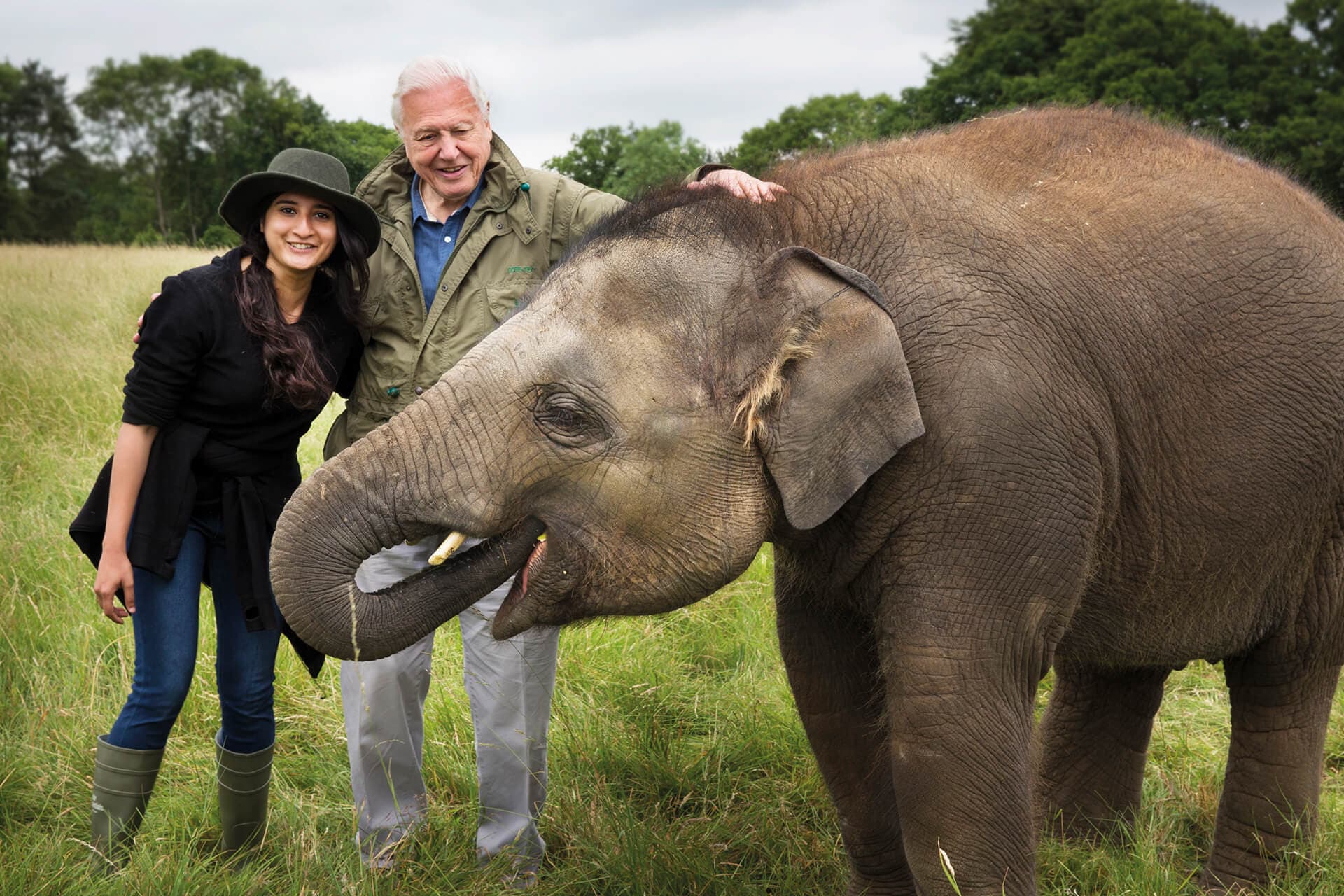
The next leg of the shoot was at ZSL Whipsnade Zoo, where he was to do a piece to camera with a baby elephant. It was here that I think I saw the thing in him that makes him who he is. Wonder. The years have given him everything else — experience, wisdom, the deep sediment of more than half a century in the field, but what years tend to take from people, they had simply not taken from him. As the calf was led out by her keeper, he greeted her with such unguarded gentleness, such quiet, undimmed delight at being in the company of a small elephant, that something very deep in me went very quiet. He was wise, and still capable of wonder. There is no formula for that. You cannot fake it for a camera. It is either left in you, or it isn’t.
Ignorance to empathy
Before we wrapped, Stephen, and I can never thank him enough for this, said that if I wanted a photograph with David, this was my moment. Sir David, the elephant, and the awestruck filmmaker from Kolkata. On bad days, when the work is hard and the world more so, I look at that photo, and remind myself that miracles do happen.
This is a man who has spent more than seven decades of his life telling us about the planet. His voice has narrated the death of an oak, the birth of an emperor penguin, the courtship dances of bowerbirds nobody had filmed before. He has been knighted, decorated, honoured by nearly every institution that exists for the purpose. There are species named after him in almost every kingdom of the natural world. A flower. A beetle. A plesiosaur. Without a doubt, he is the most consequential natural historian who has ever lived. The most beloved, at the very least.
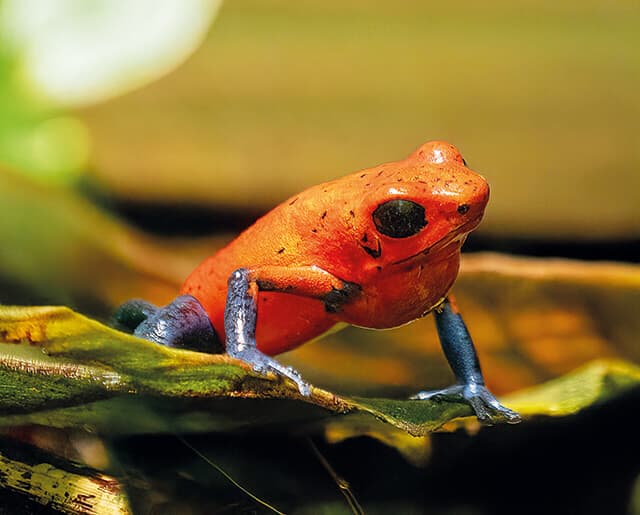
And yet even he has not been spared the modern impulse of armchair critics. It has become fashionable, in the last decade or so, for a certain kind of commentator and green activist to question whether Sir David did enough. They will tell you he preferred lyricism to alarm. That his programmes showed us nature gleaming when they ought to have shown it on fire. That his great talent was deployed too cautiously, for too long, in service of preferred neutrality. That his recent and full-throated advocacy and United Nations speeches came only after much of the damage was already done. There is something in the charge, but it misunderstands what he actually did, and what it was for.
How do you quantify the love a single man has created for the natural world? How do you count the children who, on a rainy afternoon in 1995, in a back room in Kolkata or Brisbane or Buenos Aires, looked up from a small television and decided, without yet having the words for it, that this was what they would dedicate the rest of their lives to? You cannot. There is no metric for it. There is only the evidence of the work being done.
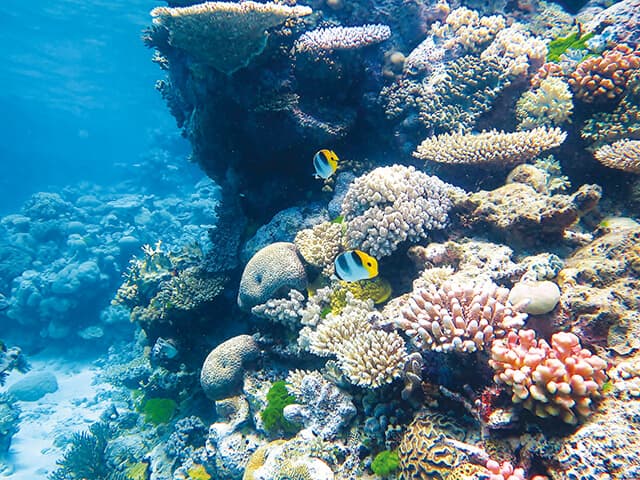
You cannot defend what you do not love, and the world, before David arrived, did not love most of what it knew. We feared the deep ocean. We were bored by lichen. We thought sharks were monsters. He spent years turning that ignorance into intimacy. He gave the hummingbird and the polar bear and the platypus their close-ups. He took a camera down onto the Great Barrier Reef and made a generation see the coral as a living, breathing thing rather than scenery. He made the pangolin a household name in countries that had never seen one. And, very quietly, by doing so, he produced generations of conservationists.
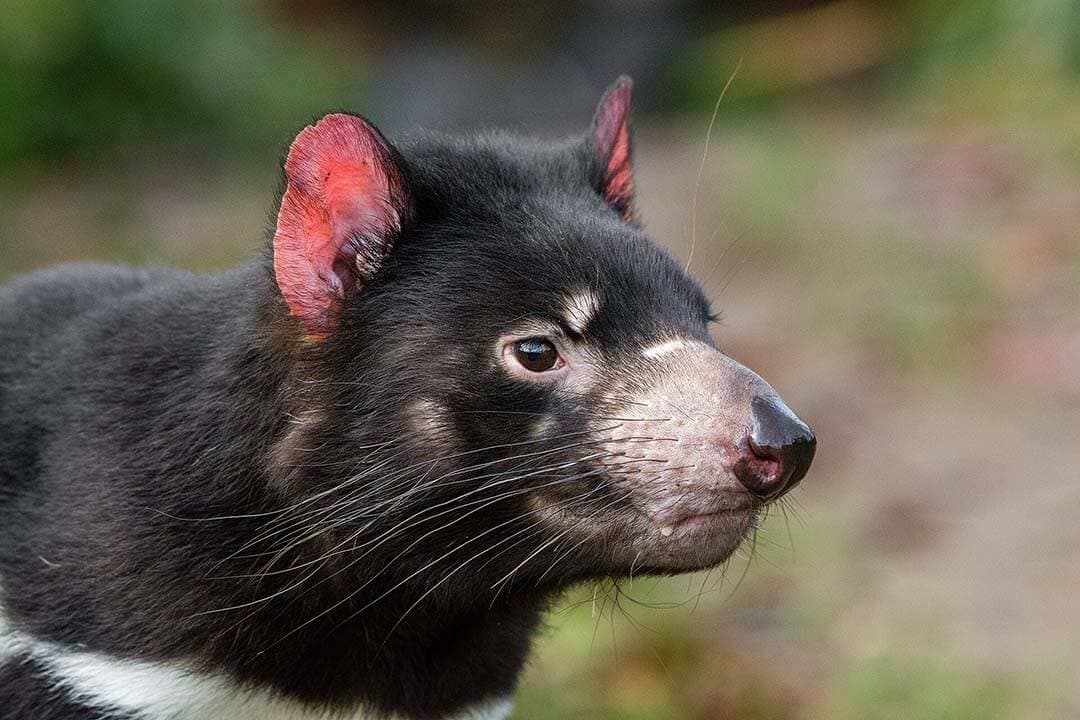
I am one among millions. A conservation filmmaker, I tell stories that I believe matter. Then there’s the marine biologist on a research vessel below the Antarctic Convergence. The researcher tracking what’s left of the Tasmanian devil population. The conservationist in Bengaluru. The graduate student in a Welsh meadow counting bumblebees nobody has bothered to count before. None of us is famous like him. Most of us will never meet him. But ask any of us sincerely, and you will get the same sentence, with small variations: I grew up watching David Attenborough documentaries. I knew, by about 10, that I would dedicate my life to animals. He is the invisible thread that runs between every one of us who serves the planet in our own small way. An inspiration to everyday changemakers as well as Britain’s royal family, Barack Obama, Leonardo DiCaprio, Australia’s very own Steve Irwin, among many more. He made us all fall in love with the planet by introducing us to it in a way nobody else ever has. That, in the end, is the greatest act of conservation any one person has ever performed.
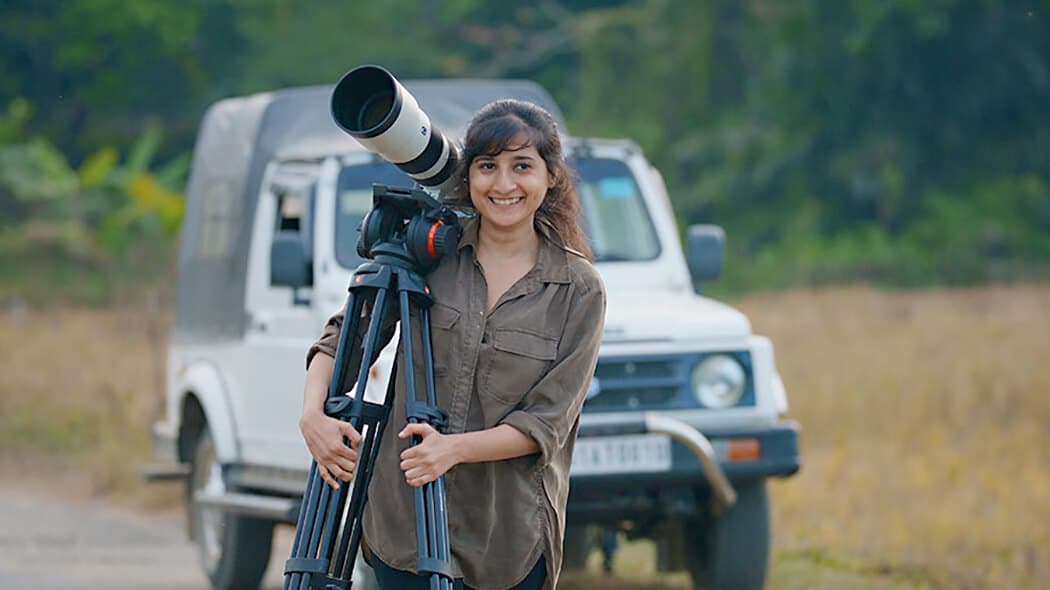
He turned 100 on May 8, 2026.
This is an extraordinary man. He inspired generations across the world. And he loves jam tarts and carries a very unsmart phone and cannot drive and has a cracker of a sense of humour. And above all else he is human.
A hundred years. Of one man. On one small planet. Quietly making the rest of us notice it.
So, on behalf of the millions he set in motion. For everyone, in every corner of the world, who picked up a camera or a pen or a pair of binoculars because of him. For the planet he taught us to love before we knew it needed saving.
There is only one thing left to say.
Thank you, sir. And a happy World Environment Day.
Who is Ashwika Kapur?
Who is Ashwika Kapur?
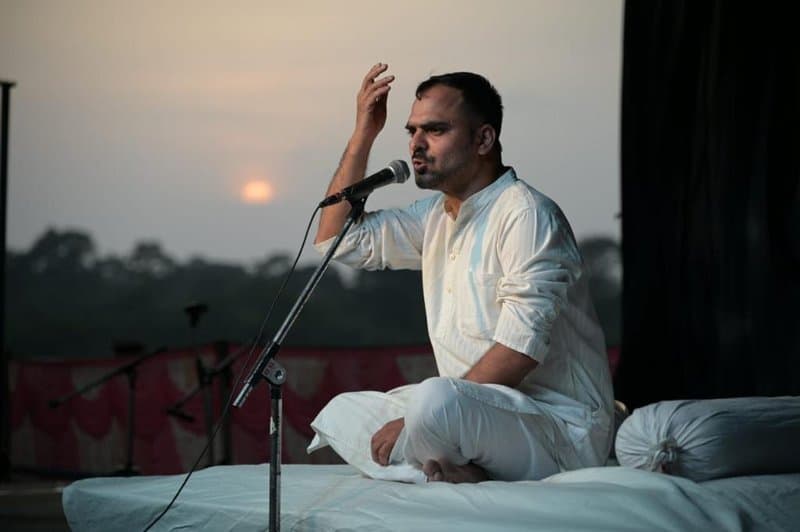
Ashwika Kapur is an award-winning natural history filmmaker, director, producer, presenter and science communicator, and the first Indian woman to win a Green Oscar/Panda Award in a global category.
How did David Attenborough influence Ashwika Kapur's career?
How did David Attenborough influence Ashwika Kapur's career?
His documentaries sparked her fascination with wildlife as a child and inspired her to pursue a career in natural history filmmaking.
What is Sirocco: How a Dud Became a Stud about?
What is Sirocco: How a Dud Became a Stud about?
The documentary tells the story of Sirocco, a famous New Zealand kakapo whose unusual behaviour turned him into an unlikely wildlife celebrity.
When did Ashwika Kapur first meet David Attenborough?
When did Ashwika Kapur first meet David Attenborough?
She first met him at the Wildscreen Film Festival in 2014 after her debut film won the Best Newcomer award.
Did Ashwika Kapur work with David Attenborough?
Did Ashwika Kapur work with David Attenborough?
Yes. In 2017, she joined the production of Attenborough and the Giant Elephant to film behind-the-scenes footage and observe Attenborough at work.
Why is David Attenborough considered an important conservation figure?
Why is David Attenborough considered an important conservation figure?
Through decades of documentaries, he has inspired millions of people worldwide to appreciate, understand and protect the natural world.