The Calcutta I knew as a boy and the Kolkata I know as a man both wake up to calls. Some have changed, many have stayed the same.
At the crack of dawn came the muezzin’s soothing, acoustic azaan, now replaced by high-powered microphones, often jolting you out of bed. If you are close to local train lines, you might hear an early-morning horn heralding the arrival of the workforce. Back in the Ripon Street area, the squeak of the community hand pump and the clanging of buckets announced bath time. The noise of the bhistis (water carriers) jousting to get their goatskins filled was occasionally matched by a bell from a roadside temple as early puja began.
As morning gathered pace, so did the street calls. The bikriwallah or kabadiwallah (scrap seller) called for purana kagaz (old newspapers), now joined by the collector of electronics with his cry of “computer, UPS, monitaaar”.
Then there was the ‘ting-tingwallah’. He rang a small handbell to attract kids to sample his treats, not limited to white candyfloss known locally as budiya ka bal (old lady’s hair). He and his tribe still roam the streets between Wellesley and Dharamtala.
Rats! The vendor is at hand with “chuha mare, khatmal mare, aadmi nahi maregaaa”. Without the singsong melody, it translates as “rats will die, bugs will die but people will not die” — if, obviously, you buy the local poison he is selling.
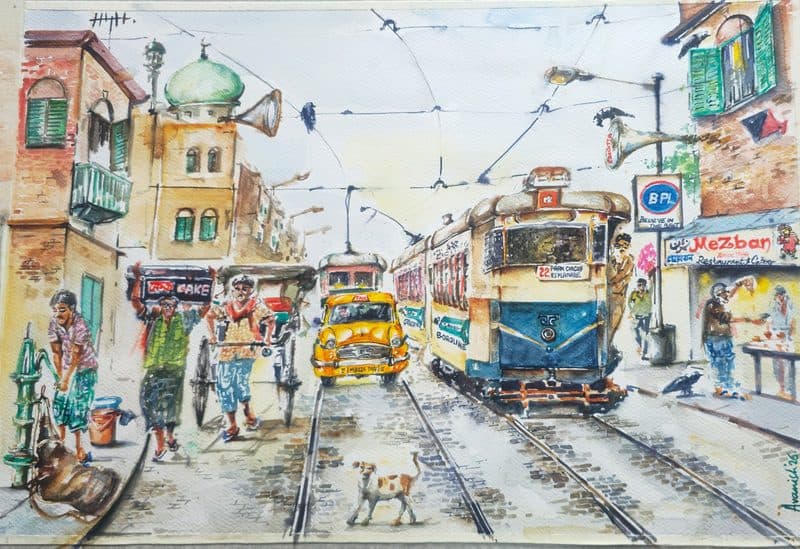
The hand-pulled rickshaw, king of the flooded streets, had a brass bell on a short rope to alert passers-by. It still exists in pockets, though largely replaced by tricycles with squeeze-bulb horns and e-rickshaws with fancy electronic ones. Surely, nothing can beat the cacophony of the vehicle horns, rising into a rousing chorus depending on the timing of the day or the complexity of the traffic jam.
You can’t miss the sound of the trundling trams, confined frustratingly to their tracks. The foot-operated bell seemed only to express the driver’s irritation with the vehicle in front. Though largely phased out, trams remain on a few routes and are more of a tourist attraction now, some airconditioned and even serving snacks!
The itinerant flute player, who knew everything from seasonal Christmas songs to movie themes, would wander past our homes on Elliot Road or Wellesley to amuse us or earn a little pocket money. Today, we have young buskers who set up on Park Street, earning their keep while honing their musical skills.
In those days, the ‘monkey man’ would make his rounds with a damroo, immediately bringing the crowds into a tight circle to marvel at the skills of our ancestors. It was a familiar street spectacle in an older Kolkata, one that has since disappeared from everyday life. Then came the Cake Man, who carried atop his head a black box filled with cakes, cream rolls and mince patties. His cry of “cakewallah” was the signal for afternoon tea.
As the evening crept in, sounds of beautiful music would waft through various doorways. Rabindrasangeet to the sound of the harmonium from some, and mushy love songs from others. Today, you are more likely to hear prime-time soap operas and high-intensity news anchors!
The sounds may have changed, as cities do, but Kolkata still finds new ways to make itself heard.