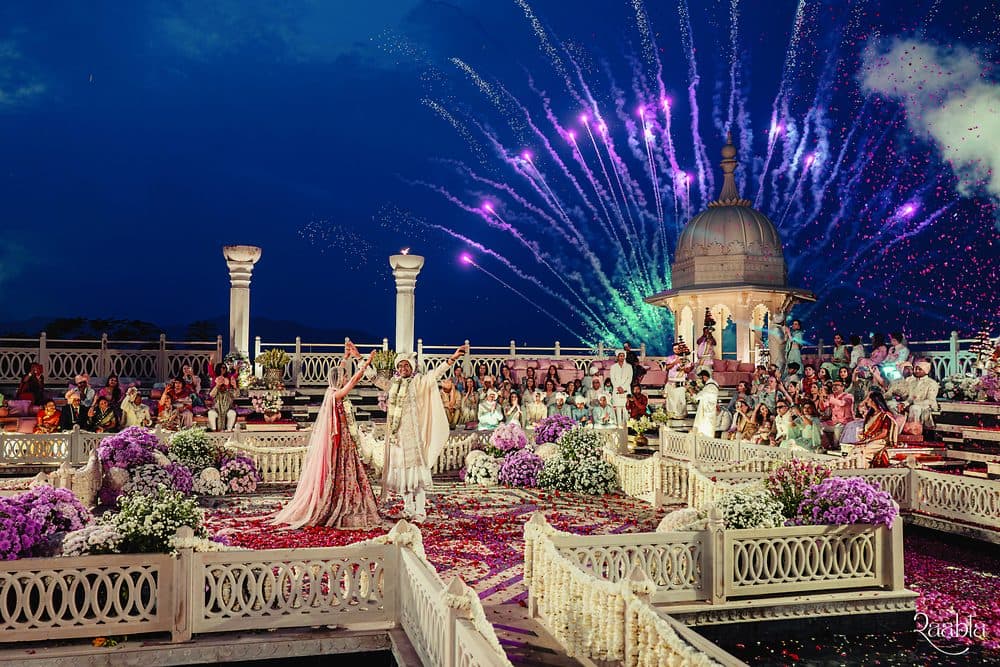
One camera waits for the wide frame, another is focused on her face, a third watches the groom, the parents and the friends who may cry when they see her. A drone could be buzzing above the venue. The song has been selected, the pace of the entrance discussed.
What was once a wedding video has now become a production. Indian wedding films now arrive as teasers, trailers and Instagram reels along with the longer film. They use interviews, drone footage, colour grading and intricate sound design. Crews can run into dozens and filming may cost several lakhs a day.
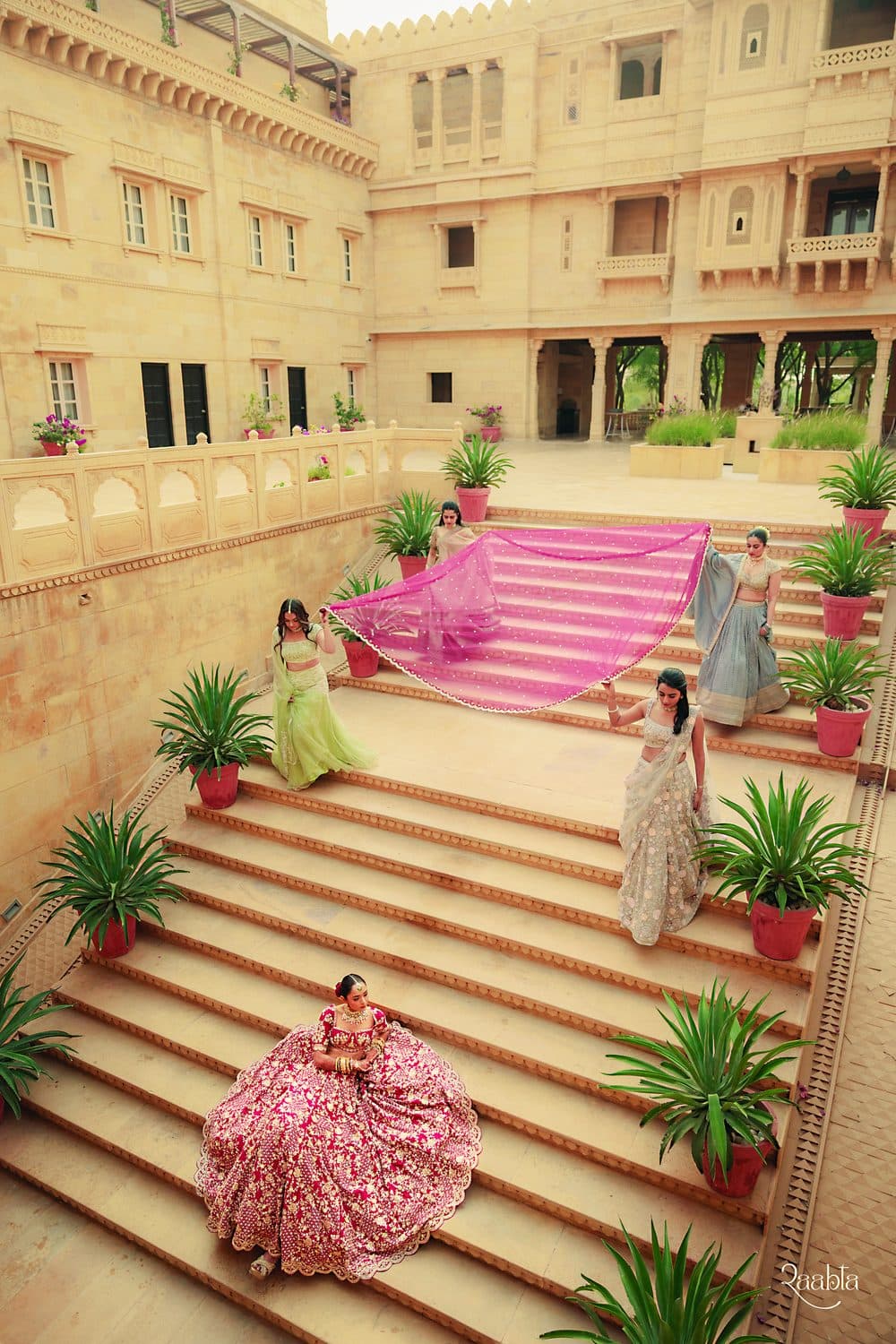
“There are no retakes,” says Shrey Bhagat, co-founder of Raabta Studios. A bride cannot be asked to walk down the aisle again. The mangalsutra cannot be put on twice. Yet the expectation is that the finished film will look cinematic.
At a large wedding, each camera is given a position. The crew must cover the couple, their families, performances, decor and guests without obstructing anyone’s view or constantly appearing in one another’s frames. A small wedding may need only a photographer and a cinematographer. A sprawling destination wedding can require camera operators, drone pilots, sound recordists and a large post-production team.
The footage is then shaped into several products. Raabta may make a teaser of around one minute, a three-to-five-minute trailer and a longer film running for approximately 30 to 45 minutes.
This new grammar has also changed the wedding itself. Couples arrive with mood boards, reference films and collections of saved Instagram reels. They know the portraits they want, where the cameras are likely to be and how slowly they should move.
‘It’s literally like acting’
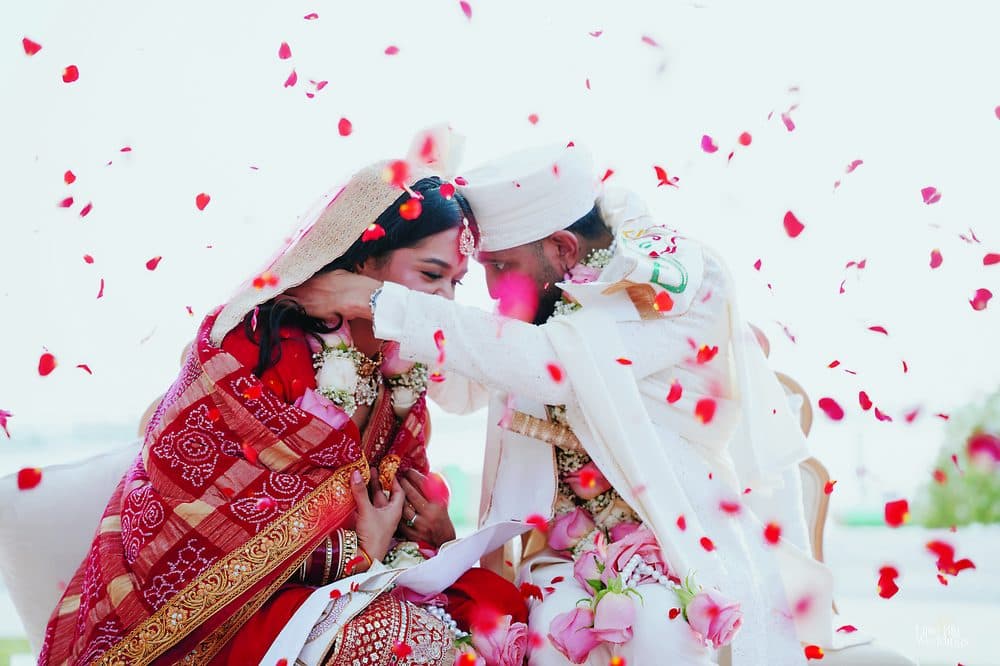
For Madhura Lingayat, co-founder of Little Big Weddings, the change has been enormous. When she entered the business around 2013, clients often had little idea what a wedding film could look like. “Now the bride knows,” Lingayat says. “It’s literally like acting.”
That awareness can make some parts of the filmmaker’s work easier. The bride knows how to turn towards the light or hold her pace during an entrance. But it can also make the wedding appear rehearsed.
At one of Lingayat’s shoots, the bride looked nervous. But when Lingayat raised the camera, the nervousness appeared differently. She noticed the woman’s hands, her expressions and the way people approached her. Through the lens, Lingayat felt she could “see through her”. It was the first time she understood the emotional access that a wedding could give.
Lingayat’s first wedding-film assignment was a three-day celebration with a budget of approximately AUD $1,500. Almost all the money went to the crew. Early assignments ranged from AUD $2,200 to AUD $6,000. Wedding filmmakers rarely shared their prices or disclosed whom they hired.
Layers and lenses
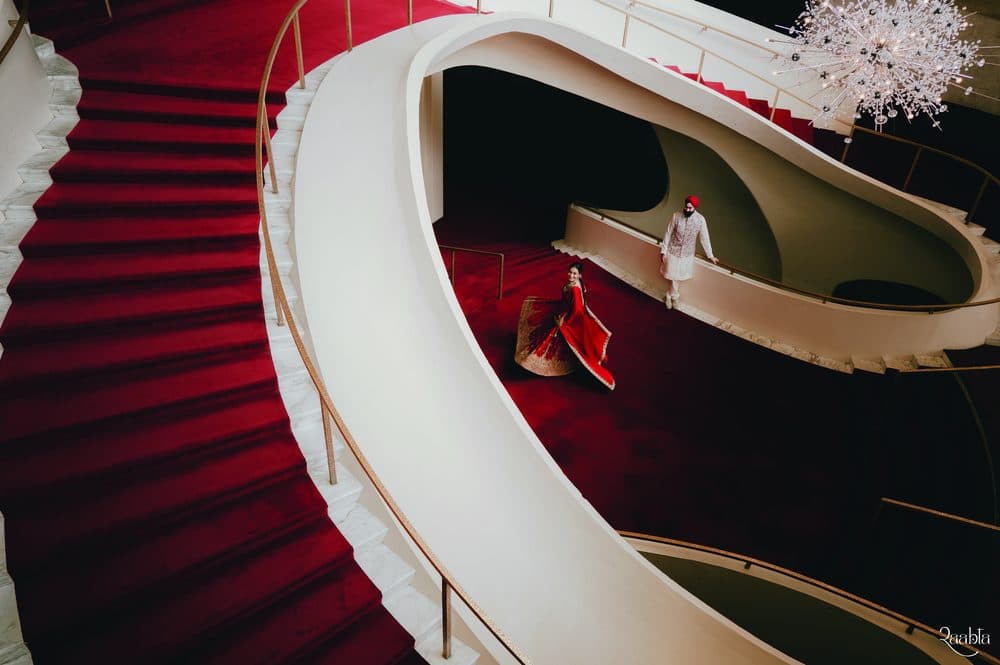
Today, a big wedding film offers original compositions, personalised soundtracks, aerial filming, 360-degree video and on-site edits. The equipment has also changed. Early filmmakers generally worked with DSLRs and delivered films in HD. Higher-paying clients now commonly expect 4K output. Cameras perform better in low light, stabilisers allow smooth movement and drones establish the venue and the scale of the celebration. Long lenses help filmmakers remain outside the ceremony while still capturing faces closely.
Sometimes, distance is imposed on them. Himanshu Patel, founder of Epic Stories, recalls working at Anant Ambani and Radhika Merchant’s wedding, where access restrictions meant that the team had to film parts of the ceremony from far away. They used lenses more commonly associated with wildlife photography to capture faces and expressions without entering restricted spaces.
Epic Stories also advertises same-day edits. Films of five to 10 minutes completed in time to be screened at the end of an event. The process demands a parallel editing team working while the celebrations are still under way.
Music is another sign of how far the form has travelled. Earlier wedding filmmakers often used popular film songs or tracks available from music libraries. Some high-budget productions now commission original songs. The music may accompany the bride’s entrance, be performed during the sangeet and later return in the wedding film.
Lingayat estimates that involving a singer, composer and music producer may require a budget of AUD $37,000 to AUD $45,000. That is her assessment of the premium end of the market, not a standard industry rate.
Make it grand
The expansion of wedding films sits within a much larger increase in wedding expenditure.
WedMeGood’s 2025–26 industry report found that average spending among the couples it surveyed had reached AUD $59,000. Jaipur had the highest average among the cities in the report, at AUD $108,900. These figures from a commercial wedding platform’s survey indicate the scale of the market in which luxury film companies operate.
A production involving a singer, composer and music producer may require a budget of AUD $37,000 to AUD $45,000
Social media has expanded both the ambition and the audience. Celebrity-wedding images, once available mainly through magazines and entertainment television, now appear almost immediately online. A wedding film is made partly for the couple and family, but its trailer may be designed for thousands or even millions of strangers.
Instagram has also created a gap between expectations and budgets. Lingayat meets couples who want the finish and scale of expensive films without understanding how much labour lies behind them. She limits Little Big Weddings to around 20 assignments a year because she believes a much larger volume would affect the work.
The pressure eventually reaches the editing room. A multi-day wedding can produce hundreds of hours of footage from several cameras. The editor has to find the glances, pauses and fragments of conversation that will hold the story together. With too many projects, Lingayat says, every film begins to look the same.
The modern Indian wedding film has become bigger, more expensive and technically more accomplished. But at the same time filmmakers now struggle to find moments that are not performed.