Key Highlights
- According to old texts like the Nilmata Purana, much of Kashmir was once a vast lake called Sarisar
- According to ancient Hindu tradition, Kashmir gets its name from Kashyap Rishi who drained the lake and split the mountains at Baramulla
- The Shankaracharya Temple in Kashmir sits 1,000 ft above Srinagar — an altitude that slightly reduces oxygen, causing the brain to shift into theta waves, which are ideal for deep meditation
- 42 kilometres from Srinagar is Doodhpatri, or the Valley of Milk
- Two hours south of Srinagar, in the hills of Udhampur, is a village called Sitaharan. Locals say that this is the hill Ravana took Sita from
- Kashmir was historically called Sharada Desh, believed to be the land of Sharada Devi, the goddess of learning and speech
- Hari Parbat, in Kashmir, houses the Hindu Sharika Devi Temple, the Sufi shrine of Makhdoom Sahib, Gurdwara Chatti Padshahi and a mosque
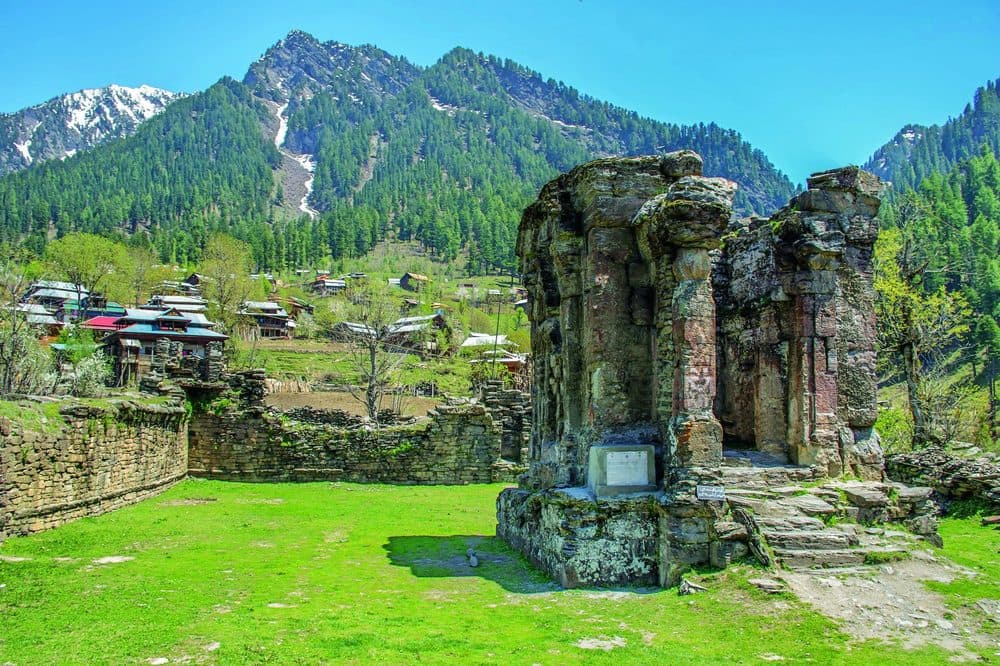
My grandfather used to whisper about Kashmir like he was keeping a secret from the almighty himself. As Kashmiri Pandits, going back felt loaded. Like rereading a book you weren’t sure was yours. In May this year, my husband and I finally went. We had been planning this trip for longer than either of us was willing to admit. As it turned out, the delayed gratification was worth it.
Our first stop was Lal Chowk. The traffic near Dal Lake is not what the wellness brochures prepare you for. Three lanes become seven. Horns merge into one continuous note. I sat in the back of a taxi wondering if Andrew Huberman has a protocol for this.
He doesn’t; but thankfully Kashmir does, and it’s 3,000 years old.
Despite the traffic, I fell in love. How could I not? The gardens. The light on the lake. The fact that every spiritual tradition in history exists here.
Lady of the lake
Before Srinagar was a city, Kashmir was a lake. The Nilmata Purana — one of Kashmir’s oldest texts — calls it Satisar: the lake of Sati, Shiva’s first wife. Goddess energy, right down to the geology itself!
Mythology says that the sage Kashyap Rishi drained it by splitting the mountains at Baramulla. Kashmir is named after Kashyap himself. A city built on a goddess’s lake bed is a wellness origin story too powerful to become just another sales pitch.
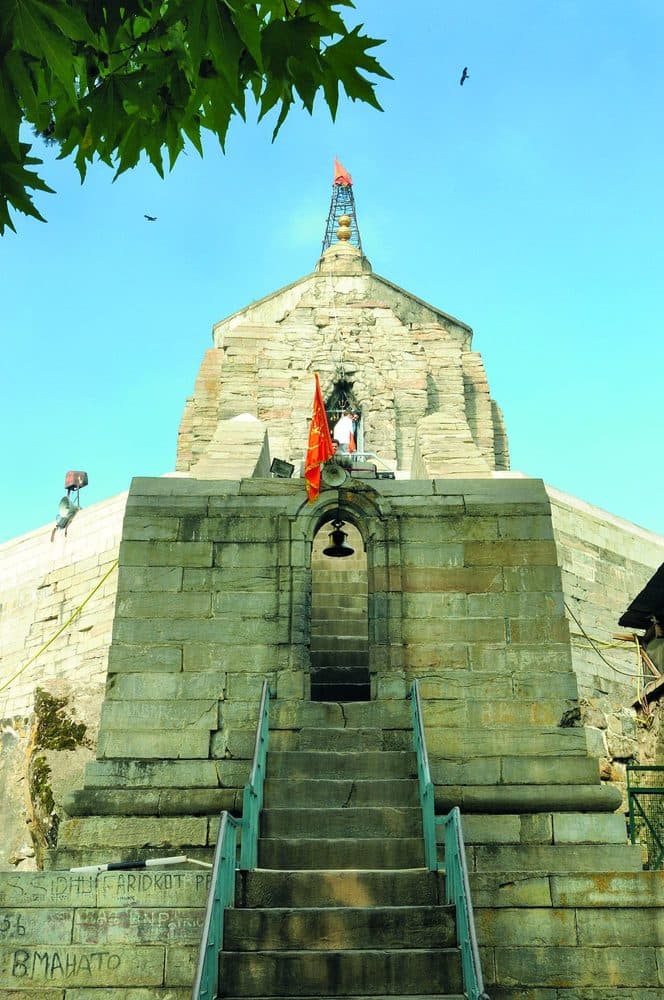
The Shankaracharya Temple sits 1,000 ft above Srinagar. Sacred use dates to 2,500 years ago. In the 9th century CE, Adi Shankaracharya meditated here and it is said he composed the Soundarya Lahari — a hymn to Shakti that reads like neuroscience — on this exact hill. It is because of Shankaracharya’s lineage that today’s modern yoga is known.
High altitude slightly reduces oxygen, causing the brain to shift into theta waves — 4 to 7 Hz. EEG studies confirm this. Theta also happens to be the frequency of deep meditation, creative insight and the threshold state where your mind finally opens. Ancient sages chose elevated ground by instinct and now modern neuroscience is catching up.
I climbed the 243 steps at sunrise. My brain went quiet around step 200. No commentary. No mental grocery run. Just cold air and the lake below and something very old doing its job.
If you want to understand what yoga is actually for, climb that hill before spending another season in downward dog thinking about dinner.
The spring nobody maps
Forty-two kilometres from Srinagar is Doodhpatri, or the Valley of Milk. The Sufi saint Nund Rishi prayed here, and milk is said to have flowed from the earth. Behind the upper meadow, a group of older local women quietly led me uphill to a small geothermal stream. Warm water. Cold mountain air. Completely unmarked.
I sat there for 40 minutes, feeling mildly ridiculous and also completely reset.
Two hours south of Srinagar, in the hills of Udhampur, is a village called Sitaharan, with a Sanskrit name nobody ever changed. Locals say Sita bathed at a freshwater spring here called Sita Naag, and Ravana took her from this hill.
My Kashmiri driver pointed to the valley with quiet pride. “It is ours,” he said. That sentence explained Kashmir’s spiritual character more clearly than any book has.
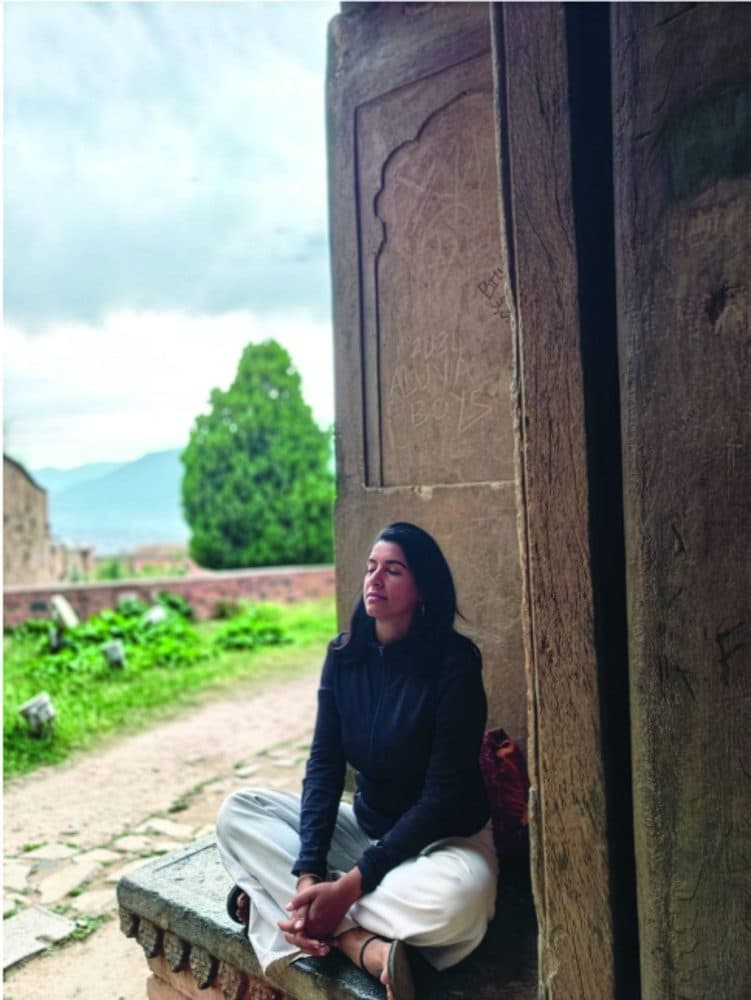
Kashmir was called Sharada Desh — the land of Sharada Devi, the goddess of learning and speech. The ancient Sharada Peeth temple and university reportedly housed 5,000 scholars at its peak. The Sharada script — the ancestor of Devanagari — is named after her.
The Mughal emperor Jahangir arrived and declared: “Agar firdaus bar roo-e zameen ast, hamin ast.” It translates to: “If paradise exists on earth, it is here.” Firdaus is the Quranic name for the highest level of paradise.
Buddhist texts call Kashmir tushita, or “divine realm”. The Mahabharata’s Kashmir recension is among the oldest textual traditions on the subcontinent. Every tradition, independently, pointed to this valley.
The fort for all faiths
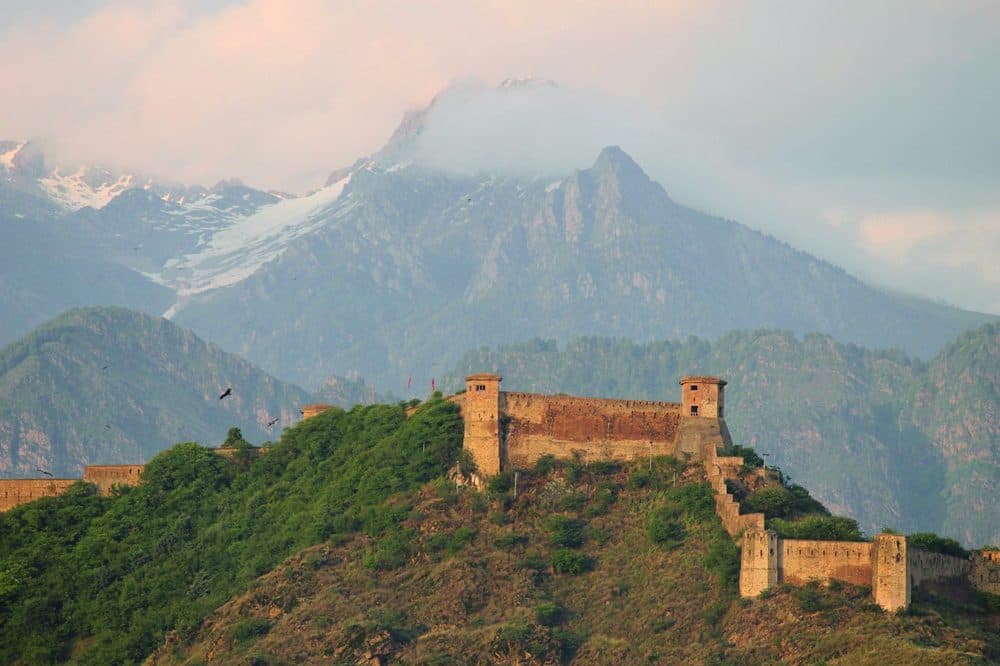
On our last day, we went to Hari Parbat. One hill. Four religions.
At the base was the Sufi shrine of Makhdoom Sahib. Halfway up was Gurdwara Chatti Padshahi, where Guru Hargobind once camped. At the top: the Sharika Devi Temple — the ancient Kali temple, sacred to Sharika Chakreshwari, the mother goddess of Kashmir. And across the courtyard, a mosque.
In Kashmir Shaivism, this is called maya — not an illusion to escape, but the divine creative power that allows the One to appear as many.
What is Kashmir Shaivism and how is it different from regular yoga?
Kashmir Shaivism is a nondual Tantric philosophy that developed between the 9th and 12th centuries CE. It holds that individual and universal consciousness are identical.
Most modern yoga teaches movement. Kashmir Shaivism teaches what the movement is for.
The consciousness philosophy nobody is teaching
Kashmir produced Kashmir Shaivism, a sophisticated philosophy of mind. The philosopher Abhinavagupta worked here between 950 and 1016 CE. His Tantraloka maps consciousness across 37 volumes.
Spanda — divine vibration — is its core idea. All of reality pulses. You are not separate from it. The gap between you and the cosmos is not real; it is forgotten identity. This recognition — pratyabhijna — is what Kashmir Shaivism calls awakening. Not becoming something. Remembering what you already are.
The Vijnanabhairava Tantra, also from Kashmir, offers 112 meditation techniques. One simply says: “Rest your awareness in infinite space.” Stand under a Kashmiri sky and you understand what they mean immediately.
If you’re in a beautiful pose but mentally composing a WhatsApp message to your cousin who refuses to stretch, you are not in yoga. You are in stretching mode. Kashmir corrects this by geographic force.
Wellness didn’t begin in a studio. It started in places like these: a valley born from a goddess, on a hill that quiets your brain by altitude alone, at a fort where every faith quietly agreed the spot was worth sharing.
Who is Kashmir named after?
Who is Kashmir named after?
Kashmir is named after Kashyap Rishi, who drained lake Kashmir — also known as lake Satisar in ancient texts — and split the mountains at Baramulla.
Where is the Shankaracharya temple located?
Where is the Shankaracharya temple located?
The Shankaracharya temple is located 1,000 ft above Srinagar.
How did Doodhpatri get its name?
How did Doodhpatri get its name?
Doodhpatri, or the Valley of Milk, is named so because it is believed that the Sufi saint Nund Rishi prayed there, leading milk to flow from the earth.
Is there a village in Kashmir called Sitaharan?
Is there a village in Kashmir called Sitaharan?
Yes, the village of Sitaharan is located in the hills of Udhampur, which is two hours from Srinagar. The village is named so because it is believed Ravana took Sita from here.
Does Kashmir have any other names?
Does Kashmir have any other names?
Kashmir was called Sharada Desh, because it is believed to be the land of Sharada Devi, the goddess of learning and speech. The ancient Sharada Peeth temple and university reportedly housed 5,000 scholars
What is Hari Parbat and why is it special?
What is Hari Parbat and why is it special?
Hari Parbat is a hill that houses four religions. At the base is the Sufi shrine of Makhdoom Sahib. Halfway up is Gurdwara Chatti Padshahi, where Guru Hargobind once camped. At the top, is the Sharika Devi Temple — the ancient Kali temple, sacred to Sharika Chakreshwari, the mother goddess of Kashmir. And across the courtyard, there is a mosque.
What do Buddhist texts refer to Kashmir as?
What do Buddhist texts refer to Kashmir as?
Buddhist texts call Kashmir tushita, or “divine realm”.