



 ion
ion
For decades, Hindi cinema had a language of its own for success. A film could be a flop, a hit, a super-hit or, if things went exceptionally well, a blockbuster. These were not simply adjectives thrown around by fans. They came from the trade.
The old system was built around distributors. A producer sold a film territory by territory. The distributor first had to recover what they had paid. After that came their commission. If the film kept earning, it went into what the trade called ‘overflow’, when the producer too began sharing the extra money. By the mid-1990s, the trade was formally classifying films this way: a film that merely recovered the distributor’s cost was average; around twice the cost could make it a semi-hit or hit; three times or more could make it a super-hit.
How much does a hit make?
The numbers once looked very different. When Hum Aapke Hain Koun..! arrived in 1994, Rajshri Productions released it in only 26 cinemas. By its 21st week, it was playing in 522. Box Office India, a website dedicated to analysing the finances of Hindi films, now classifies it as an all-time blockbuster, with an Indian net collection of about AUD $10.7 million and distributor share of nearly AUD $7.7 million.

Fourteen years later, Ghajini crossed AUD $14.8 million net in India. Its worldwide AUD $16.8 million collection created a new shorthand for success, the ₹100-crore club. That shorthand grew redundant rather quickly, and not just because of inflation.
In 2025, 37 films across languages crossed AUD $14.8 million in India. Hindi cinema had its best year ever, grossing AUD $812.5 million. Dhurandhar crossed AUD $73.8 million. So did Chhaava. “Today, for a big film, people talk of AUD $75 million and AUD $150 million,” says veteran film critic and trade analyst Taran Adarsh. But ₹100 crore (AUD $14.8 million) from a small film made for a few crores, he says, would still be “monstrous”.
What a film collects at the ticket counter is not the same as what someone makes from the film. Vishek Chauhan, owner of Roopbani Cinema in Purnia, Bihar, and author of Cinemas Forever, remembers the older system clearly. “Ultimately, it was gauged by the distributor’s recovery,” he says. Now there may be no single recovery that decides whether a film has worked.
A producer can make money from theatres in India and overseas, streaming, television and music. The producer may also be the distributor. Actors themselves can be producers or take a share of profits rather than simply charge a fee.
Chauhan gives an imaginary Rajkummar Rao film as an example. Suppose it costs AUD $4.4 million. Netflix agrees to buy it for AUD $5.2 million, but wants the film to first go to theatres. It does a modest AUD $3.7 million at the box office and another AUD $1.5 million eventually reaches the producer. As a theatrical release, people may call it disappointing. The producer has still turned AUD $4.4 million into AUD $6.7 million.
“If no one has lost money on the film, and the producer is in a AUD $1.5 million profit, how can I call it a flop?” Chauhan asks.
The reverse can happen, too. A producer may have protected their investment while a distributor who paid heavily for one territory loses money. The same film can therefore be profitable for one person and a failure for another.
The industry itself is bringing in more money. India had its biggest box-office year ever in 2025 at AUD $1.97 billion. But the boom is not across the board. This year, footfalls did rise five per cent in the first six months, but the money is increasingly concentrated. The top 15 films took 58 per cent of the box office, against 49 per cent in the same period last year. Dhurandhar: The Revenge alone contributed nearly one-fifth. And this explains Bollywood’s renewed hunt for the film that feels like a spectacle.
Today, for a big film, people talk of AUD $75 million and AUD $150 million. But ₹100 crore (AUD $14.8 million) from a small film made for a few crores would still be “monstrous”
—Taran Adarsh, film critic and trade analyst
‘The movie theatre will always work on FOMO’
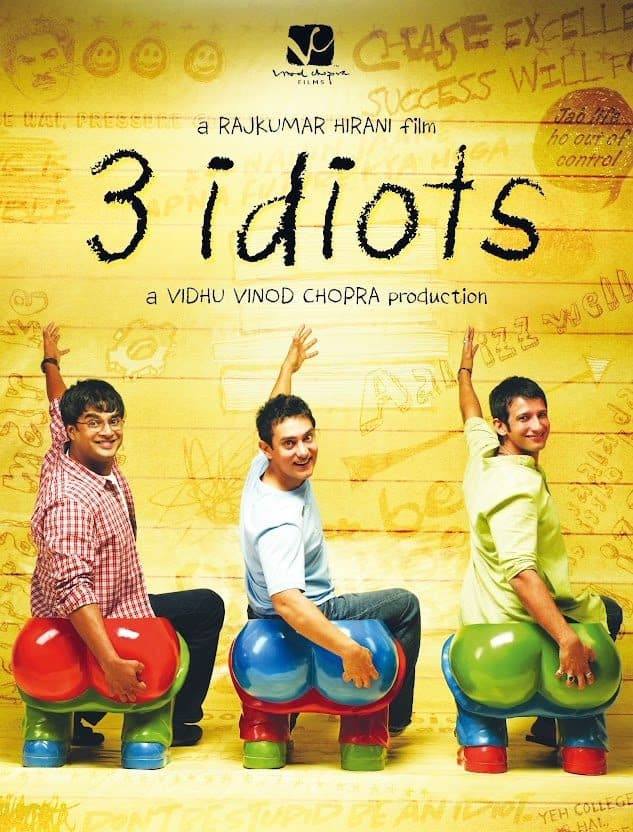
Chauhan also traces an earlier shift like this to the multiplex boom. Higher-priced urban screens gave films such as Khosla Ka Ghosla and Bheja Fry a platform they might not have found earlier. He recalls Saif Ali Khan speaking about how Hum Tum was shaped for the new multiplex audience. Later, 3 Idiots helped make this urban cinema the commercial mainstream. Then came streaming and the pandemic. Audiences spent years consuming smaller dramas at home.

“But the movie theatre will always work on FOMO,” Chauhan says. His argument is that spectacle, action, intense romance and the larger-than-life hero returned partly because cinema again had to offer something that home viewing could not.
Streaming, meanwhile, has produced some strange new theatre economics.
Earlier this year, small films such as Mayasabha, Rahu Ketu and One Two Cha Cha Chaa received what trade executives called ‘token’ theatrical releases. Some played in low-traffic slots with almost no audience. The cinema run itself had value because streaming platforms were making a theatrical release a condition for an OTT deal. So theatres can now matter even when almost nobody is in them.
The effects of the changing business can also be seen in what films cost. Even as the numbers soar, how they are distributed is still significantly top heavy.
Producers have increasingly complained about star fees and entourages. The entourages, including personal social-media teams, trainers and coaches, can account for 10 to 12 per cent of the production cost of some high mid-budget and big films.
The money that doesn’t trickle down
Further down the hierarchy, the arithmetic looks very different.
Writers, technicians, make-up artists and other crew have spoken about delayed payments and uncertain work even during a period of rising headline collections. Nor does working on a ₹500-crore film necessarily mean a better rate. “If the numbers are big for the film, it doesn’t help us,” says gaffer Rajjak Shaikh. Some light boys, he says, take up food delivery work when film work is thin because they can make more money doing that.
The entourages can account for 10-12 per cent of the production cost of some high mid-budget and big films
Bollywood continues to have its hits, super-hits and blockbusters, while the old structures have survived more neatly than the accounting behind them.