


 ion
ionKey Highlights
- In India, the mango is not merely a fruit. It features as symbol and motif in everyday life
- The mango tree is entwined with Indian folklore and religious ceremony. It is said that the Buddha himself was gifted a mango grove so he might rest in its shade
- In several Hindu ceremonies, mango leaves are strung into garlands and hung at the entrance of the home as a mark of blessing
- The branch of the mango finds mention in several classical compositions such as Jhula Daro Amuva Ki Daari
- When Hindi popular music wanted to depict spring, flirtation, ache or rural romance, it also repeatedly reached for the mango bough and the koel as metaphors
- In Indian vernacular poetry, writers such as Amir Khusrau turned to the mango in their verses
- Mangoes are also seen in the vibrant, modern lexicon of tribal art, primarily in Gond painting
- Textile historians note that the shape globally known as ‘paisley’ is, in India, also understood as ambi or kairi, both of which are words for mango
- The mango was also present at the 2026 Met Gala, where Isha Ambani carried a crochet bag holding a bronze mango sculpture by Subodh Gupta
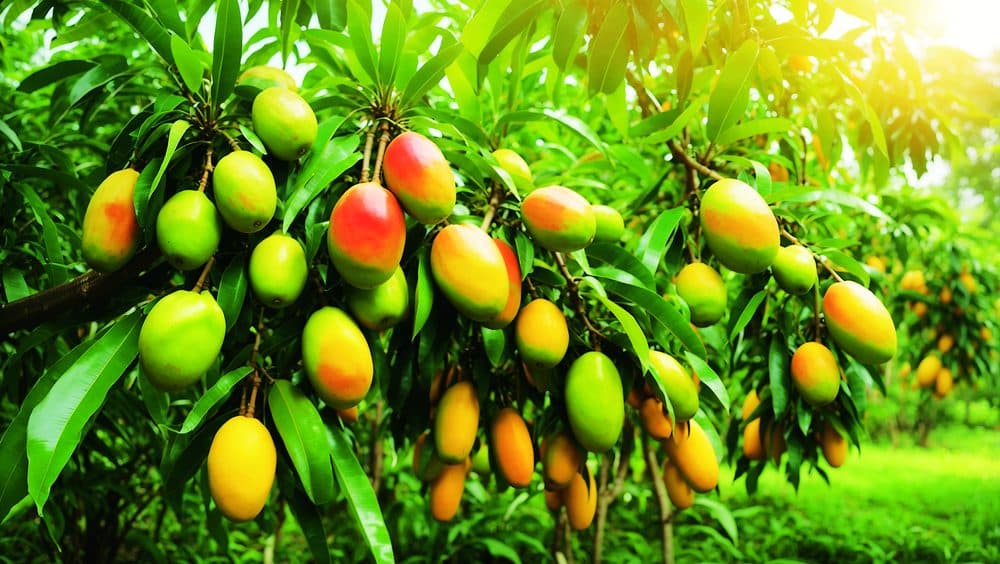
The mango in India is not a thing of mystery — the fruit, to this day, saturates Indian life before it even reaches the plate. Mango leaves hang at the entrances of homes and offices in garlands; mango varieties enter ritual space as an auspicious presence; the mango tree provides shade and succour to saints and lovers in story; and the fruit itself sits so deep in memory and belonging that its scientific and common names both point back to the subcontinent. Mangifera indica is indigenous to southern Asia, with modern genetic work showing its existence for over 4,000 years in the Indian subcontinent and the adjoining Indo-Burmese region; the mango tree is entwined with Indian folklore and religious ceremony, and it is said that the Buddha himself was gifted a mango grove so that he might rest in its shade. The English word ‘mango’ came through the Portuguese manga, which was derived from India’s southern languages Malayalam (manga) and Tamil (mangai).
That is why reducing the mango to a quarrel over the taste and quality of its varieties misses the point. K.L. Mehra’s ethnobotanical survey, Folk Uses of Plants for Adornment in India, records mango leaves strung into garlands for temples and house entrances and remarks that Hindu ceremony is scarcely complete without them. As such, can a fruit that is food on the plate, blessing at the threshold, resting place in religious memory and motif in ornament be merely botanical?
Listen closely, and the mango enters India through sound as much as through scent and taste. Take the mango branch; within classical and semi-classical practice, it appears with near-musical inevitability. Classical compositions such as Jhula Daro Amuva Ki Daari (Raga Brindavani Sarang), keep the swing, the branch and the season bound together in a performance repertory, and popular cinema inherited this shorthand. In Vidyapati (1937), Ambuva Ki Dali Dali Jhum Rahi Hai Aali makes the swaying mango branch an image of intoxication and erotic buoyancy, and Dahej (1950) gives us Ambua Ki Daari Pe Bole Re Koyaliya, where the cuckoo’s call from the mango branch becomes a warning against love itself. When Hindi popular music wanted spring, flirtation, ache or rural romance, it repeatedly reached for the mango bough and the koel as its readymade stage.
Article Title
Indian vernacular poetry understood this long before cinema did. Bihari’s Satsai, the great 17th-century Braj classic, turns the mango blossom into an accomplice to desire. In one celebrated couplet, the delay in the arrival of her beloved has already unsettled the pining lover; the flowering mango branches finish the work.
ही औरै-सी ह्वै गई टरी औधि कैं नाम।
दूजै कै डारी खरी बौरी बौरैं आम॥
The grief at the deferred tryst, followed by the ripening mangoes driving the yearning lover mad, show how, in Braj poetry, the mango is an activator of longing; it articulates the grief, resilience and identity of women in the painful throes of separation. Then there is Amir Khusrau’s devotion to the mango, which borders on ecstatic.
Priyadarshini Chatterjee wrote about one lush invocation of the fruit by Khusrau:
Naghzaki-ma (Var Khwash) naghz-kunbistan, / Naghza tarin mewa (Var na mat) – Hindustan.
Our fairling, beauty-maker of the garden, / Fairest fruit of Hindustan,/ Ere ripe, other fruits to cut we bon, / But mango serves us ripe or not.
(The ‘fairling’ is the mango.)
Elsewhere, in Nuh Siphir (1318), Khusrau marvels at the mangoes of Devagiri, describing them as “golden shells of milk and honey”. Finally, in another verse, the poet writes:
He visits my town once a year. / He fills my mouth with kisses and nectar. / I spend all my money on him. / Who, girl, your man?
No, a mango.
It is from these invocations that the mango passes seamlessly into image. Some commentators note that Bihari’s couplets are like miniature paintings and that many, indeed, became themes for 18th- and 19th-century painters in Kangra, Rajput and Mughal schools. Architectural Digest’s survey of mangoes in miniature painting similarly reads ripe mangoes as symbols of fertility and plenty, while the act of plucking them becomes a princely pastime and a sign of seasonal abundance.
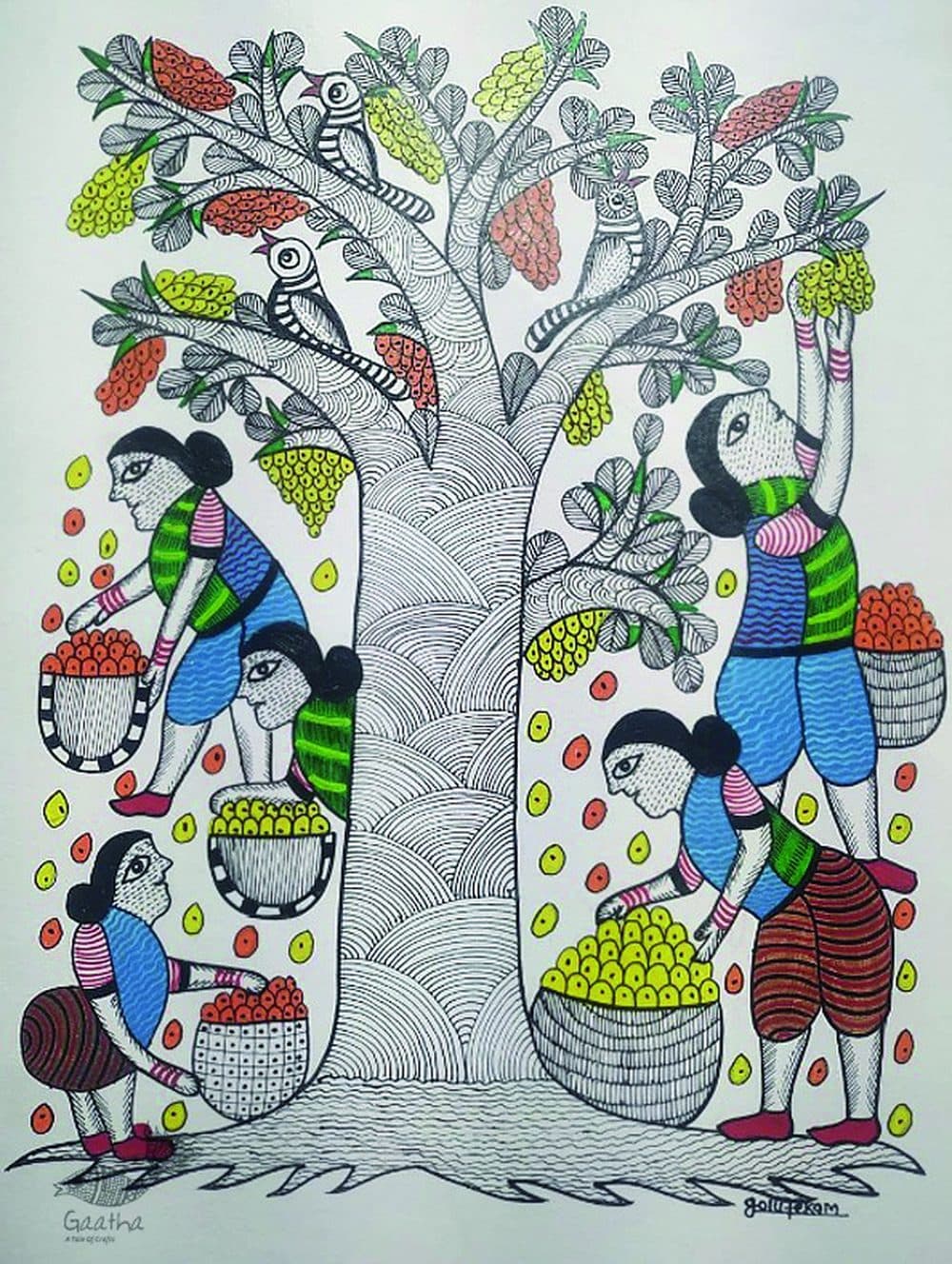
Mangoes are also seen in the vibrant, modern lexicon of tribal art, primarily in Gond painting, and Khusrau, paired with Bihari, demonstrates how the mango belongs both to an elite literary culture and a vernacular emotional register: it is celebrated as much in praise as it is in ache.
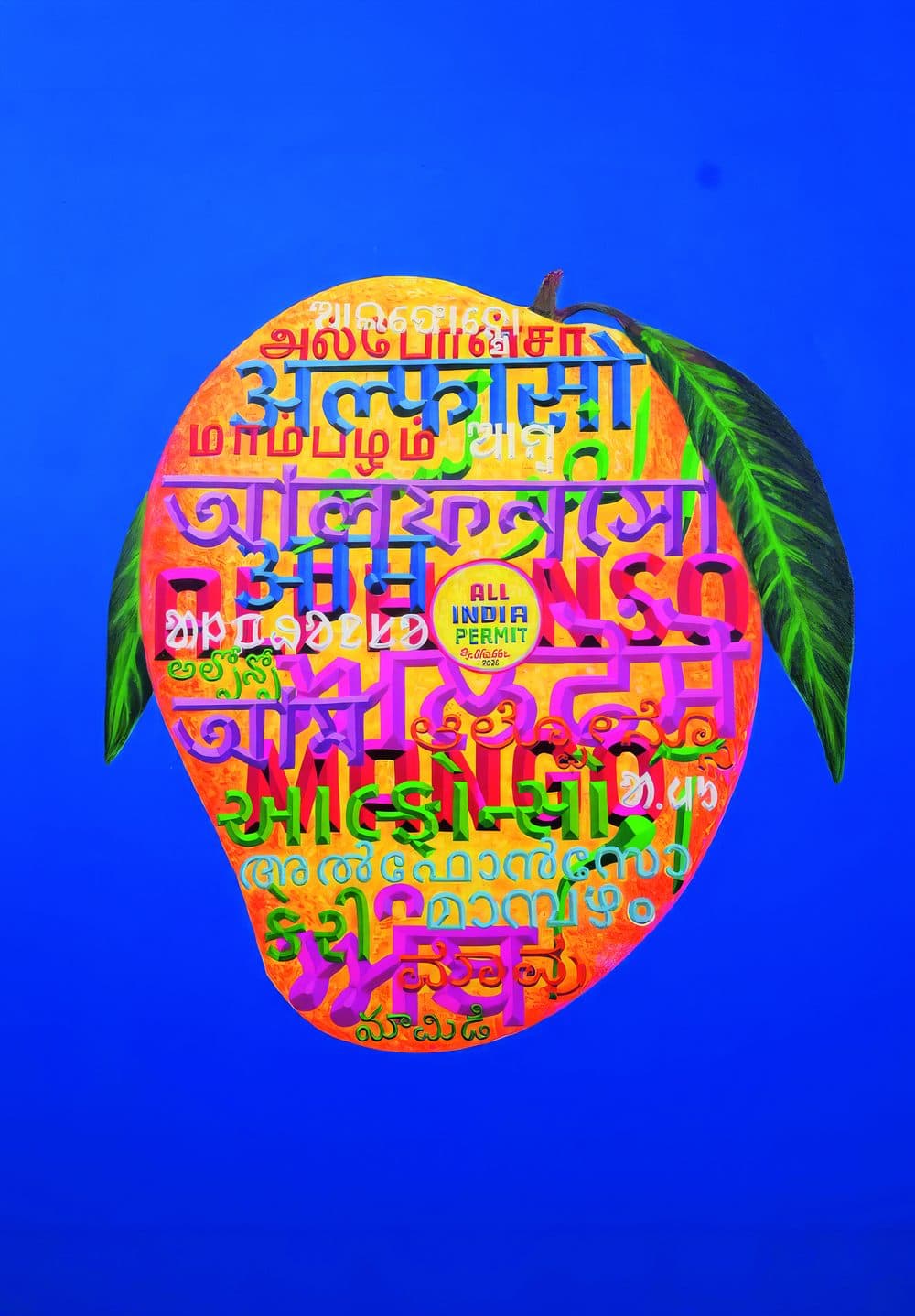
This many-sidedness of the fruit is now on view at Mangoes and Meanings (May 9 to June 14, 2026) at the Museum of Goa, where the works of artists like Harshada Kerkar (Carrying Home Mangoes) and Akhlaq Ahmed (All India Permit) move between the domestic and the national.
While Nishtha Manchanda’s Summer Gold turns the mango into an almost inaccessible luxury, thereby questioning shifting ideas of value and exclusivity, Mithun Dasgupta’s Homage to the mango man Kalimullah Khan highlights the man who famously grew more than 300 varieties of the fruit from a single tree, making visible the way the fruit can hold wildly different tastes and loyalties across India.
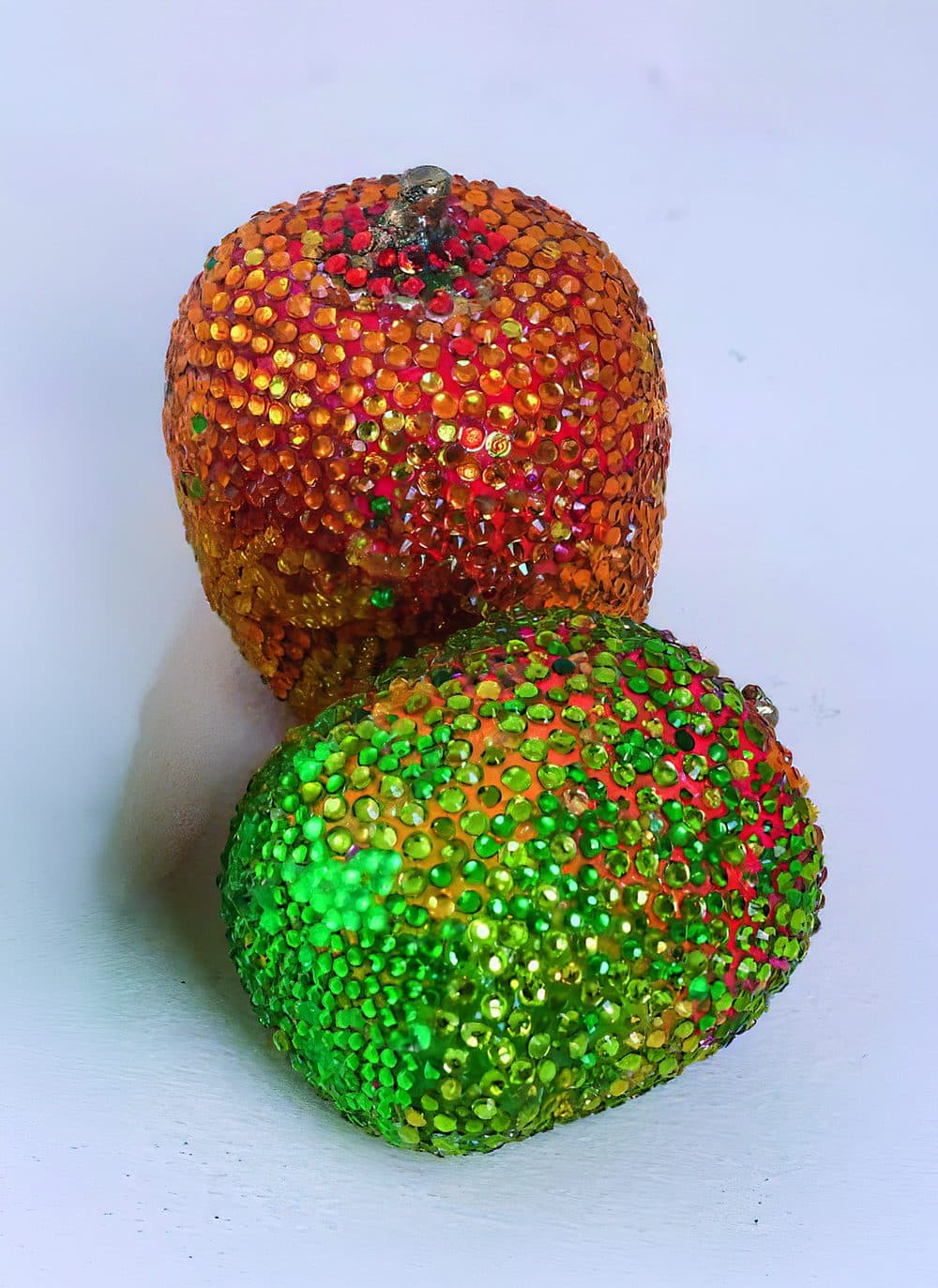
This is an almost allegorical feat, a reminder that the mango gathers different attachments under one common name, across culture, region, religion and, crucially, age and belief (see Sanjeev Kumar’s Last Fruit and Nandini Chakraborty’s Is It A Mango?). As the director of MOG Sharada Kerkar says, the mango in India opens up “conversations about history, ecology, mythology, recipes and culture” that must be had.
When a fruit turns into form
If music gives the mango a voice and poetry evokes its complex moods, design gives it endurance. The motif the world now blithely calls ‘paisley’ has a more interesting subcontinental life. Textile historians note that the shape globally known as ‘paisley’ is, in India, also understood as ambi or mango, even if its longer history includes Persian buta antecedents.
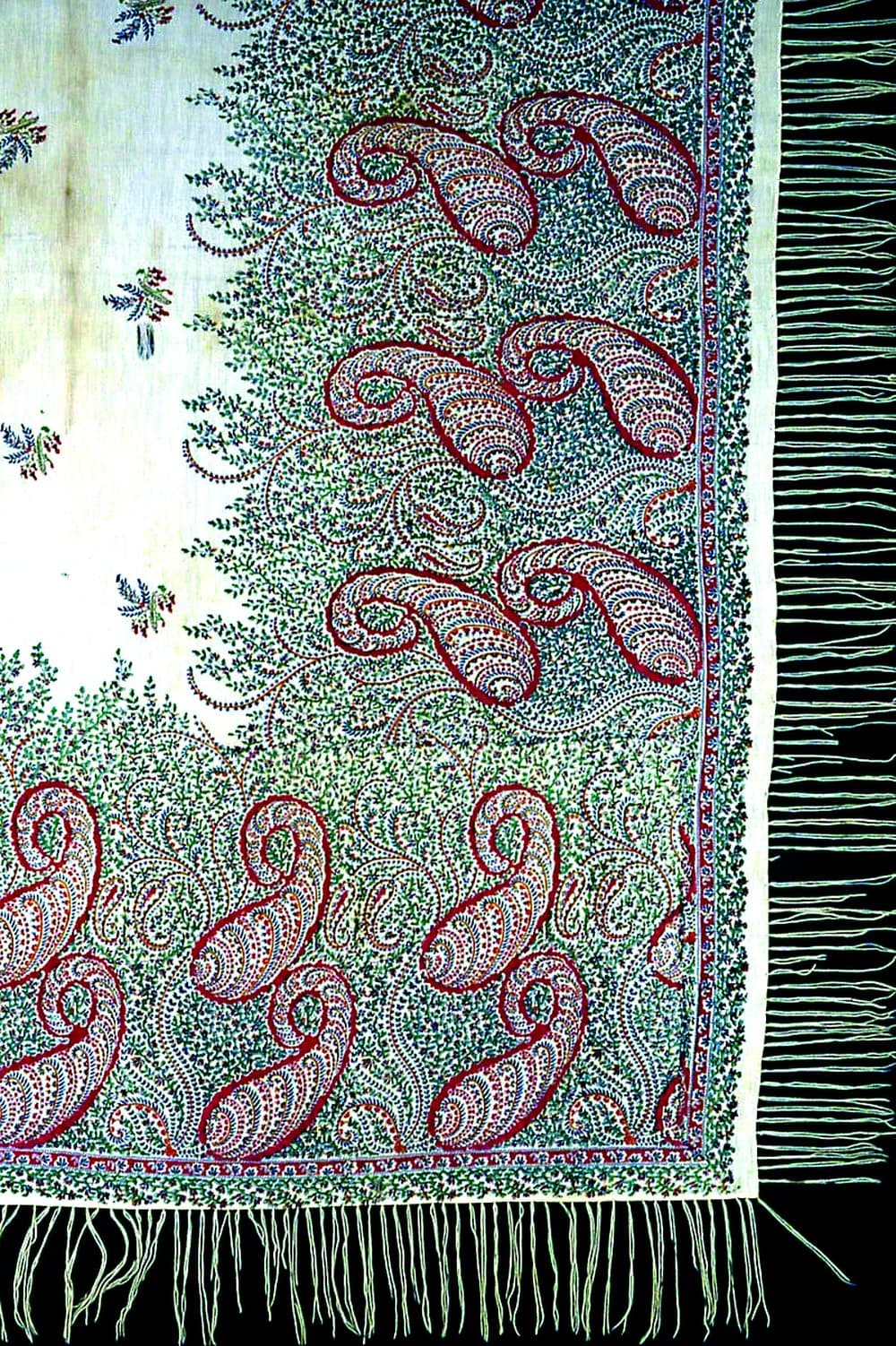
The Scottish town of Paisley gave the motif its export name; India gave it some of its most persistent meanings. Here it became kairi, ambi, kolka, kolam — a mango remembered in cloth and design.
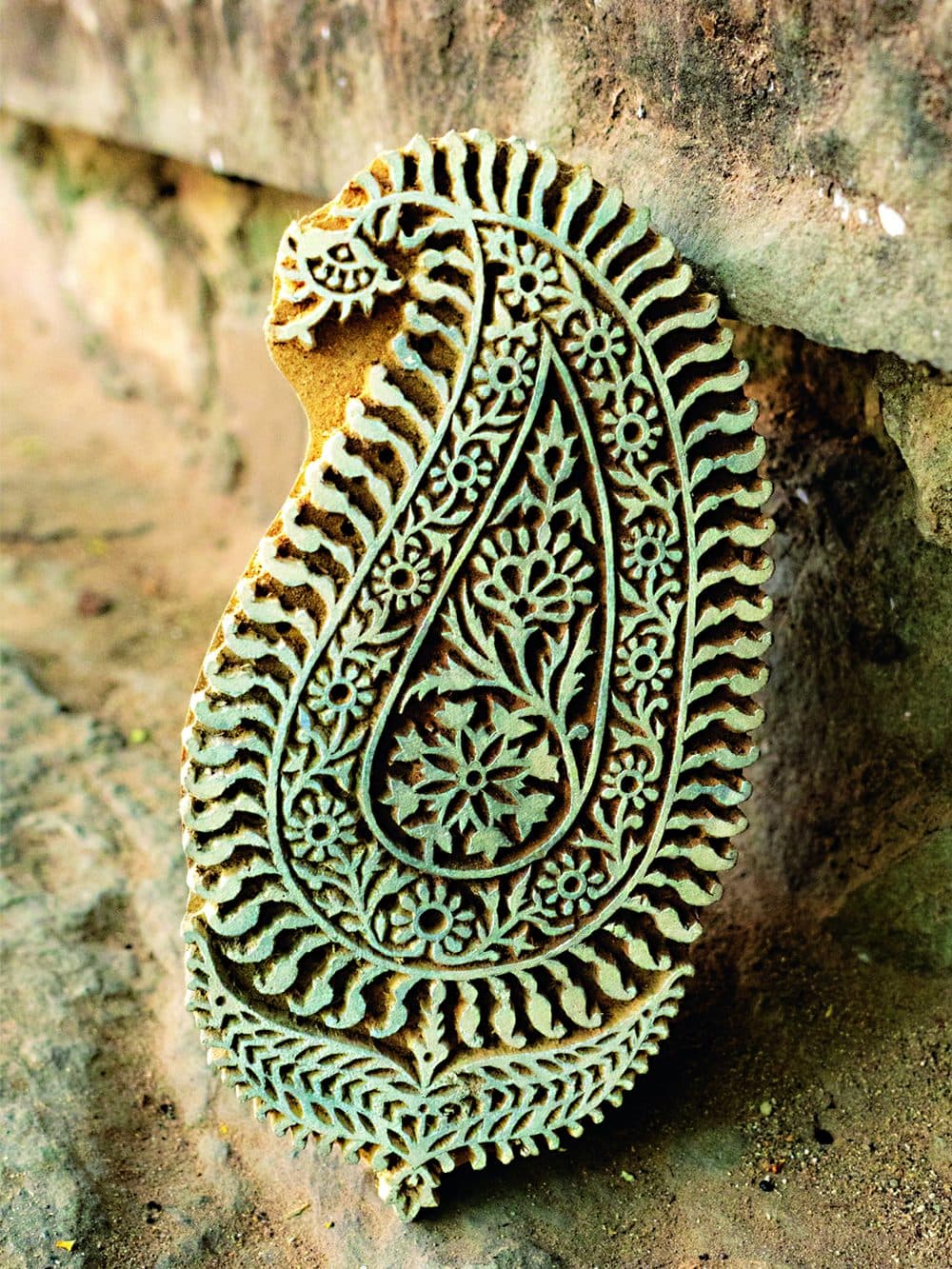
Anamika Pathak’s study for the journal Global InCH makes that transformation even clearer: the mango’s symbolic form as kairi, or a raw mango, appears first in architecture, then in jewellery, and later in textiles, dominating Kashmiri shawls from the 17th century onward before travelling westward into what Europe would rechristen as ‘paisley’.
In other words, even when the mango went beyond its edible form, it continued to signify fertility, faith, continuity and adornment. That is why the motif feels so native across Indian surfaces: on shawls, sarees, carpets, embroidery, temple decoration, and the everyday visual grammar of domestic taste.
From temple gold to the Met Gala
Nowhere is this translation from fruit to form more literal than in the South Indian manga malai. Sotheby’s, in its description of a 19th-century manga malai from Tamil Nadu, notes its use at weddings and in Bharatanatyam performances, and traces the form back to the Chola period and earlier sculptural traditions.
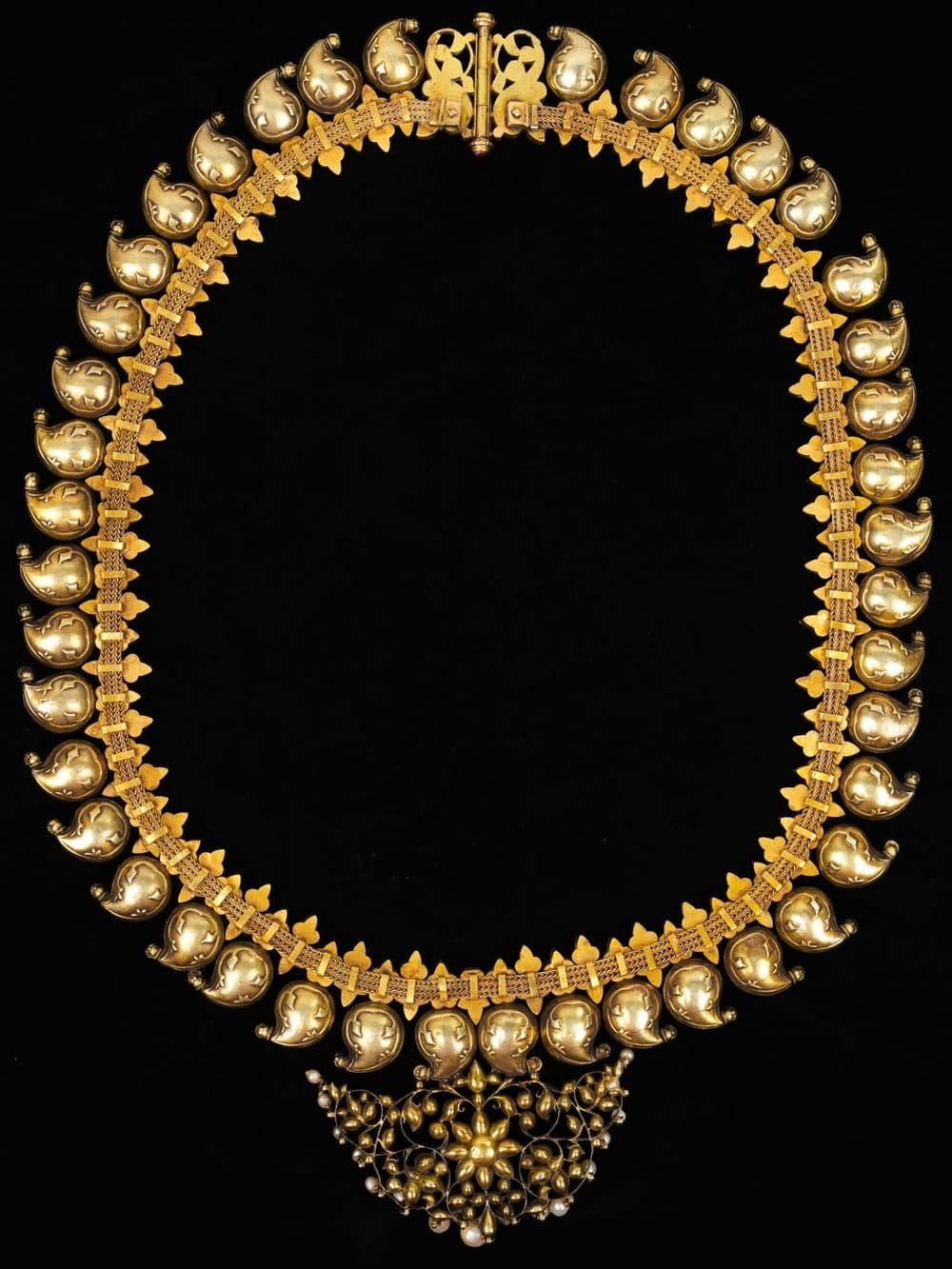
Crucially, it also describes the mango in the neckpiece as a symbol of love and fertility. That single necklace, thus, carries the cultural weight of several centuries at once: devotion, dance, bridal desire, temple memory and the body made auspicious through design.
Perhaps that is why the mango’s reappearance on the 2026 Met Gala carpet did not feel whimsical. Isha Ambani’s ensemble included a crochet bag holding a bronze mango sculpture by Subodh Gupta from his Aam Aadmi series. On one of the world’s most photographed red carpets, the mango remained instantly readable as Indian. In the global luxury circuit, it was seen as an art object: a witty, self-aware sign of Indian visual culture.
That is why the ubiquitous nature of the mango in India persists: because it can still travel between domestic memory and cosmopolitan display without losing its recognisability. It is food, certainly, but it is also beauty, taste, aspiration, love, and, crucially, art.
India has never treated it as mere produce; the mango is the nation’s way of feeling and understanding form — sweetness and desire made visible, and beauty given a shape that we would recognise anywhere.
For a familiar taste of the aroma, flavour, and heritage of India's finest mangoes, visit the Indian Mango Festival in Sydney, on June 21.
Was Isha Ambani carrying a mango at the Met Gala?
Was Isha Ambani carrying a mango at the Met Gala?
Isha Ambani was not carrying the mango fruit at the Met Gala 2026. Her ensemble included a crochet bag holding a bronze mango sculpture by Subodh Gupta from his Aam Aadmi series.
Was the Buddha given a mango tree?
Was the Buddha given a mango tree?
Yes, it is said that the Buddha himself was gifted a mango grove so he might rest in its shade.
How is mango present in art and music?
How is mango present in art and music?
The bough of the mango tree is often mentioned in classical compositions and in several popular Bollywood songs, especially when expressing flirtation, spring, ache or rural romance. Mangoes are also often seen in the vibrant, modern lexicon of tribal art, primarily in Gond paintings.
How is mango used in Indian literature?
How is mango used in Indian literature?
Indian vernacular literature frequently mentions mangoes, particularly in Braj classics and in the works of Amir Khusrau, as a part of everyday living.
Is the shape of the mango the same as the paisley?
Is the shape of the mango the same as the paisley?
Yes. Thus, in India, the paisley is often called the kairi or ambi motif, both of which are words for mango.
What is a manga malai?
What is a manga malai?
Manga malai or ‘mango garland’ is a type of necklace that has the mango (or manga) shape as its main design element. This design can be traced back to the Cholas and is typically used in Bharatanatyam performances or weddings in Tamil Nadu. It signifies love and fertility.