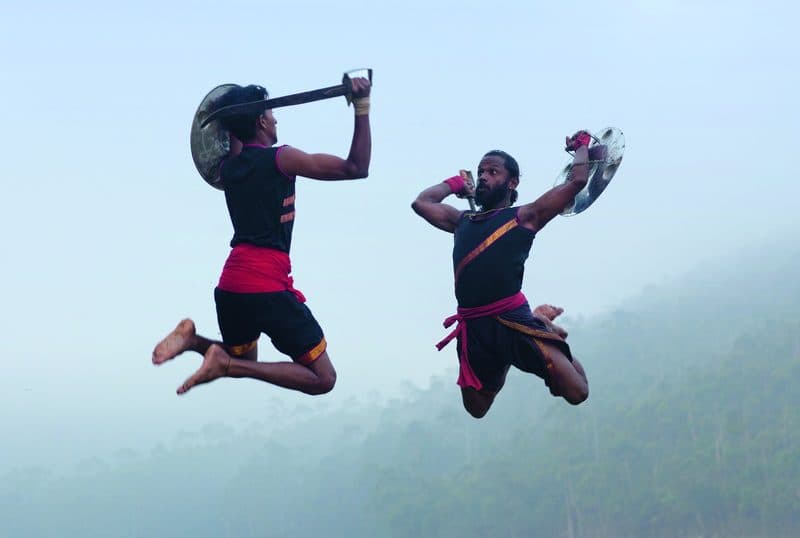
Originating in Kerala around 3,000 years ago, Kalaripayattu — a holistic system that combines physical training, combat techniques, healing and spiritual development — is often revered as the “Mother of all Martial Arts”. Described as a way of life that cultivates harmony of mind, body and spirit, it also incorporates a deep appreciation of nature. And though perhaps not as well known as other martial arts forms, it has spread its influence across the world.
Despite its lack of fanfare and pop culture appeal, the power of Kalaripayattu has long been recognised. During British rule in India, the practice of Kalaripayattu was perceived as a threat to authority. And with good reason. The ruler of Kottayam, Pazhassi Raja, challenged the British for nearly a decade with warriors trained in Kalaripayattu and traditional combat.
The British responded by targeting traditional warrior groups, regulating their use of weapons, and hence, many of the local systems that supported martial training dwindled. Yet the art endured, as generations of Kalari masters quietly carried forward its techniques, teachings and traditions.
Ashan Vipin Das Gurukkal, founder of Athma Kalari, Chemmalasseri, explains, “During the colonial period, many martial traditions faced restrictions, but dedicated gurukkals preserved the art. Today, Kalaripayattu has evolved not only as a martial discipline but also as a method of physical fitness, self-development, performance art and therapeutic practice.”
Foundation of martial arts
Kalaripayattu comprises an array of ancient Indian martial arts, including adimurai (armed and unarmed combat), silambam (Silambattam/stick fighting/staff), kuthu varisai (defensive/striking techniques), nada saari (blocking/combat techniques), siramam (short stick fighting) and ayutha perukkam (weaponry skills). It is traditionally practised in a sunken arena called a kalari — meaning battlefield or training ground — usually 42 feet long and 21 feet wide.
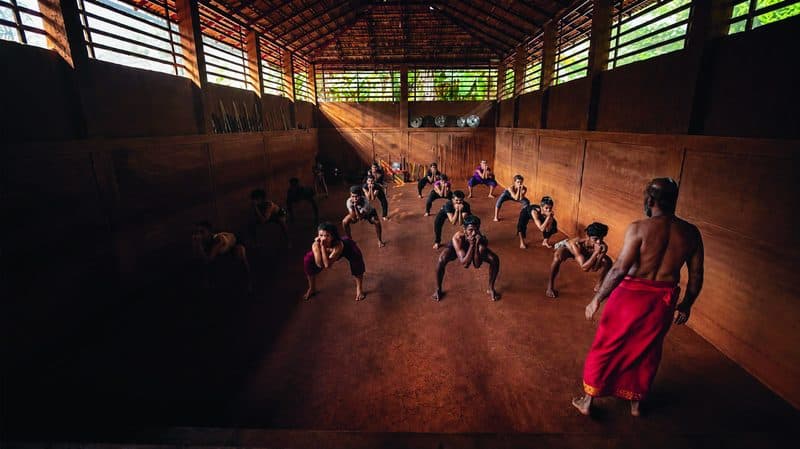
Stages of Kalari
Kalaripayattu is taught in stages that develop the body, mind and reflexes
Meithari: Foundation of Movement
Builds strength, flexibility and body awareness through stances, kicks, leg swings, jumps and flowing movement sequences
Kolthari: Training with Wooden Weapons
Develops coordination, timing and precision using sticks of various lengths and shapes
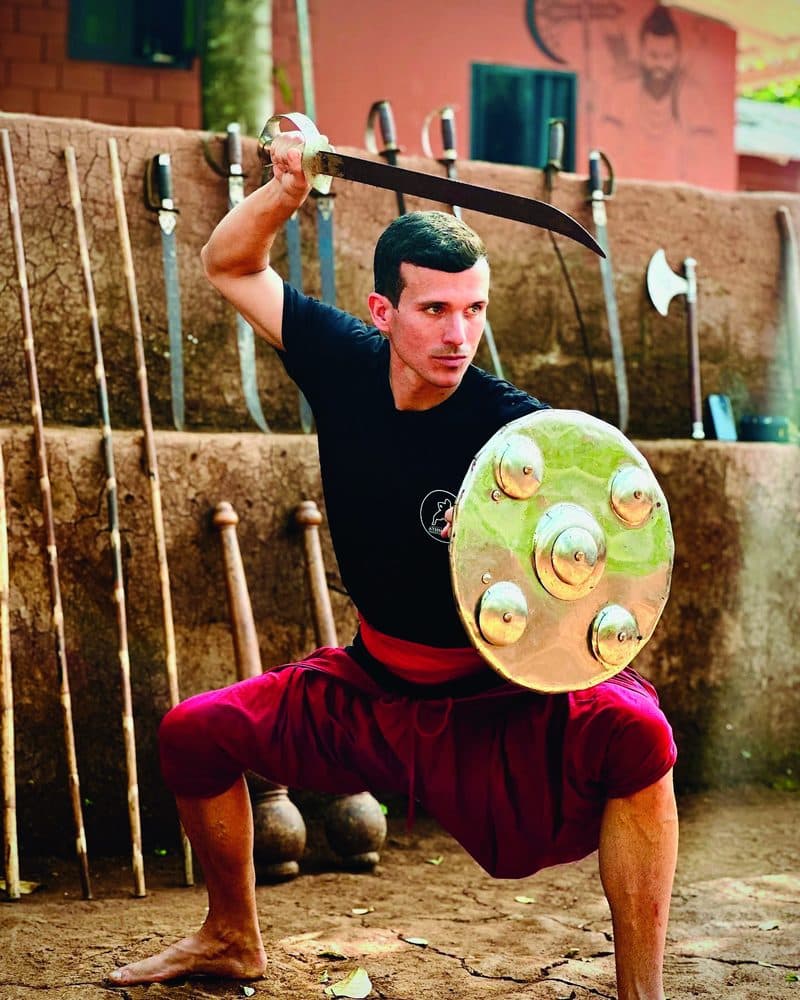
Angathari: Mastery of Metal Weapons
Trains with sharp weapons like the sword and shield, spear, dagger and bow, demanding full focus, presence and control
Verumkai: Bare-handed Combat
Unarmed techniques to defend against armed and unarmed opponents using strikes, blocks, holds and throws
Legend has it that Maharishi Agastya, one of the seven renowned sages of Hinduism, developed this martial art form as a defence against wild animals. Lord Shiva was said to have trained the sage-warrior Parashurama in the art of Kalaripayattu, incorporating the use of weapons, which were absent in Agastya’s style.
This rich tradition also influenced other martial arts, dance and theatre forms throughout India and Asia. The 6th century CE monk Bodhidharma, known as Dhamo in China and Japan, has been credited with starting the tradition of intense body conditioning in the Shaolin monasteries of China. Born a prince at Kanchipuram in Tamil Nadu, he learnt the ways of Buddhism and trained in the Kerala style of Kalaripayattu, eventually setting out to spread the principles of Zen Buddhism across the continent. He authored two texts on body conditioning and flexibility and devised a strict regimen that he taught to the Shaolin monks. These exercises are believed to have evolved into what we today know as Shaolin Kung Fu.
Imran Sarfaraz, a student of Kalaripayattu at Kalarigram, Auroville, says, “Karate also has similar movements and principles. While karate means ‘empty hand’ in Japanese, the third stage of Kalaripayattu training is called verumkai, also meaning ‘empty hand’.”
The ashta vadivu (eight core animal postures) of Kalaripayattu are recognised as an early, ancestral cousin of modern bodyweight flow techniques. These are part of the Mey Payattu, and comprise movements that mimic the motions of animals and birds like the lion, tiger and elephant, and the peacock and crane.
“There are more than 30 art forms in Kerala that have Kalaripayattu as their physical practice. Kathakali, Koodiyattam, Mohiniyattam, Theyyam, Thirayattam, Mudiyettu, Kolkali, Poorakkali, Valakali and Tacholikali are a few examples,” Sarfaraz says.
The American-born director, writer and professor of performance practice Phillip Zarrilli, who spent seven years living and training in Kerala, became the first Westerner to master the art and receive the traditional pitham (representing mastery). Zarrilli came to Kerala in 1976 to train in Kathakali and Koodiyattam — a 2,000-year-old UNESCO-recognised theatre tradition. It dawned on him that the body conditioning, flexibility and massage practices in both traditions originated from Kalaripayattu. Intrigued, Zarrilli himself began training in Kalaripayattu at the CVN Kalari in Thiruvananthapuram.
“The eastern martial arts forms share commonalities with Kalaripayattu. The emphasis on bridging the gap between mind, body and spirit through breath forms the core of their philosophy. Through rigorous physical practice, the practitioner learns to regulate breath, ultimately finding the focus to enter into a meditative state,” Sarfaraz adds.
Contemporary dance and theatre have also adopted Kalaripayattu’s movement exercises. Prominent arts and theatre institutions in India, such as Attakkalari Centre for Movement Arts, Bangalore, and abroad have Kalaripayattu in their modules.
Kalari in Australia
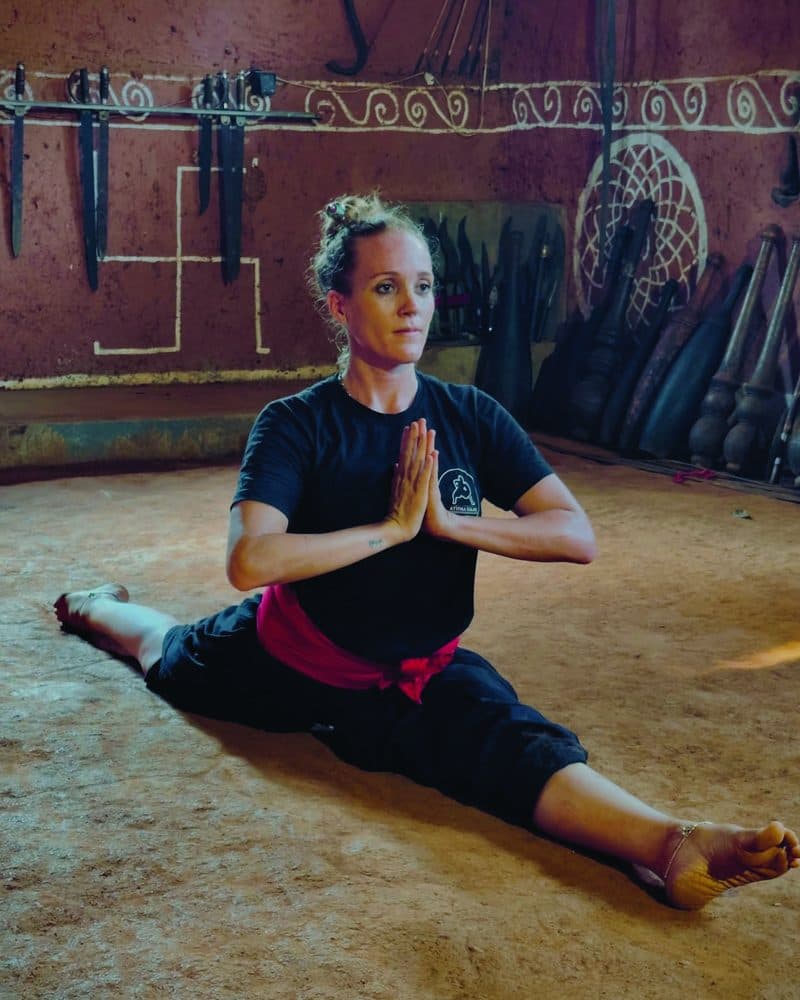
After centuries of undocumented influence, Kalaripayattu today has travelled to other continents. Dr Mirunalini Nidhivanan, instructor, Academy of Kalari Australia (AKA), Sydney, says: “Kalari is a way of life that surpasses the physical combat to become a holistic system that integrates the mind, body and spirit.”
The academy, affiliated to The World Federation of Kalari, USA, aims to expand Kalari yoga, meditation and martial arts in Australia. The practice is empowering, feels Mirunalini, alongside its physical benefits. “The breathing techniques, calisthenics and combinations of the chuvadu (techniques), adavu (stances), vadivus (striking/defensive poses), leg exercises, and different jumps and leaps provide flexibility and stamina.”
As part of its healing traditions, kalari chikitsa and kalari marma relieve pain and restore the body’s inherent powers of regeneration.
Das of Athma Kalari hopes that Kalaripayattu receives the recognition it deserves as “one of humanity’s great martial traditions”.
“I would like to see more gurukkals, research initiatives, educational programmes and international collaborations that preserve its authenticity while making it accessible. I hope Kalaripayattu continues to inspire people worldwide to cultivate strength, wisdom, discipline and inner balance.”
In India
Athma Kalari Village — Chemmalasseri, Malappuram, Kerala
Agasthyam Kalari — Nemom, Thiruvananthapuram, Kerala
Kadathanadan Kalari Sangam — Vadakara, Kozhikode, Kerala
Kadathanadan Kalari Foundation — Mananthavady, Wayanad, Kerala
Kalarigram (Yoganjali Natyalayam) — Auroville, Tamil Nadu
In Australia
Academy of Kalari Australia — Sydney
Kalari Sydney
Australian School of Kalaripayattu — Queensland
Kalariyog — Adelaide
Nataka Kalari Australia — Victoria (Melbourne)
Kalari Perth