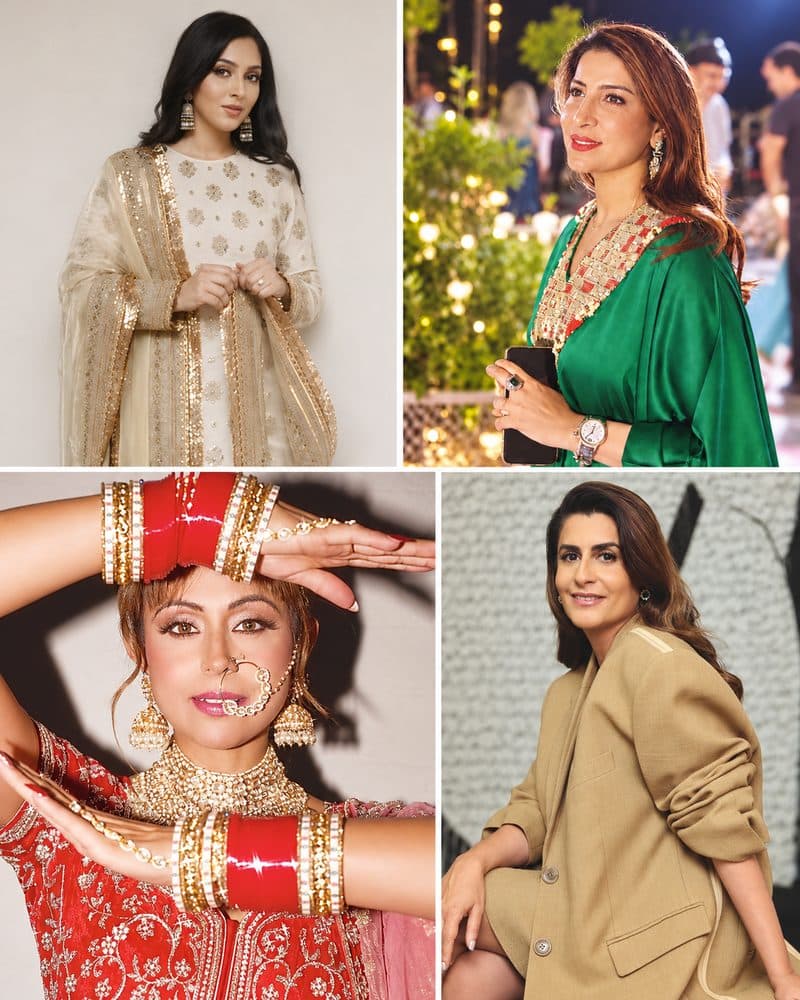
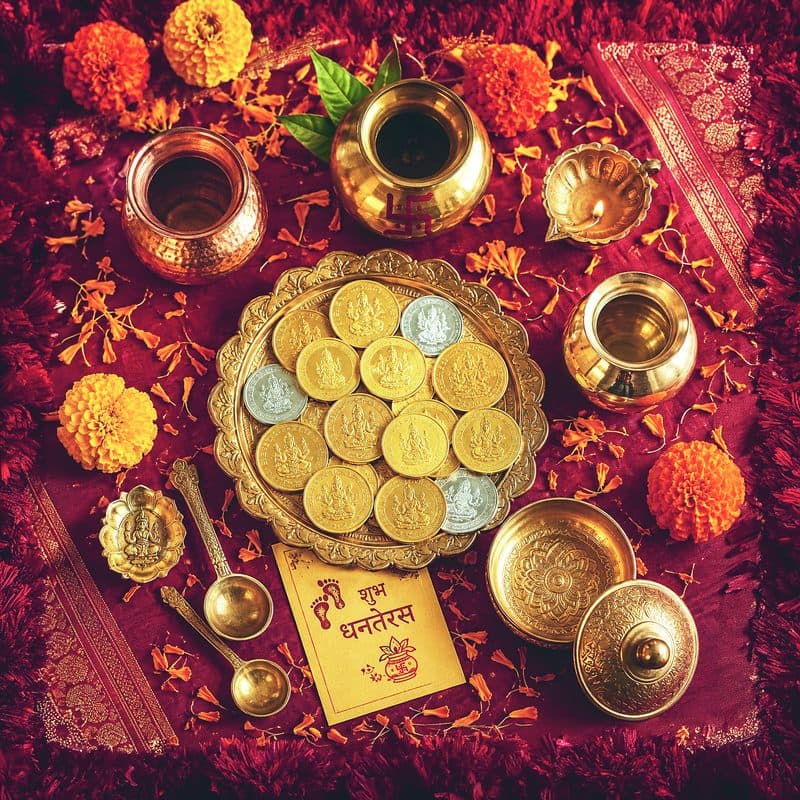
Dinaz Surti is a Parsi Zoroastrian but growing up in the great cultural melting pot of Mumbai, she has fond memories of celebrating Hindu festivals like Dhanteras. “My father would buy gold or silver in some form every Dhanteras,” remembers Surti, who works as a sociology and speech and drama teacher in the city. “His ideology was that an auspicious day should be celebrated meaningfully, even if it was not necessarily a part of our own culture. I grew up watching him respect traditions around us while never losing sight of who we were as Zoroastrians.”
Surti, now married with a child, has happily kept the tradition alive in her own small family, as a tribute to her father. “There is something very special about buying a small piece of gold or silver and knowing that it is connected to a memory that has travelled from one generation to another.”
Dhanteras is celebrated as the first day of the Diwali festival by Hindus across the world, with people buying gold, silver and kitchen utensils for good luck. However, wealth is only one of the traditions associated with the day. “Dhanteras or Dhanatrayodashi, is also associated with Lord Dhanvantari, who we worship on the auspicious day...,” explains Delhi-based behavioural economist Dr Smriti Walia. In Hinduism, Lord Dhanvantari is revered as the god of Ayurveda and medicine. Dhanteras is an occasion to celebrate both good health and wealth, but somewhere down the line, wealth gained precedence over health.
Advertising is certainly one, but not the only reason for this shift towards a more commercial version of the festival. “I think it’s also because people don’t question traditions,” she says. “We are conditioned to believe and follow certain rituals.”
The backstory
Besides the obvious religious reason for celebrating Dhanteras, there is a bit of economics, finance and history at play too.
Dr Savita Kulkarni, assistant professor at the Centre for Behavioral Economics, Gokhale Institute of Politics and Economics in Pune, explains that such ritualistic consumption was historically born out of “practical economic survival and a desire for intergenerational security”.
“One key driver lies in the traditional agricultural calendar,” she says. After the sale of the Kharif crops (the subcontinental monsoon harvest), farmers would be flush with money right before Diwali. “In an agrarian economy, converting the surplus wealth into gold, silver or brass was the most reliable way to preserve it. These assets are seen as the ultimate haven during crises,” she explains. The wealth acquired during auspicious days like Dhanteras was believed to be sacred, thus “making the practice of saving money feel like a ritual”.
Ritualistic consumption was historically born out of practical economic survival and a desire for intergenerational security.—Dr Savita Kulkarni, Assistant Professor, Gokhale Institute of Politics and Economics
Subrato Banerjee, associate professor, IIT Bombay, and Fellow, Royal Statistical Society, points out that in a country where income has traditionally been dependent on something as unpredictable as the weather, Indians have been conditioned to deal with a level of uncertainty. “And when you have a designated day for all your spending, it curtails the tendency for impulsive buying and leaves one with surplus savings which help the next generation.”
Balancing economics and tradition
Dhanteras brings in an element of financial planning to the festivities, depending on a family’s income. Those who can afford it, for instance, may invest in assets that can generate good returns in the future.
“During festivals like Diwali, the question I get asked often is, ‘Should I buy a gold or silver coin or should I buy an exchange traded fund?’,” says Rachna Monga Koppikar, an AMFI Regd Mutual Fund Distributor and financial planner. “We strongly advocate that if it’s a token purchase for cultural or sentimental reasons, then a small quantity of physical gold or silver can be purchased. However, if you are looking at it purely as an investment, then consideration needs to be given to your asset allocation too.”
Festivals call for a fine balancing act between current economic realities and the irresistible urge to follow the crowd and indulge a bit. So Indian consumers end up doing something that they have mastered: adjusting and adapting.
“Recently, there’s been a trend of buying gold coins which are smaller because of their high prices, with many choosing to buy silver coins, silverware, or brass and stainless-steel utensils, as they are more affordable,” says Dr Kulkarni. “The psychological and emotional pleasure of participating in the tradition can completely override financial investment skills.”
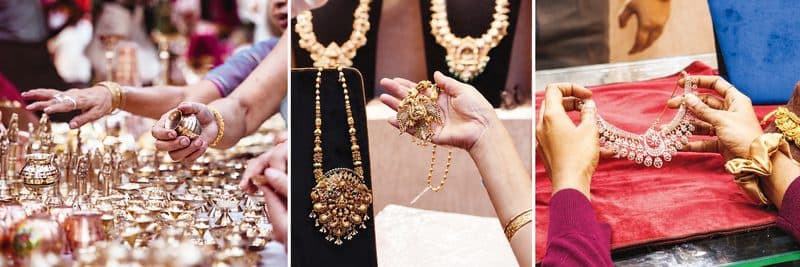
It’s no surprise that in India, tradition can trump even economics. “People derive utility not only from what they are buying — be it gold, silver or a small utensil — but they also derive a lot of value from the act of buying it,” explains Dr Walia.
People derive utility not only from what they are buying — be it gold, silver or a small utensil — but they also derive a lot of value from the act of buying it.
— Dr Smriti Walia, Delhi-based behavioural economist
Same ritual, new assets
Younger, financially savvy consumers are opting for more investment-aligned alternatives like Digital Gold and Sovereign Gold Bonds. “Many now use Dhanteras as an auspicious date to launch new financial habits, such as starting a Systematic Investment Plan (SIP) or buying blue-chip stocks,” says Kulkarni. Also, as festive sale offers are splashed across e-commerce platforms, consumers prefer to purchase home appliances and electronic gadgets instead of hurrying to the closest jeweller. It’s an attempt to “keep the tradition of bringing home something valuable on auspicious days intact”, she says, while using the money to buy something the household needs — or wants.
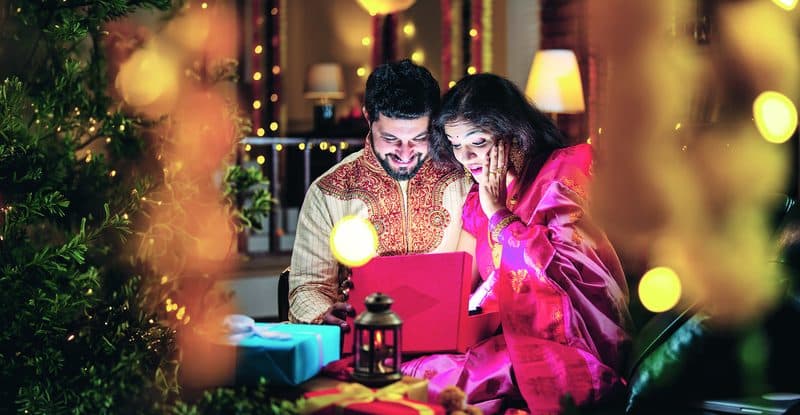
Cashing in on the consumers’ preference for convenience and speed, e-commerce platforms even sell silver coins online. “And why not,” asks Banerjee. “It appeals to the human instinct to acquire and preserve something of value.”
At the end of the day, Dr Walia reminds us what festivals are about, even if they are deeply intertwined with our financial behaviour and decisions. “In India, religion is an emotion,” she says. “And you don’t work against your emotions.”