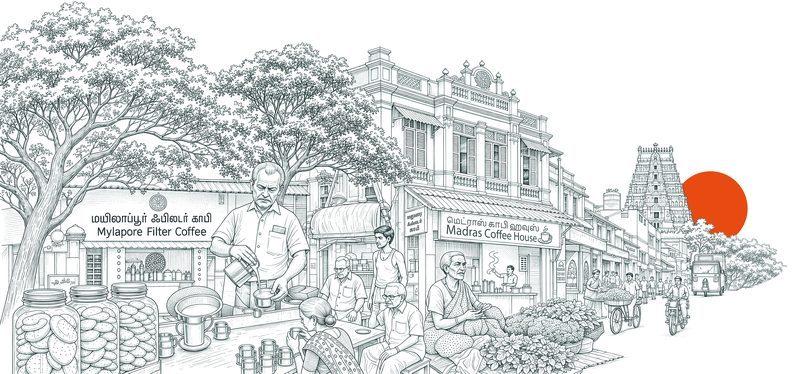
A decade ago, much of India perceived coffee as a bitter beverage that teenagers downed to stay up all night before an important exam. The southern states — where most Indian coffee is grown — had a filter coffee culture that seldom moved beyond the occasional dosa spot in the rest of the country.
Now, brewed coffee beverages — cappuccino to pourover, siphon to cold brew — have become nationwide favourites. It was only a matter of time till India developed its homegrown caffeine cravings in keeping with global trends. For though India is perceived as a chai-obsessed country, it is actually the seventh largest coffee producer of the world, and the fifth largest exporter (US$ 1.8 billion in FY 2024-25).
Deepali Gupta, Chief Beverage Officer of Indian luxury chocolate brand Smoor, is a coffee veteran, having consulted with cafes for over a decade. She recollects how, until the late 2000s, Indians largely equated coffee with Cafe Coffee Day. Most people knew the word ‘cappuccino’, but didn’t really know what it was. “In 2013, Blue Tokai was one of the first to bring specialty coffee to India,” Gupta remembers. Although people were apprehensive about spending Rs 250 (AUD $4) for a cup, it did build awareness that there was an entire side to the beverage that instant coffee wasn’t doing justice to.
“If you wanted a good cup of coffee, you had to go to a cafe. But at home, you were still largely restricted to instant coffee,” says Faiyaz Tharakar, who started Maverick & Farmer, an artisanal coffee brand, in 2019.
Home brewing takes off
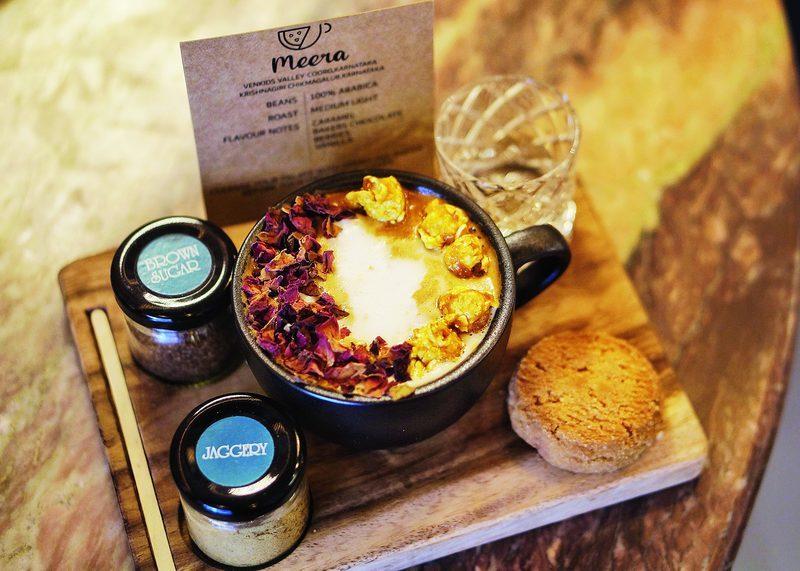
What was building gradually witnessed a turning point during the pandemic, feel Gupta and Tharakar. “A lot of people had a lot of time on their hands. The ‘dalgona’ trend was, for many, their first tryst with how innovative the art of coffee making was. It pushed them to learn more about it, and go down the rabbit hole of home brewing,” says Gupta. There was a sharp uptake in the purchase of French presses and moka pots.
Tharakar adds, “A lot of people who had lived or worked abroad also returned, bringing their coffee sensibilities with them. Since it is an everyday ritual in the West, many started seeking alternatives in India.”
The coffee community grew from a small, geeky niche in tech hubs like Bengaluru and Hyderabad, to a nationwide presence. Specialty coffee shops and national chains have been cropping up across India, in high-end malls and the narrowest city lanes
The third wave coffee movement, in which coffee is elevated from product to experience, took off, exposing people to the nuances between coffee from different estates. This led to growing awareness around quality coffee that was being grown in India. “People started taking more interest in whether their coffee was being sourced from Sakleshpur, Coorg or Chikmagalur, with their own natural notes,” Gupta says. And coffee no longer seemed incomplete without milk and sugar; there was a growing interest in the subtle flavours of black coffee.
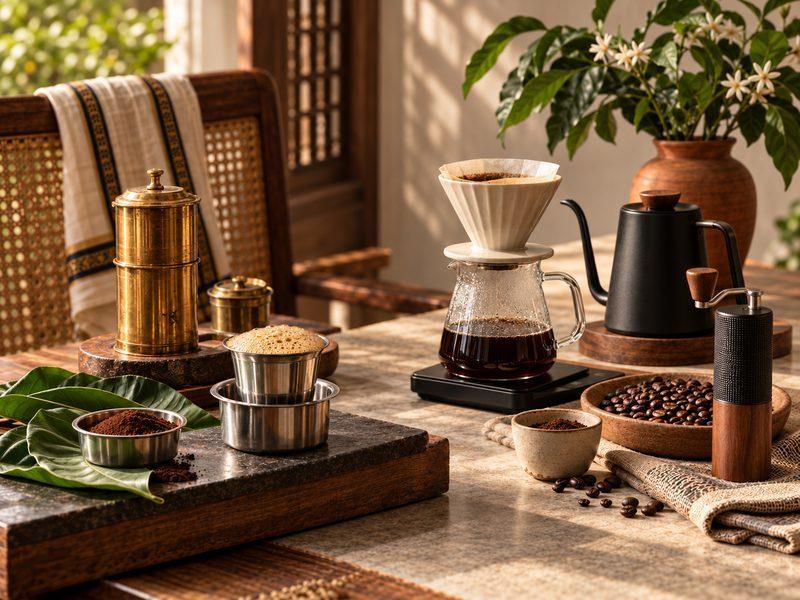
As baristas and consumers began experimenting with different beans with academic fervour, Tharakar believes that one of the biggest leaps came when people started buying grinders for the home. “As a coffee grower and roaster, watching people buying beans over powder was a milestone.”
Soon, the coffee community grew from a small, geeky niche in tech hubs like Bengaluru and Hyderabad, to a nationwide presence. “Coffee always had a presence in the south, but in the past few years, specialty coffee has penetrated smaller towns like Kanpur, Karnal, Panipat and Mohali. The post-2022 coffee boom has been unbelievable.”
Specialty coffee shops and national chains have been cropping up across India, in high-end malls and the narrowest city lanes. The evolving nature of remote work has also led to an evolution of coffee consumption, and cafe culture. With more people working from home, cafes have stepped in as the social glue — a place to go when feeling isolated, or a convenient place to take a meeting.
Fertile ground
For decades, coffee growing was concentrated in the southern part of the country — and it still is, with Karnataka being the nation’s largest coffee growing state. But in the past few years, farms in Odisha and Meghalaya have received global attention for their unique taste. “Today, Koraput in Odisha is regarded among the best coffees of India,” Gupta says.
This is in keeping with the growing respect Indian coffees are garnering globally for their unique tasting notes. Unlike in many countries where coffee is the sole crop in plantations, Indian coffees grow in a multi-crop model, where other plants thrive alongside the coffee. This allows the coffee to imbibe the complex flavours of the plant it is grown with. “If the plantation grows pepper, its coffee will have a hint of spice. A coffee grown alongside jackfruit will have fruity notes. Another one that shares a farm with orange will get its refreshing acidity,” Gupta explains, adding that cafes around the world, which used to sell Indian coffees as blends, have started carrying specific estates. Another unique practice is growing coffee under a thick canopy of shade provided by native trees. This causes the beans to fill slowly and influences the overall flavour profile while also playing a crucial role in managing the microclimate.
Tharakar has also witnessed growing innovation. In 2019, he produced the world’s first ‘cold smoked coffee’, where the green beans were smoked in a small chamber, and then roasted to medium. The spirit of experimentation has only grown. “Each coffee farmer is levelling up in terms of how they process their beans, resulting in incredible cups of coffee,” says Tharakar.
With a range of boutique experiences now emerging around the beverage, global trends are being explored in India. According to Gupta, there is also a growing trend of ‘coffee tourism’, with people travelling abroad for coffee festivals.
Gupta believes that the coffee movement is only getting started, and its biggest testament is the shrinking percentage of export of Indian beans. “Up till the early 2000s, most of India’s best coffee was exported, but the number has been steadily decreasing in recent years. With growing taste and palate, Indian coffee is finally coming home.”
Pick up a pack of these Indian specialty coffees and try brewing them at home. Tasting notes differ by batch
ARAKU SIGNATURE COFFEE
Origin: Araku Valley, Andhra Pradesh. A great starting point. Araku is known for regenerative farming and high-quality Arabica grown by tribal farming communities.
Tasting profile: Balanced, rounded cup with sweetness and a gentle roasted character.
Best for: Everyday black coffee, filter coffee.

OKIRU TORA – MONSOONED MALABAR
Origin: Chikmagalur, Karnataka. Monsooned Malabar is a GI-tagged Indian coffee style in which beans are exposed to humid monsoon conditions.
Tasting profile: Chocolate, nuts and malt, with an earthy finish.
Best for: Espresso, moka pot, French press and milk-based coffee.
RATNAGIRI YEAST THERMAL SHOCK
Origin: Ratnagiri Estate, Karnataka. An experimental, fermentation-led coffee if you enjoy unusual flavour profiles.
Tasting profile: A fruit-forward aromatic cup with fermentation-driven complexity.
Best for: Pourover and other filter methods
ILI HU KALLEDEVARAPURA ESTATE
Origin: Karnataka. If you want a more refined cup with sweetness and texture.
Tasting profile: Buttery mouthfeel and chocolate-led flavours.
Best for: Espresso, AeroPress and filter brewing.
SUBKO VLGE
Origin: Paderu Valley, Andhra Pradesh. From a cooperative agriculture initiative, it’s medium roast, rounded and comforting.
Tasting profile: Honey, walnuts, brown sugar and with a mellow citrus aftertaste.
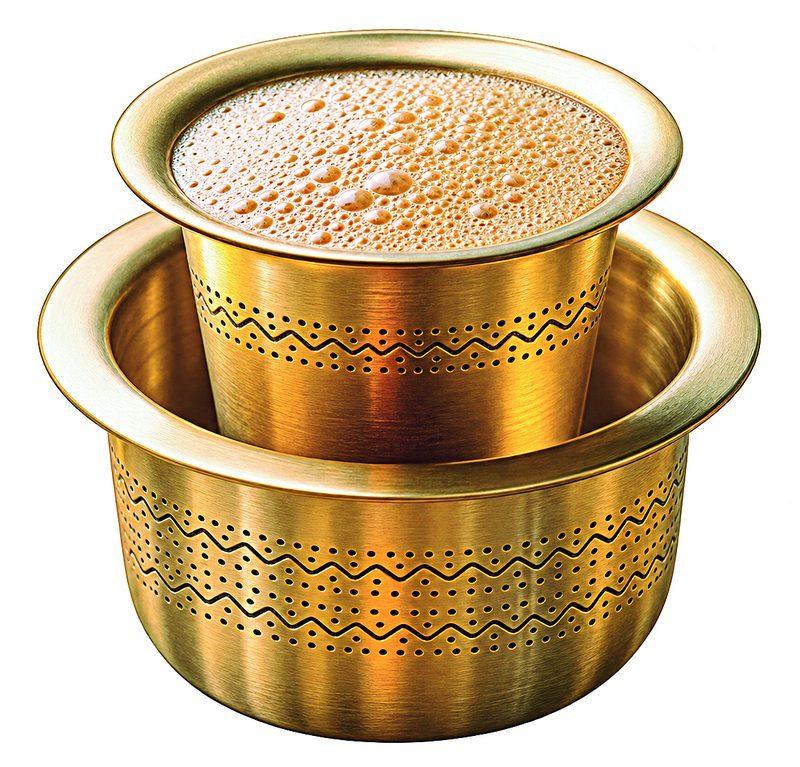
Best for: Espresso and strong extractions. AeroPress or South Indian filter for a fuller-bodied cup.
TRADITIONAL REGIONS:
Karnataka
The largest producer, contributing about 70% of India's coffee. Key areas include Chikmagalur (where coffee was first planted in the Baba Budan Giri hills), Coorg (Kodagu), and Hassan.
Kerala
The second-largest producer, famous for robusta coffee grown in the Wayanad and Idukki districts.
Tamil Nadu
Cultivated in cool, high-altitude regions like the Nilgiris, Yercaud, and the Shevaroys.
EMERGING REGIONS
Andhra Pradesh and Odisha
Grown along the Eastern Ghats, most notably in the Araku Valley of Andhra Pradesh.
Northeastern states
Small-scale cultivation takes place in states like Assam, Meghalaya, Manipur, Mizoram, Tripura, Nagaland and Arunachal Pradesh.