Key Highlights
- Goa’s second-home boom has transformed once-sleepy villages and heritage neighbourhoods
- Architect Dean D'Cruz argues that Goa’s ecology needs careful, low-impact development
- Goa consists of nearly 400 villages and 300 panchayats, each with distinct ecological and cultural identities
- D’Cruz is in favour of low-rise construction and village-specific planning to reduce overdevelopment
- Traditional Goan architecture is defined by features like balcãos, low boundary walls, high plinths and porous layouts
- Fontainhas and Panaji’s heritage areas are facing increasing gentrification and tourism pressure
- D’Cruz believes Goa’s future depends on respecting the land, preserving public life and building with restraint rather than spectacle
The Goan dream was born over 60 years ago, when the tiny seaside Indian state was discovered by the original (non-digital) nomads — the hippies — of the 1960s. Travellers from the West fell in love with Goa’s beauty, laidback energy and affordable living. Having only recently joined the Indian union after centuries of Portuguese rule, Goa provided the perfect balance of Europe and India to be the stuff of Utopian dreams for a jaded generation.
Today, that Goan dream has, as dreams often do, shifted. While Goa still has its hidden moments of calm for those who go in search of it, its popularity as a destination has ballooned to include many more hungry tourists and part-time residents who all need a place to stay and party. Goan second homes are almost as common as Fontainhas reels that pop up on social media feeds. The popular beaches are overrun. As are the once sleepy villages that surround them.
So how do developers, architects and activists navigate the relationship with the built and the unbuilt in one of the world’s most coveted real estate addresses? It’s a question that local stakeholders like award-winning architect Dean D’Cruz have been working for decades to answer.
D’Cruz is among the most significant voices in Indian architecture today. This is not because of the volume of his output — impressive as it is with his firm Mozaic Architecture having completed over 350 projects, including more than 300 residences in Goa and 40 hotels across India. It is the consistency of his position, and his commitment to it.
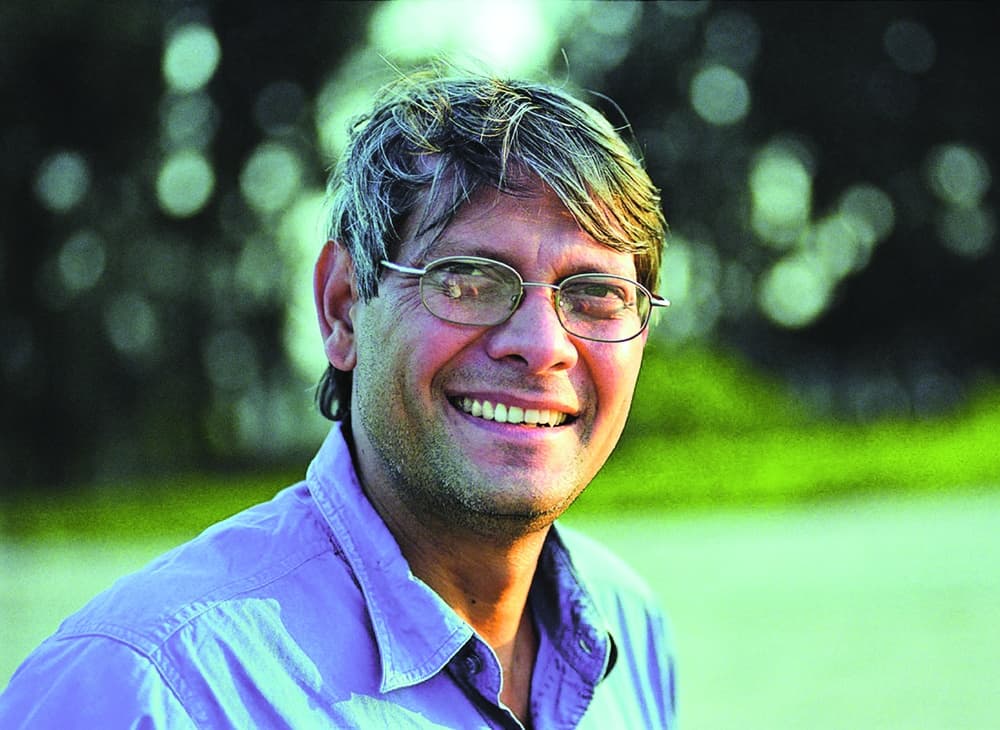
Much is written and perhaps more is felt about the particular quality of light in Goa — gold-tinted, filtering through laterite and canopy. This light has shaped the built landscape as much as colonial influence or craft traditions. And it has shaped the softness of Goa’s people. D’Cruz noticed it when he first arrived from Mumbai, 40 years ago, a graduate of the Sir J.J. College of Architecture with the Maximum City’s characteristic urgency still in his bones. “That particular big-city arrogance that ‘Bombay’ has, I had it in spades” he says. “But Goa, its people, forced me to rethink. To understand that people are softer than in bigger cities, and that I needed to soften a lot more. So, I did.”
And as a result, he never left.
The reality of real estate
Goa, which D’Cruz describes as an assemblage of some 400 villages and 300 panchayats, each ecologically and historically distinct, has been under unprecedented pressure.
Climate refugees — his term — arrive from Delhi, Mumbai and other parts of the world, pulled in by relative safety, air quality and calm. This drives the need for residences. And then there is the ‘Goa dream’, pushing the active acquisition of vacation homes and fractional ownerships.
But, what does this mean for the state? Among the top biodiversity hotspots in the world, Goa needs every architect and professional in the construction industry to respond to this demand with caution. D’Cruz has spent four decades formulating and articulating what this caution looks like in practice. It begins with a ratio. Each square kilometre of settlement requires about four square kilometres of green infrastructure, be it fields, forest or water bodies. Most cities had to abandon this arithmetic long ago. Goa’s cities managed to maintain it through serendipity, but are now in danger of breaching it.
“I have been an activist for decades and I was punished for my sins by being pushed into serving on the State Level Committee for Goa’s Regional Plan 2021,” says D’Cruz. He pushed for planning norms that work to protect each village as a module — autonomous and ecologically specific. These include regulations such as low FAR (floor area ratio), low height limits and bylaws designed to shape architecture, while making real-estate speculation unrewarding. “Ground plus one with an FAR of 50 or 60 leads to architecture which is low-slung,” he explains. “And it also deters developers from buying that land, because the money they can make from it is minimal.”
Challenges remain though, since many of the state’s voices of influence are involved in the real estate business. D’Cruz has observed the consequences compound. Newly built vacation homes might adopt the Mangalore tile roof, the terracotta floors, the cast tiles that used to arrive by ship. “But 95 per cent of what is being built now does not capture the spirit of Goa,” says D’Cruz.
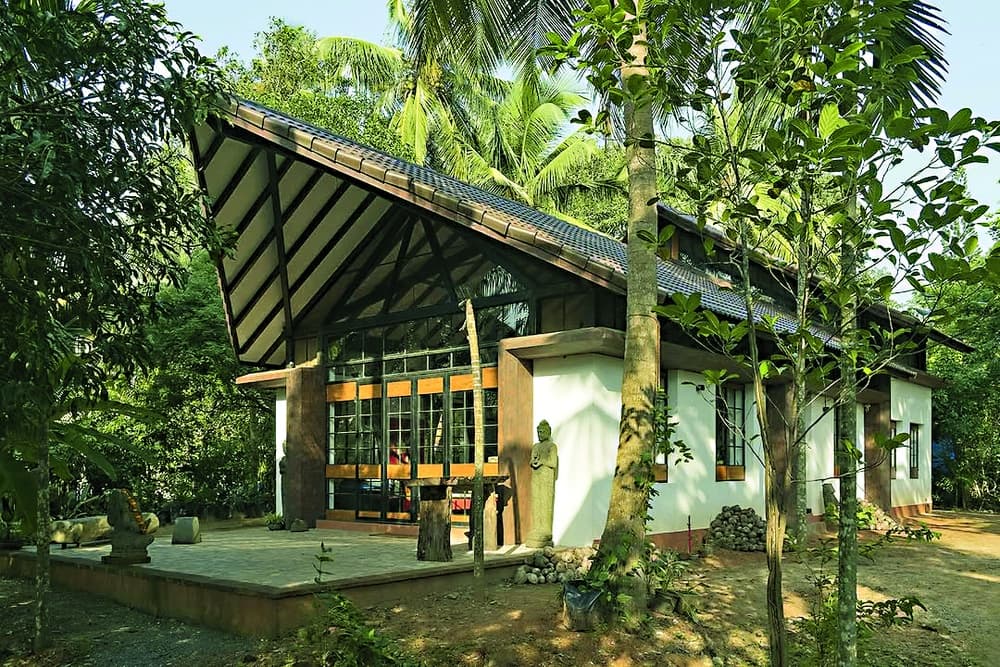
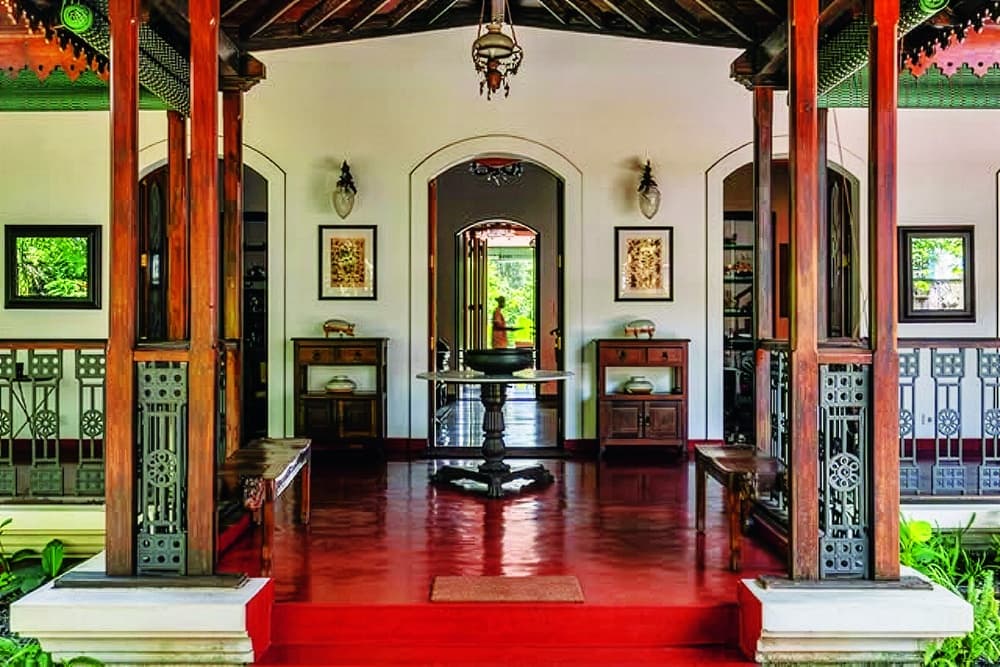
This spirit is encoded into Goa’s architectural character, an integral factor of Goa’s social character and fabric. Low boundary walls that encourage neighbourly chats. The balcão or intermediate veranda space, neither fully public nor fully private. The high plinth, lifted off the ground for reasons of rain and reptiles. The distinct formation of windows, the wrought iron railings, the roof profile. There is a logic of the traditional floor plan — a small entrance hall opening to living rooms, service areas at the rear, kitchen and utilities facing the sunset.
This is what he says is lost. Even the better approximations do not have that characteristic informality that made traditional Goan interiors adaptable across generations. “Furniture used to be very basic,” he notes. “It is now all ‘curated’.”
What then is the way forward? “As an Indian, I will never say Goa is only for Goans. But those who come need to imbibe its ethos,” he feels. That ethos is born from respect for the land.
How does he approach it in his practice? “By consciously avoiding design that can be identified as a ‘Mozaic building’,” he responds. His signature, if any, is not a form but an approach. Buildings that are porous to their landscapes; that have a light footprint on the land.
The heritage hierarchy
While planning norms have somehow managed to arrest rampant development towards the villages, Goa’s historic precincts remain at risk. D’Cruz says the heritage bylaws are “very easy to get around”. To him, hotels are a better alternative to vacation homes that take up and shut off land, and remain unoccupied for the best part of a year. Goan tourism, he says, reached its carrying capacity 10-15 years ago and has been operating in deficit ever since.
It is in Panaji that these pressures become most visible and painful. Its historic pincodes — Fontainhas, with its densely inhabited Portuguese-era lanes and Altinho, its grander counterpart on considerably higher ground — have both undergone a transformation story. Fontainhas, once just a part of Goa where “traders” lived, became fashionable and gentrified, thanks to the neighbourhood’s gentle cinematic beauty. “A little bit of Europe and India,” D’Cruz says. “Now it’s just a big selfie point.”
The waterfront tells a harsher story. The Mandovi has been colonised by the casinos, which have had a more damaging effect than simply taking up public space. They have changed the social atmosphere of the once-gentle city, bringing with them what D’Cruz calls the usual companions of gambling — black money, narcotics, sex work. Congestion and displacement of small traders and family businesses that once gave Panaji its character are the other outcomes. “Panjim is dying out in a way,” he says.
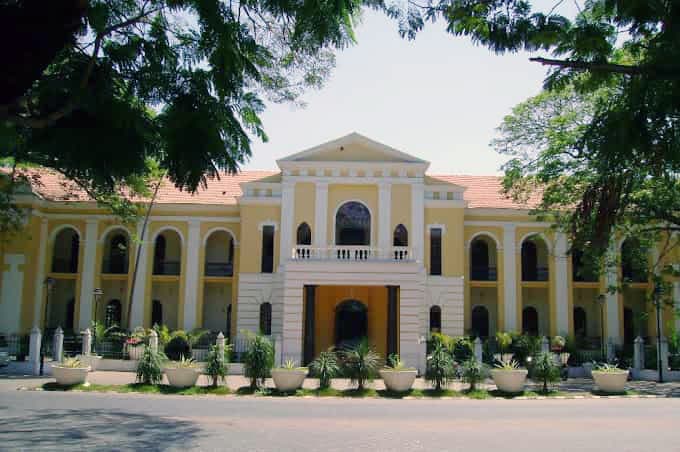
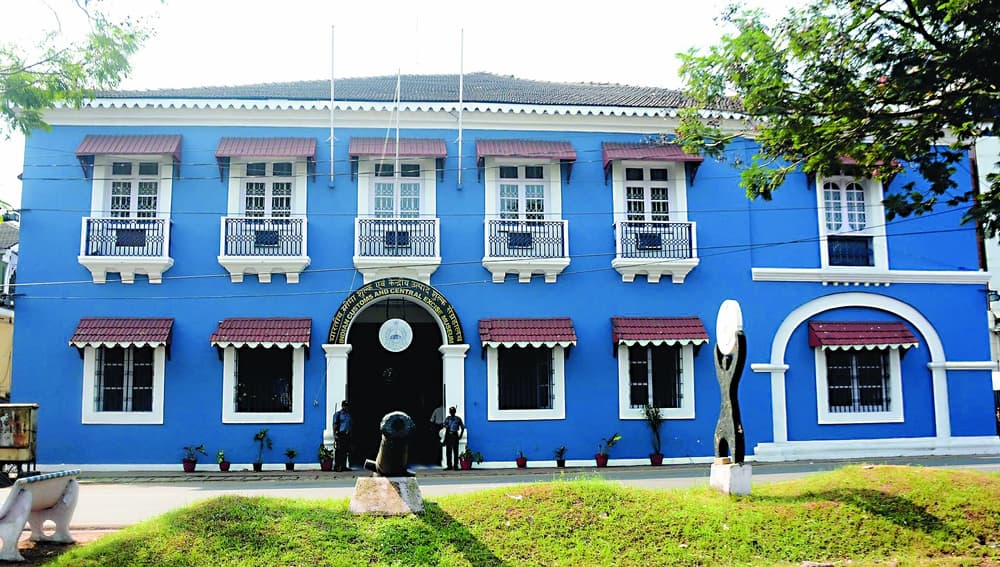
But that is no reason to stop fighting the good fight. Because, a lot remains that is worth preserving. D’Cruz names these with the tender precision of someone who has walked every street. The grand Goa Medical College building, the old Adil Shah Palace in its restored yellows and whites, the Customs House in its vibrant indigo blue. These picturesque buildings are more than the perfect background for reels. They are the history and bones of a city that understood how to nurture public life.
D’Cruz’s stance is not a fashionable or profitable one. It is not one that lends itself to dreamy renderings or to poetic nostalgia. But in 40 years of quiet, tenacious practice in one of the world’s most gently magical places, D’Cruz has built not only his beautiful buildings, but made his position, brick by laterite brick, into a firm articulation of undeniable reality.
Who is Dean D’Cruz?
Who is Dean D’Cruz?
Dean D'Cruz is an award-winning architect, urban intervention specialist and founder of Mozaic Architecture, known for sustainable design practices in Goa.
Why is Goa facing development pressure?
Why is Goa facing development pressure?
Rising tourism, second-home demand and migration from major cities have increased pressure on Goa’s land, infrastructure and ecology.
What is the “Goan dream” mentioned in the article?
What is the “Goan dream” mentioned in the article?
It refers to the long-standing idea of Goa as an idyllic escape offering beauty, calm, culture and slower living.
What makes traditional Goan architecture unique?
What makes traditional Goan architecture unique?
Features such as balcãos, low boundary walls, laterite structures, tiled roofs and open, climate-sensitive layouts define its character.
What is FAR in urban planning?
What is FAR in urban planning?
FAR, or Floor Area Ratio, determines how much can be built on a plot of land. Lower FAR encourages smaller, low-rise development.
Why is Fontainhas important?
Why is Fontainhas important?
Fontainhas is Panaji’s historic Latin Quarter, known for its Portuguese-era architecture and cultural heritage.
What is Mozaic Architecture’s design philosophy?
What is Mozaic Architecture’s design philosophy?
The firm focuses on context-sensitive buildings that blend into the landscape and minimise ecological impact.