


 ion
ion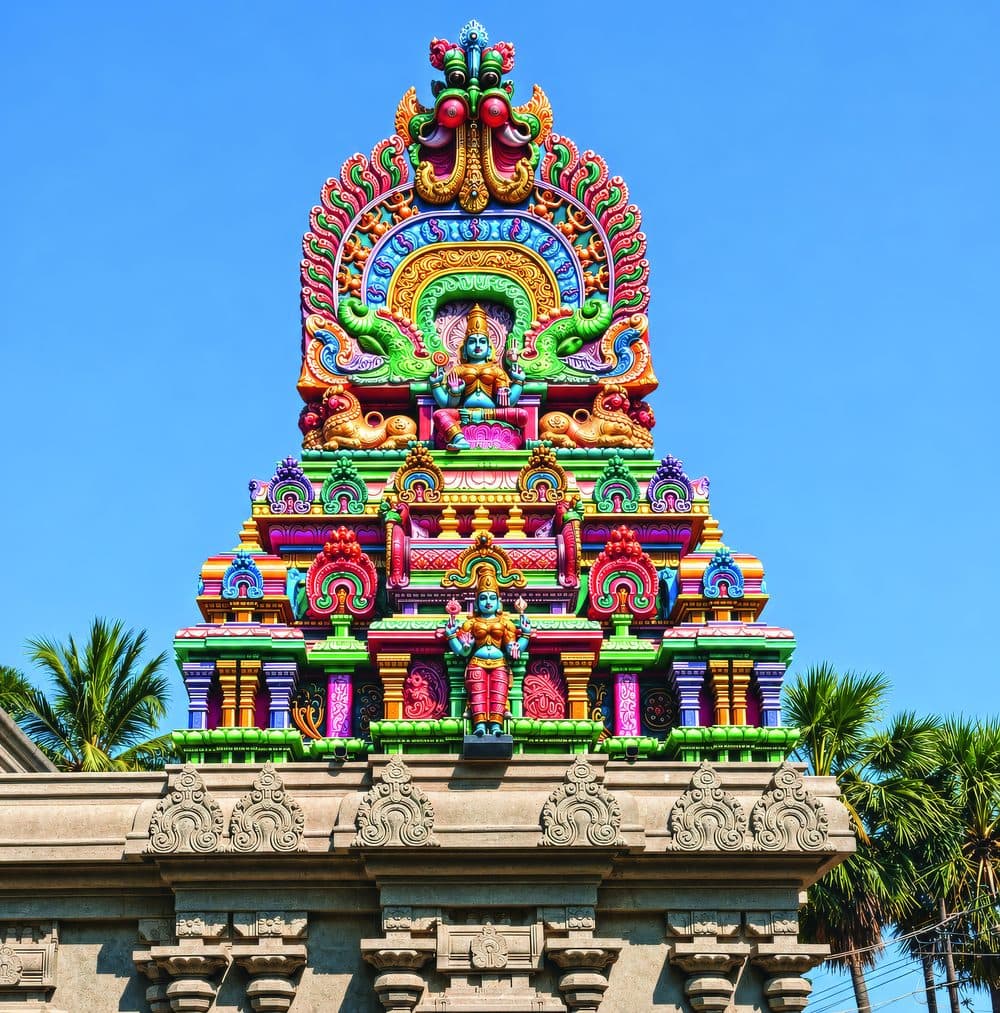
From its plains to its hills, its riversides to its cityscapes, India is dotted with temples. Across an astonishing range of scale, style, period and canon, these structures have functioned not just as places of worship, but as indicators of the prosperity of kingdoms, as barometers of influence of communities and, always, of the skill of artisans. But what is often overlooked is that a temple — like any place of worship — is a sanctified structure. And in the Hindu faith, it is intrinsically a “body of the divine,” which, to serve its purpose, needs to be designed and engineered with a precision that is as much science as art.
Be it the towering shikhara (spire) or the innermost garbha griha (sanctum sanctorum), each architectural element performs a designated metaphysical function. For instance, the garbha griha represents the universal womb, while the spire above reflects the spiritual axis, Mount Meru. But this begs the question — how and where were these rules first laid down?
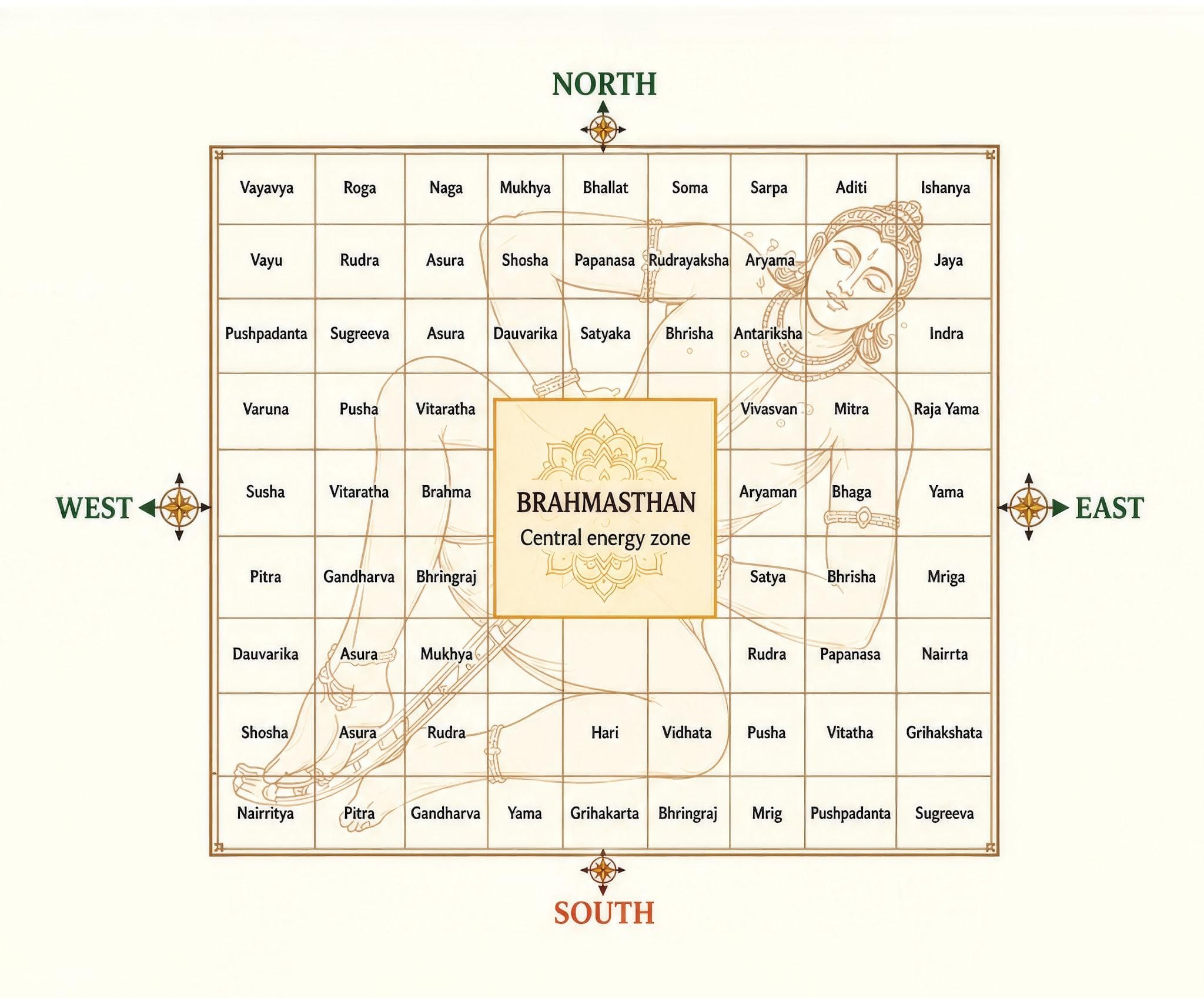
The answer lies in the twin ancient Sanskrit treatises of the Vastu Shastra and the Shilpa Shastra, which explicitly detail ground layouts, cosmic proportions (Vastu Purusha Mandala) and deity iconography. In combination, these two texts result in a singular, pan-Indian science of sacred architecture, where, for those who believe, temple design is an act of spiritual translation that transforms unmanifest cosmic energy into living, physical geometric form. And at the heart of this ancient science is the sthapati: the master architect, structural engineer and priest of traditional Indian building arts.
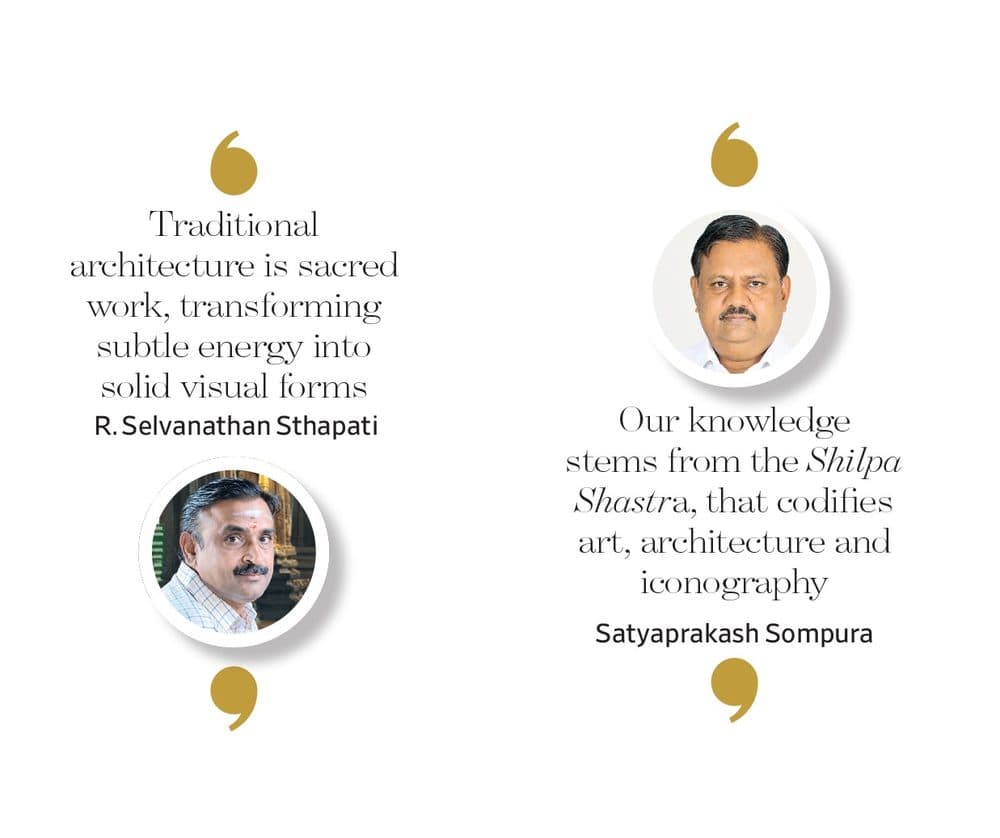
“Traditional architecture is sacred work where we transform subtle energy into solid visual forms,” explains R. Selvanathan Sthapati, principal of Sri Vaidyanatha Sthapati Associates in Chennai. “Our temples are supposed to harness and emit positive vibrations, promoting spiritual peace. This is a living tradition, continuously practiced and passed down through generations without break.”
Selvanathan has an extraordinary pedigree. His family lineage traces back to the 10th century, counting among its ancestors Sri Veerachozha Kunjara Mallan Rajara Perunthatchan — the chief architect of the UNESCO-listed Brihadiswara Temple in Tanjore. With the constant noise of the family pattarai (workshop) as the background of his childhood, Selvanathan learned the nuances of stone long before formal academic study. He later honed his craft over three decades under his mentor, Padma Bhushan Dr V. Ganapati Sthapati.
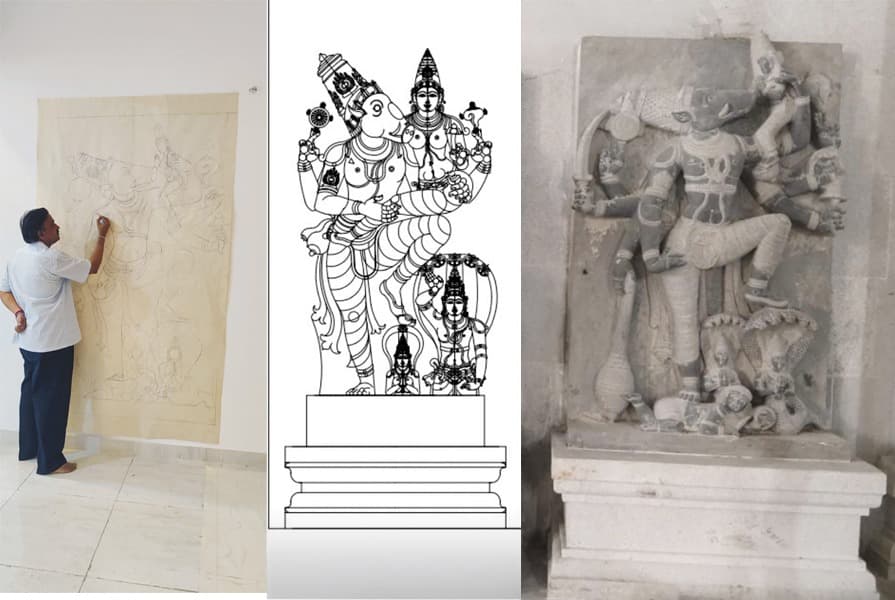
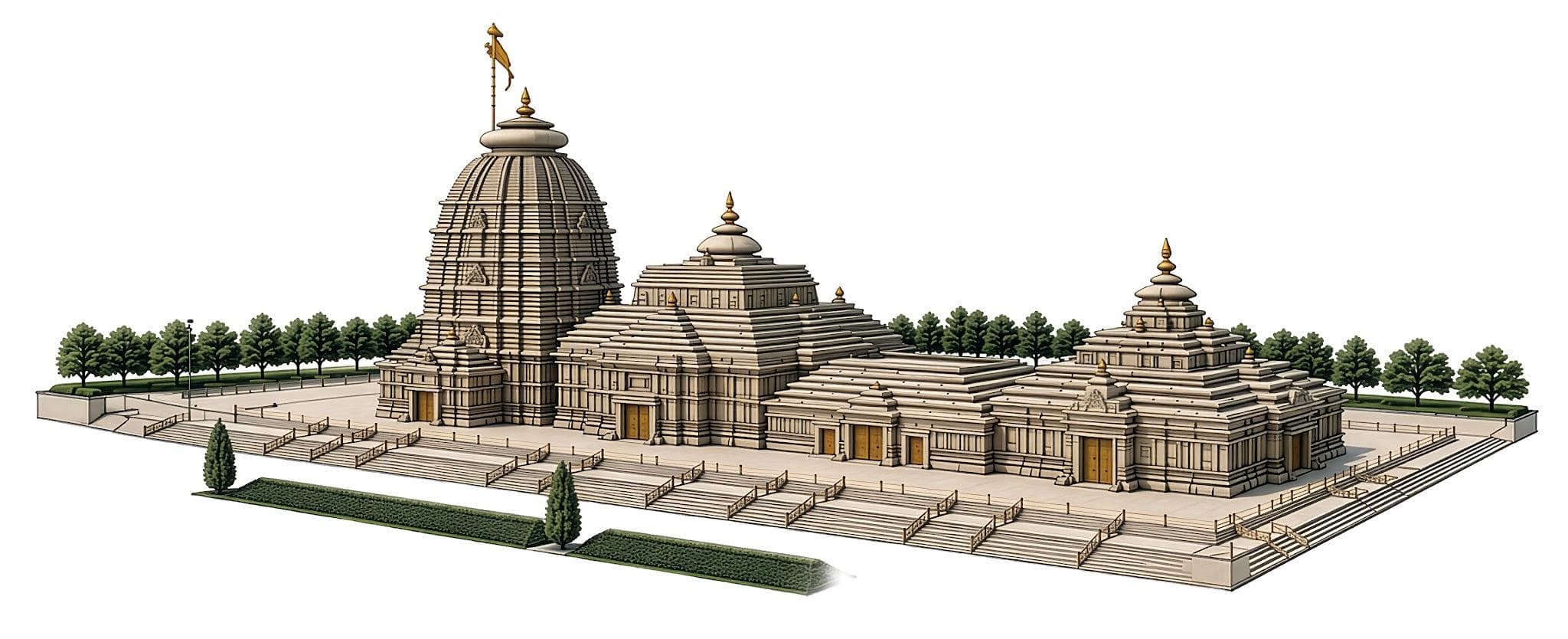
This sacred knowledge manifests through distinct regional canons across the subcontinent. Southern Vishwakarma sthapatis like Selvanathan learn, master and build the soaring granite gopurams of the Dravida style while northern Sompura master builders have carried on the Nagara tradition for centuries, sculpting exquisite marble and sandstone structures.
For Satyaprakash Sompura of Ahmedabad-based S.K. Arts, ‘Sompura’ is a surname as well as a calling. He identifies his practice as part of a continuum, a family and a clan legacy. “We Sompuras are a community of temple architects and sculptors. Though till my generation we did not have formal architecture degrees, we are the undisputed experts in designing and constructing temples,” he explains. “Our knowledge is practical, with an intuitive sense, deep knowledge and unqualified commitment to adhering to and preserving traditional architectural principles and styles. Our knowledge stems from the Shilpa Shastra, that codifies the principles of art, architecture and iconography. This encompasses a wide range of creative fields, including sculpture, painting, carpentry, jewellery-making and design.”
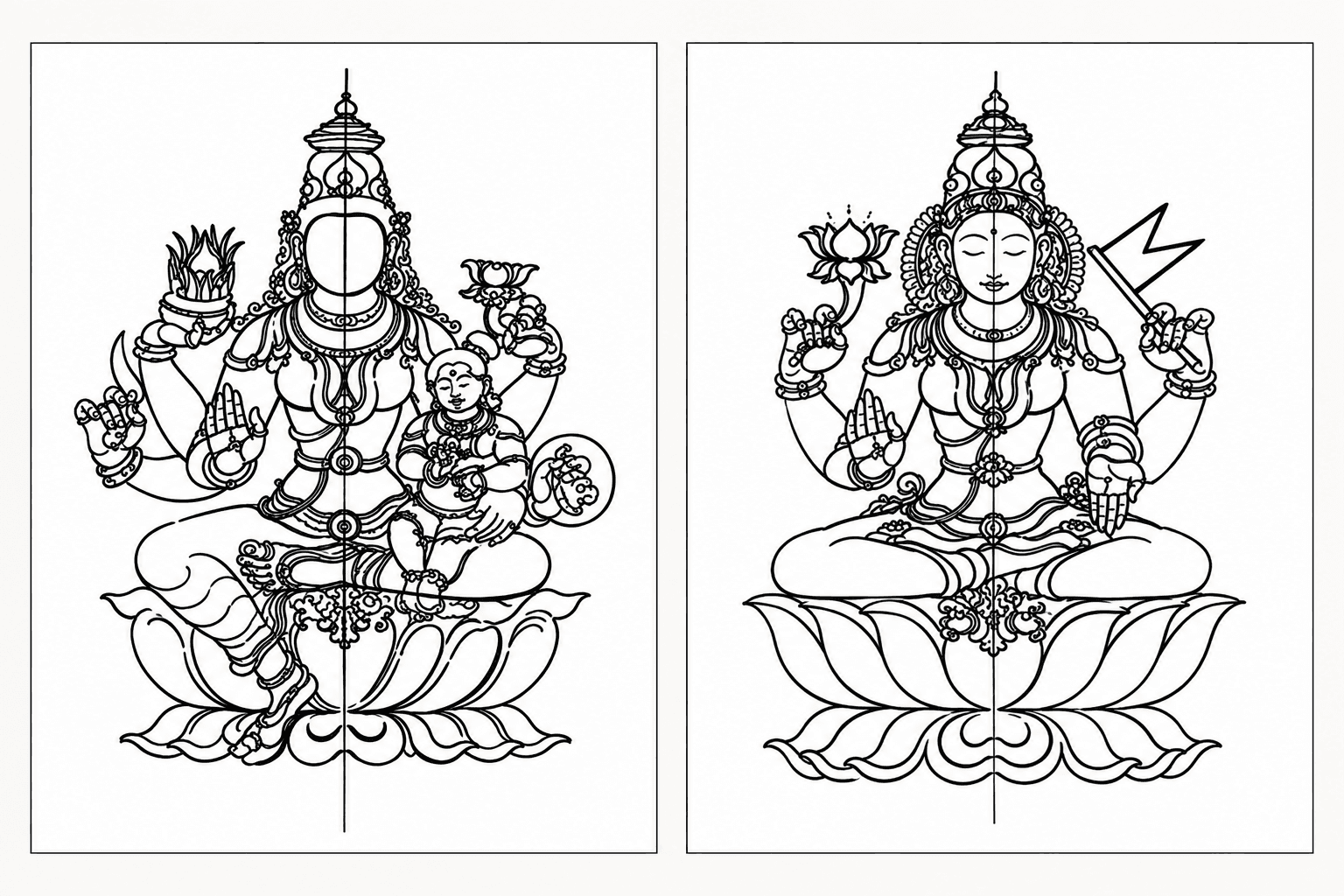
The Shilpa Shastra codifies design with specified proportions, details, and forms derived from intensive study of aspects such as the nakshatras (constellations), disha (directions) and the name and nature of the deities. “We have to consider the individual properties as well as the combined alignment of individual stones, from the foundation to the dhwaja (pennant),” says Satyaprakash. “Our style is primarily the Nagara style, with curvilinear towers and intricate carvings. We are skilled sculptors, and the intricate carvings that adorn temple structures are our work.”
It is not just the Vastu Shastra and the Shilpa Shastra either. Governing this pan-Indian knowledge system is a vast corpus of ancient literature. Treatises such as the canonical Manasara — referencing 32 foundational shastras — along with regional masterworks like the Samarangana Sutradharam and the Mayamatam define non-negotiable rules of measurement, spatial arrangement and proportion (mana-pramana).
“Agama shastras (a class of authoritative ancient Indian scriptures that serve as practical manuals for temple construction, worship, iconography and personal spiritual practice) like the Makutagama cite ‘Manena nirmite bimbhe swayam aabhati daivatam’ — meaning that when deities are made strictly in accordance with shastraic measures, the divine energy and spiritual vibrations manifest automatically,” says Selvanathan.
Training extends to the selection of raw materials through desacharam, an ancient methodology. In the Dravida traditions, resonance decides which hard granite is chosen. ‘Male’ stones — cylindrical, emitting a bell-like ring — are used for male deities, ‘female’ stones — tapered, producing a higher-pitched sound — are used for female deities, and ‘neuter’ stones — unresonant — are used for non-sacred elements.
But what about temples abroad? It is these same master builders under whose supervision temples are erected on foreign soil. With the global Indian diaspora establishing roots and communities across North America, Europe and Australasia, sthapatis have to navigate complex and stringent local building codes, seismic standards and weather, all without compromising the Vastu Purusha Mandala or the sacred energy grid. A common practice also is to pre-carve temples in Indian workshops, number the blocks, ship and assemble overseas by specialised shilpis alongside local engineering teams.
“Often, we teach foreign architects the basics of our traditional rules to help them adapt our spatial layouts to fit their country’s building codes,” Selvanathan observes. “They are amazed when they see the detail and structural precision of our elevation drawings.”
The custodians of an ancient knowledge, sthapatis across India have also embraced modern technology, which eases the entry of the next generation who are often trained architects. What does the future hold, then, for this tradition? Selvanathan sees this as a sacred responsibility for whoever chooses to enter the field. “If the next generation handles the sacred responsibility of bringing unmanifest ideas into physical form with care, without compromising the sacred rules of the shastras, we will continue transforming cosmic energy into enduring physical structures”.