


 ion
ion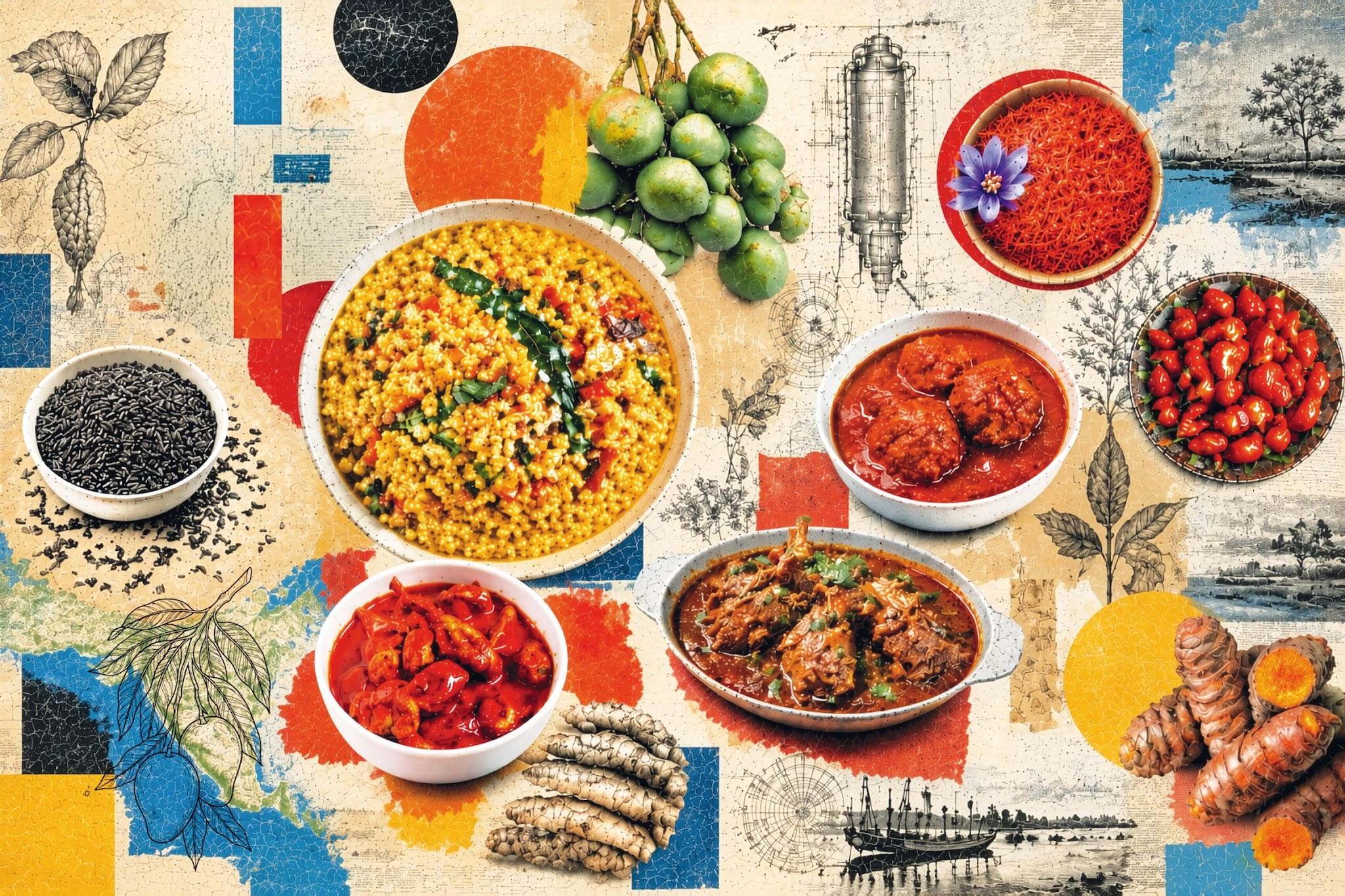
Talk of provenance in a room where Indians are in the majority and suddenly the conversation turns to soil chemistry, temperatures and micro-climates. Whatever the day job, Indians’ pride in the superiority of the produce of their region can often be taken to a fight to the finish.
Latest official filings put the count of registered agricultural items in the Geographical Indications (GI) Registry of India at over 180, the second-largest sector after handicrafts. In fact, the very first GI tag granted in India was in the agricultural category for Darjeeling tea in 2004. Karnataka, Tamil Nadu, Kerala and Maharashtra hold the largest share of agricultural GI tags, spanning rare spices, native fruits, heirloom rice landraces and regional coffee varieties.
Maharashtra’s Alphonso mango (GI tag number 139, selling anywhere between AUD $5 and AUD $12) is finding it increasingly tough to fight Goa’s ultra-rare Mankurad (GI tag number 713, at AUD $22 to AUD $74 a dozen in the early season) for the crown of Konkan’s best. But the seasoned epicure makes the battle about specificity, as GI-tagged heavyweights often define singular regional dishes. For Karnataka’s famous traditional mango pickle, Malnad Appemidi Uppinakayi, both the Alphonso and the Mankurad are without use. Only the Appemidi Mango (GI tag number 131, at AUD $6 to AUD $12 per kg) will do as the non-negotiable foundation. The natural pine-like resins of this wild fruit keep it crisp for up to three years when pickled whole in brine. This is found almost exclusively on riverbank trees of upper Karnataka.
Inland towards Vidarbha, the Waigaon Turmeric (GI tag number 437, costing AUD $5 to AUD $10 per kg) grows in the black basalt soil of Wardha. Its rare 6 to 7.5 per cent curcumin concentration yields an intense, mustard-gold pigment that is responsible for the signature throat-warming richness and glowing sheen of the slow-cooked mutton gravies of Saoji cuisine.
Further south, spice choices become about aroma. The Byadgi Chilli (GI tag number 129, at AUD $6 to AUD $13 per kg) grown in Karnataka’s Haveri district, with its low heat profile and unusually high colour yield, is the secret behind the bold crimson tones of authentic Udupi Sambar and Bisi Bele Bath.
In the heart of Central India, soil and forest collaborate to yield more unique culinary treasures. Madhya Pradesh’s tribal heartland of Jhabua is home to the Kadaknath Chicken (GI tag number 559, fetching AUD $12 to AUD $18 per kg) renowned for its jet-black meat and high-protein content. The fierce local tribal curry owes its richness more to this meat than to spices.
In the north, the sub-Himalayan Tarai belt’s Kalanamak Rice (GI tag number 425, AUD $4 to AUD $7/kg) is an heirloom grain that dates back to 600 BCE. When cooked, this softens and elongates, giving off a distinct, buttery popcorn aroma, the favoured flavour for fragrant Awadhi pulao.
Then there is Kashmir’s Pampore Saffron (GI tag number 635, commanding anywhere between AUD $3,700 and AUD $5,150 per kg) which grows in the high-altitude Karewa plateaus. A single kilogram is harvested from over 150,000 crocus flowers. This kesar produces the signature amber glow and honeyed aroma required for a royal Wazwan Rista (Kashmiri meatball dish).
Acquiring these treasures might earn global kitchens temporary curry points. But, perhaps aided by the memory of an abba’s Sunday chicken stew or a paati’s comforting Bisi Bele Bath, comes the understanding that these iconic ingredients are far more than produce. And this might be a small yet significant step in a reimagining of luxury.